
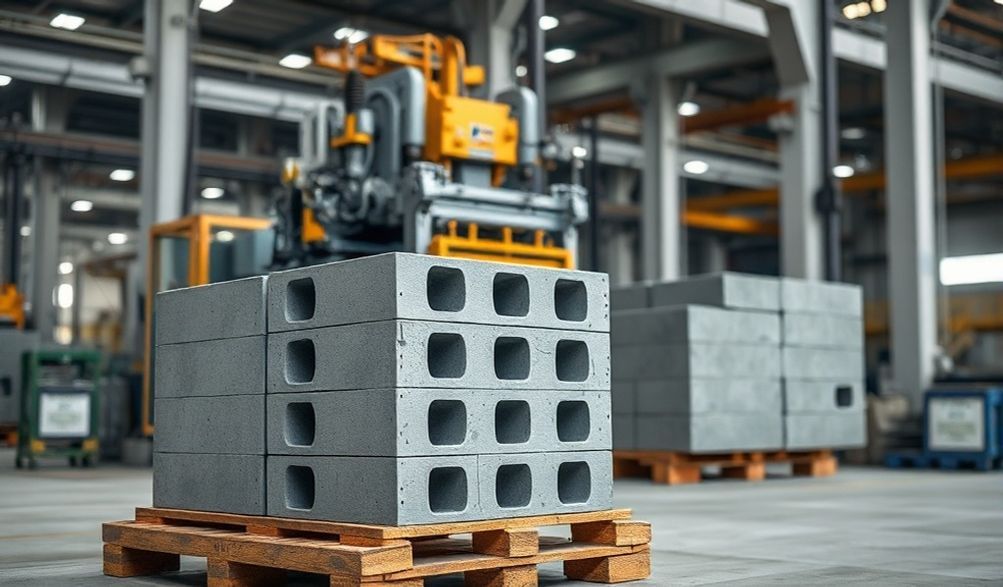
Остаточний посібник з машин для виробництва пустотілих цеглин: типи, переваги та як обрати
Вступ
Глобальна будівельна галузь невпинно шукає матеріали, які є одночасно стійкими та економічно вигідними. На тлі цього попору порожнисті цеглини вийшли на перший план як провідне рішення, пропонуючи оптимальне поєднання продуктивності, економічності та екологічної відповідальності. Але за кожною високоякісною порожнистою цеглиною стоїть ключова технологія: верстат для виробництва порожнистих цеглин.
Ця машина є двигуном сучасного виробництва блоків, перетворюючи сировинні матеріали, такі як цемент, зола-винос і пісок, у точно сформовані будівельні блоки високої міцності. Її роль є трансформаційною, дозволяючи підприємцям запускати бізнеси, а будівельним компаніям отримувати контроль над власним ланцюгом постачання, якістю та витратами.
Цей посібник є вашим всеосяжним експертним ресурсом. Він об'єднує глибокі знання галузі, технічні характеристики та практичні поради щодо покупки, розроблені для власників бізнесу, керівників будівельних проектів і підприємців у сфері виробництва. До кінця ви отримаєте чітке розуміння різних типів машин, їх значних переваг, детальний контрольний список для вибору, ключові поради щодо експлуатації та відповіді на критично важливі поширені запитання. Наша мета — надати вам можливість прийняти ідеально обґрунтоване інвестиційне рішення, враховуючи ваші конкретні потреби.
Що таке верстат для виготовлення пустотілих цеглин? Основна функція та принцип роботи
У своїй основі, верстат для виробництва пустотілих цеглин — це пристрій, який автоматизує виробництво пустотілих бетонних блоків за допомогою процесу ущільнення та вібрації. Розуміння його функціонування починається з продукту, який він створює.
Визначення продукту: порожнисті цеглини проти суцільних цеглин
Порожнисті цеглини, також відомі як бетонні кладочні блоки (БКБ) або порожнисті блоки, визначаються своєю конструкцією: вони містять одну або кілька великих отворів або порожнин (званих "серцевинами").
- Конструктивне проектування:Ці порожнини зазвичай становлять від 25% до 50% загальної площі поперечного перерізу блоку. Вони проходять через блок зверху донизу.
- Отримані переваги:
- Легкий:Значно легші за суцільну цеглу, що робить їх простішими та дешевшими для транспортування та обробки на будівельному майданчику, зменшуючи навантаження на працівників та конструкційне навантаження.
- Теплоізоляція:Повітряні кишені у порожнинах забезпечують відмінну теплову та акустичну ізоляцію, що призводить до більш енергоефективних і тихіших будівель.
- Корисність:Серцевини дозволяють легко прокладати електричні канали, водопровідні труби та арматурні стрижні, які можуть бути залиті розчином для додаткової міцності.
Як працює машина: Основний процес
Хоча конструкції різняться, основний виробничий цикл є однаковим для більшості машин.
- Годування:Попередньо змішані сировинні матеріали (суміш цементу, піску, золи-виносу, кам’яного пилу та води) завантажуються у бункер машини.
- Змішування:Внутрішній міксер забезпечує однорідну, стабільну суміш, що є вирішальним для рівномірної міцності цегли.
- Ущільнення та вібрація:Суміш заливається у форму (за бажаною формою цегли). Потім машина застосовує величезний тиск, щоб ущільнити її.гідравлічний тискта високочастотнівібраціяЦя подвійна дія видаляє повітряні кишені та щільно ущільнює матеріал, надаючи цеглі структурної цілісності.
- Викидання та затвердження:Свіжо сформовану, "сиру" цеглину виштовхують з форми на піддон або конвеєр. Потім її переміщують у зону твердіння, де протягом кількох днів вона набирає міцності завдяки контрольованій вологості та температурі.
Основні застосування в будівництві
Вироблені цеглини є універсальними та використовуються для:
* Житлові будівлі:Для несучих і ненесучих стін.
* Комерційні комплекси:Офіси, склади та торгові приміщення.
* Partition Walls: Creating internal divisions within structures.
* Landscaping & Boundary Walls: For garden walls, fences, and other outdoor applications.
Types of Hollow Brick Making Machines: A Detailed Breakdown
Choosing the right type is your first major decision. Machines are categorized by operation, capacity, and output.
За способом керування: ручний, напівавтоматичний та повністю автоматичний.
-
Ручні верстати: Operated primarily by hand levers.
- Інвестиція:Дуже низька початкова вартінсть.
- Праця: High labor intensity, slow, and output dependent on operator skill.
- Вихід: Low (100-500 bricks per day).
- Ідеально підходить для: Micro-enterprises, very small-scale projects, or regions with extremely low labor costs.
-
Напівавтоматичні верстати: Combine mechanical operation (like hydraulic pressure) with manual handling of bricks and pallets.
- Інвестиція: Moderate.
- Праця: Requires a small team (2-4 people) for operation and handling.
- Вихід: Medium (800-2500 bricks per 8-hour shift).
- Ідеально підходить для: Small to medium businesses (SMBs) and startups with a steady demand.
-
Повністю автоматичні машини: Computer-controlled systems that automate feeding, mixing, molding, stacking, and pallet return.
- Інвестиція:Високі капітальні витрати.
- Праця: Minimal; often just 1-2 operators for monitoring.
- Вихід: High (3000-15,000+ bricks per shift).
- Ідеально підходить для: Large-scale manufacturers, construction companies supplying major projects, and high-volume businesses.
By Production Capacity: Small, Medium, and Large Scale Plants
- Small Scale: Outputs up to 2,000 bricks per day. Often semi-automatic, suitable for local market supply.
- Medium Scale: Outputs between 2,000 and 8,000 bricks per day. Can be robust semi-automatic or entry-level automatic lines.
- Large Scale Plants: Outputs exceeding 8,000 bricks per day. Always fully automatic production lines with conveyor systems and sometimes robotic palletizers.
By Brick Type and Size
Machines are configured with interchangeable molds to produce various products:
* Стандартні пустотілі блоки: 4-inch, 6-inch, 8-inch, and 12-inch thicknesses.
* Суцільні блоки: For applications requiring maximum load-bearing capacity.
* Бруківка та міжблокові покриття: For driveways and walkways.
* Спеціальні форми: Curved blocks, chimney blocks, or lintels.
Specialized Machines: Mobile vs. Stationary Plants
- Стаціонарні рослини: The standard setup, installed in a fixed factory location.
- Мобільні машини для виробництва цегли: Mounted on a trailer for easy transport. The key advantage is on-site production, eliminating transport costs for bricks and allowing immediate use. Ideal for large, remote construction projects like dams, highways, or large housing developments.
Key Benefits of Using a Hollow Brick Making Machine
Investing in this technology unlocks a cascade of advantages, from the balance sheet to the building site.
Economic Advantages
- Lower Unit Cost: Producing in-house drastically reduces the cost per brick compared to purchasing from third-party suppliers.
- High-Profit Margins: Creates a revenue stream by selling surplus bricks to the local market.
- Reduced Dependency: Shields your projects from market price fluctuations and supply chain delays of traditional bricks.
Construction & Performance Benefits
- Lightweight Nature: Eases construction speed and reduces dead load on the building foundation.
- Відмінна теплоізоляція: Thermal properties lower heating and cooling costs. Acoustic insulation enhances comfort in residential and commercial spaces.
- Proven Structural Strength: When produced to proper standards, hollow blocks offer excellent compressive strength for multi-story construction.
Environmental & Sustainability Benefits
- Утилізація відходів: Can incorporate industrial by-products like fly ash (from coal plants) and slag, diverting them from landfills.
- Ефективність використання ресурсів: The hollow design uses less raw material per unit volume than a solid block.
- Energy-Efficient End-Product: Buildings made with hollow bricks have a lower lifetime carbon footprint due to reduced energy consumption.
Business and Operational Benefits
- High Production Speed: Machines produce bricks far faster than manual or traditional methods.
- Стабільна якість: Automated processes ensure every brick has identical dimensions, density, and strength, leading to better construction quality.
- Масштабованість бізнесу: You can start small and add capacity by upgrading machines or adding shifts as demand grows.
How to Choose the Right Machine: A Buyer’s Checklist
This decision should be driven by careful analysis, not impulse. Use this checklist to guide your evaluation.
Assess Your Business Needs & Goals
Answer these questions first:
* Target Market: Are you supplying a single project, local retailers, or large contractors?
* Daily Production Volume: What is your current and projected 3-year demand? Be realistic.
* Budget: What is your total investment cap, including machine, installation, and working capital?
* Available Space & Power: Do you have a suitable factory space with a 3-phase electrical connection?
Critical Technical Specifications to Scrutinize
- Compaction Force (Tonnage): Measured in tons, this determines brick density and strength. For standard blocks, 100-150 tons is common; for pavers or high-strength blocks, 200+ tons may be needed.
- Час циклу: The time to produce one brick or one mold of bricks. Faster cycles mean higher output.
- Вимога до потужності: Verify if it runs on standard 3-phase electricity or requires a diesel generator.
- Універсальність форми: Does the supplier offer a range of mold options, and how easy/expensive is it to change them?
Quality and Durability Factors
- Конструкція рами: The main frame should be made from heavy-duty steel plates and profiles, not lightweight sections.
- Component Brands: Reputable brands for hydraulic pumps, valves, PLCs (for automatics), and vibrator motors indicate reliability.
- Захист від корозії: Look for sandblasting and high-quality paint coating to protect against rust in humid production environments.
Manufacturer & After-Sales Support Evaluation
This is often more important than a slight price difference.
* Warranty: A minimum of 12 months on parts and workmanship is standard for reputable makers.
* Наявність запчастин: Ensure common wear parts are readily available locally or can be shipped quickly.
* Технічна підтримка: Does the company provide installation supervision, operator training, and troubleshooting support?
* Company Reputation: Research their history, ask for client references, and if possible, visit an existing plant using their machine.
Cost Analysis: Investment vs. Return on Investment (ROI)
Calculate a simple payback period:
1. Calculate your total investment (Machine + Installation + Initial Raw Material).
2. Estimate your monthly profit: (Selling Price per Brick – Production Cost per Brick) x Monthly Production Volume.
3. Payback Period (Months) = Total Investment / Monthly Profit.
A well-run operation with a suitable machine can often see a payback period of 12-24 months.
Operating and Maintaining Your Machine for Longevity
Your machine is a long-term asset. Proper operation and maintenance are non-negotiable for profitability and longevity.
Essential Raw Material Preparation
The quality of your bricks is directly tied to your raw material mix.
* Mix Ratios: A common starting mix is 1 part cement, 3 parts sand, and 3 parts stone dust/aggregate (1:3:3). Fly ash can replace 15-25% of the cement. Always conduct trial batches.
* Вміст вологи: The mix must have the right consistency—typically 8-10% water. Too dry causes weak bricks; too wet causes deformation.
* Якість матеріалу: Use clean, well-graded sand and aggregates free of clay, silt, or organic matter.
Daily Operation Best Practices
- Startup: Check oil levels, ensure the area is clear, and run the machine empty for a few minutes to warm up hydraulics.
- During Operation: Monitor brick formation, listen for unusual noises, and check for consistent vibration.
- Shutdown: Clean the hopper, mold, and platform thoroughly. Follow the manufacturer’s specific shutdown procedure.
Routine Maintenance Schedule
- Daily: Clean the machine, check for loose bolts, and inspect hydraulic hoses for leaks.
- Weekly: Lubricate all moving parts (pivots, guide rods) as per the manual. Check hydraulic oil level and condition.
- Monthly: Tighten all bolts and nuts on the frame and vibration table. Inspect mold liners for wear.
Troubleshooting Common Issues
- Poor Brick Strength: Likely causes are incorrect mix ratio, low cement content, insufficient compaction force, or improper curing.
- Surface Cracks: Usually caused by too much water in the mix, excessive vibration, or rapid drying during curing.
- Bricks Sticking in Mold: Often due to a worn or damaged mold liner, insufficient release agent, or a misaligned ejection system.
Frequently Asked Questions (FAQ) About Hollow Brick Making Machines
What is the average cost range for a hollow brick machine?
Prices vary dramatically based on automation and capacity. Manual machines can start from $2,000 – $8,000. Semi-automatic models typically range from $15,000 – $50,000. Fully automatic production lines begin around $60,000 and can exceed $250,000 for high-capacity plants. Always remember: specifications dictate the final price.
What raw materials can I use?
The most common materials are Portland cement, sand (river or crushed), stone dust (aggregate), and water. A key advantage is the ability to use industrial waste like летюча зола (to replace cement) and slag. Some setups also allow for the use of recycled concrete aggregate.
How much space and what kind of power supply is needed?
You need space for three areas: the machine itself, raw material storage, and a curing yard. A small semi-automatic setup may require 1,500 – 3,000 sq. ft. Most industrial machines require a 3-phase electrical supply (380V/415V). Mobile or remote options often use diesel power packs.
Is special training required to operate the machine?
While modern machines are designed for user-friendliness, comprehensive training from the supplier is crucial. Proper training ensures operator safety, maximizes production efficiency, and teaches essential daily maintenance to prevent costly breakdowns.
What is the typical lifespan of a well-maintained machine?
A high-quality hollow brick making machine that receives diligent, scheduled maintenance can have a productive lifespan of 10 to 15 years or more. The key factor is preventative care—neglect can reduce this lifespan by half.
Висновок
Selecting the right hollow brick making machine is a strategic decision that impacts your project’s cost, timeline, and quality, or your business’s profitability and growth trajectory. It requires balancing your immediate production needs with long-term goals, prioritizing machine quality and manufacturer support over the lowest initial price tag.
Our final expert recommendation is to conduct thorough due diligence. Request material tests from potential suppliers using your local raw materials to see the final product quality. Always calculate the Загальна вартість володіння, factoring in maintenance and potential downtime, not just the purchase price.
We encourage you to consult with multiple reputable manufacturers, ask for client references you can contact directly, and, if feasible, visit a working plant to see the machine in operation. This firsthand experience is invaluable.
By making an informed investment, you are not just purchasing a machine; you are acquiring the key technology to build a more profitable, efficient, and sustainable future in the ever-evolving construction industry.
<