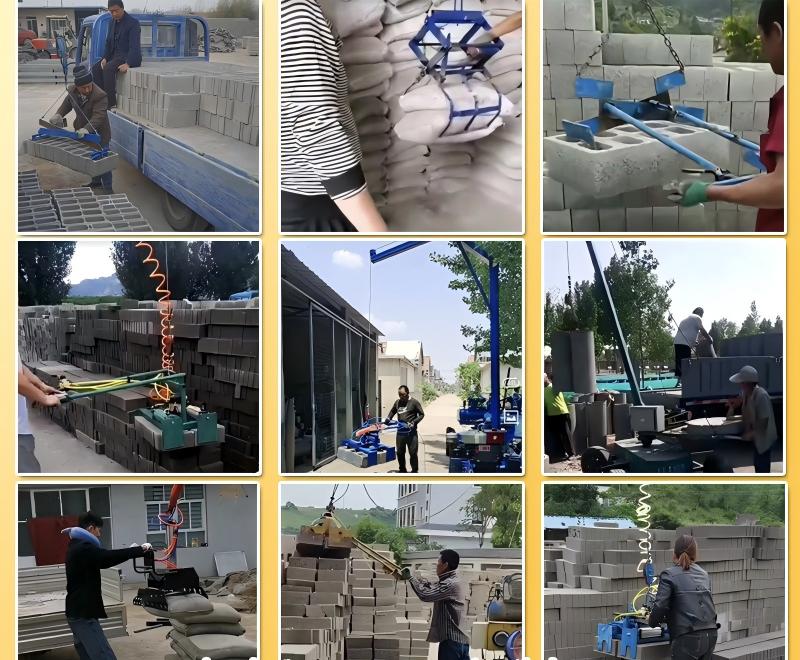
Texnik mexanika va asosiy komponentlar
Asosiy Ish Prinsiplari
Ushbu mexanizm, asosan, standartlashtirilgan qurilish bloklarini yig‘ish, tashish va aniq joylashtirish jarayonini avtomatlashtiradi. Jarayon mashinaning o‘zini paletlangan yuk bilan to‘g‘rilashidan boshlanadi, bunda ko‘pincha yo‘naltirilgan lazer tizimlari yoki jismoniy yo‘naltirgichlardan foydalaniladi. O‘zining xos qisish mexanizmi yordamida u butun to‘plamni mahkam ushlaydi. Keyin yuk ko‘tariladi, odatda mustahkam qaychi ko‘tarish yoki gidravlik qo‘l tizimi orqali, va tashish uchun barqarorlashtiriladi. Mashina keyin harakatlanadi—yoki operator tomonidan qo‘lda boshqariladi yoki rivojlangan modellarda oldindan dasturlashtirilgan ko‘rsatmalar bo‘yicha—belgilangan tushirish maydoniga. Bu joyda joylashtirish millimetr aniqligida amalga oshiriladi, har bir birlikning keyingi g‘isht terish yoki yig‘ish uchun to‘g‘ri yotqizilishini ta’minlaydi. Tsikl mashinaning boshlang‘ich nuqtasiga qaytishi bilan yakunlanadi va keyingi yukga tayyor bo‘ladi. Ushbu takrorlanuvchi, yuqori aniqlikdagi operatsiya qo‘lda ishlash bilan bog‘liq o‘zgaruvchanlik va charchoqni yo‘q qiladi.
Kritic quyi tizimlar va ularning funktsiyalari.
Ushbu uskunaning ishonchliligi va samaradorligi bir nechta o‘zaro bog‘langan quyi tizimlarga bog‘liq.
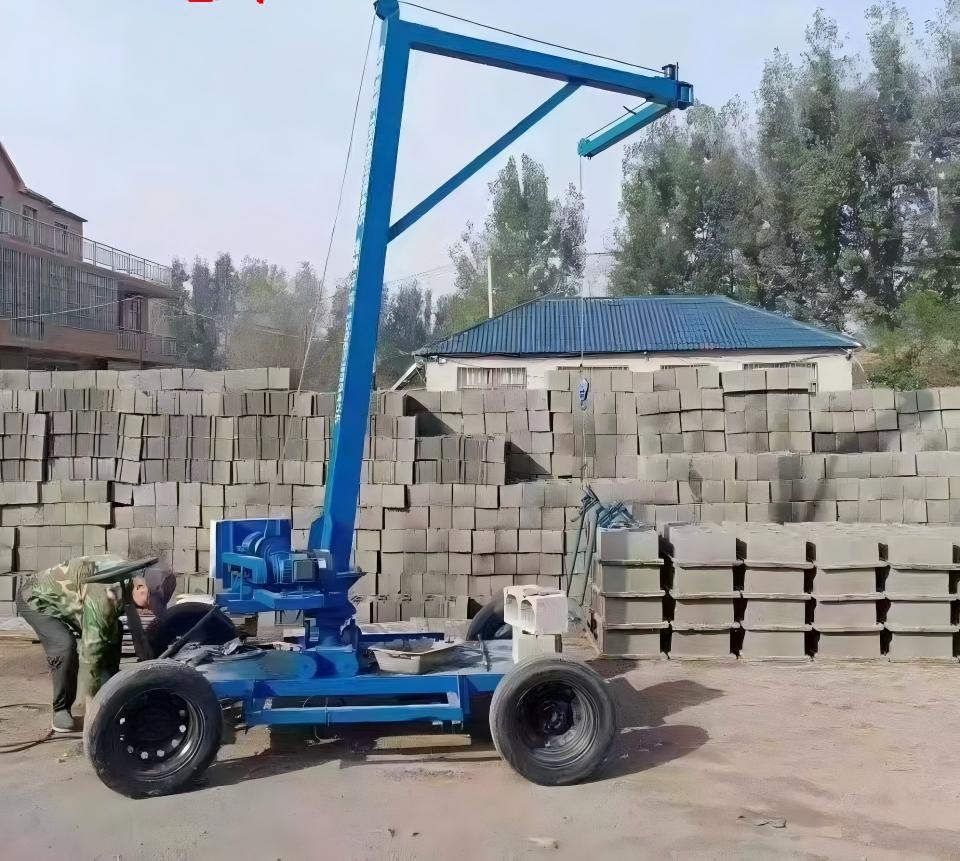
- Shassi va Harakatlanuvchi RamkaBu, to‘liq yuk ostida barqarorlikni ta’minlash uchun mo‘ljallangan, mashinaning asosiy tayanch qismini tashkil qiladi. Variantlarga notekis, tayyorlanmagan erlarda yuqori tortish kuchi beruvchi paletli versiyalar va silliq, qattiq yuzalarda harakatlanuvchi g‘ildirakli modellar kiradi. Shassi tanlovi mashinaning turli uchastka sharoitlariga moslashuvchanligiga bevosita ta’sir qiladi.
- Ko‘tarish va manipulyatsiya mexanizmi:Mashinaning asosiy funksiyasi shundan iborat. Tizimlar oddiy forklift uslubidagi tirgaklardan tortib, turli o‘lcham va shakldagi bloklarni boshqarishga qodir murakkab ko‘p tirgakli kallaklargacha bo‘ladi. Ko‘tarish kuchi yuqori kuch zichligi va silliq boshqaruvi bilan tanilgan gidravlik tizimlar yoki yuqori energiya samaradorligiga intilayotgan yangi modellardagi elektromexanik aktuatorlar tomonidan ta’minlanadi.
- Boshqaruv va Yo‘naltiruvchi Interfeys:Operator interfeysi asosiy modellardagi jismoniy tutqich va joystiklardan tortib, to‘liq raqamli sensorli ekran panellarigacha bo‘lgan diapazonni qamrab oladi. Murakkab tizimlar takroriy joylashtirish naqshlarini dasturlash, umumiy ish parametrlarini saqlash va diagnostik fikr-mulohazalarni ta’minlovchi dasturiy ta’minotni o‘z ichiga oladi. Ba’zi yuqori darajadagi qurilmalar oldindan belgilangan yo‘llar yoki simli yo‘naltirgichlar bo‘ylab harakatlanadigan yarim avtonom boshqaruvga ega.
- Quvvat va Harakatlanish Tizimi:Dizel dvigatellari uzoq joylarda kun bo'yi ishlash uchun an'anaviy yuqori quvvat va uzoq muddatli xizmat muddatini ta'minlaydi. Yirik akkumulyator batareyalari bilan ishlaydigan elektr motorli modellar bino ichida foydalanish, nol mahalliy chiqindilar va past operatsion shovqin tufayli mashhurlik kasb etmoqda, bu esa yashil qurilish tashabbuslariga mos keladi.
- Xavfsizlik va Stabilizatsiya Apparati:Integral tarkibiy qismlarga ko‘tarish operatsiyalari vaqtida ag‘darilishning oldini olish uchun ochiladigan outriggerlar yoki stabilizator oyoqlari kiradi. Sensorlar doimiy ravishda yuk og‘irligi, gidravlik bosim va mashina muvozanatini kuzatib boradi. Parametrlar xavfsizlik chegaralaridan oshib ketsa, avtomatik o‘chirish funksiyalari ishga tushib, mashina va xodimlarni himoya qiladi.
Bozorni Segmentatsiyalash va Uskunalarning Turlari
Harakatchanlik va masshtab bo‘yicha tasniflash
Bozor muayyan operatsion ko‘lam va muhitlarga moslashtirilgan differensiallashtirilgan mahsulotlarni taklif etadi.
- Ixcham va O‘rta Darajadagi Qurilmalar:Bu yuqori manevrli mashinalar turar-joy loyihalari, kichikroq tijorat qurilishlari va rekonstruksiya ishlari uchun idealdir. Ular ko‘pincha saytlar orasida oson tashish uchun treylerlarga o‘rnatiladi. Ularning asosiy e’tibori tez-tez uchraydigan kichik yuklar uchun chaqqonlik va tezlikka qaratilgan.
- Yuqori quvvatli sanoat tizimlari:Katta hajmdagi sanoat, tijorat va infratuzilma loyihalari uchun mo‘ljallangan ushbu qurilmalar yuqori yuk ko‘tarish qobiliyati, kengaytirilgan masofa va ko‘pincha murakkab boshqaruv tizimlari bilan ajralib turadi. Ular chidamlilik va uzluksiz ishlash uchun yaratilgan bo‘lib, yirik qurilish maydonlarining katta material talablarini qondiradi.
- Specialized Attachment-Based Solutions: This category consists of modular attachments that can be fitted to existing carrier vehicles like telehandlers or mini-excavators. This offers a cost-effective entry point for contractors who already own compatible base machines, providing functional versatility.
Advanced Features and Technological Integration
Modern iterations are increasingly defined by their technological enhancements. Telematics systems allow fleet managers and dealers to monitor machine location, fuel levels, operational hours, and maintenance alerts remotely. This data is invaluable for preventive maintenance scheduling and optimizing machine utilization. Furthermore, integration with Building Information Modeling (BIM) represents the cutting edge. Machine controls can theoretically import data from a project’s BIM model, automating the placement pattern directly from the digital blueprint, thereby reducing layout errors and further accelerating the construction process.
Strategic Advantages for the Supply Chain and End-Users
Quantifiable Economic and Operational Benefits
The adoption of this machinery delivers a compelling return on investment through multiple channels. The most direct impact is the dramatic reduction in labor costs; a single machine and operator can replace a crew of several manual laborers, completing tasks in a fraction of the time. This translates directly to shorter project timelines, allowing contractors to take on more projects per year. Material waste due to handling damage is minimized, as the consistent, mechanical movement prevents chipping and breakage common in manual throws and carries. Furthermore, the precision placement reduces the need for subsequent adjustments, allowing masons or assemblers to begin their work immediately and more efficiently.
Enhancing Safety and Ergonomic Standards
Beyond economics, the safety imperative is profound. Manual handling of heavy, dense building materials is a leading cause of musculoskeletal injuries, including chronic back problems and strains. By assuming this physically demanding task, the machinery drastically lowers the incidence of such injuries. It also reduces foot traffic and congestion in the primary material drop zones, minimizing the risk of struck-by incidents. This creates a safer, more organized worksite, which can lead to lower insurance premiums and improved regulatory compliance for the end-user.
Sustainability and Industry Alignment
The efficiency gains have a direct positive environmental impact. Faster project completion reduces the overall duration of site disturbance and energy consumption on-site. Electric models, in particular, contribute to quieter, emission-free operation, which is crucial for urban projects with strict noise and pollution ordinances. By promoting a solution that aligns with goals for faster, safer, and cleaner construction, distributors align themselves with the broader trends shaping the future of the industry.
Conclusion: Positioning for a Productive Future
The transition towards automated material handling in construction is not a speculative trend but a demonstrable shift towards greater rationality and productivity. For dealers, distributors, and procurement professionals, this equipment category represents a high-value portfolio segment that addresses fundamental client pain points: cost, time, safety, and precision. Success in this market requires a deep technical understanding of the product variations, a clear communication of the total cost of ownership and ROI, and the ability to provide robust after-sales support and parts service. By becoming knowledgeable advocates for these solutions, supply chain partners do more than sell machinery; they enable their clients to build better, faster, and safer. The competitive advantage offered by this technology makes it an indispensable consideration for any forward-looking business servicing the modern construction landscape.
Tez-tez so'raladigan savollar (FAQ)
Q1: What is the typical range of load capacity for these machines?
A: Load capacities vary significantly to suit different projects. Compact models may handle stacks weighing between 500 to 1,500 kg, while heavy-duty industrial machines can lift and transport palletized loads exceeding 3,000 kg. It is crucial to match the machine’s capacity with the most common pallet weights used by your clientele.
Q2: How does the training process work for operators, and is it complex?
A: Operator training is generally straightforward, especially for standard models. Most manufacturers provide comprehensive onsite training covering basic operations, safety protocols, and routine maintenance. For machines with advanced software or BIM integration, more in-depth training is provided. The intuitive nature of the controls allows skilled equipment operators to become proficient relatively quickly.
Q3: What are the primary considerations for choosing between a tracked and wheeled model?
A: The choice depends on anticipated ground conditions. Tracked models offer superior ground pressure distribution, making them ideal for soft, muddy, or uneven terrain as they are less likely to sink or cause damage. Wheeled models provide higher travel speeds and are better suited for hard, level surfaces like prepared pads or factory floors. They also tend to be easier to transport on trailers.
Q4: Can these machines handle other materials besides standard construction blocks?
A: Yes, with the appropriate attachments, many models can be adapted to handle a variety of palletized or bundled materials common on construction sites. This includes bags of mortar mix, landscaping blocks, certain types of paving stones, and dimensional lumber packs. This versatility enhances the machine’s utility and ROI for the end-user.
Q5: What does the maintenance schedule look like, and what is the parts availability like?
A: Maintenance is similar to other mobile construction equipment, involving regular checks of hydraulic systems, filters, structural components, and (in diesel models) the engine. Electric models have fewer moving parts and require less routine maintenance. Reputable manufacturers support their products with readily available spare parts networks and detailed service manuals. For distributors, establishing access to this parts supply chain is a critical component of customer support.
Q6: How do we effectively demonstrate the ROI to a skeptical contractor?
A: The most effective demonstration is a concrete cost-benefit analysis. Focus on direct labor savings: calculate the hours and crew size required to manually move a set quantity of material versus the machine’s cycle time. Add in quantifiable savings from reduced breakage, lower insurance costs (due to improved safety), and the potential for increased project throughput. Offering a live demonstration on the contractor’s own site, using their materials, is often the most persuasive tool.