
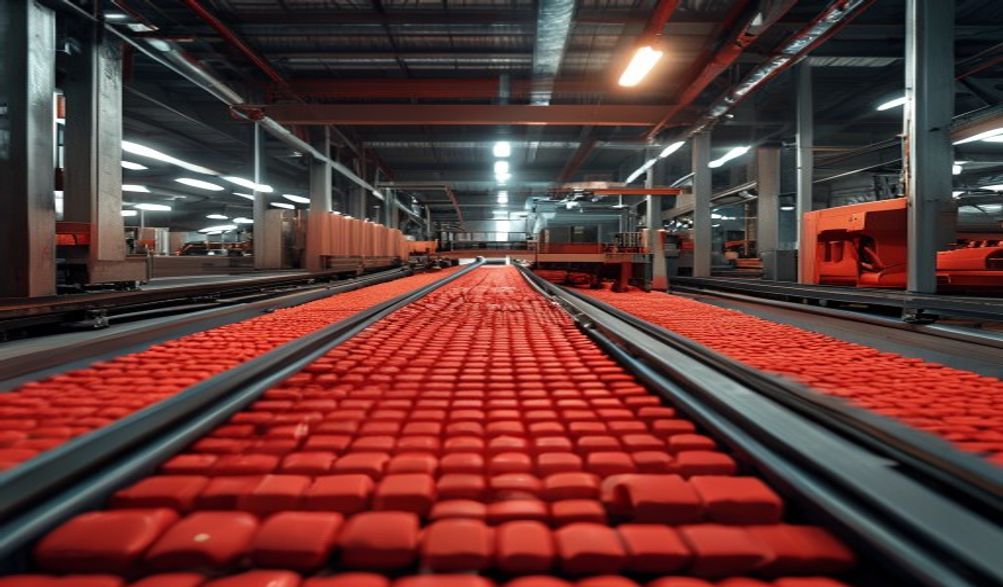
Xitoyda To'g'ri Loy G'isht Yasaladigan Mashinani Qanday Tanlash Mumkin: 2026 Xaridor Qo'llanmasi
Global qurilish bumi pasayish belgilarini ko'rsatmayapti va son-sanoqsiz loyihalarning markazida asosiy qurilish bloki turibdi: oddiy g'isht. Ushbu muhim bozorga kirishni istagan tadbirkorlar va sanoatchilar uchun to'g'ri ishlab chiqarish uskunasini topish eng muhim birinchi qadamdir. Dunyoning shubhasiz ishlab chiqarish markazi sifatida Xitoy g'isht yasash mashinalarining misli ko'rilmagan assortimentini taklif etadi. Biroq, bu mo'llik o'zining muammosini keltiradi—bunday muhim sarmoya uchun ishonchli hamkorni topish maqsadida yuzlab yetkazib beruvchilarni qanday saralab olish kerak?
Shandong, Fujian va Guangdong sanoat markazlaridagi mexanika ishlab chiqaruvchilari bilan o‘n yildan ortiq bevosita hamkorlik qilgan holda, men muvaffaqiyatli yutuqlarni ham, qimmatga tushgan xatolarni ham kuzatdim. Farq har doim bilim va sinchkovlikka asoslangan edi. Ushbu qo‘llanma sizga kerakli mutaxassislik bilimini taqdim etish uchun to‘liq yo‘l xaritasi sifatida ishlab chiqilgan. Biz har bir muhim bosqichni bosqichma-bosqich ko‘rib chiqamiz,Xitoyda loy g'isht ishlab chiqarish mashinasini qanday tanlash kerak, bu qo'rqinchli jarayonni tartibli, xavfsiz va foydali investitsiya strategiyasiga aylantiradi.
Ishlab chiqarish ehtiyojlaringizni va mashina turlarini tushunish
To‘g‘ridan-to‘g‘ri yetkazib beruvchilarning veb-saytlariga o‘tish eng keng tarqalgan va eng qimmatga tushadigan xatodir. Jarayon ichki baholashdan boshlanishi kerak. Keng ko‘lamli uy-joy loyihasi uchun juda mos bo‘lgan mashina kichik, mahalliy hovli uchun halokatli darajada samarasiz bo‘lardi va aksincha.
Loyiha ko‘lami va natija maqsadlarini baholash
Iltimos, aniq raqamlar bilan quyidagi asosiy savollarga javob berish orqali boshlang.
- Kunlik/Yillik G'isht Talabi:O'zingizning biznes maqsadlaringizga erishish uchun kuniga qancha g'isht (masalan, qattiq, ichi bo'sh, bir-biriga bog'lanuvchi) ishlab chiqarishingiz kerak? Boshlang'ich va o'sish bosqichlarida ham realistik bo'ling.
- Loyiha muddati:Bu bir martalik, vaqt bilan cheklangan qurilish loyihasi uchunmi yoki doimiy, uzluksiz ishlab chiqarish ob'ektini yaratish uchunmi?
- Ер ва инфратузилмаIshlab chiqarish maydonchangizning hajmi va holati qanday? Siz zarur kommunal xizmatlar (barqaror uch fazali elektr energiyasi, suv) dan ishonchli foydalanish imkoniyatiga egamisiz?
- Mehnat:Sizning mavjud ishchi kuchining mahorat darajasi va narxi qanday? Bu siz ko‘rib chiqishingiz kerak bo‘lgan avtomatlashtirish darajasiga bevosita ta’sir qiladi.
Ehtiyojlaringizni turkumlash:
* Kichik miqyosli:Kuniga 5,000 tagacha g'isht. Ko'pincha qo'l yoki yarim avtomatik ishlash.
* O‘rta miqyosdaKuniga 5 000 dan 20 000 gacha g‘isht ishlab chiqarish. Odatda yarim avtomatik yoki boshlang‘ich darajadagi avtomatik liniyalar.
* Katta sanoat miqyosi:Kuniga 20 000 dan ortiq g'isht. Integratsiyalashgan material tashish tizimiga ega to'liq avtomatik ishlab chiqarish liniyalari talab qilinadi.
Xitoydagi Gil G'isht Ishlab Chiqarish Mashinalari Turlari
Chinese manufacturers produce a vast spectrum of machines. Knowing the categories is key.
- Qo'lda/Yarim Avtomat Mashinalar: Ideal for startups with limited capital or in regions with very low labor costs. They require significant manual labor for feeding and brick removal but have a low initial investment.
- Тўлиқ автоматлашган блок ишлаб чиқариш станоклари: The workhorses of high-volume production. These computer-controlled lines automate material feeding, pressing, curing, and stacking. They offer unmatched consistency, output, and labor savings.
- Mobil G'isht Mashinalari: Mounted on trailers, these offer the unique advantage of on-site production, eliminating transport costs for finished bricks. Perfect for remote projects.
- Maxsus Mashinalar: This includes interlocking brick machines (for dry-stack construction), hollow block machines, and machines designed for specific raw material mixes like fly ash or cement-stabilized earth.
Key Technical Specifications to Decode
When reviewing brochures, focus on these core specs:
- Bosim (Tonaj): Measured in tons, this determines the brick’s density and strength. Higher tonnage (e.g., 500T vs. 200T) generally means a stronger, higher-quality brick.
- Sikl vaqti: The time to produce one batch of bricks. A shorter cycle time means higher output.
- Qolip Turi va Moslashtirish: The mold defines the brick’s shape and size. Ensure the supplier can provide or customize molds for your specific brick design.
- Quvvat talablari: Machines can be electric, dieselyokihybrid. Your local power stability and fuel costs will dictate the best choice.
Xitoy yetkazib beruvchilari landshaftini boshqarish
Finding a supplier is easy; finding a trustworthy, competent partner is the real task. The Chinese market has both world-class factories and problematic intermediaries.
Where to Find Reputable Manufacturers
- B2B Platforms (Alibaba, Made-in-China):
- Afzalliklari: Vast selection, easy to contact suppliers, trade assurance options.
- Kamchiliklari: Overwhelming, filled with trading companies posing as factories, requires intense vetting.
- Industry Exhibitions (Canton Fair, BIMU in Italy):
- Afzalliklari: See machines in person, meet engineering teams directly, gauge build quality firsthand.
- Kamchiliklari: Time-consuming and expensive to attend.
- Direct Sourcing via Professional Agents/Sourcing Companies:
- Afzalliklari: Leverages local expertise, language skills, and established factory networks for vetting and negotiation.
- Kamchiliklari: Adds a service cost, requires finding a trustworthy agent.
The Critical Supplier Vetting Process
This is your primary defense against risk.
- Factory Audit is Non-Negotiable: Insist on a live video tour of the production workshop. Look for organized assembly lines, quality control stations, and modern welding/CNC equipment. A refusal is a major red flag.
- Check Licenses & Certifications: Request business licenses and certificates like ISO 9001(sifatni boshqarish) vaCE (for export to many markets). Understand that while CE is important, it can be self-declared; the factory’s internal quality processes matter more.
- Analyze History & Portfolio: How long have they been in business? A 15-year-old company has more experience than a 2-year-old one. Crucially, ask for references and case studies of machines exported to your country or region. Similar climates and raw materials are a plus.
Red Flags and Green Flags in Supplier Communication
Red Flags:
* Vague, non-technical answers to specific questions.
* Unwillingness to provide a customer contact for a reference.
* Pressure to pay 100% upfront before production.
* No clear after-sales service plan or warranty details.
* Email domain doesn’t match the company name (e.g., using a generic @163.com email for a large factory).
Green Flags:
* Provides detailed, technical proposals with clear drawings.
* Offers a comprehensive warranty (e.g., 12 months for the whole machine, 18 months for the hydraulic system).
* Has a clear process for installation, training, and spare parts supply.
* Communication is prompt, professional, and in clear English (or your language).
Beyond the Price Tag: Total Cost of Ownership
The initial machine quote is just the entry fee. Your real investment is the Total Cost of Ownership (TCO) over 5-10 years.
Understanding the Quotation Breakdown
A professional quote should itemize:
* Machine Cost: The base price.
* Mold Cost: For each brick type you need.
* Shipping Terms: Understand the Incoterms!
* EXW: You handle everything from the factory gate.
* FOB: Supplier gets it to the port and on the ship; you handle sea freight and import.
* CIF: Supplier covers sea freight and insurance to your nearest port.
* Import Duties & Taxes: These vary by your country and must be researched separately.
The Hidden Costs of a Cheap Machine
A low bid often signals future expenses:
* High Failure Rates: Inferior components fail, causing constant downtime.
* Expensive & Hard-to-Find Spare Parts: Proprietary or non-standard parts can be priced exorbitantly.
* Yomon energiya samaradorligi: Weak hydraulic systems or motors consume more power, raising operational costs daily.
* Zero After-Sales Support: When it breaks, you’re on your own, paying for expensive local technicians to reverse-engineer fixes.
Warranty, After-Sales Service, and Spare Parts
Your negotiation must cover:
* Warranty Scope: What’s covered (parts, labor, shipping for parts)? What’s excluded (wear-and-tear items, misuse)?
* Sotilgandan keyingi qo'llab-quvvatlash: Is remote troubleshooting via video call available? What is the response time guarantee?
* Ehtiyot qismlar: Request a recommended spare parts list with pricing. How quickly can critical parts be shipped?
* O‘rnatish va o‘qitish: Is a technician dispatch included? If not, what are the costs? Comprehensive training for your operators is essential for productivity and safety.
Ensuring Quality and Performance
This is where technical due diligence separates the professionals from the amateurs.
Key Components That Define Machine Longevity
The machine is only as good as its weakest part. Prioritize quality in:
* Gidravlik Tizim: The heart of the machine. Renowned brand pumps and valves (e.g., Rexroth, Kawasaki, Yuken) are far more reliable than no-name components.
* Electrical Controls: A modern PLC (Dasturiy Boshqariladigan Mantiqiy Kontroller) system (from Siemens, Mitsubishi, etc.) is more reliable, programmable, and easier to troubleshoot than old-fashioned relay systems.
* Ramka tuzilishi Look for robust, welded steel frames with sufficient reinforcement. Thinner frames will warp under constant high pressure.
* Aralash Tizimi: For plants with mixers, the quality of the blades, shaft, and gearbox determines mixture consistency and maintenance intervals.
Requesting and Evaluating a Factory Test
Never buy a machine untested. Demand a performance test using raw materials as close to yours as possible.
* Step 1: Provide your clay sample or its detailed composition (clay, sand, silt content, moisture).
* Step 2: Observe the entire cycle: feeding, pressing, ejection.
* Step 3: Check the finished bricks for consistent dimensions, sharp edges, and structural integrity.
* Step 4: Assess machine stability, noise levels, and ease of operation.
Xom ashyo muvofiqligi
This is arguably the most critical technical factor. Chinese machines are often tuned for local clay. Your local clay’s plasticity, moisture content, and mineral composition will behave differently. The best practice is to send a 100-200kg sample to your shortlisted supplier for a real test. The cost is minimal compared to the risk of a machine that cannot process your material efficiently.
The Purchase and Logistics Process
With the right supplier and machine identified, it’s time to execute the purchase securely.
Negotiation Strategies and Payment Terms
- Secure Payment Methods: Never use 100% T/T (bank transfer) upfront. Standard and secure terms include:
- 30% T/T deposit, 70% against copy of Bill of Lading.
- Letter of Credit (L/C): More complex but very secure, as the bank guarantees payment upon fulfillment of contract terms.
- Negotiate: Price is negotiable, but so are warranty terms, spare part discounts, and inclusion of extra molds or tools.
Managing Shipping and Customs Clearance
- Freight Forwarder: Hire a reliable freight forwarder in your country or use one recommended by your supplier. They will handle the complex logistics and customs brokerage.
- Documentation: Ensure you receive clean, accurate documents: Commercial Invoice, Packing List, Bill of Lading, Certificate of Origin, and any required manuals.
Installation, Commissioning, and Training
- Plan ahead. Ensure your site is prepared with foundations, power, and water connections before the machine arrives.
- Coordinate the visa and travel for the supplier’s technician well in advance.
- Schedule the training program for all key operators and maintenance staff during the commissioning phase.
Tez-tez so'raladigan savollar (FAQ)
Q1: What is the average price range for a clay brick making machine from China?
A: Prices vary dramatically from around $5,000 for a small manual machine to over $150,000 for a fully automatic, high-output production line. A robust semi-automatic machine for medium-scale production typically ranges from $25,000 to $60,000. Budget based on required output and automation, not just the sticker price.
Q2: How can I verify if a Chinese supplier is legitimate and not a trading company posing as a factory?
A: Demand a live video tour of the active manufacturing floor—ask them to pan across machinery, show raw materials, and walk through the assembly line. Request their official business license and check the registered address. A true factory will have no issue showing its facility.
Q3: What is the typical lead time from order to delivery?
A: For standard models, production takes 20-40 days. Sea shipping adds 30-60 days depending on your destination port. Customized machines or full plant lines require more time for engineering and manufacturing—always get a written timeline in the contract.
Q4: Do Chinese manufacturers provide English manuals and software?
A: Reputable exporters targeting international markets do. You must confirm this before signing the contract. Specify that you require English operation manuals, maintenance guides, and electrical diagrams. Also, ensure the PLC touchscreen interface can be set to English.
Q5: Who is responsible if the machine arrives damaged or has major faults?
A: Clear contract terms are vital. The supplier is typically responsible for ensuring the machine is properly packed and insured for sea transit. Upon arrival, document any damage with photos and videos immediately. A trustworthy supplier, bound by their warranty, will work to ship replacement parts or, in severe cases, negotiate a resolution. This underscores the importance of working with a vetted, reputable partner.
Xulosa
Choosing the right clay brick making machine in China is a meticulous journey, not a simple transaction. It hinges on four pillars: precisely defining your own production needs, conducting relentless supplier vetting, evaluating the total cost of ownership over the initial price, and insisting on tangible quality verification through material tests and factory audits.
Remember, in this market, the cheapest option is almost invariably the most expensive long-term investment. Your greatest asset will not be the machine itself, but the reliable, communicative, and expert manufacturer standing behind it. That partnership is the ultimate determinant of your project’s profitability and longevity.
Ready to take the next step with confidence? Download our comprehensive supplier vetting checklist and negotiation guide to ensure you ask all the right questions and secure the best possible partnership for your brick-making venture.
<