
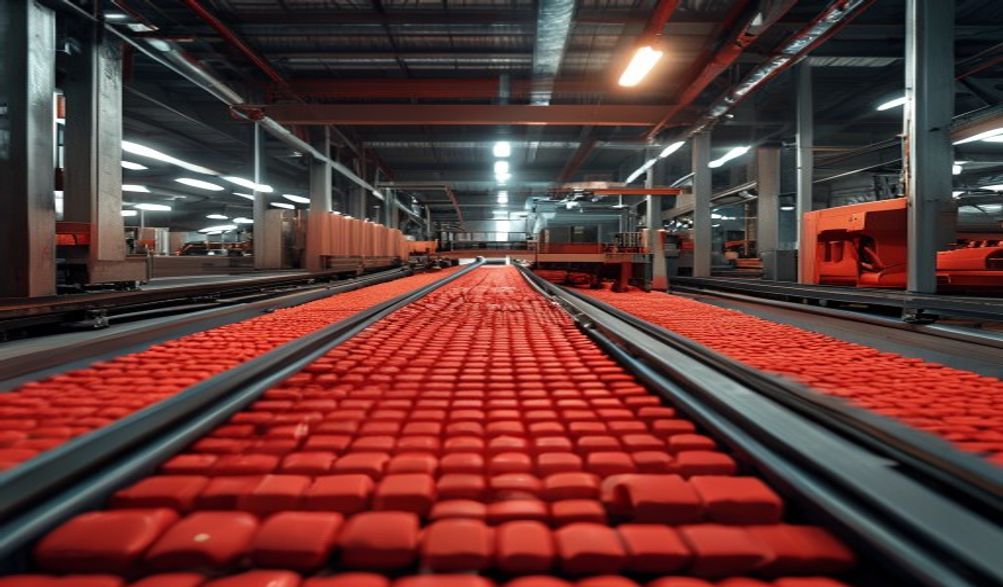
Hướng dẫn chọn máy làm gạch đất sét phù hợp tại Trung Quốc: Cẩm nang người mua năm 2026
全球建筑热潮未见减缓迹象,而在无数项目的核心处,存在着一个基础构建单元:朴素的砖块。对于希望进入这一关键市场的企业家和实业家而言,采购合适的生产设备是最关键的第一步。作为世界公认的制造业中心,中国提供了无与伦比的黏土制砖机选择。然而,这种丰富性也带来了自身的挑战——如何在数百家供应商中筛选出值得信赖的合作伙伴,以完成如此重大的投资?
在山东、福建和广东等工业重镇与机械制造商直接合作的十多年里,我既见证过成功的辉煌,也目睹过代价高昂的失误。区别始终在于知识储备与尽职调查。本指南旨在成为您的全面路线图,助您拨开迷雾,提供所需的专业洞见。我们将逐一剖析每个关键步骤——如何在中国选择一台粘土砖机。将一项令人生畏的过程转变为结构化、安全且盈利的投资策略。
Hiểu Nhu Cầu Sản Xuất & Các Loại Máy Móc
Bỏ qua giai đoạn khảo sát nội bộ và lao thẳng vào tìm kiếm nhà cung cấp là sai lầm phổ biến nhất—và cũng tốn kém nhất. Quy trình này phải bắt đầu bằng một cuộc đánh giá nội bộ kỹ lưỡng. Một cỗ máy hoàn hảo cho dự án nhà ở quy mô lớn lại có thể gây ra sự kém hiệu quả thảm khốc cho một bãi nhỏ địa phương, và ngược lại.
Đánh giá Quy mô Dự án và Mục tiêu Đầu ra của Bạn
Start by answering these foundational questions with concrete numbers:
- Daily/Annual Brick Requirement: How many bricks (e.g., solid, hollow, interlocking) do you need to produce per day to meet your business goals? Be realistic about both startup and growth phases.
- Project Duration: Is this for a single, time-bound construction project, or is it for establishing a permanent, ongoing production facility?
- Land & Infrastructure: What is the size and condition of your production site? Do you have reliable access to the necessary utilities (stable three-phase electricity, water)?
- Lao động What is the skill level and cost of your available workforce? This directly influences the level of automation you should consider.
Categorize your needs:
* Quy mô nhỏ: Up to 5,000 bricks per day. Often manual or semi-automatic operation.
* Trung bình 5,000 to 20,000 bricks per day. Typically semi-automatic or entry-level automatic lines.
* Large Industrial Scale: 20,000+ bricks per day. Requires fully automatic production lines with integrated material handling systems.
Types of Clay Brick Making Machines in China
Chinese manufacturers produce a vast spectrum of machines. Knowing the categories is key.
- Máy Thủ Công/Bán Tự Động: Ideal for startups with limited capital or in regions with very low labor costs. They require significant manual labor for feeding and brick removal but have a low initial investment.
- Máy Làm Gạch Tự Động Hoàn Toàn: The workhorses of high-volume production. These computer-controlled lines automate material feeding, pressing, curing, and stacking. They offer unmatched consistency, output, and labor savings.
- Máy Sản Xuất Gạch Di Động: Mounted on trailers, these offer the unique advantage of on-site production, eliminating transport costs for finished bricks. Perfect for remote projects.
- Máy Móc Chuyên Dụng: This includes interlocking brick machines (for dry-stack construction), hollow block machines, and machines designed for specific raw material mixes like fly ash or cement-stabilized earth.
Key Technical Specifications to Decode
When reviewing brochures, focus on these core specs:
- Áp lực (Tấn lực): Measured in tons, this determines the brick’s density and strength. Higher tonnage (e.g., 500T vs. 200T) generally means a stronger, higher-quality brick.
- Thời gian chu kỳ: The time to produce one batch of bricks. A shorter cycle time means higher output.
- Loại Khuôn & Tùy Chỉnh The mold defines the brick’s shape and size. Ensure the supplier can provide or customize molds for your specific brick design.
- Yêu cầu về nguồn điện: Machines can be electric, dieselhoặchybrid. Your local power stability and fuel costs will dictate the best choice.
探索中国供应商版图
Finding a supplier is easy; finding a trustworthy, competent partner is the real task. The Chinese market has both world-class factories and problematic intermediaries.
Where to Find Reputable Manufacturers
- B2B Platforms (Alibaba, Made-in-China):
- Ưu điểm: Vast selection, easy to contact suppliers, trade assurance options.
- Nhược điểm: Overwhelming, filled with trading companies posing as factories, requires intense vetting.
- Industry Exhibitions (Canton Fair, BIMU in Italy):
- Ưu điểm: See machines in person, meet engineering teams directly, gauge build quality firsthand.
- Nhược điểm: Time-consuming and expensive to attend.
- Direct Sourcing via Professional Agents/Sourcing Companies:
- Ưu điểm: Leverages local expertise, language skills, and established factory networks for vetting and negotiation.
- Nhược điểm: Adds a service cost, requires finding a trustworthy agent.
The Critical Supplier Vetting Process
This is your primary defense against risk.
- Factory Audit is Non-Negotiable: Insist on a live video tour of the production workshop. Look for organized assembly lines, quality control stations, and modern welding/CNC equipment. A refusal is a major red flag.
- Check Licenses & Certifications: Request business licenses and certificates like ISO 9001(quản lý chất lượng) vàCE (for export to many markets). Understand that while CE is important, it can be self-declared; the factory’s internal quality processes matter more.
- Analyze History & Portfolio: How long have they been in business? A 15-year-old company has more experience than a 2-year-old one. Crucially, ask for references and case studies of machines exported to your country or region. Similar climates and raw materials are a plus.
Red Flags and Green Flags in Supplier Communication
Red Flags:
* Vague, non-technical answers to specific questions.
* Unwillingness to provide a customer contact for a reference.
* Pressure to pay 100% upfront before production.
* No clear after-sales service plan or warranty details.
* Email domain doesn’t match the company name (e.g., using a generic @163.com email for a large factory).
Green Flags:
* Provides detailed, technical proposals with clear drawings.
* Offers a comprehensive warranty (e.g., 12 months for the whole machine, 18 months for the hydraulic system).
* Has a clear process for installation, training, and spare parts supply.
* Communication is prompt, professional, and in clear English (or your language).
Beyond the Price Tag: Total Cost of Ownership
The initial machine quote is just the entry fee. Your real investment is the Total Cost of Ownership (TCO) over 5-10 years.
Understanding the Quotation Breakdown
A professional quote should itemize:
* Machine Cost: The base price.
* Mold Cost: For each brick type you need.
* Shipping Terms: Understand the Incoterms!
* EXW: You handle everything from the factory gate.
* FOB: Supplier gets it to the port and on the ship; you handle sea freight and import.
* CIF: Supplier covers sea freight and insurance to your nearest port.
* Import Duties & Taxes: These vary by your country and must be researched separately.
The Hidden Costs of a Cheap Machine
A low bid often signals future expenses:
* High Failure Rates: Inferior components fail, causing constant downtime.
* Expensive & Hard-to-Find Spare Parts: Proprietary or non-standard parts can be priced exorbitantly.
* Hiệu suất năng lượng kém Weak hydraulic systems or motors consume more power, raising operational costs daily.
* Zero After-Sales Support: When it breaks, you’re on your own, paying for expensive local technicians to reverse-engineer fixes.
Warranty, After-Sales Service, and Spare Parts
Your negotiation must cover:
* Warranty Scope: What’s covered (parts, labor, shipping for parts)? What’s excluded (wear-and-tear items, misuse)?
* Hỗ trợ sau bán hàng: Is remote troubleshooting via video call available? What is the response time guarantee?
* Phụ Tùng Thay Thế: Request a recommended spare parts list with pricing. How quickly can critical parts be shipped?
* Cài đặt & Đào tạo: Is a technician dispatch included? If not, what are the costs? Comprehensive training for your operators is essential for productivity and safety.
Ensuring Quality and Performance
This is where technical due diligence separates the professionals from the amateurs.
Key Components That Define Machine Longevity
The machine is only as good as its weakest part. Prioritize quality in:
* Hệ thống thủy lực: The heart of the machine. Renowned brand pumps and valves (e.g., Rexroth, Kawasaki, Yuken) are far more reliable than no-name components.
* Điều khiển Điện tử: A modern PLC (Bộ điều khiển logic khả trình) system (from Siemens, Mitsubishi, etc.) is more reliable, programmable, and easier to troubleshoot than old-fashioned relay systems.
* Cấu trúc khung Look for robust, welded steel frames with sufficient reinforcement. Thinner frames will warp under constant high pressure.
* Hệ thống Trộn For plants with mixers, the quality of the blades, shaft, and gearbox determines mixture consistency and maintenance intervals.
Requesting and Evaluating a Factory Test
Never buy a machine untested. Demand a performance test using raw materials as close to yours as possible.
* Step 1: Provide your clay sample or its detailed composition (clay, sand, silt content, moisture).
* Step 2: Observe the entire cycle: feeding, pressing, ejection.
* Step 3: Check the finished bricks for consistent dimensions, sharp edges, and structural integrity.
* Step 4: Assess machine stability, noise levels, and ease of operation.
Tương Thích Nguyên Vật Liệu
This is arguably the most critical technical factor. Chinese machines are often tuned for local clay. Your local clay’s plasticity, moisture content, and mineral composition will behave differently. The best practice is to send a 100-200kg sample to your shortlisted supplier for a real test. The cost is minimal compared to the risk of a machine that cannot process your material efficiently.
The Purchase and Logistics Process
With the right supplier and machine identified, it’s time to execute the purchase securely.
Negotiation Strategies and Payment Terms
- Secure Payment Methods: Never use 100% T/T (bank transfer) upfront. Standard and secure terms include:
- 30% T/T deposit, 70% against copy of Bill of Lading.
- Letter of Credit (L/C): More complex but very secure, as the bank guarantees payment upon fulfillment of contract terms.
- Negotiate: Price is negotiable, but so are warranty terms, spare part discounts, and inclusion of extra molds or tools.
Managing Shipping and Customs Clearance
- Freight Forwarder: Hire a reliable freight forwarder in your country or use one recommended by your supplier. They will handle the complex logistics and customs brokerage.
- Tài liệu: Ensure you receive clean, accurate documents: Commercial Invoice, Packing List, Bill of Lading, Certificate of Origin, and any required manuals.
Installation, Commissioning, and Training
- Plan ahead. Ensure your site is prepared with foundations, power, and water connections before the machine arrives.
- Coordinate the visa and travel for the supplier’s technician well in advance.
- Schedule the training program for all key operators and maintenance staff during the commissioning phase.
Các Câu Hỏi Thường Gặp (FAQ)
Q1: What is the average price range for a clay brick making machine from China?
A: Prices vary dramatically from around $5,000 for a small manual machine to over $150,000 for a fully automatic, high-output production line. A robust semi-automatic machine for medium-scale production typically ranges from $25,000 to $60,000. Budget based on required output and automation, not just the sticker price.
Q2: How can I verify if a Chinese supplier is legitimate and not a trading company posing as a factory?
A: Demand a live video tour of the active manufacturing floor—ask them to pan across machinery, show raw materials, and walk through the assembly line. Request their official business license and check the registered address. A true factory will have no issue showing its facility.
Q3: What is the typical lead time from order to delivery?
A: For standard models, production takes 20-40 days. Sea shipping adds 30-60 days depending on your destination port. Customized machines or full plant lines require more time for engineering and manufacturing—always get a written timeline in the contract.
Q4: Do Chinese manufacturers provide English manuals and software?
A: Reputable exporters targeting international markets do. You must confirm this before signing the contract. Specify that you require English operation manuals, maintenance guides, and electrical diagrams. Also, ensure the PLC touchscreen interface can be set to English.
Q5: Who is responsible if the machine arrives damaged or has major faults?
A: Clear contract terms are vital. The supplier is typically responsible for ensuring the machine is properly packed and insured for sea transit. Upon arrival, document any damage with photos and videos immediately. A trustworthy supplier, bound by their warranty, will work to ship replacement parts or, in severe cases, negotiate a resolution. This underscores the importance of working with a vetted, reputable partner.
Conclusion
Choosing the right clay brick making machine in China is a meticulous journey, not a simple transaction. It hinges on four pillars: precisely defining your own production needs, conducting relentless supplier vetting, evaluating the total cost of ownership over the initial price, and insisting on tangible quality verification through material tests and factory audits.
Remember, in this market, the cheapest option is almost invariably the most expensive long-term investment. Your greatest asset will not be the machine itself, but the reliable, communicative, and expert manufacturer standing behind it. That partnership is the ultimate determinant of your project’s profitability and longevity.
Ready to take the next step with confidence? Download our comprehensive supplier vetting checklist and negotiation guide to ensure you ask all the right questions and secure the best possible partnership for your brick-making venture.
<