
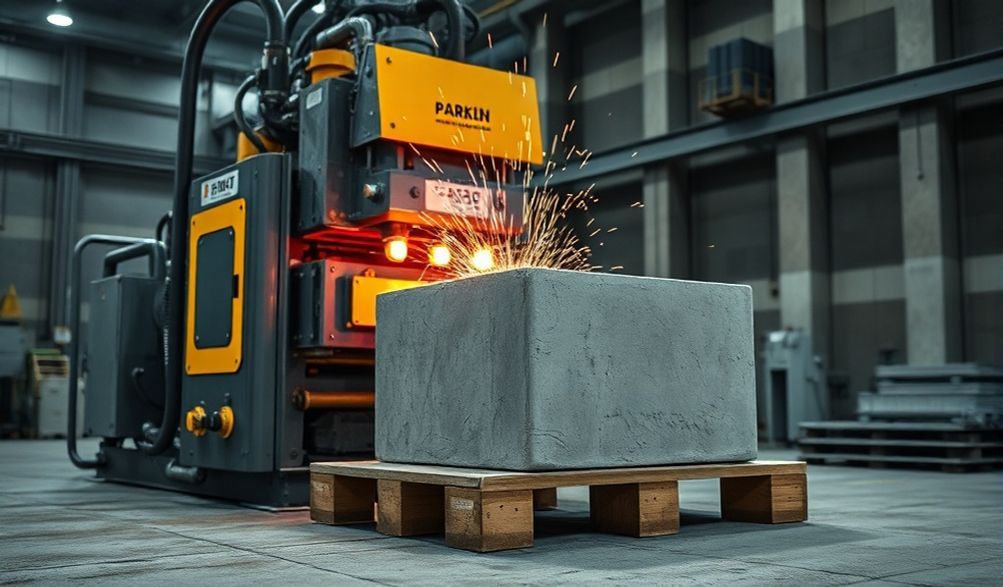
24 kVt Gidravlik Avtomatik G'isht Mashinasi To'liq Qo'llanmasi: Quvvat, Ishlash va ROI (Investitsiyadan Daromad)
Kirish
Global qurilish materiallari bozori 2030 yilga kelib 1,3 trillion dollardan oshishi kutilmoqda, bunda shaharlarning doimiy o‘sishi va infratuzilma rivojlanishi asosiy omil hisoblanadi. Biroq, bu o‘sishning markazida uzluksiz muammo yotadi: samarali, izchil va arzon g‘isht ishlab chiqarish ehtiyoji. O‘nlab yillar davomida kichik va o‘rta miqyosdagi ishlab chiqaruvchilar qo‘l mehnati yoki eskirgan mashinalarning cheklovlari bilan kurashib kelgan — sifatning nomutanosibligi, operatsion xarajatlarning keskin oshishi, yuqori chiqindilar darajasi va talabni qondirish uchun miqyosni oshirish qiyinchiliklari.
Zamonaviy yechim: gidravlik avtomatik g'isht mashinasi. Ushbu toifada muvozanatli ishlash uchun oltin zona sifatida bitta texnik xususiyat ajralib turadi—24 kVt gidravlik avtomatik g'isht mashinasiUshbu quvvat reytingi muhim o'rin tutadi, kuchli imkoniyatlarni ta'minlaydi, lekin ortiqcha energiya sarfini talab qilmaydi, bu esa uni istiqbolli operatsiyalar uchun asosiy sarmoya hisoblanadi.
Ushbu qo‘llanma, o‘n yildan ortiq muhandislik tajribasi va butun dunyo bo‘ylab yuzlab blok ishlab chiqarish maydonchalari va zavodlari bilan bevosita hamkorlik asosida yaratilgan bo‘lib, marketing shovqinidan uzoq, aniq ma’lumot berishga qaratilgan. Biz texnik spetsifikatsiyalarni oddiy tushunarli qilamiz, ularni haqiqiy ishlab chiqarish va foyda shartlariga aylantiramiz va sizga ishonchli investitsiya qarorini qabul qilish uchun kerakli asosni taqdim etamiz. Ushbu maqolani o‘qib bo‘lgach, siz mashina imkoniyatlarini aniq tushunasiz, potentsial investitsiya daromadliligini (ROI) hisoblashni o‘rganasiz, uni boshqa variantlar bilan samarali solishtira olasiz va sotuvchilarga sotib olishdan oldin qanday muhim savollar berish kerakligini bilasiz.
24 kVt quvvat birligini tushunish: Mashinaning yurak qismi
The power rating is the most critical specification on a brick machine’s datasheet, but it’s often the least understood. It’s not just a number; it defines the machine’s character, capacity, and operational economics.
What Does “24 kW Hydraulic System” Really Mean?
In simple terms, a kilowatt (kW) is a unit of power equal to 1,000 watts. It measures the rate of energy conversion. In a hydraulic brick machine, this power drives an electric motor, which in turn powers a hydraulic pump.
- The Hydraulic Pump’s Role: This pump creates flow (measured in Gallons Per Minute – GPM or Liters Per Minute – LPM) and pressure (measured in PSI or Bar). Think of it as the machine’s heart, circulating hydraulic oil to create immense force.
- The 24 kW Significance: A 24 kW system indicates a robust, mid-range power unit. It generates sufficient flow and—more importantly—sustains the high pressure (typically 21-31 MPa / 3000-4500 PSI) required to compact raw material into dense, high-strength bricks consistently. This power level is engineered to handle standard concrete mixes, including those with industrial by-products like fly ash, without strain.
Advantages of a 24 kW Hydraulic Drive
Choosing a machine with this specific power profile isn’t arbitrary. It comes with distinct operational advantages that directly impact your bottom line.
- Consistent, High-Quality Output: The hydraulic system provides uniform pressure throughout the compaction cycle. This eliminates weak spots and ensures every single brick, from the first to the thousandth, has identical density and compressive strength, meeting or exceeding ASTM or IS standards.
- Optimized Production Speed: The 24 kW motor provides ample power for a fast, reliable cycle time—from feeding and compression to ejection and pallet return. This balances speed with stability, preventing the rushed cycles that can lead to wear or defects.
- Inherent Energy Efficiency: For its output class, a 24 kW machine is remarkably efficient. It’s powerful enough to avoid being under constant maximum load (which is inefficient), yet not so oversized that it wastes energy during idle phases. Our field data shows a well-tuned 24 kW system often operates at 60-80% of its connected load during a standard cycle.
- Oshirilgan Bardoshlilik: A properly sized hydraulic system operates within its optimal performance envelope. This reduces thermal stress, minimizes pressure spikes, and leads to less wear on seals, hoses, and pumps, translating to lower long-term maintenance costs and higher uptime.
Key Features and Specifications of a 24 kW Automatic Brick Machine
Beyond the power unit, the machine’s overall design dictates its reliability and versatility. Here’s what you should expect from a quality 24 kW hydraulic brick machine.
Core Production Specifications
These numbers define what the machine can do for your business.
- Chiqish quvvati: A standard 24 kW machine can produce approximately 1,800 to 2,800 pieces per hour of common hollow blocks (e.g., 400x200x200mm). Output varies based on brick size and density.
- G'isht turlari va o'lchamlari: Versatility is key. The machine should be compatible with a wide range of mold types via a quick-change system:
- Hollow Blocks (4″, 5″, 6″)
- Solid Concrete Bricks
- Interlocking Pavers & Grass Pavers
- Kerbstones and Landscape Blocks
- Sikl vaqti: Expect a cycle time between 12 to 20 seconds, depending on block type and machine configuration.
- Avtomatlashtirish Darajasi: True “automatic” operation is governed by a Programmable Logic Controller (PLC).
- The PLC automates the entire pressing cycle, vibration timing, and pallet movement.
- Systems often include an automatic feeder for consistent material volume and a synchronized pallet circulation system for non-stop production.
Build and Design Specifications
These features determine how long and how well the machine will perform.
- Ramka va Tuzilma: Look for a fully welded, heavy-duty steel frame with reinforced stress points. This minimizes frame flex and vibration during operation, which is critical for precision and longevity.
- Gidravlik Komponentlar: The quality of the hydraulic system is non-negotiable. Reputable machines use branded pumps (e.g., Rexroth, Kawasaki, Yuken) and precision control valves. Large-bore, hard-chromed hydraulic cylinders ensure smooth, powerful compression.
- Titrama Tizimi: A separate, high-frequency vibration motor (often 7.5-11 kW) is mounted on the mold table. This dual-force system—vibration for material settling and hydraulic pressure for final compaction—is what creates a perfectly dense, smooth-faced brick.
- Electrical System: The control cabinet should be IP-rated for dust protection and contain quality contactors and relays. Safety features must include emergency stop buttons, motor overload protection, and hydraulic pressure safety valves.
Ideal Applications and Production Output
Who stands to gain the most from this specific machine? Our experience shows it perfectly aligns with several business models.
Who is This Machine Perfect For?
- Growing Brick Manufacturing Plants: Small to medium-scale plants looking to upgrade from semi-automatic equipment or expand their production capacity with a reliable, automated workhorse.
- Integrated Construction Companies: Builders and developers who want to produce bricks on-site for their projects, ensuring quality control, reducing material logistics costs, and creating a potential new revenue stream.
- Industrial Entrepreneurs: Investors entering the construction materials sector who need a machine that offers a compelling balance between initial investment and scalable output potential.
- Municipal & Infrastructure Contractors: Ideal for producing specific pavers, curbstones, or retaining wall blocks for road, park, and civil projects.
Calculating Your Potential Production
A simple, conservative calculation can help you forecast output.
Basic Formula:
[Bricks per Hour] x [Effective Operating Hours per Day] x [Working Days per Month] = Estimated Monthly Output
Example for a 24 kW Machine:
* Bricks/Hour: 2,200 (for standard hollow blocks)
* Operating Hours/Day: 16 (2 shifts)
* Working Days/Month: 25
* Estimated Monthly Output: 2,200 x 16 x 25 = 880,000 pieces
Critical Real-World Factors:
* Xomashyo: The grading and moisture content of your sand, aggregate, and cement directly affect flow and compaction speed.
* Operator Skill: Trained operators who can manage the mix, monitor the machine, and perform basic troubleshooting are essential for sustained output.
* Preventive Maintenance: A disciplined daily and weekly maintenance routine prevents unexpected downtime.
Comparing Your Options: 24 kW vs. Other Power Ratings
Choosing the right power is about matching the machine to your specific raw materials and business goals. Here’s a balanced comparison.
24 kW vs. Lower Power (e.g., 15-18 kW) Machines
- Pros of 24 kW: Significantly higher production output and faster cycle times. Much better suited for producing high-density blocks (e.g., paver blocks) or using harder, coarse aggregates. Offers more “headroom” for consistent performance under load.
- Cons of 24 kW: Higher initial purchase price and marginally higher energy consumption per hour (though often more efficient per brick produced).
24 kW vs. Higher Power (e.g., 30-37 kW) Machines
- Pros of 24 kW: Superior energy efficiency for the output range of most small-to-medium plants. Lower operational cost (OpEx) per month. The power is perfectly adequate for 90% of common brick and block types, making the extra cost of a larger machine unnecessary for many.
- Cons of 24 kW: Has a lower maximum output ceiling. It may not be the ideal choice if your primary business is manufacturing ultra-high-density, thick-walled specialty products that require extreme compaction force.
Investment Analysis: Cost, ROI, and Operational Economics
Let’s translate technical specs into financials. Transparency here is key to building a viable business case.
Understanding the Total Investment
The machine price is just one part of the capital outlay.
- Machine Price Range: A quality 24 kW hydraulic automatic brick machine from a reputable manufacturer typically falls within a $45,000 – $75,000 range, depending on configuration, brand, and level of automation.
- Yordamchi uskunalar: For a complete production line, budget for:
- Pan Mixer or Planetary Mixer
- Belt Conveyor for material feeding
- Brick Curing Racks or Curing Chamber
- Brick Stacker/Palletizer (can be manual or automatic)
- O‘rnatish va o‘qitish: Factor in costs for foundation work, electrical connection, and commissioning. Reputable suppliers include basic on-site training in the purchase price.
Calculating Return on Investment (ROI)
A simplified, conservative projection illustrates the potential.
Sample 24 kW Machine ROI Scenario:
- Monthly Production: 800,000 hollow blocks (conservative estimate).
- Revenue (@ $0.20 per block): $160,000
- Monthly Operational Costs:
- Raw Materials (Cement, Sand, Aggregate): ~$0.12 per block = $96,000
- Energy: Machine (24kW @ 70% load, 16 hrs) + Mixer & Conveyor = ~$1,500
- Labor (3 operators): ~$4,500
- Maintenance & Misc.: ~$1,000
- Total Monthly Cost: ~$103,000
- Estimated Monthly Gross Profit: $160,000 – $103,000 = $57,000
ROI Timeline: With a total line investment of ~$100,000, the machine could pay for itself in under 2 months of full operation, excluding land and building costs. This is an aggressive best-case scenario; a more conservative and realistic timeline, accounting for market fluctuations and ramp-up time, is often 4-8 months.
Critical Buying Guide: How to Choose a Quality Machine
Your relationship with the manufacturer is as important as the machine itself. Here’s a checklist from our experience.
Manufacturer Credentials Checklist
- Ishonchli natijalar: Look for a company with at least 10-15 years of dedicated manufacturing experience. Ask for their business license and export history.
- Technical & After-Sales Support: Do they have in-house engineers? What is their response time for spare parts requests? Is on-site service available in your region?
- Client Portfolio: Request references or case studies from clients in a similar climate or using similar raw materials as you.
Must-Ask Questions Before You Buy
- “What is the exact warranty period, and what components are covered?” (A comprehensive warranty should cover the frame, hydraulic system, and electrical controls for 1-2 years).
- “Can you provide a list of recommended spare parts with pricing, and what is the typical delivery time to my country?”
- “Can we arrange a live video production test from your factory, using a mold similar to what I need?” (This verifies performance claims).
- “Does the electrical system comply with IEC/CE standards, and can you provide the test certificates?”
Tez-tez so'raladigan savollar (FAQ)
Q1: What is the actual power consumption per hour for a 24 kW machine?
A: The machine does not constantly draw 24 kW. The hydraulic pump loads and unloads during the cycle. Actual average consumption is typically 60-80% of the rated power, so between 14.4 to 19.2 kWh. Your exact cost depends on your local electricity tariff.
Q2: Can this machine use fly ash or other waste materials?
A: Absolutely. In fact, modern hydraulic machines are excellent for using industrial by-products. Fly ash, slag, and even certain construction wastes can be incorporated into the mix, reducing material costs and creating more environmentally sustainable products.
Q3: How many operators are needed to run this machine?
A: For the core machine operation (monitoring, basic pallet handling, stacking), 2-3 people per shift are typically sufficient. If you invest in fully automatic pallet feeders and brick stackers, this number can be reduced.
Q4: What is the lead time for delivery and installation?
A: This varies by manufacturer order book and shipping distance. For a standard machine, you should expect a production lead time of 30-45 days, plus 15-45 days for sea shipping and customs clearance. Always get a written timeline in your contract.
Q5: Is training provided for our operators?
A: Any reputable supplier will include comprehensive on-site training as part of the purchase. This should cover safe operation, daily maintenance procedures, basic troubleshooting, and mold changing techniques.
Xulosa
The 24 kW hydraulic automatic brick machine stands out as a strategic investment for businesses aiming to scale their production with intelligence. It delivers the perfect equilibrium of power, efficiency, and reliability, capable of producing high-quality, consistent bricks that build not just structures, but a formidable market reputation.
Its value proposition is clear: robust performance for its class, manageable operational costs, and the automation needed to compete in today’s market. If your goal is to move beyond labor-intensive methods or to sensibly expand your production capacity, this machine is engineered to be the reliable workhorse at the center of your success.
Ready to move from research to action?
* For the Decisive Buyer: Contact our engineering team today with your specific production goals and local material analysis. We will provide a customized line configuration, a detailed quotation, and a projected ROI analysis tailored to your market.
* For the Detailed Researcher: Download our comprehensive technical dossier on the 24 kW series, including full specification sheets, component lists, and video case studies from installations in regions similar to yours.
We are committed to more than just selling machinery; we partner with our clients to ensure their investment delivers lasting productivity and profit, backed by unwavering technical support and a foundation of trust built over years of shared success.
<