1. Giới thiệu
Máy làm gạch đất sét đóng vai trò như những cỗ máy làm việc bền bỉ vượt thời gian trong lĩnh vực thiết bị xây dựng toàn cầu, tận dụng một trong những vật liệu xây dựng lâu đời và phong phú nhất—đất sét—để sản xuất ra những viên gạch bền vững, đa năng và tiết kiệm chi phí. Đối với các nhà phân phối, bán buôn và người mua hàng hoạt động trong không gian B2B, những máy móc này đại diện cho một danh mục sản phẩm ổn định và có nhu cầu cao, được thúc đẩy bởi tính phổ biến toàn cầu của đất sét, khả năng tương thích với môi trường và giá trị lâu bền trong các dự án nhà ở, thương mại và hạ tầng.
2. Những Điều Cơ Bản Đặc Thù Về Đất Sét: Tại Sao Máy Làm Gạch Đất Sét Lại Quan Trọng
2.1 Những Đặc Tính Độc Đáo của Đất Sét làm Nguyên Liệu
Đặc tính vốn có của đất sét khiến nó trở thành vật liệu lý tưởng để sản xuất gạch, và các máy làm gạch đất sét được thiết kế để tận dụng những đặc tính này nhằm đạt kết quả tối ưu. Việc hiểu rõ hành vi của đất sét là yếu tố then chốt để các bên liên quan trong mô hình B2B có thể tư vấn cho khách hàng, lựa chọn máy móc phù hợp và xử lý các sự cố sản xuất.
- Tính dẻoĐất sét trở nên dẻo khi trộn với nước, cho phép nó được tạo hình thành những viên gạch đồng nhất mà không bị nứt. Máy làm gạch đất sét tận dụng tính dẻo này thông qua quá trình đúc khuôn và nén chính xác, đảm bảo kích thước gạch đồng đều và tính toàn vẹn cấu trúc.
- Sự gắn kếtCác hạt đất sét liên kết chặt chẽ với nhau khi được nén chặt và sấy khô, tạo ra những viên gạch có độ bền và độ bền vững tự nhiên. Gạch đất sét chất lượng cao có thể chịu được cường độ nén từ 10-25 N/mm², đáp ứng các tiêu chuẩn xây dựng toàn cầu cho tường chịu lực.
- Khối NhiệtGạch đất sét giữ nhiệt, cải thiện hiệu quả năng lượng của các tòa nhà bằng cách điều chỉnh nhiệt độ trong nhà. Đặc tính thân thiện với môi trường này ngày càng được đánh giá cao trong xây dựng bền vững, thúc đẩy nhu cầu về máy làm gạch đất sét tại các thị trường xây dựng xanh.
- Phong phú và Giá cả phải chăngĐất sét là một nguồn tài nguyên tự nhiên có mặt ở hầu hết mọi khu vực trên thế giới, giúp giảm chi phí vận chuyển nguyên liệu thô cho các nhà sản xuất gạch. Không như bê tông (đòi hỏi xi măng - một mặt hàng có chi phí cao), đất sét có giá thành thấp và dễ tiếp cận, khiến việc sản xuất gạch đất sét trở nên khả thi về mặt kinh tế cho cả hoạt động quy mô nhỏ lẫn lớn.
- Khả năng phân hủy sinh học và Tái chếGạch đất sét không độc hại, có thể phân hủy sinh học và có thể tái chế thành cốt liệu cho xây dựng đường bộ hoặc sản xuất gạch mới. Điều này phù hợp với các quy định môi trường toàn cầu, khiến máy làm gạch đất sét trở thành lựa chọn tuân thủ cho khách hàng tìm kiếm giải pháp sản xuất thân thiện với môi trường.
2.2 Các Loại Máy Làm Gạch Đất Sét: Được Thiết Kế Phù Hợp Với Nhu Cầu Sản Xuất
Máy sản xuất gạch đất sét được phân loại dựa trên quy trình sản xuất, công suất đầu ra và mức độ tự động hóa—mỗi loại được thiết kế để đáp ứng nhu cầu cụ thể của khách hàng và điều kiện khu vực. Các nhà phân phối và bán sỉ cần nắm rõ các loại này để tư vấn thiết bị phù hợp cho khách hàng.
2.2.1 Máy Làm Gạch Đất Sét Thủ Công
- Tổng quanMáy nhỏ gọn, vận hành bằng tay, lý tưởng cho các nhà sản xuất quy mô nhỏ, doanh nhân nông thôn hoặc khu vực có nguồn điện hạn chế. Các máy này yêu cầu cấp đất sét thủ công, nén qua cần gạt tay và tháo khuôn bằng tay.
- Tính năng chínhChi phí thấp (1.000-5.000 USD), trọng lượng nhẹ (200-500 kg), không yêu cầu nguồn điện và vận hành đơn giản. Khuôn có thể thay thế linh hoạt, hỗ trợ các kích thước gạch tiêu chuẩn (ví dụ: 240×115×57mm) và kích thước tùy chỉnh nhỏ.
- Công suất đầu ra500-2.000 viên gạch mỗi ngày (ca làm việc 8 giờ), phù hợp cho xây dựng nông thôn tại địa phương, các dự án nhà ở nhỏ hoặc sản xuất gạch thủ công.
- Khách hàng mục tiêuCác doanh nhân cá thể, các lò gạch cấp làng, và người mua ở các khu vực xa xôi không có điện hoặc vốn để mua máy móc lớn hơn.
2.2.2 Máy Làm Gạch Đất Sét Bán Tự Động
- Tổng quanMáy lai kết hợp việc cấp liệu thủ công với quá trình nén ép và định hình tự động. Những máy này lấp đầy khoảng trống giữa mô hình thủ công và tự động, mang lại hiệu suất cao hơn với chi phí vừa phải.
- Tính năng chínhChạy bằng điện (3-10 kW) hoặc động cơ diesel (5-15 HP), nén thủy lực hoặc cơ khí, và tháo khuôn bán tự động. Trang bị bảng điều khiển đơn giản để điều chỉnh áp suất nén và cài đặt khuôn.
- Công suất đầu ra2.000-10.000 viên gạch mỗi ngày, phù hợp với các xưởng gạch quy mô trung bình phục vụ thị trường xây dựng khu vực.
- Khách hàng mục tiêuCác nhà sản xuất gạch quy mô nhỏ và vừa, hợp tác xã xây dựng nông thôn, và người mua có vốn hạn chế nhưng nhu cầu sản xuất ngày càng tăng.
2.2.3 Máy Làm Gạch Đất Sét Tự Động (Dựa trên Phương Pháp Ép Đùn)
- Tổng quanMáy móc quy mô công nghiệp sử dụng công nghệ đùn ép để sản xuất gạch đất sét với khối lượng lớn. Những máy này tự động hóa toàn bộ quy trình: trộn đất sét, đùn ép, cắt, sấy khô và (trong một số trường hợp) nung.
- Tính năng chínhĐộng cơ công suất cao (15-30 kW), máy đùn trục vít để định hình đất sét, máy cắt dây để đạt kích thước gạch chính xác, và tích hợp với giá sấy hoặc lò nung. Các mẫu nâng cao có hệ thống điều khiển PLC để giám sát sản xuất theo thời gian thực.
- Công suất đầu ra10.000-50.000+ viên gạch mỗi ngày, phù hợp cho các nhà sản xuất gạch quy mô lớn cung cấp cho xây dựng đô thị, dự án công trình công cộng hoặc thị trường xuất khẩu.
- Khách hàng mục tiêu大型砖块生产设施、国家建筑承包商以及在需求旺盛的市场(如印度、中国、东南亚)运营的采购商。
2.2.4 Máy làm gạch đất sét di động
- Tổng quan: Các máy móc di động được thiết kế để vận chuyển đến các mỏ đất sét hoặc công trường xây dựng, loại bỏ nhu cầu vận chuyển đất sét. Những máy này lý tưởng cho các khu vực có trữ lượng đất sét phân tán hoặc các dự án xây dựng ở xa.
- Tính năng chính安装在拖车或滑板上,由柴油发动机(10-20马力)驱动,并配备车载粘土混合和成型系统。部分型号包含移动晾干架,用于现场固化。
- Công suất đầu raMỗi ngày sản xuất từ 1.000 đến 5.000 viên gạch, phù hợp cho việc xây dựng đường nông thôn, các dự án nhà ở tạm thời, hoặc sản xuất gạch tại những khu vực không có bãi gạch cố định.
- Khách hàng mục tiêu:建筑公司、政府机构(用于基础设施项目)以及服务于偏远或受灾地区的分销商。
2.2.5 Máy làm gạch đất sét truyền thống so với hiện đại
Sản xuất gạch đất sét truyền thống (đúc thủ công và phơi nắng hoặc nung trong lò) tốn nhiều lao động và tạo ra chất lượng không đồng đều. Máy sản xuất gạch đất sét hiện đại giải quyết những vấn đề này bằng cách:
- 通过自动化压实确保砖块尺寸和密度的一致性。
- 使用集成固化系统减少干燥/烧制时间。
- Giảm thiểu lãng phí đất sét (phương pháp truyền thống lãng phí 15-20% đất sét; máy móc hiện đại lãng phí <5%).
- Giảm yêu cầu lao động (1 người vận hành cho máy bán tự động so với 5-10 công nhân cho phương pháp thủ công).
2.3 Các Thành Phần Quan Trọng Của Máy Làm Gạch Đất Sét
Máy ép gạch đất sét có các bộ phận chuyên dụng được thiết kế riêng để xử lý các đặc tính độc đáo của đất sét (tính dẻo, độ nhạy ẩm). Các nhà phân phối và người mua nên đánh giá các bộ phận này để đánh giá độ bền và hiệu suất của máy:
- Trộn Đất Sét:Trộn đất sét thô với nước để đạt độ ẩm tối ưu (15-25%, tùy thuộc loại đất sét). Được trang bị lưỡi xoắn hoặc cánh khuấy để trộn đều, ngăn ngừa các cục vón có thể gây nứt gạch.
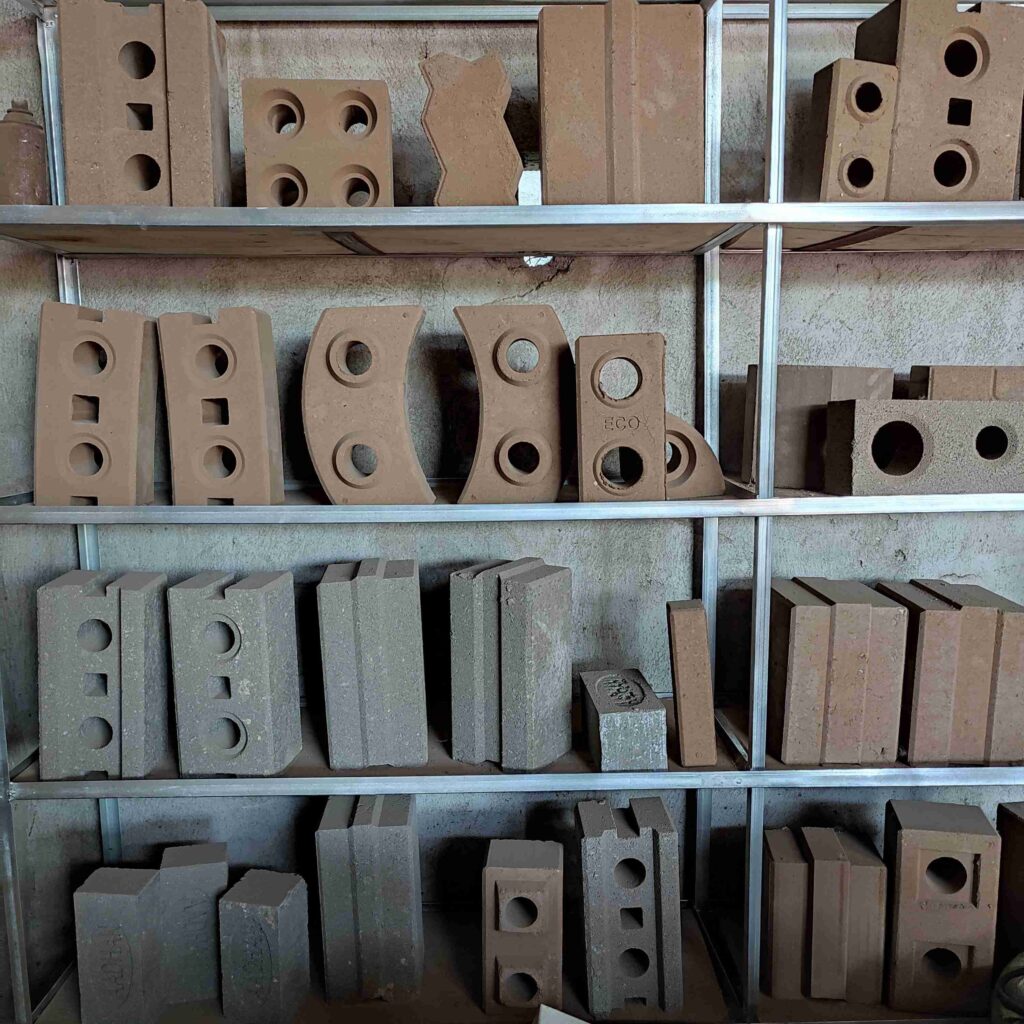
- Hệ thống KhuônĐịnh hình đất sét thành gạch bằng cách sử dụng khuôn có thể thay đổi. Đối với đất sét, khuôn thường được làm bằng thép chịu mài mòn hoặc nhôm để chịu được tính mài mòn của đất sét. Một số khuôn có các hoa văn kết cấu để tạo ra gạch trang trí.
- Cơ Chế Nén: 施加压力(10-30兆帕)于模具中的黏土,去除气泡并提高砖块密度。液压压实是黏土砖的首选方法,因为它能提供均匀的压力,并减少砖块在干燥过程中的收缩。
- Hệ thống tháo khuônNhẹ nhàng đẩy gạch đất sét nén ra khỏi khuôn để tránh hư hỏng. Máy thủ công sử dụng đòn bẩy tay, trong khi máy bán tự động/tự động sử dụng xi lanh thủy lực hoặc băng tải.
- Phụ kiện sấy/đóng rắn: : 加速粘土砖干燥的可选组件。可包括风扇、加热器或太阳能干燥架。对于高湿度或干燥季节短暂的地区至关重要。
- Khung và Khung gầmĐược chế tạo từ thép cao cấp để chịu được rung động và áp lực của việc nén đất sét. Các máy móc di động có khung gầm được gia cố để vận chuyển qua địa hình gồ ghề.
3. Cơ hội thị trường và động lực nhu cầu khu vực
3.1 全球黏土制砖机市场趋势
Dự báo thị trường máy sản xuất gạch đất sét toàn cầu sẽ tăng trưởng với tốc độ CAGR từ 6-8% trong thập kỷ tới, được thúc đẩy bởi một số xu hướng chính tạo ra cơ hội cho các bên liên quan trong lĩnh vực B2B.
- Đô thị hóa tại các nền kinh tế mới nổi:印度、巴基斯坦、孟加拉国和尼日利亚等国家正在经历快速城市化,数百万新住宅和基础设施项目需要粘土砖。例如,印度的"总理住房计划"(全民住房计划)旨在到2025年建造2000万套经济适用房,这为粘土制砖机创造了巨大需求。
- Các yêu cầu bắt buộc về xây dựng bền vữngCác chính phủ trên toàn thế giới đang thi hành các tiêu chuẩn xây dựng xanh (ví dụ: LEED, BREEAM) ưu tiên vật liệu thân thiện với môi trường. Hiệu suất nhiệt, khả năng tái chế và dấu chân carbon thấp của gạch đất sét khiến chúng tuân thủ các tiêu chuẩn này, thúc đẩy nhu cầu về máy làm gạch đất sét tại các thị trường phát triển và đang phát triển.
- Phát triển cơ sở hạ tầng道路建设、桥梁修建和公共交通项目(如铁路、机场)使用粘土砖用于挡土墙、路面铺设和排水系统。东南亚(越南、印度尼西亚)和非洲(埃塞俄比亚、肯尼亚)的政府正投资数十亿美元用于基础设施建设,推动了高产能粘土砖制造机的销售增长。
- Gạch thủ công và gạch trang trí: The demand for decorative clay bricks (textured, colored, or custom-shaped) is growing in high-end residential and commercial construction. Clay brick making machines with custom mold options cater to this niche, offering distributors and purchasers higher profit margins.
3.2 Regional Market Analysis: Key Opportunities by Geography
Clay brick making machines have distinct regional demand drivers, and B2B stakeholders should tailor their offerings to local conditions:
3.2.1 Asia-Pacific
- Demand Drivers: Abundant clay reserves, rapid urbanization, and affordable labor. India and China are the largest markets, with high demand for automatic extrusion-based machines. Southeast Asia (Vietnam, Thailand) prefers semi-automatic and mobile machines for rural construction.
- Key Considerations: Clay types vary (e.g., red clay in India, kaolin in China), so machines must be compatible with local clay moisture content and particle size. Power infrastructure is improving, but dual-power (electric + diesel) machines are still preferred in remote areas.
3.2.2 Africa
- Demand Drivers: Growing population, rural-to-urban migration, and government housing initiatives. Clay is widely available across the continent, making clay brick making machines accessible to small-scale producers.
- Key Considerations: Limited power access in rural areas favors manual and diesel-powered semi-automatic machines. Affordability is critical—distributors should offer low-cost, durable models with local spare parts availability.
3.2.3 Middle East and North Africa (MENA)
- Demand Drivers: Infrastructure development (e.g., Saudi Arabia’s NEOM project, UAE’s Expo 2020 legacy projects) and demand for heat-resistant clay bricks (suitable for arid climates).
- Key Considerations: Clay bricks must withstand high temperatures (up to 50°C), so machines with high compaction pressure (25-30 MPa) are preferred. Decorative clay bricks are in demand for luxury residential and tourist projects.
3.2.4 Europe and North America
- Demand Drivers: Sustainable construction trends, heritage building restoration (clay bricks are used in historic buildings), and demand for high-performance thermal bricks.
- Key Considerations: Strict environmental regulations require machines to reduce energy consumption and emissions. Automatic machines with energy-efficient motors and recycled clay processing capabilities are favored. Custom mold options for heritage brick replication are a key selling point.
3.3 Competitive Advantages of Clay Brick Making Machines for B2B Stakeholders
For distributors, wholesalers, and purchasers, clay brick making machines offer unique competitive advantages compared to other brick production equipment (e.g., concrete brick machines):
- Lower Raw Material Costs: Clay is cheaper and more abundant than concrete (which requires cement, sand, and aggregate), reducing production costs for clients and increasing profit margins for distributors.
- Eco-Friendly Branding: Clay bricks are perceived as sustainable, allowing distributors to market machines to eco-conscious clients and access green building markets.
- Reduced Regulatory Barriers: Unlike concrete brick production (which may face restrictions on cement use due to carbon emissions), clay brick production is generally unregulated, simplifying sales in strict environmental markets.
- Long-Term Durability: Clay bricks have a lifespan of 100+ years, making them a preferred choice for permanent structures. This durability translates to repeat business for distributors (clients need replacement machines after decades, not years).
- Cultural and Aesthetic Appeal: Clay bricks have a natural, warm appearance that is valued in residential and commercial construction. Decorative clay bricks (e.g., terracotta, textured) command higher prices, offering purchasers higher revenue potential.
4. Technical Considerations for Sourcing and Investing
4.1 Evaluating Clay Compatibility: A Make-or-Break Factor
Clay composition varies by region (e.g., sandy clay, plastic clay, loamy clay), and not all clay brick making machines are compatible with all clay types. Distributors and purchasers must evaluate clay compatibility to avoid production issues:
- Moisture Content: Clay requires 15-25% moisture for optimal molding. Machines should have adjustable water mixing systems to accommodate clay with high or low natural moisture.
- Particle Size: Clay with fine particles (<0.075 mm) is more plastic and easier to mold. Machines with powerful mixing units can handle clay with larger particles (up to 2 mm) by breaking them down.
- Impurity Levels: Clay containing stones, organic matter, or salt can cause brick cracks or discoloration. Machines should have sieving components to remove impurities, or distributors should advise clients to pre-process clay (e.g., crushing, washing).
- Shrinkage Rate: Clay shrinks during drying and firing (5-10% for most clays). Machines with adjustable mold sizes can compensate for shrinkage, ensuring finished bricks meet standard dimensions.
4.2 Key Technical Specifications to Compare
When sourcing or investing in clay brick making machines, B2B stakeholders should prioritize the following technical specifications to ensure performance and value:
| Thông số kỹ thuật | Máy Móc Thủ Công | Máy Bán Tự Động | Automatic Machines |
|---|---|---|---|
| Output Capacity (Bricks/Day) | 500-2,000 | 2,000-10,000 | 10,000-50,000+ |
| Yêu cầu về nguồn điện | None (Manual) | 3-10 kW / 5-15 HP (Diesel) | 15-30 kW |
| Compaction Pressure | 5-10 MPa (Manual) | 10-20 MPa (Hydraulic/Mechanical) | 20-30 MPa (Hydraulic) |
| Mold Compatibility | Standard Sizes (Interchangeable) | Standard + Custom Sizes | Standard + Custom Sizes (High Precision) |
| Clay Moisture Range | 18-25% | 15-22% | 12-20% (Adjustable Mixing) |
| Machine Weight | 200-500 kg | 1-5 tons | 10-30 tons |
| Installation Requirement | None (Portable) | Flat Concrete Surface | Dedicated Foundation + Production Line Space |
| Yêu cầu lao động | 2-3 Operators | 1-2 Operators | 3-5 Operators (Full Line) |
4.3 Drying and Firing: Critical Post-Molding Processes
Clay bricks require drying and (in most cases) firing to achieve strength and durability. Distributors should educate purchasers on these processes and offer compatible equipment:
- Drying: Clay bricks must be dried slowly (7-14 days) to remove moisture without cracking. Options include:
- Natural Drying: Sun-drying on racks (low cost, suitable for dry climates).
- Artificial Drying: Drying chambers with fans and heaters (faster, suitable for humid climates or high-volume production).
- Firing: Firing at 900-1,200°C strengthens clay bricks and improves water resistance. Kiln options include:
- Traditional Kilns: Wood or coal-fired (low cost, high emissions).
- Modern Kilns: Gas or electric-fired (energy-efficient, low emissions, compliant with environmental regulations).
- Machine-Kiln Integration: High-end automatic clay brick making machines can be integrated with continuous kilns, creating a fully automated production line from clay mixing to fired bricks. This integration is a key selling point for large-scale purchasers.
4.4 Maintenance and Spare Parts: Ensuring Long-Term Performance
Clay brick making machines require regular maintenance to handle clay’s abrasive nature. Distributors should offer comprehensive maintenance support to retain clients:
- Routine Maintenance Tasks:
- Cleaning clay residue from mixing units, molds, and compaction mechanisms (daily).
- Lubricating moving parts (bearings, hydraulic cylinders) (weekly).
- Inspecting molds for wear and tear (monthly).
- Replacing sieves and filters (quarterly).
- Critical Spare Parts:
- Molds (wear-resistant steel or aluminum).
- Mixing blades (abrasion-resistant).
- Hydraulic hoses and seals (for hydraulic machines).
- Compaction plates (high-strength steel).
- Spare Parts Availability: Distributors should stock essential spare parts locally or partner with manufacturers to provide fast shipping (2-5 days for urgent parts). This minimizes production downtime for purchasers.
5. Business Strategy for Distributors and Wholesalers
5.1 Building a Profitable Product Portfolio
Distributors and wholesalers should curate a product portfolio of clay brick making machines to cater to diverse client segments:
- Entry-Level Offerings: Manual and small semi-automatic machines (low cost, high volume sales) for rural entrepreneurs and small brick yards.
- Mid-Range Offerings: Medium semi-automatic and mobile machines (moderate cost, higher margins) for regional brick manufacturers.
- High-End Offerings: Automatic extrusion machines and integrated production lines (high cost, high margins) for large-scale producers and export markets.
- Complementary Products: Offer drying racks, kilns, clay crushers, and sieves to increase average order value.
5.2 Marketing and Sales Tactics for B2B Success
- Targeted Lead Generation: Attend construction equipment trade shows (e.g., Bauma, Conexpo) and regional building materials expos to connect with purchasers. Use digital marketing (LinkedIn ads, industry websites) to target brick manufacturers and construction companies.
- Technical Demonstrations: Offer on-site or virtual demonstrations of clay brick making machines to showcase production speed, brick quality, and ease of operation. Provide sample bricks to clients for strength and durability testing.
- Customization Services: Highlight custom mold options for decorative or regional brick sizes. Partner with local mold manufacturers to offer fast customization.
- Financing and Leasing Options: For high-cost automatic machines, offer financing (low-interest loans) or leasing to reduce upfront investment for purchasers. Partner with financial institutions specializing in construction equipment.
- After-Sales Support Packages: Bundle machines with maintenance contracts, operator training, and spare parts discounts to differentiate from competitors. Offer 24/7 technical support via phone or video call.
5.3 Scaling into Global Markets
For distributors looking to expand internationally, consider these strategies:
- Regional Warehousing: Establish warehouses in key markets (e.g., India, Nigeria, Vietnam) to reduce shipping costs and delivery times.
- Localization: Adapt machines to regional voltage standards (e.g., 110V for North America, 220V for Europe/Asia) and clay types. Provide user manuals in local languages.
- Partner with Local Agents: Collaborate with local distributors or agents who understand regional market dynamics and can provide on-site support.
- Compliance with Import Regulations: Ensure machines meet regional safety and environmental standards (e.g., CE for Europe, ISO for global markets). Provide certification documents to avoid customs delays.
6. Conclusion
Clay brick making machines represent a resilient and profitable opportunity for distributors, wholesalers, and purchasers in the global construction equipment market. Driven by clay’s abundance, sustainability, and enduring demand in construction, these machines cater to diverse client segments—from small-scale rural entrepreneurs to large industrial producers. Success in this market requires a deep understanding of clay-specific technicalities, regional market dynamics, and client pain points (e.g., clay compatibility, moisture control, drying challenges). For B2B stakeholders, the key to growth lies in:
- Matching clients with machines tailored to their production scale, clay type, and regional conditions.
- Emphasizing the eco-friendly and cost-effective advantages of clay brick production.
- Providing comprehensive after-sales support, including maintenance, training, and spare parts.
- Scaling product portfolios and sales strategies to tap into high-growth markets (e.g., Asia, Africa, MENA).
As the construction industry continues to prioritize sustainability and affordability, clay brick making machines will remain a critical component of building material production. By leveraging the insights in this guide, distributors, wholesalers, and purchasers can capitalize on this demand, build long-term business relationships, and achieve sustainable growth in the competitive B2B landscape.
7. FAQ (Frequently Asked Questions)
7.1 What type of clay is best for brick making?
The ideal clay for brick making is plastic clay (also known as brick clay), which has high plasticity, low sand content (<20%), and moderate shrinkage (5-8%). Plastic clay binds well when compacted and dries without cracking. Clay with excessive sand (sandy clay) may require additional water or plasticizers, while clay with high organic matter (loamy clay) may need firing at higher temperatures to remove impurities.
7.2 Can clay brick making machines produce colored bricks?
Yes. Colored clay bricks are produced by adding natural pigments (e.g., iron oxide for red/brown, manganese oxide for black) to the clay mix. Most semi-automatic and automatic clay brick making machines support pigment mixing via the clay mixing unit. For decorative colored bricks, custom molds with texture patterns can be used.
7.3 How long does it take to produce a batch of clay bricks?
Production time varies by machine type and drying/firing method:
- Máy Móc Thủ Công: 15-20 seconds per brick (molding), plus 7-14 days drying, plus 24-48 hours firing (total: 8-16 days per batch).
- Máy Bán Tự Động: 10-15 seconds per brick (molding), plus 5-7 days drying, plus 12-24 hours firing (total: 6-8 days per batch).
- Automatic Machines: 5-10 seconds per brick (molding), plus 2-3 days artificial drying, plus 6-12 hours continuous firing (total: 3-4 days per batch).
7.4 Are clay brick making machines suitable for cold climates?
Yes, but adjustments are needed:
- Drying: Use heated drying chambers to prevent clay from freezing during drying.
- Firing: Insulate kilns to maintain temperature in cold weather.
- Machine Operation: Use low-temperature lubricants for moving parts to avoid freezing.Some manufacturers offer cold-climate-adapted machines with built-in heating systems for mixing units and molds.
7.5 What is the average lifespan of a clay brick making machine?
- Máy Móc Thủ Công: 5-8 years (with regular maintenance).
- Máy Bán Tự Động: 8-12 years (depending on component quality).
- Automatic Machines: 12-15 years (industrial-grade components and modular design).Lifespan can be extended by using high-quality clay (low impurity content), following maintenance schedules, and replacing wear parts promptly.
7.6 Do clay brick making machines require specialized training to operate?
- Máy Móc Thủ Công: No specialized training—operators can learn basic functions in 1-2 hours.
- Máy Bán Tự Động: 1-2 days of training (focus on control panel operation, clay mixing, and mold changes).
- Automatic Machines: 1-2 weeks of training (covers PLC systems, production line integration, and troubleshooting).Distributors should provide free training (on-site or online) to ensure safe and efficient operation.
7.7 Can clay brick making machines use recycled clay or construction waste?
Yes. Most modern machines can process recycled clay (e.g., broken bricks, clay scrap) or construction waste (e.g., clay-based demolition debris) as part of the raw material mix (up to 30%). This reduces waste and raw material costs for purchasers, aligning with sustainable construction trends.
7.8 What after-sales services should distributors prioritize for clay brick making machines?
Essential after-sales services include:
- 1-2 year warranty on machine components (excluding wear parts like molds).
- On-site or virtual operator training.
- 24/7 technical support for troubleshooting.
- Fast spare parts delivery (local stock or express shipping).
- Maintenance contracts (annual or bi-annual servicing).
- Kiln and drying system installation support (for integrated production lines).These services build trust with purchasers and encourage repeat business.