
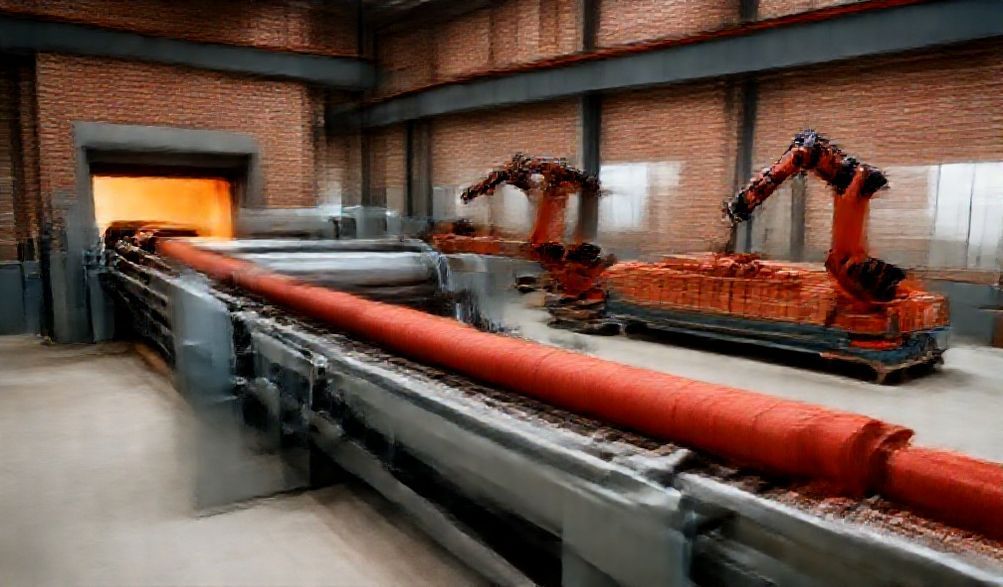
Die Volledige Gids vir Kleibaksteenvervaardigingsmasjiene: Binne die FUDA Baksteenvervaardigingsfabriek
Inleiding
Vir millennia het kleistene die letterlike en figuurlike grondslag van die menslike beskawing gevorm, van antieke ziggoerats tot moderne wolkekrabbers. Hulle blywende aantrekkingskrag lê in hul sterkte, termiese massa en tydlose estetika. Maar agter elke duursame steen lê 'n verhaal van moderne ingenieurswese en presiese vervaardiging. Vandag het die kuns van steenvervaardiging ontwikkel tot 'n gesofistikeerde wetenskap, aangedryf deur gevorderdekleistene baksteen maakmasjienewat konsekwentheid, gehalte en doeltreffendheid op groot skaal verseker.
Hierdie omvattende gids delf diep in die wêreld van outomatiese baksteenproduksie. Ons sal die masjinerie ondersoek wat rou grond in robuuste boustene omskep, met behulp van die bekendeFUDA baksteenvervaardigingsfabriekas 'n werklike gevallestudie van operasionele uitnemendheid. Die insigte hier is gegrond op bedryfskundigheid, tegniese spesifikasies en waarneembare fabriekspraktyke, wat u betroubare, uitvoerbare inligting verskaf.
Of jy nou 'n konstruksieprofessionele, 'n aspirant-entrepreneur of 'n bedryfsentoesias is, jy sal leer oor die kernproduksieproses, die tipes masjiene wat dit aandryf en die sleutelkenmerke wat betroubare toerusting definieer. Ons sluit af met 'n gedetailleerde blik op hoe 'n toonaangewende fabriek hierdie elemente integreer, wat 'n bloudruk vir doeltreffendheid en kwaliteit bied wat jou eie besluite kan inlig.
Verstaan Kleibaksteenproduksie: Van Rou Materiaal tot Voltooide Produk
Die reis van 'n kleiput na 'n pallet vol voltooide bakstene is 'n fassinerende wisselwerking van geologie, chemie en meganiese ingenieurswese. Om hierdie proses te verstaan is noodsaaklik om die rol en vereistes van die betrokke masjinerie te waardeer.
Die Belangrikste Rou Materiale: Kleiseleksie en Voorbereiding
Nie alle klei is gelyk geskape nie. Die kwaliteit van die finale baksteen is intrinsiek verbind aan die grondstof.
- Geskikte Kleisoorte:Die primêre klei wat gebruik word, is erdewerk (oppervlakklei) en vuurklei (skalie en dieper afsettings). Ideële baksteenklei bevat 'n mengsel van alumina (vir plastisiteit), silika (om krake te voorkom) en smeltmiddels soos ysteroksied (wat die klassieke rooi kleur tydens bak gee).
- Voorbereiding is die Sleutel:Rou klei is selde gereed om te vorm. Bedryfspraktyk toon dat behoorlike voorbereiding verskeie stappe behels:
- Verwering:Klei blootstel aan die elemente om knoppe af te breek en plastisiteit te verbeter.
- Verkruis & Maal:Masjiene verminder groot kleiklonte tot 'n fyn, eenvormige partikelgrootte.
- TemperWater word by die poeierklei in 'n menger gevoeg om 'n homogene, plastiese en werkbare konsekwentheid te verkry. Hierdie stap is krities om te verseker dat die klei-liggaam glad ekstrueer en stene sonder defekte vorm.
Kernfases in die Baksteenmaakproses
Die omskakeling van voorbereide klei in 'n geharde baksteen volg vier universele stadiums, wat elkeen spesifieke masjinerie vereis.
- Voorbereiding:Soos beskryf, behels dit grootte-vermindering en vermenging.
- Vorming:Die plastiese klei word deur ekstrusie of persing in die gewenste vorm (bv. solied, hol, geperforeer) gevorm.
- Droogmaak:“Groen” bakstene moet stadig en eweredig gedroog word om die voginhoud tot onder 5% te verminder, sodat krake en ontploffings in die oond voorkom word.
- Afvuur/UithardingDit is die vitrifikasie stadium, waar stene in 'n oond tot temperature tussen 900°C en 1200°C verhit word. Hierdie proses verhard hulle onomkeerbaar, wat hul finale sterkte, kleur en duursaamheid ontwikkel.
Tipes Kleisteen Maak Masjiene: 'n Oorsig
Die vlak van outomatisering bepaal die skaal, uitset en arbeidsintensiteit van 'n steenmaakbedryf. Om die regte tipe te kies, is die eerste groot besluit vir enige vervaardiger.
Handmatige, Semi-Automatiese en Volle Outomatiese Masjiene
- Handmatige Masjiene:Hierdie is eenvoudige, handgedrewe of enkelkrag-eenheidmasjiene soos tafelvorms of klein ekstrudeerders. Hulle het 'n baie lae uitset (enkele honderde stene per dag) en hoë arbeidsintensiteit. Hulle is geskik vir kleinskaalse, kunsmatige of gemeenskapsgebaseerde projekte met minimale kapitaal.
- Halfoutomatiese Masjiene:Hierdie kategorie oorbrug die gaping deur die kernvorm- en snyprosesse te outomatiseer, maar vereis steeds handmatige hantering vir droging en die stel van die oond. Dit bied ’n aansienlike verhoging in uitset (2 000-10 000 stene per dag) met ’n matige belegging en is ’n algemene keuse vir klein tot medium ondernemings (KMO’s).
- Volledig Outomatiese Masjiene: These represent the industrial standard, as seen in large factories. The entire process—from material feeding to molding, cutting, stacking, and sometimes even loading into the kiln—is automated via programmable logic controllers (PLCs). They offer the highest output (20,000+ bricks per day), consistent quality, and reduced labor costs, but require a substantial initial investment and technical know-how.
Key Machine Types in a Production Line
A modern production line is a symphony of specialized equipment.
- Clay Crusher and Mixer: The line starts here. A crusher (like a roller crusher or jaw crusher) breaks down hard clay. The mixer, often a double-shaft mixer or pug mill, then blends clay with water and additives to create a perfectly tempered body.
- Brick Molding Machine: The heart of shaping. For clay bricks, extrusion molding is predominant. A vacuum extruder removes air from the clay, compresses it, and forces it through a die to create a continuous column of clay in the desired profile (solid or hollow).
- Brick Cutter: This forms the individual brick. An automatic wire cutter or multi-wire cutter slices the extruded clay column into precise “green brick” lengths with clean edges. More advanced systems integrate robotic handling.
- Dryer and Kiln/Firing System: The hardening duo. Automated dryer chambers use controlled heat and humidity to dry bricks. The kiln, such as a highly efficient tunnel kiln or a traditional Hoffman kiln, then fires them. Modern tunnel kilns feature precise temperature zone control and heat recovery systems for maximum energy efficiency.
Inside the FUDA Brick Making Factory: A Model of Efficiency
Examining an established operation like the FUDA brick making factory provides invaluable, real-world insights into how theory translates into practice. Their success hinges on a philosophy that prioritizes systematic efficiency and uncompromising quality control.
FUDA’s Production Philosophy and Quality Standards
FUDA’s approach is built on predictability. Every brick must meet stringent internal and external standards (such as ASTM C62 or equivalent for building brick).
- Consistency & Dimensional Accuracy: Through precise machine calibration and process control, they ensure batch-to-batch uniformity in size, color, and texture. This is critical for builders, as consistent dimensions speed up construction and reduce mortar use.
- Strength as a Benchmark: Compressive strength is a non-negotiable metric. Their process is fine-tuned to reliably produce bricks that exceed required strength grades, a direct result of optimal clay preparation, extrusion density, and firing curve control.
- Integrated Quality Control: Quality is not just checked at the end. In operational environments like FUDA’s, checks occur at multiple stages: raw material testing, monitoring of the green brick extrusion, moisture checks post-drying, and final inspection of fired bricks for cracks, ringing sound, and color.
A Walkthrough of the FUDA Automated Production Line
A walk through their facility demonstrates a seamless material flow:
- Raw Material Intake & Primary Crushing: Tested clay is fed into a primary crushing system.
- Automated Tempering Line: The clay moves via conveyor to a series of secondary crushers and then into a high-capacity double-shaft mixer for precise water addition.
- Vacuum Extrusion & Cutting: The tempered clay enters a high-pressure vacuum extruder. The de-aired, dense clay column is extruded and cleanly cut by a synchronized automatic wire cutter.
- Robotic Handling & Setting: Robotic brick setters or automated setting machines carefully place green bricks onto dryer cars, maximizing space and minimizing damage.
- Automated Drying & Firing: Bricks pass through a computer-controlled dryer and then into a modern tunnel kiln. Energy-efficient firing technology with recuperators preheats combustion air using waste heat from the cooling zone.
- Sorting & Palletizing: After cooling, bricks are automatically unloaded, sorted, and palletized by robotic arms for shipment.
This integration of automated material handlingenprocess control systems minimizes human error, maximizes throughput, and ensures a superior final product.
Key Features to Look for in a Modern Clay Brick Machine
When evaluating equipment, whether for a startup or an expansion, focus on these critical aspects that separate reliable workhorses from problematic machinery.
Productivity and Output Specifications
- Kapasiteit: Clearly defined output (e.g., bricks per hour for an 8-hour shift). Match this to your business plan.
- Kragvereistes: Understand the total connected load (in kW) to ensure your facility’s electrical infrastructure can support it.
- Outomatiseringsvlak: Assess the PLC control system. A user-friendly human-machine interface (HMI) for parameter adjustment and fault diagnosis is a sign of a modern machine.
Durability, Maintenance, and After-Sales Support
This is where long-term value is determined. As demonstrated in production facilities like FUDA, durability is paramount.
- Robust Konstruksie: Look for heavy-duty frames, wear-resistant liners in mixers and extruders (e.g., alloy steel), and high-quality gears and bearings.
- Gemak van Instandhouding: Designs that allow for easy access to wear parts for inspection and replacement drastically reduce downtime.
- After-Sales Ecosystem: A reputable supplier offers comprehensive technical support, readily available spare partsenon-site or virtual training. This support network is a key reason factories succeed and is a non-negotiable in your supplier vetting process.
Choosing the Right Machine for Your Needs: A Buyer’s Checklist
Selecting machinery is a strategic decision. Use this framework to align your investment with your goals.
Assessing Your Project Scale and Budget
- Startup/Small Scale: A semi-automatic line with a basic extruder, cutter, and a small periodic kiln (like a shuttle kiln) may be ideal. Focus on simplicity and lower capital outlay.
- Medium-Scale Expansion: A more integrated semi-automatic or entry-level automatic line with a tunnel dryer and a small tunnel kiln offers a balance of output and automation.
- Large Industrial Production: A fully automatic plant with robotic handling, high-capacity extruders, and a long tunnel kiln is necessary. The budget must account for the machinery, installation, and a significant civil works foundation.
Questions to Ask Manufacturers and Suppliers
Arm yourself with these questions to cut through sales pitches:
Technical Questions:
* “What is the expected wear life of the extruder auger and liner, and what is the cost and lead time for these spare parts?”
* “Can you provide the detailed firing curve recommended for our local clay with your kiln?”
* “What is the power consumption (kWh) per 1,000 bricks produced on this specific line configuration?”
* “Does the control system provide data logging for process parameters?”
Commercial & Support Questions:
* “What is included in the delivery (FOB, CIF)? Does installation and commissioning require separate fees?”
* “Can you provide references from clients in a similar climate or using similar clay?”
* “What is the structure of your after-sales service? Do you have local technicians or partners?”
* “Do you offer training on operation and maintenance, and is it on-site or at your factory?”
Frequently Asked Questions (FAQ) About Clay Brick Machines
Q1: What is the average cost of setting up a clay brick making plant with machines like those at FUDA?
Costs vary dramatically with scale and automation. A small semi-automatic plant can start from $50,000 – $150,000. A medium-scale automatic line may range from $200,000 to $500,000. A full-scale, high-capacity automated factory like FUDA’s can represent a multi-million dollar investment, encompassing machinery, the kiln structure, land, and buildings.
Q2: What is the difference between fly ash brick machines and traditional clay brick machines?
The core difference is the raw material and curing process. Fly ash bricks use fly ash (a coal combustion byproduct), lime, and gypsum, and are cured by steam pressure (autoclaving). Clay brick machines process natural clay and shale, and the bricks are hardened by high-temperature firing in a kiln. The machinery for mixing and molding differs to handle these distinct material properties.
Q3: How energy-efficient are modern brick firing kilns used in factories?
Modern tunnel kilns are highly efficient. They employ heat recovery systems that capture waste heat from the cooling bricks to preheat combustion air and even pre-dry green bricks. This energy-efficient firing technology can reduce fuel consumption by 30-50% compared to older kiln designs, making the firing process more sustainable and cost-effective.
Q4: Can clay brick making machines produce different sizes and types of bricks (e.g., perforated, hollow)?
Yes, absolutely. This is determined by the extrusion die (mold) installed on the machine. By changing the die, the same extruder can produce solid, hollow, perforated, or even specially shaped bricks. The cutter is then adjusted to match the new brick length.
Q5: What kind of after-sales service and training should I expect from a reputable machine supplier?
You should expect a clear service agreement. This typically includes detailed machine manuals, initial installation supervision and commissioning, comprehensive on-site training for your operators and maintenance staff, a warranty period (e.g., 12 months), and a reliable supply chain for genuine spare parts. Many top suppliers also offer remote diagnostic support.
Conclusion
Kies die regtekleistene baksteen maakmasjiene is a critical investment that forms the foundation of your entire operation. It requires a clear understanding of the production process, the spectrum of available machinery, and the features that ensure long-term productivity and reliability. This decision hinges not just on specifications, but on the proven expertise and support behind the equipment.
As we have seen through this guide, studying established and authoritative operations like the FUDA baksteenvervaardigingsfabriek provides an invaluable benchmark. Their integration of automated production lines, rigorous quality control, and energy-efficient practices illustrates the pinnacle of modern brick manufacturing. Let their model of efficiency guide your standards.
Final Call-to-Action: Before making a commitment, conduct thorough research. Prioritize suppliers who encourage factory visits or live demonstrations of their equipment. Ask the detailed questions outlined here and request client references. By choosing a partner with transparent processes and proven expertise, you ensure that your brick making venture is built on the most solid foundation possible.
<