
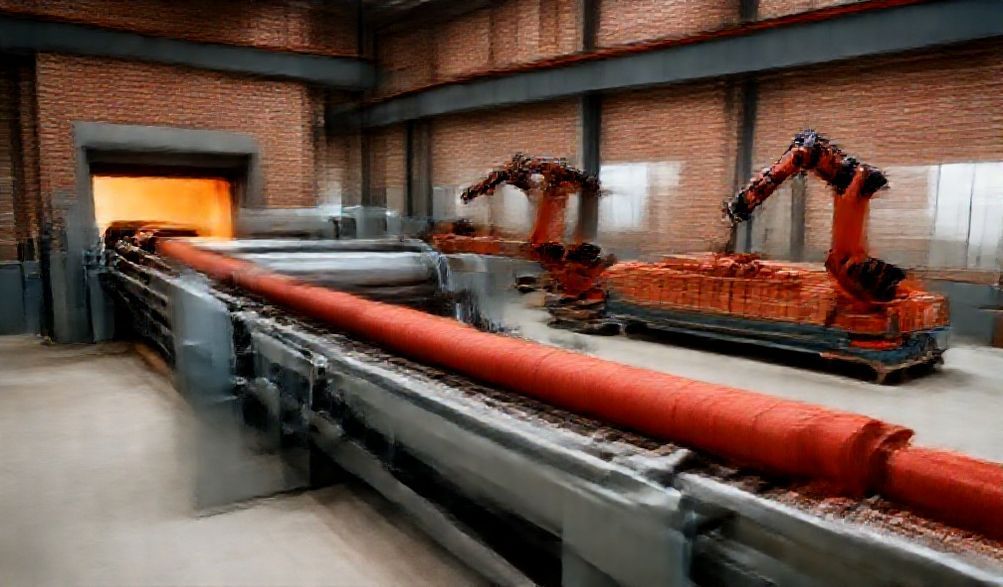
Guía Completa de Máquinas para Fabricar Ladrillos de Arcilla: Dentro de la Fábrica de Ladrillos FUDA
Introducción
Durante milenios, los ladrillos de arcilla han formado la base literal y figurativa de la civilización humana, desde los antiguos zigurats hasta los rascacielos modernos. Su atractivo perdurable radica en su resistencia, masa térmica y estética atemporal. Pero detrás de cada ladrillo duradero hay una historia de ingeniería moderna y fabricación precisa. Hoy, el arte de fabricar ladrillos ha evolucionado hacia una ciencia sofisticada, impulsada por tecnologías avanzadas.Máquinas para fabricar ladrillos de arcilla.que aseguran consistencia, calidad y eficiencia a gran escala.
Esta guía integral profundiza en el mundo de la producción automatizada de ladrillos. Exploraremos la maquinaria que transforma la tierra cruda en robustos bloques de construcción, utilizando la renombradaFábrica de ladrillos FUDAcomo un estudio de caso del mundo real sobre excelencia operacional. Las perspectivas aquí presentadas están fundamentadas en la experiencia de la industria, especificaciones técnicas y prácticas observables en fábricas, proporcionándole información confiable y accionable.
Ya sea que seas un profesional de la construcción, un emprendedor en ciernes o un entusiasta de la industria, aprenderás sobre el proceso central de producción, los tipos de máquinas que lo impulsan y las características clave que definen un equipo confiable. Culminamos con una mirada detallada a cómo una fábrica líder integra estos elementos, ofreciendo un modelo de eficiencia y calidad que puede informar tus propias decisiones.
Comprensión de la Producción de Ladrillos de Arcilla: Desde la Materia Prima hasta el Producto Terminado
El viaje desde una cantera de arcilla hasta un palé de ladrillos terminados es una fascinante interacción de geología, química e ingeniería mecánica. Comprender este proceso es esencial para apreciar la función y los requisitos de la maquinaria involucrada.
Los Materiales Crudos Esenciales: Selección y Preparación de la Arcilla
No toda la arcilla se crea igual. La calidad del ladrillo final está intrínsecamente ligada a la materia prima.
- Tipos de Arcilla Adecuados:Las arcillas primarias utilizadas son la arcilla de alfarería (arcillas superficiales) y la arcilla refractaria (esquistos y depósitos más profundos). La arcilla ideal para ladrillos contiene una mezcla de alúmina (para plasticidad), sílice (para evitar grietas) y fundentes como el óxido de hierro (que da el clásico color rojo durante la cocción).
- La preparación es clave:La arcilla cruda rara vez está lista para moldear. La práctica industrial muestra que la preparación adecuada implica varios pasos:
- Meteorización:Exponer la arcilla a los elementos para deshacer los terrones y mejorar la plasticidad.
- Trituración y Molienda:Las máquinas reducen terrones grandes de arcilla a un tamaño de partícula fino y uniforme.
- Templado:Se añade agua a la arcilla en polvo en una mezcladora para lograr una consistencia homogénea, plástica y trabajable. Este paso es fundamental para asegurar que la pasta de arcilla se extruya suavemente y forme ladrillos sin defectos.
Etapas Clave en el Proceso de Fabricación de Ladrillos
La transformación de la arcilla preparada en un ladrillo endurecido sigue cuatro etapas universales, cada una requiriendo maquinaria específica:
- Preparación:Como se ha descrito, esto implica la reducción de tamaño y la mezcla.
- Moldeo:La arcilla plástica se moldea en la forma deseada (por ejemplo, sólida, hueca, perforada) mediante extrusión o prensado.
- Secado:Los ladrillos "verdes" deben secarse lenta y uniformemente para reducir su contenido de humedad por debajo del 5%, evitando grietas y explosiones en el horno.
- Cocción/ Curado:Esta es la etapa de vitrificación, donde los ladrillos se calientan a temperaturas entre 900 °C y 1200 °C en un horno. Este proceso los endurece irreversiblemente, desarrollando su resistencia, color y durabilidad finales.
Tipos de Máquinas para Fabricar Ladrillos de Arcilla: Una Visión General
El nivel de automatización define la escala, la producción y la intensidad laboral de una operación de fabricación de ladrillos. Elegir el tipo adecuado es la primera gran decisión para cualquier fabricante.
Máquinas Manuales, Semiautomáticas y Automáticas
- Máquinas Manuales:Son máquinas simples, operadas manualmente o con una sola unidad de potencia, como moldes de mesa o pequeñas extrusoras. Tienen una producción muy baja (unos cientos de ladrillos al día) y una alta intensidad laboral. Son adecuadas para proyectos a pequeña escala, artesanales o comunitarios con un capital mínimo.
- Máquinas Semiautomáticas:Esta categoría cierra la brecha, automatizando los procesos principales de moldeado y corte, pero requiriendo manejo manual para el secado y la preparación del horno. Ofrecen un aumento significativo en la producción (2,000-10,000 ladrillos por día) con una inversión moderada y son una opción común para pequeñas y medianas empresas (PYMEs).
- Máquinas Completamente Automáticas:Estos representan el estándar industrial, como se ve en grandes fábricas. Todo el proceso, desde la alimentación de material hasta el moldeo, corte, apilado y, a veces, incluso la carga en el horno, está automatizado mediante controladores lógicos programables (PLC). Ofrecen la mayor producción (más de 20,000 ladrillos al día), calidad consistente y costos laborales reducidos, pero requieren una inversión inicial sustancial y conocimientos técnicos.
Tipos Clave de Máquinas en una Línea de Producción
Una línea de producción moderna es una sinfonía de equipos especializados.
- Trituradora y Mezcladora de Arcilla. The line starts here. A crusher (like a roller crusher or jaw crusher) breaks down hard clay. The mixer, often a double-shaft mixer or pug mill, then blends clay with water and additives to create a perfectly tempered body.
- Brick Molding Machine: The heart of shaping. For clay bricks, extrusion molding is predominant. A vacuum extruder removes air from the clay, compresses it, and forces it through a die to create a continuous column of clay in the desired profile (solid or hollow).
- Brick Cutter: This forms the individual brick. An automatic wire cutter or multi-wire cutter slices the extruded clay column into precise “green brick” lengths with clean edges. More advanced systems integrate robotic handling.
- Dryer and Kiln/Firing System: The hardening duo. Automated dryer chambers use controlled heat and humidity to dry bricks. The kiln, such as a highly efficient tunnel kiln or a traditional Hoffman kiln, then fires them. Modern tunnel kilns feature precise temperature zone control and heat recovery systems for maximum energy efficiency.
Inside the FUDA Brick Making Factory: A Model of Efficiency
Examining an established operation like the FUDA brick making factory provides invaluable, real-world insights into how theory translates into practice. Their success hinges on a philosophy that prioritizes systematic efficiency and uncompromising quality control.
FUDA’s Production Philosophy and Quality Standards
FUDA’s approach is built on predictability. Every brick must meet stringent internal and external standards (such as ASTM C62 or equivalent for building brick).
- Consistency & Dimensional Accuracy: Through precise machine calibration and process control, they ensure batch-to-batch uniformity in size, color, and texture. This is critical for builders, as consistent dimensions speed up construction and reduce mortar use.
- Strength as a Benchmark: Compressive strength is a non-negotiable metric. Their process is fine-tuned to reliably produce bricks that exceed required strength grades, a direct result of optimal clay preparation, extrusion density, and firing curve control.
- Control de Calidad Integrado: Quality is not just checked at the end. In operational environments like FUDA’s, checks occur at multiple stages: raw material testing, monitoring of the green brick extrusion, moisture checks post-drying, and final inspection of fired bricks for cracks, ringing sound, and color.
A Walkthrough of the FUDA Automated Production Line
A walk through their facility demonstrates a seamless material flow:
- Raw Material Intake & Primary Crushing: Tested clay is fed into a primary crushing system.
- Automated Tempering Line: The clay moves via conveyor to a series of secondary crushers and then into a high-capacity double-shaft mixer for precise water addition.
- Vacuum Extrusion & Cutting: The tempered clay enters a high-pressure vacuum extruder. The de-aired, dense clay column is extruded and cleanly cut by a synchronized automatic wire cutter.
- Robotic Handling & Setting: Robotic brick setters or automated setting machines carefully place green bricks onto dryer cars, maximizing space and minimizing damage.
- Automated Drying & Firing: Bricks pass through a computer-controlled dryer and then into a modern tunnel kiln. Energy-efficient firing technology with recuperators preheats combustion air using waste heat from the cooling zone.
- Sorting & Palletizing: After cooling, bricks are automatically unloaded, sorted, and palletized by robotic arms for shipment.
This integration of automated material handlingyprocess control systems minimizes human error, maximizes throughput, and ensures a superior final product.
Key Features to Look for in a Modern Clay Brick Machine
When evaluating equipment, whether for a startup or an expansion, focus on these critical aspects that separate reliable workhorses from problematic machinery.
Productivity and Output Specifications
- Capacidad: Clearly defined output (e.g., bricks per hour for an 8-hour shift). Match this to your business plan.
- Requisitos de Energía: Understand the total connected load (in kW) to ensure your facility’s electrical infrastructure can support it.
- Nivel de Automatización: Assess the PLC control system. A user-friendly human-machine interface (HMI) for parameter adjustment and fault diagnosis is a sign of a modern machine.
Durability, Maintenance, and After-Sales Support
This is where long-term value is determined. As demonstrated in production facilities like FUDA, durability is paramount.
- Construcción Robusta: Look for heavy-duty frames, wear-resistant liners in mixers and extruders (e.g., alloy steel), and high-quality gears and bearings.
- Facilidad de Mantenimiento: Designs that allow for easy access to wear parts for inspection and replacement drastically reduce downtime.
- After-Sales Ecosystem: A reputable supplier offers comprehensive technical support, readily available spare partsyon-site or virtual training. This support network is a key reason factories succeed and is a non-negotiable in your supplier vetting process.
Choosing the Right Machine for Your Needs: A Buyer’s Checklist
Selecting machinery is a strategic decision. Use this framework to align your investment with your goals.
Assessing Your Project Scale and Budget
- Startup/Small Scale: A semi-automatic line with a basic extruder, cutter, and a small periodic kiln (like a shuttle kiln) may be ideal. Focus on simplicity and lower capital outlay.
- Medium-Scale Expansion: A more integrated semi-automatic or entry-level automatic line with a tunnel dryer and a small tunnel kiln offers a balance of output and automation.
- Large Industrial Production: A fully automatic plant with robotic handling, high-capacity extruders, and a long tunnel kiln is necessary. The budget must account for the machinery, installation, and a significant civil works foundation.
Questions to Ask Manufacturers and Suppliers
Arm yourself with these questions to cut through sales pitches:
Technical Questions:
* “What is the expected wear life of the extruder auger and liner, and what is the cost and lead time for these spare parts?”
* “Can you provide the detailed firing curve recommended for our local clay with your kiln?”
* “What is the power consumption (kWh) per 1,000 bricks produced on this specific line configuration?”
* “Does the control system provide data logging for process parameters?”
Commercial & Support Questions:
* “What is included in the delivery (FOB, CIF)? Does installation and commissioning require separate fees?”
* “Can you provide references from clients in a similar climate or using similar clay?”
* “What is the structure of your after-sales service? Do you have local technicians or partners?”
* “Do you offer training on operation and maintenance, and is it on-site or at your factory?”
Frequently Asked Questions (FAQ) About Clay Brick Machines
Q1: What is the average cost of setting up a clay brick making plant with machines like those at FUDA?
Costs vary dramatically with scale and automation. A small semi-automatic plant can start from $50,000 – $150,000. A medium-scale automatic line may range from $200,000 to $500,000. A full-scale, high-capacity automated factory like FUDA’s can represent a multi-million dollar investment, encompassing machinery, the kiln structure, land, and buildings.
Q2: What is the difference between fly ash brick machines and traditional clay brick machines?
The core difference is the raw material and curing process. Fly ash bricks use fly ash (a coal combustion byproduct), lime, and gypsum, and are cured by steam pressure (autoclaving). Clay brick machines process natural clay and shale, and the bricks are hardened by high-temperature firing in a kiln. The machinery for mixing and molding differs to handle these distinct material properties.
Q3: How energy-efficient are modern brick firing kilns used in factories?
Modern tunnel kilns are highly efficient. They employ heat recovery systems that capture waste heat from the cooling bricks to preheat combustion air and even pre-dry green bricks. This energy-efficient firing technology can reduce fuel consumption by 30-50% compared to older kiln designs, making the firing process more sustainable and cost-effective.
Q4: Can clay brick making machines produce different sizes and types of bricks (e.g., perforated, hollow)?
Yes, absolutely. This is determined by the extrusion die (mold) installed on the machine. By changing the die, the same extruder can produce solid, hollow, perforated, or even specially shaped bricks. The cutter is then adjusted to match the new brick length.
Q5: What kind of after-sales service and training should I expect from a reputable machine supplier?
You should expect a clear service agreement. This typically includes detailed machine manuals, initial installation supervision and commissioning, comprehensive on-site training for your operators and maintenance staff, a warranty period (e.g., 12 months), and a reliable supply chain for genuine spare parts. Many top suppliers also offer remote diagnostic support.
Conclusión
Choosing the right Máquinas para fabricar ladrillos de arcilla. is a critical investment that forms the foundation of your entire operation. It requires a clear understanding of the production process, the spectrum of available machinery, and the features that ensure long-term productivity and reliability. This decision hinges not just on specifications, but on the proven expertise and support behind the equipment.
As we have seen through this guide, studying established and authoritative operations like the Fábrica de ladrillos FUDA provides an invaluable benchmark. Their integration of automated production lines, rigorous quality control, and energy-efficient practices illustrates the pinnacle of modern brick manufacturing. Let their model of efficiency guide your standards.
Final Call-to-Action: Before making a commitment, conduct thorough research. Prioritize suppliers who encourage factory visits or live demonstrations of their equipment. Ask the detailed questions outlined here and request client references. By choosing a partner with transparent processes and proven expertise, you ensure that your brick making venture is built on the most solid foundation possible.
<