
Полное руководство по машинам для производства глиняных кирпичей: Внутри кирпичного завода FUDA
Введение
На протяжении тысячелетий глиняные кирпичи составляли как буквальный, так и символический фундамент человеческой цивилизации — от древних зиккуратов до современных небоскребов. Их непреходящая привлекательность заключается в прочности, теплоемкости и вневременной эстетике. Но за каждым долговечным кирпичом стоит история современной инженерии и точного производства. Сегодня искусство изготовления кирпичей превратилось в сложную науку, движимую передовымиМашины для производства глиняных кирпичейкоторые обеспечивают согласованность, качество и эффективность в масштабе.
Это подробное руководство погружает в мир автоматизированного производства кирпича. Мы рассмотрим оборудование, которое превращает сырую землю в прочные строительные блоки, используя известнуюФабрика по производству кирпича FUDAкак реальный пример операционного совершенства. Представленные здесь выводы основаны на отраслевой экспертизе, технических спецификациях и наблюдаемых производственных практиках, что обеспечивает вас достоверной и применимой на практике информацией.
Будь вы специалистом в строительной сфере, начинающим предпринимателем или просто увлеченным отраслевым энтузиастом, вы узнаете об основном производственном процессе, типах машин, которые его обеспечивают, и ключевых характеристиках, определяющих надежное оборудование. В завершение мы подробно рассмотрим, как передовой завод объединяет эти элементы, предлагая модель эффективности и качества, которая может стать основой для ваших собственных решений.
Понимание производства глиняного кирпича: от сырья до готового продукта
Путь от глиняного карьера до поддона готового кирпича — это увлекательное взаимодействие геологии, химии и машиностроения. Понимание этого процесса необходимо для оценки роли и требований к задействованному оборудованию.
Основные сырьевые материалы: выбор и подготовка глины
Не вся глина одинакова. Качество готового кирпича напрямую зависит от исходного сырья.
- Подходящие типы глины:Основными используемыми глинами являются гончарная (поверхностные глины) и огнеупорная (сланцы и глубокие залежи). Идеальная кирпичная глина содержит смесь глинозёма (для пластичности), кремнезёма (чтобы предотвратить растрескивание) и флюсов, таких как оксид железа (который при обжиге придаёт классический красный цвет).
- Подготовка — ключ к успеху:Сырая глина редко бывает готова к формовке. Отраслевая практика показывает, что правильная подготовка включает несколько этапов:
- Выветривание:Выдерживание глины под воздействием погодных условий для разрушения комков и повышения пластичности.
- Дробление и измельчение:Машины измельчают крупные комья глины до мелкого, однородного размера частиц.
- Закалка:В порошковую глину в смесителе добавляют воду для достижения однородной, пластичной и удобоукладываемой консистенции. Этот этап критически важен для обеспечения гладкого экструдирования глиняной массы и формирования кирпичей без дефектов.
Основные этапы процесса изготовления кирпича
Превращение подготовленной глины в затвердевший кирпич проходит через четыре универсальных этапа, каждый из которых требует специального оборудования:
- Подготовка:Как описано, это включает уменьшение размера и смешивание.
- Формование:Пластичная глина формуется в желаемую форму (например, сплошную, полую, перфорированную) методом экструзии или прессования.
- Сушка:«Зеленые» кирпичи должны сушиться медленно и равномерно, чтобы снизить влажность ниже 5% и предотвратить появление трещин и взрывов в печи.
- 烧成/固化:Это этап витрификации, на котором кирпичи нагреваются в печи до температуры от 900°C до 1200°C. Данный процесс необратимо затвердевает их, формируя окончательную прочность, цвет и долговечность.
Обзор типов станков для изготовления глиняного кирпича
Уровень автоматизации определяет масштабы, объемы производства и трудоемкость процесса изготовления кирпича. Выбор подходящего типа автоматизации — первое ключевое решение для любого производителя.
Ручные, полуавтоматические и полностью автоматические машины
- Ручные станки:Это простые, ручные или односиловые машины, такие как настольные формы или небольшие экструдеры. Они имеют очень низкую производительность (несколько сотен кирпичей в день) и высокую трудоемкость. Они подходят для мелкомасштабных, кустарных или общинных проектов с минимальным капиталом.
- Полуавтоматические станки:Эта категория устраняет разрыв, автоматизируя основные процессы формовки и резки, но требует ручной обработки для сушки и укладки в печь. Такие системы значительно повышают производительность (2000–10 000 кирпичей в день) при умеренных инвестициях и часто выбираются малыми и средними предприятиями (МСП).
- Полностью автоматические машины:Это промышленный стандарт, применяемый на крупных заводах. Весь процесс — от подачи материала до формовки, резки, укладки, а иногда и загрузки в печь — автоматизирован с помощью программируемых логических контроллеров (ПЛК). Такие линии обеспечивают максимальную производительность (20 000+ кирпичей в день), стабильное качество и снижение затрат на рабочую силу, но требуют значительных первоначальных вложений и технических знаний.
Основные типы машин в производственной линии
现代生产线是专业化设备的交响曲。
- Глиномялка и смеситель:Линия начинается здесь. Дробилка (например, валковая или щековая) измельчает твердую глину. Затем смеситель, часто двухвальный или лопастной, смешивает глину с водой и добавками для получения идеально подготовленной массы.
- Формовочная машина для кирпичаСердце формовки. Для глиняных кирпичей.挤压成型преобладает. Вакуумный экструдер удаляет воздух из глины, сжимает ее и продавливает через матрицу, создавая непрерывную колонну глины заданного профиля (сплошного или полого).
- Brick Cutter: This forms the individual brick. An automatic wire cutter or multi-wire cutter slices the extruded clay column into precise “green brick” lengths with clean edges. More advanced systems integrate robotic handling.
- Dryer and Kiln/Firing System: The hardening duo. Automated dryer chambers use controlled heat and humidity to dry bricks. The kiln, such as a highly efficient tunnel kiln or a traditional Hoffman kiln, then fires them. Modern tunnel kilns feature precise temperature zone control and heat recovery systems for maximum energy efficiency.
Inside the FUDA Brick Making Factory: A Model of Efficiency
Examining an established operation like the FUDA brick making factory provides invaluable, real-world insights into how theory translates into practice. Their success hinges on a philosophy that prioritizes systematic efficiency and uncompromising quality control.
FUDA’s Production Philosophy and Quality Standards
FUDA’s approach is built on predictability. Every brick must meet stringent internal and external standards (such as ASTM C62 or equivalent for building brick).
- Consistency & Dimensional Accuracy: Through precise machine calibration and process control, they ensure batch-to-batch uniformity in size, color, and texture. This is critical for builders, as consistent dimensions speed up construction and reduce mortar use.
- Strength as a Benchmark: Compressive strength is a non-negotiable metric. Their process is fine-tuned to reliably produce bricks that exceed required strength grades, a direct result of optimal clay preparation, extrusion density, and firing curve control.
- Integrated Quality Control: Quality is not just checked at the end. In operational environments like FUDA’s, checks occur at multiple stages: raw material testing, monitoring of the green brick extrusion, moisture checks post-drying, and final inspection of fired bricks for cracks, ringing sound, and color.
A Walkthrough of the FUDA Automated Production Line
A walk through their facility demonstrates a seamless material flow:
- Raw Material Intake & Primary Crushing: Tested clay is fed into a primary crushing system.
- Automated Tempering Line: The clay moves via conveyor to a series of secondary crushers and then into a high-capacity double-shaft mixer for precise water addition.
- Vacuum Extrusion & Cutting: The tempered clay enters a high-pressure vacuum extruder. The de-aired, dense clay column is extruded and cleanly cut by a synchronized automatic wire cutter.
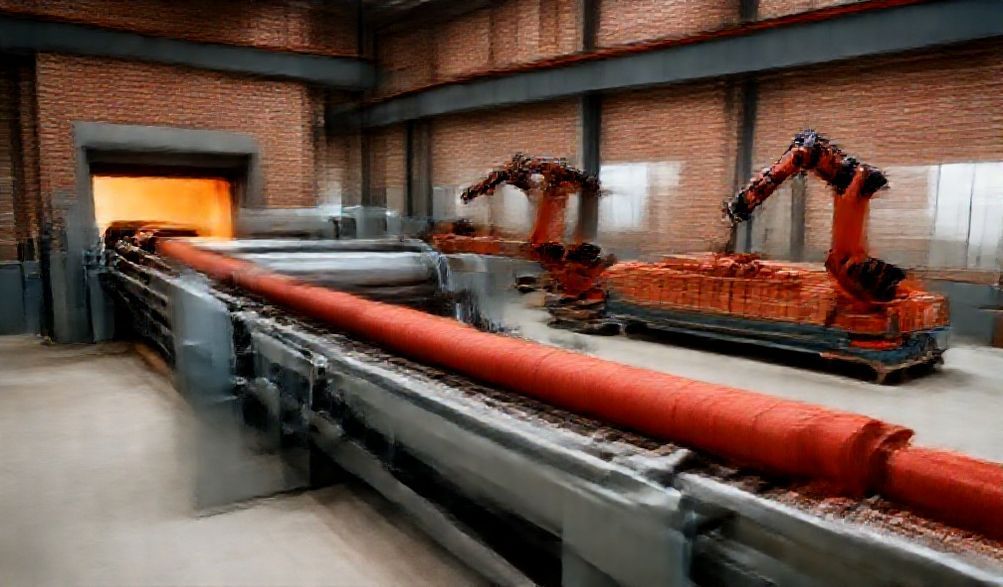
- Robotic Handling & Setting: Robotic brick setters or automated setting machines carefully place green bricks onto dryer cars, maximizing space and minimizing damage.
- Automated Drying & Firing: Bricks pass through a computer-controlled dryer and then into a modern tunnel kiln. Energy-efficient firing technology with recuperators preheats combustion air using waste heat from the cooling zone.
- Sorting & Palletizing: After cooling, bricks are automatically unloaded, sorted, and palletized by robotic arms for shipment.
This integration of automated material handlingиprocess control systems minimizes human error, maximizes throughput, and ensures a superior final product.
Key Features to Look for in a Modern Clay Brick Machine
When evaluating equipment, whether for a startup or an expansion, focus on these critical aspects that separate reliable workhorses from problematic machinery.
Productivity and Output Specifications
- Вместимость: Clearly defined output (e.g., bricks per hour for an 8-hour shift). Match this to your business plan.
- Требования к питанию: Understand the total connected load (in kW) to ensure your facility’s electrical infrastructure can support it.
- Уровень автоматизации: Assess the PLC control system. A user-friendly human-machine interface (HMI) for parameter adjustment and fault diagnosis is a sign of a modern machine.
Durability, Maintenance, and After-Sales Support
This is where long-term value is determined. As demonstrated in production facilities like FUDA, durability is paramount.
- Прочная конструкция: Look for heavy-duty frames, wear-resistant liners in mixers and extruders (e.g., alloy steel), and high-quality gears and bearings.
- Простота обслуживания: Designs that allow for easy access to wear parts for inspection and replacement drastically reduce downtime.
- After-Sales Ecosystem: A reputable supplier offers comprehensive technical support, readily available spare partsиon-site or virtual training. This support network is a key reason factories succeed and is a non-negotiable in your supplier vetting process.
Choosing the Right Machine for Your Needs: A Buyer’s Checklist
Selecting machinery is a strategic decision. Use this framework to align your investment with your goals.
Assessing Your Project Scale and Budget
- Startup/Small Scale: A semi-automatic line with a basic extruder, cutter, and a small periodic kiln (like a shuttle kiln) may be ideal. Focus on simplicity and lower capital outlay.
- Medium-Scale Expansion: A more integrated semi-automatic or entry-level automatic line with a tunnel dryer and a small tunnel kiln offers a balance of output and automation.
- Large Industrial Production: A fully automatic plant with robotic handling, high-capacity extruders, and a long tunnel kiln is necessary. The budget must account for the machinery, installation, and a significant civil works foundation.
Questions to Ask Manufacturers and Suppliers
Arm yourself with these questions to cut through sales pitches:
Technical Questions:
* “What is the expected wear life of the extruder auger and liner, and what is the cost and lead time for these spare parts?”
* “Can you provide the detailed firing curve recommended for our local clay with your kiln?”
* “What is the power consumption (kWh) per 1,000 bricks produced on this specific line configuration?”
* “Does the control system provide data logging for process parameters?”
Commercial & Support Questions:
* “What is included in the delivery (FOB, CIF)? Does installation and commissioning require separate fees?”
* “Can you provide references from clients in a similar climate or using similar clay?”
* “What is the structure of your after-sales service? Do you have local technicians or partners?”
* “Do you offer training on operation and maintenance, and is it on-site or at your factory?”
Frequently Asked Questions (FAQ) About Clay Brick Machines
Q1: What is the average cost of setting up a clay brick making plant with machines like those at FUDA?
Costs vary dramatically with scale and automation. A small semi-automatic plant can start from $50,000 – $150,000. A medium-scale automatic line may range from $200,000 to $500,000. A full-scale, high-capacity automated factory like FUDA’s can represent a multi-million dollar investment, encompassing machinery, the kiln structure, land, and buildings.
Q2: What is the difference between fly ash brick machines and traditional clay brick machines?
The core difference is the raw material and curing process. Fly ash bricks use fly ash (a coal combustion byproduct), lime, and gypsum, and are cured by steam pressure (autoclaving). Clay brick machines process natural clay and shale, and the bricks are hardened by high-temperature firing in a kiln. The machinery for mixing and molding differs to handle these distinct material properties.
Q3: How energy-efficient are modern brick firing kilns used in factories?
Modern tunnel kilns are highly efficient. They employ heat recovery systems that capture waste heat from the cooling bricks to preheat combustion air and even pre-dry green bricks. This energy-efficient firing technology can reduce fuel consumption by 30-50% compared to older kiln designs, making the firing process more sustainable and cost-effective.
Q4: Can clay brick making machines produce different sizes and types of bricks (e.g., perforated, hollow)?
Yes, absolutely. This is determined by the extrusion die (mold) installed on the machine. By changing the die, the same extruder can produce solid, hollow, perforated, or even specially shaped bricks. The cutter is then adjusted to match the new brick length.
Q5: What kind of after-sales service and training should I expect from a reputable machine supplier?
You should expect a clear service agreement. This typically includes detailed machine manuals, initial installation supervision and commissioning, comprehensive on-site training for your operators and maintenance staff, a warranty period (e.g., 12 months), and a reliable supply chain for genuine spare parts. Many top suppliers also offer remote diagnostic support.
Заключение
Choosing the right Машины для производства глиняных кирпичей is a critical investment that forms the foundation of your entire operation. It requires a clear understanding of the production process, the spectrum of available machinery, and the features that ensure long-term productivity and reliability. This decision hinges not just on specifications, but on the proven expertise and support behind the equipment.
As we have seen through this guide, studying established and authoritative operations like the Фабрика по производству кирпича FUDA provides an invaluable benchmark. Their integration of automated production lines, rigorous quality control, and energy-efficient practices illustrates the pinnacle of modern brick manufacturing. Let their model of efficiency guide your standards.
Final Call-to-Action: Before making a commitment, conduct thorough research. Prioritize suppliers who encourage factory visits or live demonstrations of their equipment. Ask the detailed questions outlined here and request client references. By choosing a partner with transparent processes and proven expertise, you ensure that your brick making venture is built on the most solid foundation possible.
<