
점토 벽돌 제작 기계 완벽 가이드: 푸다 벽돌 제작 공장 내부 탐방
소개
수천 년 동안, 점토 벽돌은 고대 지구라트에서 현대 마천루에 이르기까지 문자 그대로 그리고 상징적으로 인류 문명의 기초를 이루어왔습니다. 그들의 지속적인 매력은 강도, 열용량, 그리고 시대를 초월한 미학에 있습니다. 그러나 내구성 있는 벽돌 하나하나 뒤에는 현대 공학과 정밀한 제조의 이야기가 있습니다. 오늘날 벽돌 제조의 기술은 첨단 기술로 추진되는 정교한 과학으로 진화했습니다.점토 벽돌 제조 기계규모에 맞는 일관성, 품질 및 효율성을 보장하는 것.
이 포괄적인 가이드는 자동화된 벽돌 생산의 세계를 깊이 있게 탐구합니다. 우리는 원료인 흙을 튼튼한 건축 자재로 변환하는 기계 장비를 살펴보며, 특히 유명한푸다 벽돌 제조 공장운영 우수성의 실제 사례 연구로서, 여기 담긴 통찰은 산업 전문 지식, 기술 사양, 그리고 관찰 가능한 공장 관행에 기반하여 신뢰할 수 있고 실행 가능한 정보를 제공합니다.
건설 전문가, 야심 찬 기업가, 또는 업계 애호가이든 상관없이, 여러분은 핵심 생산 공정, 이를 움직이는 기계의 종류, 그리고 신뢰할 수 있는 장비를 정의하는 주요 특징에 대해 배우게 될 것입니다. 마지막으로 선도적인 공장이 이러한 요소들을 어떻게 통합하는지 자세히 살펴보며, 효율성과 품질을 위한 청사진을 제시함으로써 여러분의 의사 결정에 도움을 드리겠습니다.
점토 벽돌 생산 이해: 원자재에서 완제품까지
점토 채굴장에서 완성된 벽돌 팔레트까지의 여정은 지질학, 화학, 기계 공학의 흥미로운 상호작용입니다. 이 과정을 이해하는 것은 관련 기계의 역할과 요구 사항을 제대로 평가하는 데 필수적입니다.
필수 원재료: 점토 선택과 준비 과정
모든 점토가 동등하게 만들어진 것은 아닙니다. 최종 벽돌의 품질은 원자재와 본질적으로 연결되어 있습니다.
- 적합한 점토 종류:주로 사용되는 점토는 토기용 점토(표면 점토)와 내화 점토(셰일 및 심층 퇴적물)입니다. 이상적인 벽돌 점토는 알루미나(가소성 부여), 실리카(균열 방지), 산화철과 같은 융제(소성 시 고전적인 붉은 색을 냄)의 혼합물을 포함합니다.
- 준비가 핵심입니다:원점토는 성형 준비가 거의 되어 있지 않습니다. 업계 관행에 따르면 적절한 준비에는 여러 단계가 포함됩니다:
- 풍화 작용점토를 자연 환경에 노출시켜 덩어리를 분해하고 가소성을 향상시킵니다.
- 분쇄 및 분쇄:기계는 큰 점토 덩어리를 미세하고 균일한 입자 크기로 분쇄합니다.
- 템퍼링:믹서에 분말 점토에 물을 첨가하여 균질하고 가소성 있으며 작업 가능한 농도를 달성합니다. 이 단계는 점토가 원활하게 압출되고 결함 없이 벽돌을 형성하도록 보장하는 데 중요합니다.
벽돌 제조 공정의 핵심 단계
준비된 점토가 단단한 벽돌로 변환되는 과정은 네 가지 보편적 단계를 거치며, 각 단계마다 특정한 기계가 필요합니다.
- 준비설명된 바와 같이, 이는 크기 축소와 혼합을 포함합니다.
- 성형:플라스틱 점토는 압출 또는 프레싱을 통해 원하는 모양(예: 솔리드, 홀로우, 퍼포레이티드)으로 성형됩니다.
- 건조:"생벽돌"은 습도를 5% 이하로 줄이기 위해 천천히 균일하게 건조해야 하며, 이는 가마에서 균열과 폭발을 방지하기 위함입니다.
- 소성/경화이것은 비트리피케이션 단계로, 벽돌을 가마에서 900°C에서 1200°C 사이의 온도로 가열하는 과정입니다. 이 공정은 벽돌을 비가역적으로 경화시켜 최종 강도, 색상 및 내구성을 발달시킵니다.
점토 벽돌 제조 기계의 종류: 개요
자동화 수준은 벽돌 제조 작업의 규모, 생산량 및 노동 집약도를 결정합니다. 적절한 유형을 선택하는 것은 모든 제조업체의 첫 번째 주요 결정입니다.
수동, 반자동 및 완전 자동 기계
- 수동 기계:이것들은 테이블 몰드나 소형 압출기와 같은 간단한 수동 또는 단일 동력 장치 기계입니다. 이들은 매우 낮은 생산량(하루 수백 개의 벽돌)과 높은 노동 집약도를 가지고 있습니다. 최소한의 자본으로 소규모, 수공예 또는 지역사회 기반 프로젝트에 적합합니다.
- 반자동 기계:이 범주는 간극을 메우며, 코어 성형 및 절단 공정을 자동화하지만 건조 및 가마 설정에는 수동 작업이 필요합니다. 이는 중간 정도의 투자로 생산량(하루 2,000~10,000개 벽돌)을 크게 향상시키며, 중소기업에게 일반적인 선택지입니다.
- 완전 자동 기계:이는 대규모 공장에서 볼 수 있는 산업 표준을 대표합니다. 재료 투입부터 성형, 절단, 적층, 때로는 가마에 적재하는 전 과정이 프로그래머블 로직 컨트롤러(PLC)를 통해 자동화됩니다. 이 시스템은 최고의 생산량(하루 20,000개 이상의 벽돌), 일관된 품질, 인건비 절감을 제공하지만, 상당한 초기 투자와 기술적 노하우가 필요합니다.
생산 라인의 주요 기계 유형
현대 생산 라인은 특수 장비의 교향곡이다.
- 점토 분쇄 및 혼합기이 줄부터 시작됩니다. 분쇄기(롤러 크러셔나 조 크러셔 등)가 단단한 점토를 부수고, 혼합기(주로 이중 샤프트 믹서나 퍼그 밀)가 점토를 물과 첨가제와 섞어 완벽히 조정된 바디를 만듭니다.
- 벽돌 성형 기계:성형의 핵심. 점토 벽돌의 경우,압출 성형주를 이룬다. 진공 압출기는 점토에서 공기를 제거하고, 압축한 후, 다이를 통해 밀어내어 원하는 형태(단단하거나 속이 빈)의 연속적인 점토 기둥을 생성합니다.
- 벽돌 절단기:이렇게 하여 개별 벽돌이 형성됩니다. 자동 와이어 커터나 멀티 와이어 커터가 압출된 점토 기둥을 깨끗한 가장자리로 정확한 '반건조 벽돌' 길이로 자릅니다. 더 발전된 시스템은 로봇 핸들링을 통합합니다.
- 건조기 및 가마/소성 시스템:경화 듀오. 자동 건조실은 조절된 열과 습도를 사용하여 벽돌을 건조시킵니다. 고효율 가마와 같은tunnel kiln or a traditional Hoffman kiln, then fires them. Modern tunnel kilns feature precise temperature zone control and heat recovery systems for maximum energy efficiency.
Inside the FUDA Brick Making Factory: A Model of Efficiency
Examining an established operation like the FUDA brick making factory provides invaluable, real-world insights into how theory translates into practice. Their success hinges on a philosophy that prioritizes systematic efficiency and uncompromising quality control.
FUDA’s Production Philosophy and Quality Standards
FUDA’s approach is built on predictability. Every brick must meet stringent internal and external standards (such as ASTM C62 or equivalent for building brick).
- Consistency & Dimensional Accuracy: Through precise machine calibration and process control, they ensure batch-to-batch uniformity in size, color, and texture. This is critical for builders, as consistent dimensions speed up construction and reduce mortar use.
- Strength as a Benchmark: Compressive strength is a non-negotiable metric. Their process is fine-tuned to reliably produce bricks that exceed required strength grades, a direct result of optimal clay preparation, extrusion density, and firing curve control.
- Integrated Quality Control: Quality is not just checked at the end. In operational environments like FUDA’s, checks occur at multiple stages: raw material testing, monitoring of the green brick extrusion, moisture checks post-drying, and final inspection of fired bricks for cracks, ringing sound, and color.
A Walkthrough of the FUDA Automated Production Line
A walk through their facility demonstrates a seamless material flow:
- Raw Material Intake & Primary Crushing: Tested clay is fed into a primary crushing system.
- Automated Tempering Line: The clay moves via conveyor to a series of secondary crushers and then into a high-capacity double-shaft mixer for precise water addition.
- Vacuum Extrusion & Cutting: The tempered clay enters a high-pressure vacuum extruder. The de-aired, dense clay column is extruded and cleanly cut by a synchronized automatic wire cutter.
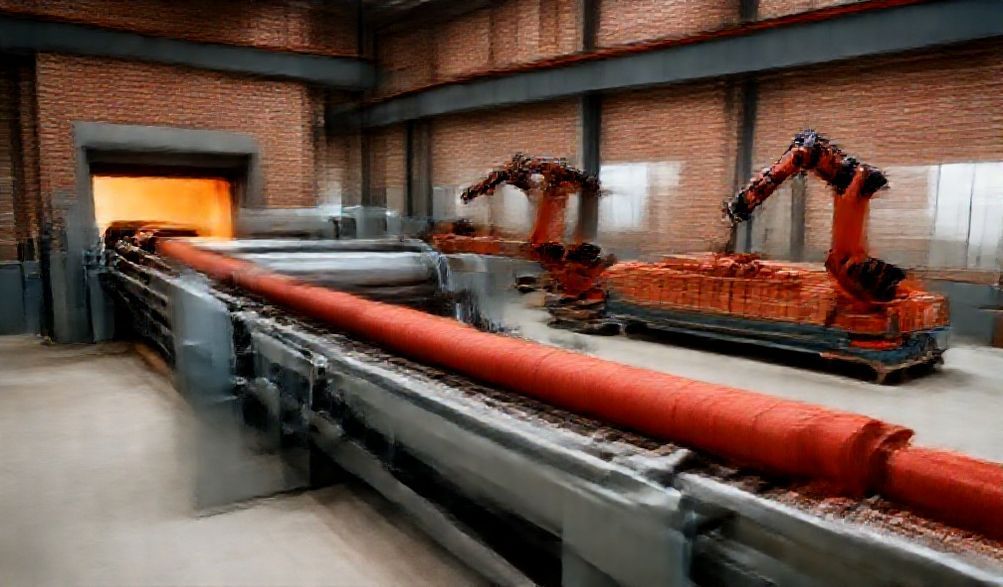
- Robotic Handling & Setting: Robotic brick setters or automated setting machines carefully place green bricks onto dryer cars, maximizing space and minimizing damage.
- Automated Drying & Firing: Bricks pass through a computer-controlled dryer and then into a modern tunnel kiln. Energy-efficient firing technology with recuperators preheats combustion air using waste heat from the cooling zone.
- Sorting & Palletizing: After cooling, bricks are automatically unloaded, sorted, and palletized by robotic arms for shipment.
This integration of automated material handling그리고process control systems minimizes human error, maximizes throughput, and ensures a superior final product.
Key Features to Look for in a Modern Clay Brick Machine
When evaluating equipment, whether for a startup or an expansion, focus on these critical aspects that separate reliable workhorses from problematic machinery.
Productivity and Output Specifications
- 수용량 Clearly defined output (e.g., bricks per hour for an 8-hour shift). Match this to your business plan.
- 전력 요구 사항 Understand the total connected load (in kW) to ensure your facility’s electrical infrastructure can support it.
- 자동화 수준: Assess the PLC control system. A user-friendly human-machine interface (HMI) for parameter adjustment and fault diagnosis is a sign of a modern machine.
Durability, Maintenance, and After-Sales Support
This is where long-term value is determined. As demonstrated in production facilities like FUDA, durability is paramount.
- 견고한 구조: Look for heavy-duty frames, wear-resistant liners in mixers and extruders (e.g., alloy steel), and high-quality gears and bearings.
- 유지보수 용이성: Designs that allow for easy access to wear parts for inspection and replacement drastically reduce downtime.
- After-Sales Ecosystem: A reputable supplier offers comprehensive technical support, readily available spare parts그리고on-site or virtual training. This support network is a key reason factories succeed and is a non-negotiable in your supplier vetting process.
Choosing the Right Machine for Your Needs: A Buyer’s Checklist
Selecting machinery is a strategic decision. Use this framework to align your investment with your goals.
Assessing Your Project Scale and Budget
- Startup/Small Scale: A semi-automatic line with a basic extruder, cutter, and a small periodic kiln (like a shuttle kiln) may be ideal. Focus on simplicity and lower capital outlay.
- Medium-Scale Expansion: A more integrated semi-automatic or entry-level automatic line with a tunnel dryer and a small tunnel kiln offers a balance of output and automation.
- Large Industrial Production: A fully automatic plant with robotic handling, high-capacity extruders, and a long tunnel kiln is necessary. The budget must account for the machinery, installation, and a significant civil works foundation.
Questions to Ask Manufacturers and Suppliers
Arm yourself with these questions to cut through sales pitches:
Technical Questions:
* “What is the expected wear life of the extruder auger and liner, and what is the cost and lead time for these spare parts?”
* “Can you provide the detailed firing curve recommended for our local clay with your kiln?”
* “What is the power consumption (kWh) per 1,000 bricks produced on this specific line configuration?”
* “Does the control system provide data logging for process parameters?”
Commercial & Support Questions:
* “What is included in the delivery (FOB, CIF)? Does installation and commissioning require separate fees?”
* “Can you provide references from clients in a similar climate or using similar clay?”
* “What is the structure of your after-sales service? Do you have local technicians or partners?”
* “Do you offer training on operation and maintenance, and is it on-site or at your factory?”
Frequently Asked Questions (FAQ) About Clay Brick Machines
Q1: What is the average cost of setting up a clay brick making plant with machines like those at FUDA?
Costs vary dramatically with scale and automation. A small semi-automatic plant can start from $50,000 – $150,000. A medium-scale automatic line may range from $200,000 to $500,000. A full-scale, high-capacity automated factory like FUDA’s can represent a multi-million dollar investment, encompassing machinery, the kiln structure, land, and buildings.
Q2: What is the difference between fly ash brick machines and traditional clay brick machines?
The core difference is the raw material and curing process. Fly ash bricks use fly ash (a coal combustion byproduct), lime, and gypsum, and are cured by steam pressure (autoclaving). Clay brick machines process natural clay and shale, and the bricks are hardened by high-temperature firing in a kiln. The machinery for mixing and molding differs to handle these distinct material properties.
Q3: How energy-efficient are modern brick firing kilns used in factories?
Modern tunnel kilns are highly efficient. They employ heat recovery systems that capture waste heat from the cooling bricks to preheat combustion air and even pre-dry green bricks. This energy-efficient firing technology can reduce fuel consumption by 30-50% compared to older kiln designs, making the firing process more sustainable and cost-effective.
Q4: Can clay brick making machines produce different sizes and types of bricks (e.g., perforated, hollow)?
Yes, absolutely. This is determined by the extrusion die (mold) installed on the machine. By changing the die, the same extruder can produce solid, hollow, perforated, or even specially shaped bricks. The cutter is then adjusted to match the new brick length.
Q5: What kind of after-sales service and training should I expect from a reputable machine supplier?
You should expect a clear service agreement. This typically includes detailed machine manuals, initial installation supervision and commissioning, comprehensive on-site training for your operators and maintenance staff, a warranty period (e.g., 12 months), and a reliable supply chain for genuine spare parts. Many top suppliers also offer remote diagnostic support.
결론
올바른 선택점토 벽돌 제조 기계 is a critical investment that forms the foundation of your entire operation. It requires a clear understanding of the production process, the spectrum of available machinery, and the features that ensure long-term productivity and reliability. This decision hinges not just on specifications, but on the proven expertise and support behind the equipment.
As we have seen through this guide, studying established and authoritative operations like the 푸다 벽돌 제조 공장 provides an invaluable benchmark. Their integration of automated production lines, rigorous quality control, and energy-efficient practices illustrates the pinnacle of modern brick manufacturing. Let their model of efficiency guide your standards.
Final Call-to-Action: Before making a commitment, conduct thorough research. Prioritize suppliers who encourage factory visits or live demonstrations of their equipment. Ask the detailed questions outlined here and request client references. By choosing a partner with transparent processes and proven expertise, you ensure that your brick making venture is built on the most solid foundation possible.
<