
Die Ultieme Gids vir Ekologiese Baksteenmasjiene: Die Bou van 'n Volhoubare Toekoms
Die globale konstruksiebedryf is op 'n kruispad. Dink hieraan: die vervaardiging van tradisionele gebakte kleistene is verantwoordelik vir na raming2.6 miljard ton CO2-vrystellings jaarliks'n beduidende bydraer tot globale kweekhuisgasse. Verder maak konstruksie- en sloopafval byna30% van alle afval wat in baie streke gegenereer wordwaarvan die meeste op stortingsterreine beland. Hierdie lineêre "neem-maak-wegdoen"-model is omgewingskatastrofies en ekonomies ondoeltreffend.
Vir eeue lank was die nederige baksteen 'n bousteen van die beskawing, maar sy konvensionele vervaardigingsproses—wat hoëtemperatuur-oonde behels wat dae lank brand—is nou 'n oorblyfsel van 'n onvolhoubare verlede. Die uitdagings is duidelijk: massiewe energieverbruik, ernstige lugbesoedeling, bogronduitputting en eskalering van koste.
Gaan dieEkologiese Baksteenmasjien'n transformerende stuk tegnologie wat ons denke oor konstruksiemateriaal herdefinieer. Hierdie gids, gesintetiseer uit ingenieursbeginsels, bedryfsnavorsing en praktiese gevallestudies, sal u 'n omvattende begrip van hierdie volhoubare oplossing bied. Of u nou 'n bouer, argitek, entrepreneur of bloot 'n ekobewuste individu is, u sal leer hoe hierdie masjiene werk, hul diepgaande voordele, die verskillende tipes beskikbaar, en die kritieke faktore om een te kies. Teen die einde sal u toegerus wees om 'n ingeligte besluit te neem wat beide u projek en die planeet bevoordeel.
Wat is 'n Ekologiese Baksteenmasjien? Die Herskryf van Konstruksiemateriaal
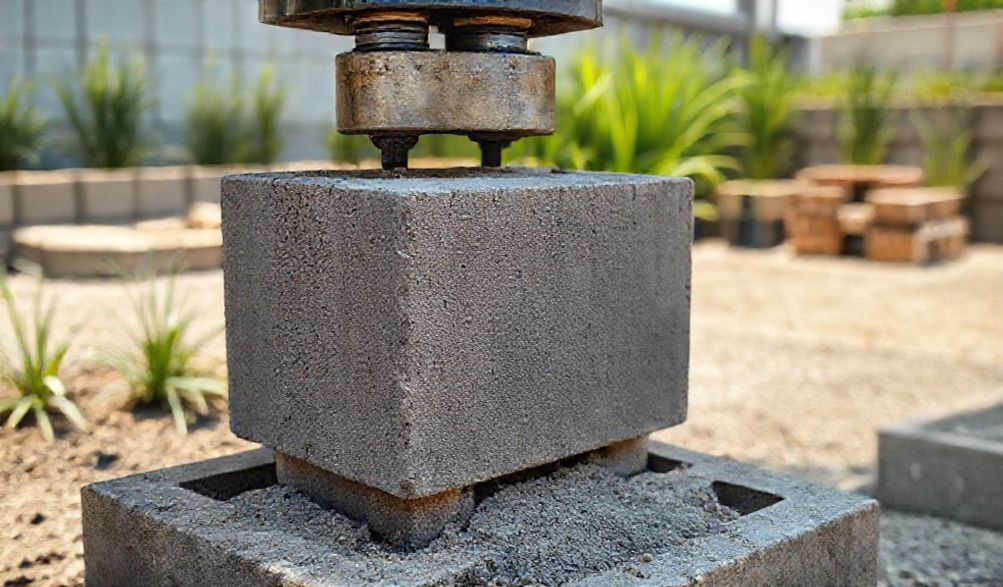
'n Ekologiese baksteenmasjien, dikwels 'n saamgeperste grondblok (CEB) masjien of vliegasbaksteenmasjien genoem, is 'n toestel wat boublokke vervaardig deur 'n proses van meganiese verdigting en uitharding.heeltemal die behoefte aan hoë-energie-afvuur uit te skakelDit omskep plaaslik beskikbare, dikwels afvalgebaseerde materiale in digte, duursame stene.
Kern Definisie en Beginsel
In sy kern werk 'n ekologiese baksteenmasjien op 'n eenvoudige maar kragtige beginsel:hoëdruk-persingAnders as tradisionele baksteenmaak, wat hitte (ongeveer 1000°C) gebruik om kleideeltjies te sinter, gebruik hierdie masjiene hidrouliese of meganiese krag om 'n klam mengsel van rou materiale saam te pers.
- Die Proses:Die masjien druk die materiaal in 'n vorm saam onder geweldige druk (tipies 10 tot 30+ ton), wat die deeltjies meganies aanmekaar bind.
- Die Uitslag:Dit skep 'n baksteen met onmiddellike "groen sterkte" wat dan genees word, gewoonlik met water, vir 'n tydperk van weke om sy volle strukturele potensiaal te bereik deur 'n chemiese proses (soos sementhidrasie of pozzolaanreaksie).
Sleutel Roumateriaal: Afval om Skakel in Rykdom
Die ware genie van hierdie tegnologie lê in sy grondstof. Dit verander industriële en stedelike afval in waardevolle hulpbronne.
- Vliegas:'n Fynpoeierafval van steenkoolkragsentrales. Dit is 'n posolane materiaal, wat beteken dit reageer met kalk en water om sementagtige verbindings te vorm. Die gebruik van vliegas los 'n groot wegdoeningsprobleem op.
- Verpletterde Konstruksie- en Sloopafval (K&S-afval):Beton, mortel en keramiekafval kan tot aggregaat vergruis word, wat die kringloop van konstruksiemateriaal se lewensiklusse voltooi.
- Steengroefstof:'n Neweproduk van klipbreukwerk, wat dikwels as 'n fynaggregaat gebruik word.
- Grond (Gestabiliseer)Plaaslik verkrygde grond, gestabiliseer met 'n klein persentasie (3-10%) sement of kalk om sterkte en waterweerstand te bereik.
- Slag:'n Neweproduk van staalmeule.
Die mantra is“plaaslike materiale vir plaaslike konstruksie”wat die vervoeremissies en koste drasties verminder, terwyl dit die plaaslike omgewing skoonmaak.
Die Omgewingsmegansime: Hoe Dit Die Planeet Red
Die ekologiese voordele is direk en meetbaar.
- Zero Burning, Zero Emissions: By eliminating the kiln, it removes the associated release of CO2, sulfur dioxide (SO2), and particulate matter.
- Dramatic Water Savings: Traditional clay brick production is water-intensive for mining and molding. Ecological brick production uses minimal water, primarily for curing.
- Topsoil Preservation: It does not require fertile topsoil, preserving agricultural land and preventing topsoil erosion.
Advantages of Using Ecological Bricks and Machines
Adopting this technology isn’t just an environmental statement; it’s a practical, economic, and social win.
Tangible Environmental Benefits
- Koolstofvoetspoor Vermindering: Lifecycle assessments show a reduction of up to 90% in embodied carbon compared to fired bricks.
- Afvalherleiding: A single medium-scale unit can divert hundreds of tons of fly ash or C&D waste from landfills annually.
- Groenbou-krediete: The use of these bricks contributes significantly to certification systems like LEED (Leierskap in Energie en Omgewingsontwerp)ofGRIHA (Green Rating for Integrated Habitat Assessment), earning points for regional materials, recycled content, and innovation.
Economic & Practical Advantages for Builders
- Lower Unit Cost: Raw materials are often low-cost or even free (waste by-products), leading to a cheaper brick. Production costs can be 20-30% lower than fired bricks.
- Superior Construction Efficiency: Machine-produced bricks have consistent size and shape, leading to less mortar use, faster laying times, and reduced skilled labor requirements.
- Proven Strength and Durability: When properly made, compressed ecological bricks can achieve compressive strengths exceeding 10 MPa, suitable for load-bearing walls (referencing standards like IS 1077:1992ofASTM C67).
- Enhanced Comfort: The density and composition provide excellent thermal mass, regulating indoor temperatures, and offer better akoestiese isolasie than conventional bricks.
Societal Impact
- Bekostigbare Behuising: The low production cost directly enables more affordable, sustainable housing projects.
- Green Job Creation: It fosters new micro-enterprises and jobs in material collection, brick production, and masonry.
- Circular Economy Model: It embodies a circular economy, transforming waste streams into valuable assets for community development.
Types of Ecological Brick Machines: Choosing the Right Technology
Selecting the right machine depends entirely on your scale, budget, and business model.
Manual / Hand-Operated Press Machines
- Ideaal Vir: Community-led building projects, NGOs, homesteaders, and entrepreneurs testing the market with minimal capital.
- Uitset:Ongeveer300-500 bricks per 8-hour day.
- Voordele: Very low cost, completely portable, requires no electricity—perfect for remote areas.
- Nadele: Highly labor-intensive and physically demanding. Output is limited by operator stamina.
Semi-Automatic Hydraulic Press Machines
- Ideaal Vir: Small to medium enterprises (SMEs), start-up brick manufacturing businesses, and medium-sized construction projects.
- Uitset: Ranges from 1,000 to 4,000 bricks per day, depending on model and crew size.
- Voordele: Excellent balance of affordability and productivity. Electric or diesel-powered hydraulic systems ensure consistent, high-pressure compaction with a small team (2-4 people). Offers a strong return on investment for serious ventures.
Fully Automatic Production Lines
- Ideaal Vir: Large-scale commercial production plants supplying entire regions or major construction companies.
- Uitset: 10,000 to 50,000+ bricks per day.
- Voordele: Maximum output with minimal manual labor. These are integrated systems with automated material feeding, mixing, pressing, and stacking/palletizing.
- Nadele: Requires a very high initial capital investment, significant space, and a reliable, high-capacity power supply.
Critical Factors When Selecting an Ecological Brick Machine
Buying a machine is a significant decision. Look beyond the brochure.
Assessering van U Produksiebehoeftes en Skaal
- Are you building a single house or starting a supply business?
- Bereken jourequired daily output (Bricks Per Day) based on project timelines or market demand. Always factor in a buffer for growth.
Raw Material Analysis is Key
This is the most critical step. Test your local materials first.
* A reputable supplier should offer to test your soil or waste material sample.
* The machine must be compatible with the material’s clay content, silt, and grain size distribution. A high clay content, for instance, may require a different mix design or machine pressure.
Masjien Spesifikasies Diep Duik
- Druk (Tonnasie): Higher pressure (e.g., 20 tons vs. 10 tons) generally produces denser, stronger bricks. Match this to your target strength and material type.
- Siklustyd: How many seconds per brick? This directly determines your maximum daily output.
- Kragvereistes: Choose between electric (cleaner, lower OpEx) or diesel (for areas with unreliable grid power).
- Durability & After-Sales Service: The frame, hydraulics, and mold should be robust. A supplier’s willingness to provide training, spare parts, and technical support is non-negotiable.
Cost Analysis: Beyond the Sticker Price
- Consider Totale Eienaarskyskoste: Initial machine cost + cost of auxiliary equipment (mixer, sieve) + operating costs (labor, power, maintenance).
- Calculate ROI: Based on your local brick selling price and production cost, project how long it will take to recoup your investment. A semi-automatic machine for an SME often has an ROI of 12-24 months.
The Production Process: From Raw Material to Finished Brick
Understanding the process ensures quality control.
Step 1: Sourcing and Preparation of Raw Materials
Materials are sieved to remove debris and oversized particles. Hard aggregates may need crushing. The goal is a consistent, homogenous feedstock.
Step 2: Precise Mixing and Moisture Control
This is where quality is made. The raw materials (e.g., soil, fly ash, cement) are mixed in a mechanical pan mixer. Optimal Moisture Content (OMC)—usually around 8-12%—is critical. Too dry, and the brick won’t compact properly; too wet, and it will deform after ejection.
Step 3: Compression in the Machine
The mix is fed into the machine’s chamber and compacted under high pressure for a few seconds. The brick is then ejected onto a pallet.
Step 4: Curing and Quality Assurance
- Kuuring: Bricks are stacked and kept moist (often by sprinkling water and covering with plastic sheeting) for 14 to 28 days. This allows the cement or lime to fully hydrate, achieving the designed strength.
- Quality Tests: Simple on-site tests include the “drop test” (a cured brick should not break when dropped from waist height) and checking for uniform color and lack of cracks.
FAQ: Your Questions About Ecological Brick Machines Answered
Q1: Are ecological bricks as strong as traditional fired clay bricks?
A: Yes, and often stronger. When produced to standard with proper material ratios and compaction, they easily meet and exceed common building code requirements for compressive strength (e.g., IS 1077 specifies a minimum of 3.5 MPa for common burnt clay bricks, while quality compressed blocks often achieve 7-10 MPa).
Q2: What is the typical cost of setting up an ecological brick production unit?
A: Costs vary dramatically. A basic manual press can start around $1,500 – $3,000. A semi-automatic hydraulic plant, including mixer and basic setup, may range from $15,000 to $50,000. A fully automatic line can start from $100,000 and go into the millions. Location, scale, and automation are the key drivers.
Q3: Can I start this business without an engineering background?
A: Absolutely. Many successful operators come from varied backgrounds. Reputable suppliers provide comprehensive operational and mix-design training. A willingness to learn, attention to detail, and hands-on practice are more important than a formal degree.
Q4: How do I find a reliable machine supplier?
A: Conduct thorough due diligence. Look for manufacturers with a long track record. Always ask for client references and visit an existing working unit if possible. Insist on a live demonstration using a sample of jou raw materials. Scrutinize the warranty and after-sales service contract.
Q5: Are there any government subsidies or policies supporting this technology?
A: Many governments worldwide promote green construction technologies. In India, for example, the Building Materials & Technology Promotion Council (BMTPC) actively certifies and promotes such technologies. Check with your local Ministry of Environment, MSME development institutes, or green building councils for potential grants, soft loans, or tax incentives.
Conclusion: Building Greener, Building Smarter
The ecological brick machine represents more than just a piece of equipment; it symbolizes a paradigm shift towards a restorative and responsible construction industry. It addresses environmental degradation, economic constraints, and social needs in one integrated solution.
The future is bright, with advancements like AI-driven mix optimization, solar-powered production units, and even stronger geopolymer binders on the horizon. The technology is proven, scalable, and ready for adoption.
Your Call to Action:
* For Builders & Architects: Specify “compressed ecological bricks” or “fly ash bricks” in your next project’s Bill of Quantities. Demand sustainable materials from your suppliers.
* Vir Entrepreneurs: Conduct a localized feasibility study. The market for green building materials is growing exponentially. Reach out to a reputable supplier for a detailed consultation.
* For Everyone: Share this knowledge. Promoting sustainable construction practices is a collective responsibility.
Based on verifiable industry data and engineering best practices, integrating ecological brick technology is one of the most concrete steps we can take toward a sustainable future. The blueprint for change is here, and it’s compressed into the shape of a brick.
<