
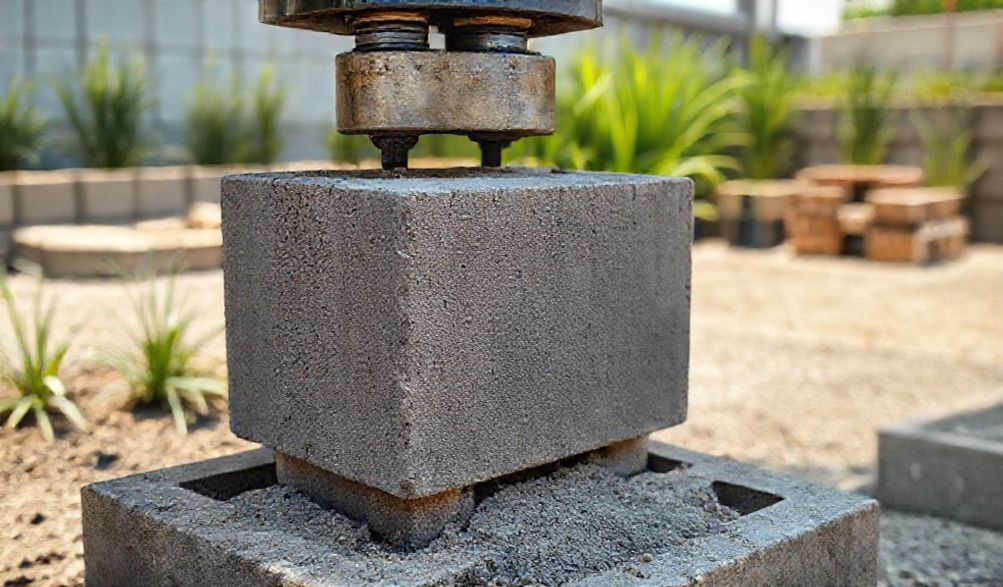
Panduan Muktamad untuk Mesin Bata Ekologi: Membina Masa Depan Lestari
Industri pembinaan global berada di persimpangan jalan. Pertimbangkan ini: pengeluaran batu bata tanah liat bakar tradisional menyumbang kepada anggaran2.6 bilion tan pelepasan CO2 setiap tahunpenyumbang utama kepada gas rumah hijau global. Tambahan pula, sisa pembinaan dan pembongkaran membentuk hampir30% daripada semua sisa yang dihasilkan di banyak kawasankebanyakannya berakhir di tapak pelupusan. Model linear "ambil-buat-buang" ini adalah malapetaka alam sekitar dan tidak cekap dari segi ekonomi.
Selama berabad-abad, batu bata sederhana telah menjadi blok pembangun peradaban, namun proses pembuatannya yang konvensional—melibatkan tanur bersuhu tinggi yang dibakar selama berhari-hari—kini menjadi peninggalan masa lalu yang tidak berkelanjutan. Tantangannya jelas: konsumsi energi yang besar, polusi udara parah, penipisan tanah subur, dan biaya yang terus meningkat.
MasukkanMesin Bata Ekologi—satu teknologi transformatif yang sedang mengubah cara kita berfikir tentang bahan binaan. Panduan ini, disintesis daripada prinsip kejuruteraan, penyelidikan industri, dan kajian kes di lapangan, akan memberikan anda pemahaman komprehensif tentang penyelesaian mampan ini. Sama ada anda seorang pembina, arkitek, usahawan, atau sekadar individu yang prihatin terhadap alam sekitar, anda akan mempelajari cara mesin ini berfungsi, manfaat mendalamnya, pelbagai jenis yang tersedia, dan faktor kritikal untuk memilih satu. Pada akhirnya, anda akan dilengkapi untuk membuat keputusan yang berinformasi yang memberi manfaat kepada kedua-dua projek anda dan planet ini.
Apakah itu Mesin Bata Ekologi? Mendefinisikan Semula Bahan Binaan
Mesin bata ekologi, sering disebut sebagai mesin blok bumi termampat (CEB) atau mesin bata abu terbang, adalah peranti yang menghasilkan blok binaan melalui proses pemadatan mekanikal dan pematangan.menghapuskan sepenuhnya keperluan untuk penembakan berkuasa tinggiIa mengubah bahan tempatan yang tersedia, selalunya berasaskan sisa, menjadi bata yang padat dan tahan lama.
Definisi Teras dan Prinsip
Pada terasnya, mesin bata ekologi beroperasi berdasarkan prinsip yang mudah namun berkuasa:pemadatan tekanan tinggiTidak seperti pembuatan bata tradisional yang menggunakan haba (sekitar 1000°C) untuk menyinter zarah tanah liat, mesin-mesin ini menggunakan daya hidraulik atau mekanikal untuk memampatkan campuran bahan mentah yang lembap.
- Proses:Mesin memampatkan bahan dalam acuan di bawah tekanan yang sangat tinggi (biasanya 10 hingga 30+ tan), mengikat zarah-zarah secara mekanikal.
- Hasilnya:Ini menghasilkan bata dengan "kekuatan hijau" segera yang kemudiannya disembuhkan, biasanya dengan air, untuk tempoh beberapa minggu bagi mencapai potensi struktur penuhnya melalui proses kimia (seperti penghidratan simen atau tindak balas pozzolan).
Bahan Mentah Utama: Mengubah Sisa Menjadi Kekayaan
Kecemerlangan sebenar teknologi ini terletak pada bahan mentahnya. Ia mengubah sisa industri dan bandar menjadi sumber yang berharga.
- Abu Terbang:Sisa serbuk halus dari loji janakuasa arang batu. Ia merupakan bahan pozzolanik, yang bermaksud ia bertindak balas dengan kapur dan air untuk membentuk sebatian simen. Penggunaan abu terbang menyelesaikan masalah pelupusan yang besar.
- Sisa Pembinaan & Perobohan (C&D) yang Dihancurkan:Konkrit, mortar, dan sisa seramik boleh dihancurkan menjadi agregat, menutup kitaran hayat bahan binaan.
- Debu Kuari:Sisa daripada operasi penghancuran batu, sering digunakan sebagai agregat halus.
- Tanah (Distabilkan):Tanah sumber tempatan, distabilkan dengan peratusan kecil (3-10%) simen atau kapur untuk mencapai kekuatan dan ketahanan terhadap air.
- Slag:Hasil sampingan dari kilang keluli.
Mantra ialah"bahan tempatan untuk pembinaan tempatan"secara drastik mengurangkan pelepasan dan kos pengangkutan sambil membersihkan persekitaran setempat.
Mekanisme Alam Sekitar: Bagaimana Ia Menyelamatkan Planet
Faedah ekologi adalah langsung dan boleh diukur:
- Sifar Pembakaran, Sifar Pelepasan:Dengan menghapuskan tanur, ia menghilangkan pelepasan CO2, sulfur dioksida (SO2), dan zarahan yang berkaitan.
- Penjimatan Air yang DramatikPengeluaran bata tanah liat tradisional memerlukan banyak air untuk perlombongan dan pengacuan. Pengeluaran bata ekologi menggunakan air yang minimum, terutamanya untuk pengawetan.
- Pemeliharaan Tanah Atas It does not require fertile topsoil, preserving agricultural land and preventing topsoil erosion.
Advantages of Using Ecological Bricks and Machines
Adopting this technology isn’t just an environmental statement; it’s a practical, economic, and social win.
Tangible Environmental Benefits
- Pengurangan Jejak Karbon: Lifecycle assessments show a reduction of up to 90% in embodied carbon compared to fired bricks.
- Pengalihan Sisa: A single medium-scale unit can divert hundreds of tons of fly ash or C&D waste from landfills annually.
- Kredit Bangunan Hijau: The use of these bricks contributes significantly to certification systems like LEED (Kepimpinan dalam Reka Bentuk Tenaga dan Alam Sekitar)atauGRIHA (Green Rating for Integrated Habitat Assessment), earning points for regional materials, recycled content, and innovation.
Economic & Practical Advantages for Builders
- Lower Unit Cost: Raw materials are often low-cost or even free (waste by-products), leading to a cheaper brick. Production costs can be 20-30% lower than fired bricks.
- Superior Construction Efficiency: Machine-produced bricks have consistent size and shape, leading to less mortar use, faster laying times, and reduced skilled labor requirements.
- Proven Strength and Durability: When properly made, compressed ecological bricks can achieve compressive strengths exceeding 10 MPa, suitable for load-bearing walls (referencing standards like IS 1077:1992atauASTM C67).
- Enhanced Comfort: The density and composition provide excellent thermal mass, regulating indoor temperatures, and offer better penebat akustik than conventional bricks.
Societal Impact
- Perumahan Mampu Milik: The low production cost directly enables more affordable, sustainable housing projects.
- Green Job Creation: It fosters new micro-enterprises and jobs in material collection, brick production, and masonry.
- Circular Economy Model: It embodies a circular economy, transforming waste streams into valuable assets for community development.
Types of Ecological Brick Machines: Choosing the Right Technology
Selecting the right machine depends entirely on your scale, budget, and business model.
Manual / Hand-Operated Press Machines
- Sesuai Untuk: Community-led building projects, NGOs, homesteaders, and entrepreneurs testing the market with minimal capital.
- Output:Kira-kira300-500 bricks per 8-hour day.
- Kelebihan: Very low cost, completely portable, requires no electricity—perfect for remote areas.
- Keburukan: Highly labor-intensive and physically demanding. Output is limited by operator stamina.
Semi-Automatic Hydraulic Press Machines
- Sesuai Untuk: Small to medium enterprises (SMEs), start-up brick manufacturing businesses, and medium-sized construction projects.
- Output: Ranges from 1,000 to 4,000 bricks per day, depending on model and crew size.
- Kelebihan: Excellent balance of affordability and productivity. Electric or diesel-powered hydraulic systems ensure consistent, high-pressure compaction with a small team (2-4 people). Offers a strong return on investment for serious ventures.
Talian Pengeluaran Sepenuhnya Automatik
- Sesuai Untuk: Large-scale commercial production plants supplying entire regions or major construction companies.
- Output: 10,000 to 50,000+ bricks per day.
- Kelebihan: Maximum output with minimal manual labor. These are integrated systems with automated material feeding, mixing, pressing, and stacking/palletizing.
- Keburukan: Requires a very high initial capital investment, significant space, and a reliable, high-capacity power supply.
Critical Factors When Selecting an Ecological Brick Machine
Buying a machine is a significant decision. Look beyond the brochure.
Menilai Keperluan & Skala Pengeluaran Anda
- Are you building a single house or starting a supply business?
- Kirakanrequired daily output (Bricks Per Day) based on project timelines or market demand. Always factor in a buffer for growth.
Raw Material Analysis is Key
This is the most critical step. Test your local materials first.
* A reputable supplier should offer to test your soil or waste material sample.
* The machine must be compatible with the material’s clay content, silt, and grain size distribution. A high clay content, for instance, may require a different mix design or machine pressure.
Penerangan Mendalam Spesifikasi Mesin
- Tekanan (Tan) Higher pressure (e.g., 20 tons vs. 10 tons) generally produces denser, stronger bricks. Match this to your target strength and material type.
- Masa Kitaran: How many seconds per brick? This directly determines your maximum daily output.
- Keperluan Kuasa: Choose between electric (cleaner, lower OpEx) or diesel (for areas with unreliable grid power).
- Durability & After-Sales Service: The frame, hydraulics, and mold should be robust. A supplier’s willingness to provide training, spare parts, and technical support is non-negotiable.
Cost Analysis: Beyond the Sticker Price
- Consider Kos Pemilikan Keseluruhan: Initial machine cost + cost of auxiliary equipment (mixer, sieve) + operating costs (labor, power, maintenance).
- Calculate ROI: Based on your local brick selling price and production cost, project how long it will take to recoup your investment. A semi-automatic machine for an SME often has an ROI of 12-24 months.
The Production Process: From Raw Material to Finished Brick
Understanding the process ensures quality control.
Step 1: Sourcing and Preparation of Raw Materials
Materials are sieved to remove debris and oversized particles. Hard aggregates may need crushing. The goal is a consistent, homogenous feedstock.
Step 2: Precise Mixing and Moisture Control
This is where quality is made. The raw materials (e.g., soil, fly ash, cement) are mixed in a mechanical pan mixer. Optimal Moisture Content (OMC)—usually around 8-12%—is critical. Too dry, and the brick won’t compact properly; too wet, and it will deform after ejection.
Step 3: Compression in the Machine
The mix is fed into the machine’s chamber and compacted under high pressure for a few seconds. The brick is then ejected onto a pallet.
Step 4: Curing and Quality Assurance
- Penyembuhan: Bricks are stacked and kept moist (often by sprinkling water and covering with plastic sheeting) for 14 to 28 days. This allows the cement or lime to fully hydrate, achieving the designed strength.
- Quality Tests: Simple on-site tests include the “drop test” (a cured brick should not break when dropped from waist height) and checking for uniform color and lack of cracks.
FAQ: Your Questions About Ecological Brick Machines Answered
Q1: Are ecological bricks as strong as traditional fired clay bricks?
A: Yes, and often stronger. When produced to standard with proper material ratios and compaction, they easily meet and exceed common building code requirements for compressive strength (e.g., IS 1077 specifies a minimum of 3.5 MPa for common burnt clay bricks, while quality compressed blocks often achieve 7-10 MPa).
Q2: What is the typical cost of setting up an ecological brick production unit?
A: Costs vary dramatically. A basic manual press can start around $1,500 – $3,000. A semi-automatic hydraulic plant, including mixer and basic setup, may range from $15,000 to $50,000. A fully automatic line can start from $100,000 and go into the millions. Location, scale, and automation are the key drivers.
Q3: Can I start this business without an engineering background?
A: Absolutely. Many successful operators come from varied backgrounds. Reputable suppliers provide comprehensive operational and mix-design training. A willingness to learn, attention to detail, and hands-on practice are more important than a formal degree.
Q4: How do I find a reliable machine supplier?
A: Conduct thorough due diligence. Look for manufacturers with a long track record. Always ask for client references and visit an existing working unit if possible. Insist on a live demonstration using a sample of awak raw materials. Scrutinize the warranty and after-sales service contract.
Q5: Are there any government subsidies or policies supporting this technology?
A: Many governments worldwide promote green construction technologies. In India, for example, the Building Materials & Technology Promotion Council (BMTPC) actively certifies and promotes such technologies. Check with your local Ministry of Environment, MSME development institutes, or green building councils for potential grants, soft loans, or tax incentives.
Conclusion: Building Greener, Building Smarter
The ecological brick machine represents more than just a piece of equipment; it symbolizes a paradigm shift towards a restorative and responsible construction industry. It addresses environmental degradation, economic constraints, and social needs in one integrated solution.
The future is bright, with advancements like AI-driven mix optimization, solar-powered production units, and even stronger geopolymer binders on the horizon. The technology is proven, scalable, and ready for adoption.
Your Call to Action:
* For Builders & Architects: Specify “compressed ecological bricks” or “fly ash bricks” in your next project’s Bill of Quantities. Demand sustainable materials from your suppliers.
* Untuk Usahawan: Conduct a localized feasibility study. The market for green building materials is growing exponentially. Reach out to a reputable supplier for a detailed consultation.
* For Everyone: Share this knowledge. Promoting sustainable construction practices is a collective responsibility.
Based on verifiable industry data and engineering best practices, integrating ecological brick technology is one of the most concrete steps we can take toward a sustainable future. The blueprint for change is here, and it’s compressed into the shape of a brick.
<