هياكل التكاليف لأنظمة تصنيع الطوب الآلية
مقدمة
بالنسبة للموزعين والوكلاء ومتخصصي المشتريات في صناعة معدات البناء، يُعد سؤال تسعير آلة الطوب الأوتوماتيكية من أكثر الاستفسارات شيوعاً وتعقيداً من العملاء. ومع ذلك، فإن الرقم النقدي المباشر ليس مجرد بطاقة سعر، بل هو نقطة الدخول إلى تحليل مالي وتشغيلي مفصل. تعتبر تكلفة آلة الطوب الأوتوماتيكية بناءً متغيراً، يتأثر بمجموعة من المواصفات الفنية، وحجم الإنتاج، وعمق الأتمتة، وأنظمة الدعم المساعدة.
تفكيك الاستثمار: المحركات الرئيسية للتكلفة
سعر آلة الطوب الأوتوماتيكية ليس عشوائيًا؛ بل هو انعكاس مباشر لهندستها، وقدراتها، والقيمة التي تقدمها. تشمل العوامل الرئيسية المحددة:
- القدرة الإنتاجية وفئة الإنتاج
- إنتاجية الماكينة المصممة، مقاسة بوحدات الطوب أو البلوكات في الساعة أو في الوردية الواحدة مدتها 8 ساعات، تعد مضاعفًا أساسيًا للتكلفة. وتصنف الماكينات بشكل عام:
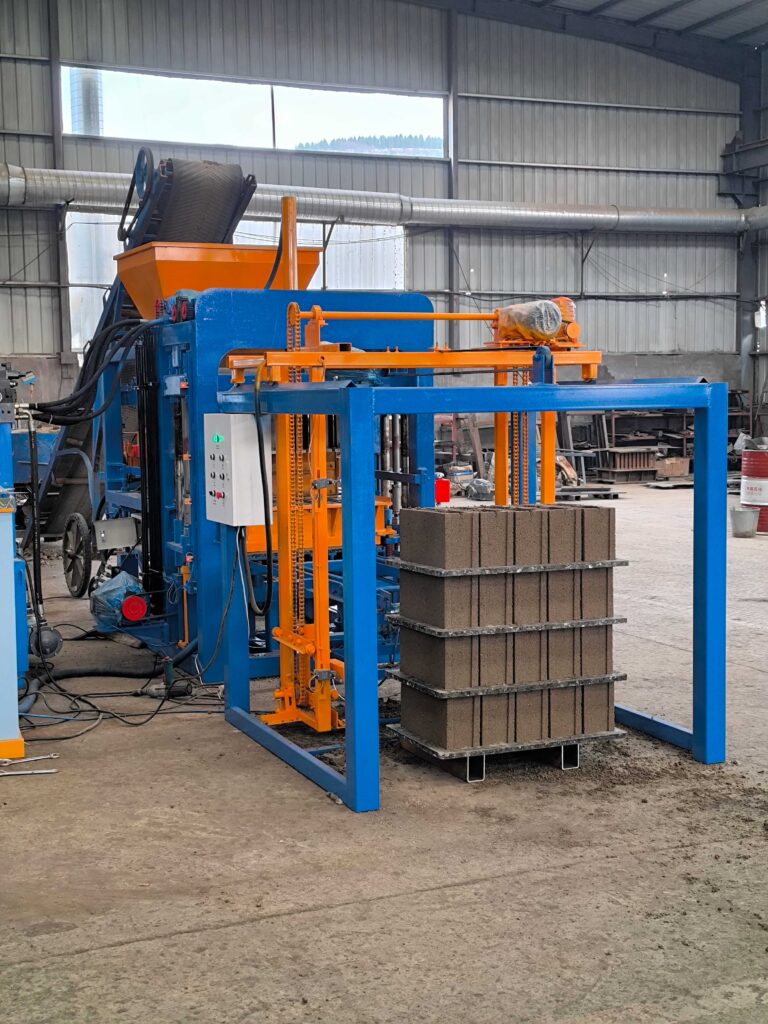
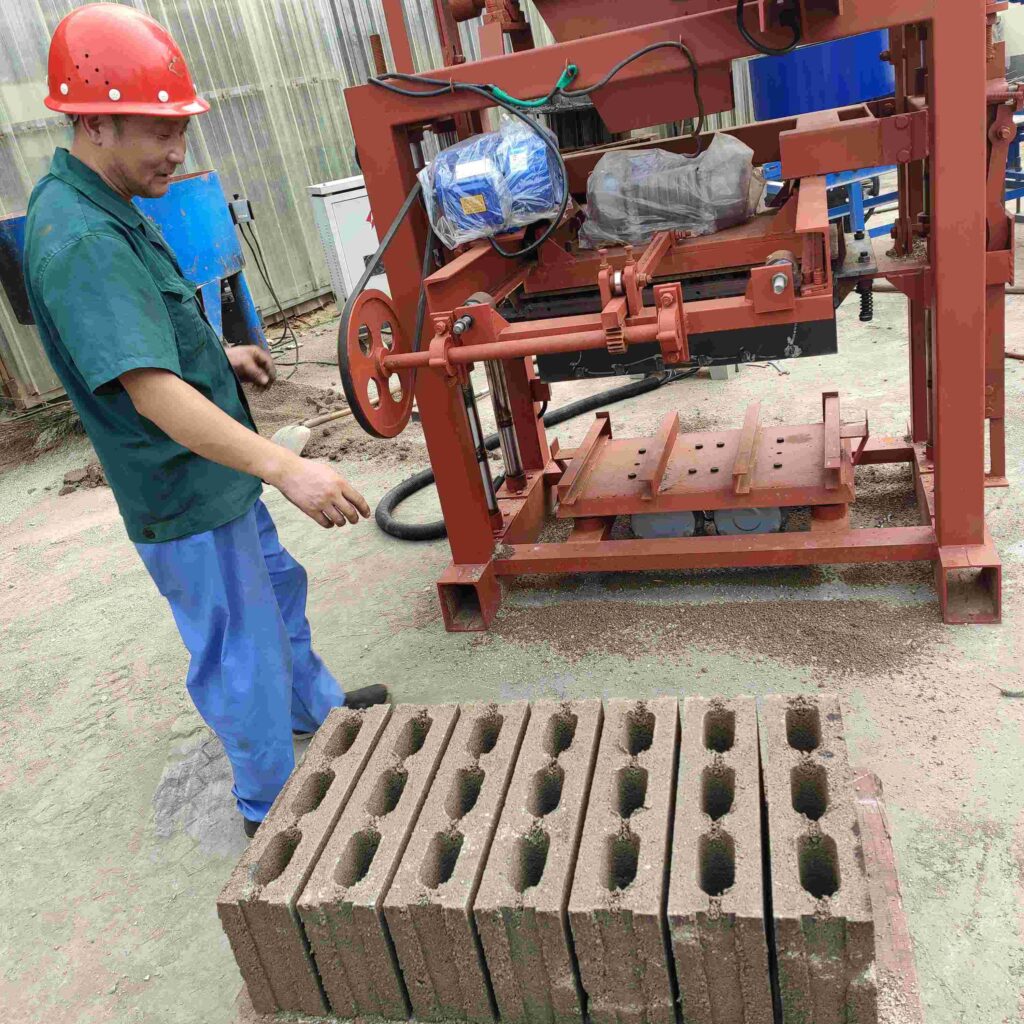
- أجهزة الأتمتة ذات الدخول الأولي/النطاق الصغير:مخرجات تتراوح بين 1,000 و3,000 قالب لكل وردية. غالبًا ما تتميز هذه الماكينات بأتمتة أساسية (كبس تلقائي، تغذية بسيطة للمنصات) ومساحة أصغر للماكينة. تمثل هذه الفئة الطبقة الأدنى من التسعير التلقائي ولكنها توفر ترقية كبيرة مقارنة بالتشغيل شبه التلقائي.
- Medium-Scale Industrial Systems: Outputs from 3,000 to 8,000 blocks per shift. This is the most common commercial range, featuring robust hydraulic systems, integrated material feeders, and often a semi-automatic or fully automatic pallet circulation system. They form the core of most profitable block yards.
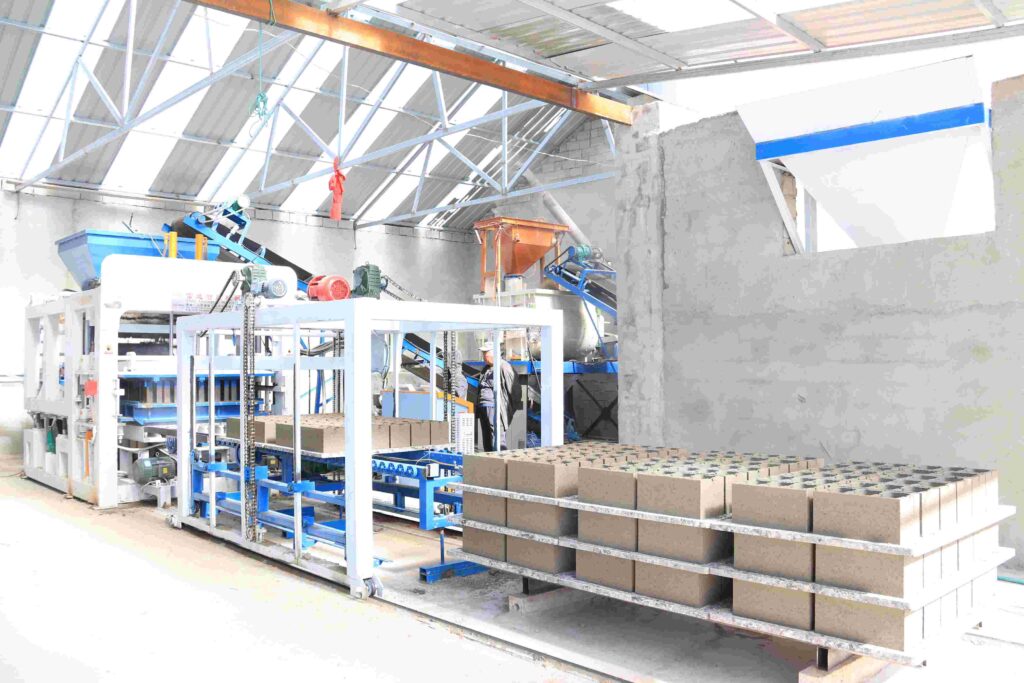
- Large-Scale/High-Speed Production Lines: Outputs exceeding 8,000 and reaching 20,000+ blocks per shift. These are complete, integrated plants with sophisticated PLC controls, robotic pallet handling, multi-layer stackers, and sometimes integrated mixers and conveyors. Pricing escalates significantly with this level of integration and speed.
- إنتاجية الماكينة المصممة، مقاسة بوحدات الطوب أو البلوكات في الساعة أو في الوردية الواحدة مدتها 8 ساعات، تعد مضاعفًا أساسيًا للتكلفة. وتصنف الماكينات بشكل عام:
- Degree and Sophistication of Automation
- “Automatic” is a spectrum. Costs increase with each layer of hands-free operation:
- Basic Automatic Press: Automates the pressing and ejection cycle only. Material feeding and pallet handling may still be manual or semi-automatic.
- Fully Automatic Machine with Pallet Circulation: Includes an automated closed-loop system for feeding empty pallets into the press and moving loaded pallets out to a conveyor. This is a standard for true automation.
- Fully Integrated Automatic Line: Incorporates automated material batching and mixing, conveyor-based transfer to the press hopper, the press itself, automatic curing stackers/descenders, and sometimes robotic packaging. Each added module increases the capital outlay.
- “Automatic” is a spectrum. Costs increase with each layer of hands-free operation:
- Machine Specifications and Build Quality
- The technical specifications directly impact durability, maintenance costs, and longevity:
- سعة الضغط (الطاقة بالطن): A 150-ton press will cost significantly more than a 60-ton press due to larger cylinders, a heavier frame, and a more powerful hydraulic system.
- جودة المكونات The origin and brand of core components like the PLC (Siemens, Mitsubishi, etc.), hydraulic pumps and valves, electrical motors, and bearings affect both initial cost and long-term reliability. Premium components command a premium price.
- Construction and Materials: The thickness of steel plate in the frame, the quality of weldments, and the use of hardened and chromed mold components all contribute to the machine’s price and its resistance to wear in an abrasive industrial environment.
- The technical specifications directly impact durability, maintenance costs, and longevity:
- Product Versatility and Tooling
- A machine capable of producing multiple product types (solid blocks, hollow blocks, pavers, interlocking blocks) through quick mold change systems will be more expensive than a dedicated single-product machine. The initial purchase may include only one or two mold sets; additional molds are a separate, recurring capital cost that must be factored into the total project investment.
The Pricing Spectrum: From Entry-Level to Turnkey Plants
Providing context is more valuable than a single number. Investment ranges can be conceptualized as follows (Note: These are illustrative ranges and can vary widely by region and manufacturer):
- Entry-Level Automatic Systems: $5,000 – $10,000
- Typically includes a basic automatic press with a simple feeder and perhaps a pallet feed table. Suitable for small businesses entering automated production. May require considerable manual intervention for material and product handling.
- Mid-Range Industrial Workhorse Systems: $10,000 – $20,000
- Encompasses robust, fully automatic machines with reliable pallet circulation, good production capacity (3,000-6,000 blocks/shift), and standardized components. This range represents the core offering for established block manufacturers and represents the best balance of performance and investment for many SMEs.
- High-Capacity Integrated Production Lines: $20,000 – $50,000+
- For serious industrial producers. This price bracket includes high-speed machines with advanced controls and, critically, integrated auxiliary equipment: automated batching plants, twin-shaft mixers, conveyor networks, and automated curing handling systems (stackers/descenders). The price reflects a complete production solution, not just a machine.
ما وراء السعر الظاهر: إجمالي تكلفة الملكية
An informed distributor guides the client to evaluate the Total Cost of Ownership, which dictates true profitability.
- Initial Capital Expenditure (CapEx)
- This is the purchase price of the machine and essential auxiliary equipment (mixer, conveyor, pallets). It also includes costs for shipping, installation, commissioning, and operator training.
- Operational Expenditure (OpEx)
- The ongoing costs of running the machine:
- استهلاك الطاقة A significant variable cost based on local electricity rates and machine efficiency.
- المواد الخام: Cost of aggregates, cement, pigments.
- العمل Reduced but not eliminated. Requires skilled technicians and machine minders.
- الصيانة وقطع الغيار Regular servicing, replacement of wear parts (mold liners, hydraulic seals, vibrator mounts). A machine with cheaper initial cost but high, difficult-to-source spare parts can become a liability.
- Tooling (Mold) Replacement: Molds are consumables with a finite lifecycle.
- The ongoing costs of running the machine:
- The Critical Value of After-Sales Support
- The initial price must be evaluated alongside the cost and quality of after-sales support. This includes:
- Warranty Terms and Scope.
- Availability and Price of Spare Parts.
- Accessibility and Cost of Technical Support (remote and on-site).
- Quality of Documentation and Training.
A machine with a slightly higher initial price but backed by excellent, localized support often has a lower TCO due to higher uptime and longer lifespan.
- The initial price must be evaluated alongside the cost and quality of after-sales support. This includes:
Strategic Financial Considerations for Client Advisory
Distributors must equip clients to make a sound investment case.
- Building a Return on Investment (ROI) Model
- Guide clients to create a basic pro forma: Estimate annual production volume, assign a market value to the bricks, and subtract all projected OpEx. The net profit divided by the total CapEx provides a simple ROI timeframe. A quality automatic machine should typically aim for an ROI of 18 to 36 months based on efficient operation at reasonable capacity utilization.
- Assessing Financing and Cash Flow Implications
- Few clients pay entirely from cash reserves. Discuss financing options, leasing structures, or government grants for industrial equipment. The machine’s ability to generate consistent cash flow from production is key to servicing any debt.
- The Cost of Not Automating: A Competitive Analysis
- Frame the investment against the alternative. What is the client losing by sticking with manual or semi-automatic production? Calculate the higher labor cost per block, the lower and inconsistent output, the inability to fulfill large contracts, and the inferior product quality. The “cost” is often lost market share and constrained growth.
خاتمة
The question, “How much does an automatic brick machine cost?” is the beginning of a strategic conversation, not the end. For the distributor, the goal is to shift the client’s perspective from viewing the machine as a commodity purchase with a single price to understanding it as a capital investment with a multi-variable cost structure and a clear path to ROI.
The most effective sales approach is consultative: work with the client to analyze their target market, required production volume, available infrastructure, and financial capacity. Then, match them with a system whose capabilities—and price point—align with their business plan. By transparently discussing not just the initial price but the TCO, the value of support, and the financial model for success, distributors build immense trust and position themselves as long-term partners in their clients’ growth. In doing so, they transform a complex pricing question into a clear blueprint for profitability and competitive advantage in the construction materials industry.
الأسئلة الشائعة (FAQ)
Q1: Is it possible to get a reliable automatic brick machine for under $10,000?
أ: While entry-level machines are advertised in this range, extreme caution is advised. At this price point, machines often involve significant compromises: lighter structural frames, lower-quality hydraulic components, simplified PLCs, and minimal after-sales support. They may be suitable for very low-volume, intermittent production but carry high risks of frequent breakdowns, difficult-to-source parts, and short service life. For a business-critical asset, investing in a robust system from a reputable supplier in a higher tier is almost always more economical in the long run.
Q2: What percentage of the total project cost should be allocated to auxiliary equipment (mixer, conveyor, pallets)?
أ: As a rule of thumb, for a fully functional production line, the auxiliary equipment can represent 30% to 50% of the total capital expenditure. A $100,000 automatic press might require an additional $40,000-$60,000 for a quality mixer, conveyor system, pallets (which are a significant recurring cost themselves), and a simple forklift or stacker. This must be budgeted from the outset to avoid a scenario where a client purchases a press but lacks the means to feed it or handle its output efficiently.
Q3: How does local manufacturing versus import affect the price and value proposition?
أ:
- Locally Manufactured: May offer a moderate price advantage, easier and faster access to spare parts, and more responsive service. Technical documentation and training might be in the local language. The technology may sometimes be based on older, proven designs.
- Imported (from established manufacturing hubs): Often commands a premium price but may incorporate more advanced technologyوhigher-grade international components. The critical factor is the local presence and strength of the distributor’s after-sales network. An imported machine without strong local technical support is a high-risk investment.
Q4: What are the most common hidden costs that clients overlook?
أ: Major hidden costs include:
- Site Preparation: Reinforced concrete foundation, three-phase electrical hookup, compressed air lines.
- Initial Spare Parts Kit: Beyond the basic toolkit, an inventory of common wear parts (seals, hoses, sensors) is essential to minimize downtime.
- البالتات: A full set of high-quality steel pallets for circulation is a substantial upfront cost.
- Installation & Commissioning Fees: These are sometimes quoted separately from the machine price.
- Ongoning Training: For new operators beyond the initial training.
Q5: Can the production output (blocks per hour) guarantee in the brochure be achieved in real-world conditions?
أ: Brochure outputs are theoretical maximums under ideal conditions: perfect material consistency, immediate pallet supply, and zero downtime. Real-world sustainable output is typically 75-85% of the brochure figure. A prudent client plans their business model based on this adjusted output. Discuss “cycle time” with the manufacturer rather than just “bricks per hour,” and ask for references from existing clients about their actual production rates.