
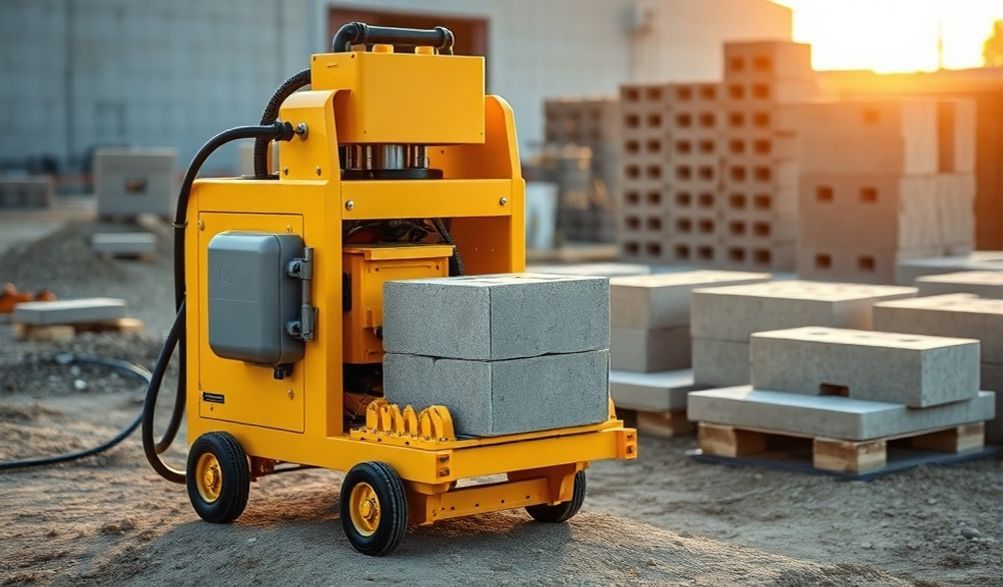
الدليل الشامل لآلات صناعة الطوب المحمولة: تعزيز الإنتاج والكفاءة في الموقع
تخيل أنك في موقع بناء ناءٍ، على بعد أميال من أقرب مورد. ارتفع سعر تسليم الكتل الخرسانية بنسبة 30% بسبب تكاليف الوقود وصعوبة الوصول. أو تصور مقاولًا صغيرًا يخسر عرضًا مربحًا لأعمال التنسيق لأن تكلفة البلاط المشتركة تلتهم كل الربح. بالنسبة للبنائين والمقاولين ورجال الأعمال، هذه ليست افتراضات - بل هي إحباطات يومية تضغط على الهوامش وتعقد العمليات اللوجستية.
ماذا لو استطعت تحويل المواد الخام إلى كتل أو طوب أو بلاط عالي الجودة تمامًا حيث تحتاجها؟ هذا هو الوعد الأساسي لآلة صنع الكتل المحمولة. إنها قوة محركة مدمجة ومتنقلة مصممة لإنتاج وحدات البناء الخرسانية مباشرة في موقع العمل، أو المصنع الصغير، أو حتى المنزل الريفي.
هذا الدليل الشامل يقطع شوطاً بعيداً عن الضجيج. مجمع من مواصفات الصناعة، والمعرفة التشغيلية، والاعتبارات العملية للأعمال، فهو بمثابة مصدرك الشامل. سواء كنت تبحث عن معلومات حول كيفية عملها، أو تقارن بين الخيارات التجارية، أو تحدد الميزات الرئيسية للشراء، سنوفر لك الوضوح الذي تحتاجه لاتخاذ استثمار واثق ومستنير.
ما هي آلة صناعة الكتل المحمولة؟ المفاهيم الأساسية والتطبيقات
في جوهره، آلة صنع الكتل المحمولة هي مصنع متنقل للمنتجات الخرسانية. فهي تخلط وتضغط وتشكل خليط الخرسانة إلى أشكال دقيقة ومتينة مثل الكتل والطوب أو البلاط. على عكس المصانع الثابتة، فإن سِمتها المميزة هي التنقل—يمكن سحبها أو دفعها أو تحميلها على مقطورة، مما يجلب الإنتاج إلى نقطة الاستهلاك.
كيف تختلف عن المحطات الثابتة
فهم هذا التمييز أمر بالغ الأهمية. فالمصانع الثابتة تُبنى لإنتاج ضخم ومستمر، غالبًا ما تنتج آلاف القوالب في الساعة. وهي منشآت دائمة تتطلب رأس مال ومساحة وبنية تحتية كبيرة.
آلة محمولة تقلب هذا النموذج رأسًا على عقب:
* الحركة:إنه مجهز بعجلات، أو بوصلة جر، أو خفيف بما يكفي ليتم نقله بواسطة رافعة شوكية.
* إخراج أقليتم قياس الإنتاج بمئات أو بضعة آلاف من البلوكات يومياً، بما يتوافق مع الاحتياجات حسب الطلب.
* المرونة:يتم إعداده على أرض مستوية في ساعات، ينتج ما تحتاجه، وينتقل إلى الموقع التالي. هذه المرونة هي قوته الخارقة.
التطبيقات الرئيسية والمستخدمون المثاليون
هذه المرونة تجعلها أداة لمجموعة واسعة من المستخدمين.
* الشركات الصغيرة والمتوسطة في قطاع البناء:إنتاج الكتل في الموقع لمشاريع الإسكان، مما يلغي الحاجة للنقل ويقلل من السرقة.
* المساكن والتنمية الريفيةمثالي للمناطق ذات إمكانية وصول طرقية ضعيفة أو عدم وجود موردي بلوك محليين، مما يمكن من البناء بقيادة المجتمع.
* مقاولو تنسيق الحدائق ورصف الطرق:إنشاء أرضيات رصف مخصصة، وأحجار حواف، وكتل جدران استنادية مصممة خصيصًا لكل تصميم.
* رواد الأعمال والمنتجون الصغارابدأ مشروعًا لصناعة الطوب بتكاليف دخول أقل، لتزويد الأسواق المحلية.
* وكالات الإغاثة في حالات الكوارث والمساعدات الإنسانية:النشر السريع لإنتاج مواد البناء من أجل جهود إعادة الإعمار.
* هواة الأعمال اليدوية وأصحاب المنازل الريفية:لبناء الجدران، السقائف، أو معالم الحدائق باستخدام مواد مصنوعة ذاتيًا.
الأنواع الشائعة للكتل المنتجة
هذه الآلات مذهلة في تنوع إنتاجها. فباستخدام قوالب قابلة للتبديل، يمكن لآلة واحدة أن تنتج:
* الطوب المجوف:معيار للجدران الحاملة وغير الحاملة.
* كتل صلبة: For foundations, pillars, and areas requiring high strength.
* الأحجار المرصوفة والطوب المتشابك:للممرات والمشايات والتراسات.
* Curbs, Kerbstones, and Grass Pavers: For landscaping and civil works.
* الأشكال المتخصصة Some machines offer molds for unique architectural blocks.
Key Advantages of Investing in a Portable Block Maker
The benefits extend far beyond simple mobility. Investing in this technology can fundamentally change your project economics and operational control.
Unmatched Mobility and On-Site Production
This is the cornerstone advantage. By producing directly where materials are needed, you:
* إلغاء تكاليف النقل: No more paying for trucks to haul heavy, finished blocks over long distances.
* Reduce Material Handling: Minimize double-handling and breakage from loading/unloading multiple times.
* Overcome Logistical Hurdles: Access tight or remote sites where delivery of pre-made blocks is impossible or prohibitively expensive.
تخفيض كبير في التكاليف
The financial impact is multi-layered:
* توفير الخدمات اللوجستية As above, transport costs can constitute a major portion of block expenses.
* Lower Material Costs: Source sand and aggregate locally, often at a fraction of the cost of finished goods.
* Reduced Middlemen: Cut out the distributor and retailer markups, capturing more value in your own process.
Flexibility and Customization
Gain unprecedented control over your supply chain:
* الإنتاج حسب الطلب: Make blocks as the project progresses, reducing storage needs and capital tied up in inventory.
* Reduce Waste: Only mix and produce what you need for the day or week.
* Customize Easily: Change molds to produce different block sizes, or add pigments to the mix for colored pavers, all without relying on a supplier’s catalog.
Low Operational Overhead
Compared to a stationary plant, the barrier to entry is much lower:
* Capital Investment: Significantly lower initial purchase price.
* Setup & Infrastructure: Requires no permanent foundation or complex electrical/water hookups.
* Space Requirements: Can operate in a small yard or directly on the construction site.
Critical Features to Consider Before You Buy
Choosing the right machine requires matching its specifications to your specific needs. Here’s what demands your careful attention.
القدرة الإنتاجية (الكتل في الساعة / اليوم)
Capacity is typically measured in blocks per cycle (e.g., 3-10) and cycles per hour. A machine rated for 500 blocks per 8-hour shift is vastly different from one rated for 2000.
* Match to Scale: A small landscaping business might only need 200-300 pavers a day. A contractor building several houses will need 1000+ blocks daily.
* Consider Growth: It’s often wise to buy a machine with 20-30% more capacity than your current need to accommodate future growth.
Power Source: Manual, Electric, or Diesel
The power source dictates where and how you can operate.
* Manual (Hand-Operated): Lowest cost, no power needed. Ideal for very small-scale, intermittent use. Labor-intensive and lower output.
* كهربائي The most common for semi-automatic machines. Offers consistent vibration/pressure, quieter operation. Requires a reliable power source or generator.
* Diesel or Diesel-Electric Hybrid: Full independence from the grid. Essential for remote sites. Higher fuel cost and maintenance, but offers maximum mobility and power.
Machine Type & Block Molding Process
The compaction method defines block quality and machine complexity.
* نظام الاهتزاز:
* Table Vibration: The mold table vibrates intensely to settle the concrete mix. Common and effective for most block types.
* Press Vibration: Vibration is combined with mechanical or hydraulic pressure from above. Produces denser, higher-strength blocks faster.
* Pressure Type: Machines can be mechanically lever-operated, electro-mechanical, or hydraulic. Hydraulic systems often provide the most consistent pressure and easier operation.
Mobility Features
Not all “portable” machines are equally portable.
* Wheel Type & Axle: Heavy-duty pneumatic tires are best for rough terrain. Check the towing hitch rating.
* Weight & Dimensions: Can it be legally towed by your vehicle? Will it fit through your gate? Verify overall transport dimensions.
* الاستقرار: Once on site, does it have outriggers or jacks for stable operation?
سهولة التشغيل والصيانة
This affects your daily workflow and long-term costs.
* سهولة الاستخدام: Are controls intuitive? Is the mold-changing process straightforward?
* مستوى المهارة Some machines require experienced operators, while others are designed for quick training.
* Maintenance & Spare Parts: What daily greasing is required? Are critical spare parts (like vibration motors) readily available from the supplier? A machine with no local service support is a major risk.
A Step-by-Step Guide to Operating Your Portable Block Machine
Once you have your machine, proper operation is key to quality and safety. Here’s a practical overview of the process.
Site Preparation and Safety First
A successful production day starts with preparation.
* Choose Stable Ground: Level, compacted soil or a concrete pad. This ensures machine stability and product uniformity.
* Safety Gear is Non-Negotiable: Always wear steel-toe boots, heavy-duty gloves, safety goggles, and hearing protection (if near a loud engine).
* Organize Your Workspace: Have raw material piles (cement, sand, aggregate) and a clean water source easily accessible. Designate areas for mixing, production, and block curing.
The Production Cycle: From Raw Material to Cured Block
The core process is a consistent cycle:
1. خلط المواد الخام: A consistent mix is critical. A common starting ratio is 1 part cement, 3 parts sand, and 3 parts aggregate (3/8″ or 10mm). Use a mechanical pan mixer for consistency—hand mixing is rarely adequate for machine production. Achieve a semi-dry, “ball-in-hand” consistency.
2. Loading the Hopper: The mixed material is fed into the machine’s feed hopper.
3. Molding/Compaction Process: The operator activates the machine. The hopper feeds a measured amount of mix into the mold cavity. Vibration and pressure compact the mix into a solid form.
4. Ejection and Palletizing: The mold rises, and the freshly formed block is ejected onto a wooden or steel pallet. Pallets are then carefully moved to the curing area.
5. Curing Process Best Practices: Curing is not just drying; it’s a chemical process. For maximum strength:
* Keep blocks under plastic sheeting or in a shaded area for 24-48 hours to retain moisture.
* After initial set, water-cure by sprinkling for 5-7 days. Properly cured blocks can reach their specified strength (often 3-5 MPa for non-load bearing, 7+ MPa for load-bearing).
Routine Maintenance Checklist
Preventative care prevents downtime.
* Daily: Clean the machine thoroughly after use, removing all concrete residue. Check and grease all moving parts and bearings as per the manual.
* Weekly: Inspect bolts and nuts for tightness. Check hydraulic hoses and electrical connections for wear.
* Monthly: Perform a more detailed inspection of the vibration motors, mold liners, and wear plates. Replace parts showing significant wear.
Choosing the Right Machine for Your Project & Budget
This is where your research culminates in a smart purchasing decision.
Matching Machine Specifications to Project Scope
- DIY/Landscaping (Very Small Scale): A manual or small electric machine producing 200-400 units/day is sufficient.
- Small Housing Project/Startup Business: Look at semi-automatic electric models producing 800-1500 blocks/day.
- Medium-Scale Commercial Production: A robust semi-automatic or fully automatic diesel machine with 2000+ blocks/day capacity is necessary.
Understanding Pricing Tiers
Prices vary dramatically based on features and automation:
* الآلات اليدوية: $1,000 – $4,000. Basic, labor-driven.
* الآلات شبه الآلية: $5,000 – $25,000. The sweet spot for most businesses. Electric or diesel, with mechanized vibration and compaction.
* آلات أوتوماتيكية بالكامل: $30,000+. High-output machines with automated pallet circulation and batching. For serious production businesses.
Supplier Vetting Checklist
The supplier is as important as the machine. Ask:
* After-Sales Service & Warranty: What is covered and for how long? Is there a local service technician?
* Training & Support: Do they offer on-site or video training? Is an operational manual provided?
* توفر قطع الغيار Can you get a list of common spare parts and their costs? Is inventory held locally?
* السمعة Always seek verified customer reviews and ask the supplier for references from past clients in a similar industry. Contact those references.
Cost-Benefit Analysis (ROI) Framework
Justify the investment with simple math:
1. Calculate your current cost per block (purchase price + delivery).
2. Estimate your production cost per block with the machine (cement, aggregate, sand, labor, fuel/power, machine depreciation).
3. Determine your daily/weekly block requirement.
4. The difference between #1 and #2, multiplied by your volume, shows your potential savings. This will reveal your payback period (Investment Cost / Monthly Savings).
Frequently Asked Questions (FAQ) About Portable Block Machines
Q: What is the average production output of a portable block making machine?
A: Output varies widely. Small manual machines may produce 300-500 blocks in an 8-hour day. Semi-automatic models typically range from 800 to 2,500 blocks per day, depending on block size and operator efficiency.
Q: Can I use a portable machine to start a block manufacturing business?
A: Absolutely. It’s a common and lower-risk entry point. Start by supplying your own projects or small local clients. Focus on consistent quality, reliable curing, and good customer service to build your reputation.
Q: What raw materials are required, and what is the ideal mix ratio?
A: You need Portland cement, clean sand, and aggregate (crushed stone, 3/8″ or 5-10mm is typical). A standard starting mix is 1:3:3 (cement:sand:aggregate) by volume. The ideal “semi-dry” mix should hold its shape when squeezed in your hand.
Q: How durable are the blocks produced compared to factory-made ones?
A: With the correct mix design, proper compaction, and—most importantly—adequate curing, on-site blocks can meet or exceed the strength of factory-made blocks. The key is controlling the process meticulously.
Q: What are the most common operational challenges and how do I solve them?
A: Common issues include:
* Blocks breaking during ejection: The mix is too dry. Add slight moisture.
* Blocks lack strength or crumble: Inadequate compaction, wrong mix ratio, or, most commonly, poor curing. Review each step.
* Inconsistent block height: Unstable ground or an uneven feed of raw material into the mold.
Q: Is technical training provided by most manufacturers?
A: Reputable suppliers should provide training, either via detailed manuals, video tutorials, or on-site instruction. Always confirm this before purchasing.
Q: What is the typical lifespan of a well-maintained machine?
A: A quality machine that receives regular maintenance can last 10-15 years or more. Critical wear parts like mold liners and vibration motors will need replacement during this time, but the main frame should endure.
خاتمة
Portable block making machines represent a paradigm shift in how we think about construction material supply. They transform logistical challenges into opportunities for savings, control, and flexibility. By bringing production on-site, they empower builders, contractors, and entrepreneurs to take charge of their costs, timelines, and output quality.
The “best” machine isn’t the most expensive or the highest-output model. It is the one that aligns perfectly with your specific project scope, budget constraints, and local operating conditions. It is the machine backed by a supplier who offers robust support and training.
We encourage you to use this guide as a foundational checklist. Move forward by consulting with multiple reputable suppliers, requesting detailed specifications, and—where possible—witnessing a live demonstration. Speak directly to existing customers to get unfiltered feedback. With thorough due diligence, your investment in a portable block maker can become a cornerstone of efficiency and profitability for years to come.
<