
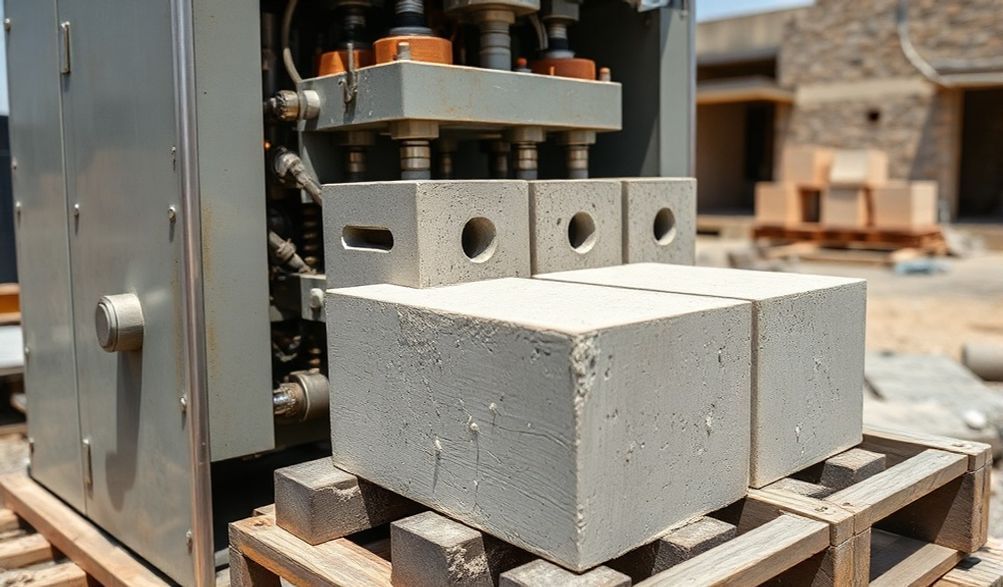
হাউস ব্লক মেকিং মেশিনের চূড়ান্ত গাইড: প্রকার, খরচ এবং কীভাবে বেছে নেবেন
ভূমিকা
সাশ্রয়ী, টেকসই আবাসনের বৈশ্বিক চাহিদা একটি স্থায়ী চ্যালেঞ্জ। নগর সম্প্রসারণ থেকে গ্রামীণ উন্নয়ন পর্যন্ত, একটি নির্ভরযোগ্য, সাশ্রয়ী নির্মাণ সামগ্রীর প্রয়োজন সর্বজনীন। এই প্রেক্ষাপটে আসেবাড়ি ব্লক তৈরির মেশিনএটি প্রকৌশলের একটি শক্তিশালী নিদর্শন যা কাঁচা, স্থানীয় উপকরণকে সম্প্রদায়ের মূল ভিত্তিতে রূপান্তরিত করে। নির্মাতা, ঠিকাদার এবং উদ্যোক্তাদের জন্য এই যন্ত্রপাতি কেবল একটি সরঞ্জাম নয়; এটি সম্প্রসারণযোগ্য, গুণমান-নিয়ন্ত্রিত নির্মাণের একটি মৌলিক সমাধান।
এই নির্দেশিকা একটি একক উদ্দেশ্য পরিবেশন করে: ব্লক উৎপাদন যন্ত্রপাতির জগতে নেভিগেট করার জন্য আপনার ব্যাপক, নিরপেক্ষ সম্পদ হওয়া। আমরা প্রযুক্তিগত বিবরণ, শিল্প জ্ঞান এবং কঠোর অর্জিত ব্যবহারিক অভিজ্ঞতার ভিত্তিতে স্বচ্ছতা প্রদানের জন্য বিপণনের জার্গন কেটে দিই। নতুন ক্রেতাদের মুখোমুখি হওয়া একটি সাধারণ সমস্যা হল তাদের স্থানীয় কাঁচামালের গুরুত্বকে অবমূল্যায়ন করা, যার ফলে মেশিন এবং মাটির মধ্যে ব্যয়বহুল অসামঞ্জস্য দেখা দেয়।
আমাদের লক্ষ্য আপনাকে ক্ষমতায়িত করা। এই নির্দেশিকার শেষে, আপনার চাহিদা মূল্যায়ন, বাজার বোঝা এবং একটি আত্মবিশ্বাসী বিনিয়োগ সিদ্ধান্ত নেওয়ার জন্য আপনার কাছে একটি স্পষ্ট কাঠামো থাকবে। আমরা কোন ব্র্যান্ডকে পক্ষপাতিত্ব না করে পেশাদ ও কনস, এবং গুরুত্বপূর্ণ বিবেচনাগুলো কভার করব, যা আপনাকে এগিয়ে যাওয়ার জন্য প্রয়োজনীয় বিশ্বস্ত তথ্য দেবে।
হাউস ব্লক মেকিং মেশিন কী? মূল কার্যকারিতা ও সুবিধা
তার মূলে, একটিবাড়ি ব্লক তৈরির মেশিনএটি এমন একটি যন্ত্র যা কাঁচামালের মিশ্রণ—সাধারণত মাটি, সিমেন্ট, বালি এবং সমষ্টিকে—একটি ঘন, অভিন্ন আকারের ব্লকে পরিণত করে। এটি ঐতিহ্যগতভাবে হাতে করা একটি প্রক্রিয়াকে স্বয়ংক্রিয় ও শিল্পায়িত করে, যা হস্তশিল্পের তুলনায় সুনিশ্চিত করে নির্ভুলতা, শক্তি এবং দক্ষতা।
কীভাবে কাজ করে: কাঁচামাল থেকে সমাপ্ত ব্লক পর্যন্ত মৌলিক প্রক্রিয়া
প্রক্রিয়াটি, যদিও মেশিনের ধরন অনুযায়ী পরিবর্তিত হয়, একটি সামঞ্জস্যপূর্ণ নীতি অনুসরণ করে:
1. মিশ্রণ:মিশ্রণকারী যন্ত্রে একটি নির্দিষ্ট পরিমাণ পানির সাথে কাঁচামাল মিশিয়ে একটি সমজাতীয়, আধা-শুষ্ক গঠনপ্রাপ্ত হয়।
2. খাওয়ানো:এই মিশ্রণটি মেশিনের হপারে খাওয়ানো হয়।
3. কম্প্যাকশন ও ছাঁচনির্মাণ:মিশ্রণটি একটি ছাঁচ গহ্বরে ফেলা হয়। এখানে, উচ্চ-ফ্রিকোয়েন্সি কম্পন এবং যান্ত্রিক বা জলবাহী চাপের সমন্বয়ে উপাদানটি সংকুচিত হয়, বায়ু পকেট দূর করে এবং সর্বাধিক ঘনত্ব নিশ্চিত করে।
4. বহিষ্কার: The newly formed, solid block is ejected from the mold onto a pallet or the ground.
5. কিউরিং Blocks are stacked and left to cure for a period (often 14-28 days) to gain full structural strength, a process sometimes accelerated with steam curing in advanced setups.
Key Benefits: Why Use a Dedicated Machine?
Investing in a dedicated machine offers transformative advantages:
* খরচ-দক্ষতা: Drastically reduces labor costs per block and minimizes material waste through precise proportioning.
* সঙ্গতি ও মান: Every block has identical dimensions and compressive strength (measured in MPa), which is non-negotiable for structural integrity and compliance with building codes.
* Speed and Scalability: A single machine can produce hundreds or thousands of blocks per day, keeping large projects on schedule and enabling business growth.
* Design Versatility: By simply changing molds, one machine can produce solid blocks, hollow blocks, interlocking blocks (which require no mortar), and paving stones, offering product line flexibility.
Types of House Block Making Machines Explained
Choosing the right type of machine is your first major decision. The spectrum ranges from purely manual to fully automated systems.
ম্যানুয়াল ব্লক তৈরির মেশিন
- অপারেশন এবং আউটপুট Entirely human-powered. An operator manually fills the mold, engages a lever to apply pressure, and then removes the block. Output is low, typically 100-500 blocks per day.
- আদর্শ ব্যবহারের ক্ষেত্র: Extremely small-scale projects, personal use (e.g., building a home garden wall), or contexts with very limited capital and abundant cheap labor.
- সুবিধা: Very low initial cost, no power required, simple to understand.
- অসুবিধাগুলো Labor-intensive, low and inconsistent output, highly dependent on operator skill, produces lower-strength blocks.
সেমি-অটোমেটিক ব্লক তৈরির মেশিন
- অপারেশন এবং আউটপুট These machines automate the critical compaction process (using electric or diesel-powered vibration and pressure) but require operators to feed material and remove finished blocks. Output ranges from 500 to 3,000+ blocks per 8-hour shift.
- আদর্শ ব্যবহারের ক্ষেত্র: The sweet spot for most small to medium construction businesses and contractors. Offers an excellent balance between investment cost, output, and block quality.
- সুবিধা: Significant productivity boost over manual, excellent quality control, moderate investment, more consistent block strength.
- অসুবিধাগুলো Still requires a small crew, output is not continuous.
সম্পূর্ণ স্বয়ংক্রিয় ব্লক তৈরির মেশিন
- অপারেশন এবং আউটপুট These are complete production lines. They feature automatic material feeding, molding, compaction, block ejection, stacking, and sometimes pallet return systems. Controlled by PLC (Programmable Logic Controller), they can produce 4,000 to 20,000+ blocks per day.
- আদর্শ ব্যবহারের ক্ষেত্র: Large-scale commercial block yards, major construction firms supplying entire housing developments, or entrepreneurs focusing solely on block manufacturing as a business.
- সুবিধা: Maximum output with minimal labor, unparalleled consistency, often include advanced features like automatic color dosing or steam curing chambers.
- অসুবিধাগুলো High capital investment, complex installation, requires reliable utility connections and skilled maintenance.
Mobile vs. Stationary Block Plants: Key Differences
- মোবাইল মেশিন: Mounted on a trailer, these are designed to be towed directly to a construction site. They produce blocks on-site, eliminating transport costs for the finished product. Ideal for remote projects or where the raw material (e.g., soil) is already at the location.
- স্থির উদ্ভিদ: Set up in a fixed yard. They require raw materials to be transported to the machine and finished blocks to be transported to job sites. They allow for more permanent, optimized setups with shelters, conveyor systems, and larger raw material stockpiles.
Critical Factors for Choosing Your Machine
Beyond the machine type, drill down into these specifics. An experienced buyer always prioritizes these factors over a flashy sales pitch.
Assessing Your Production Needs: Output Capacity
Don’t just think about today’s project. Consider your business over the next 2-3 years.
* Calculate your average daily block requirement based on project pipelines.
* Crucial Insight: Machine output is rated in cycles per hour. Multiply this by the number of blocks per cycle (e.g., a “4-block mold” makes 4 blocks per cycle). Always derate the manufacturer’s “ideal” output by 15-20% for real-world conditions like breaks, maintenance, and material loading.
Raw Material Considerations
The machine must suit your material, not the other way around.
* Soil Type: Not all soil is suitable. A simple on-site soil test for composition (clay, silt, sand ratio) is essential. High clay content can cause cracking; sandy soil may lack cohesion.
* মিশ্রণ নকশা: The recipe matters. A standard Cement Stabilized Earth Block (CSEB) might be 5-10% cement, 30% sand, and 60-65% soil. Your local conditions will dictate the optimal mix. প্রো টিপ: Reputable suppliers should offer to test a sample of your local material in their machine.
ব্লকের প্রকার এবং আকার
What will you build? Your product determines the mold.
* সলিড ব্লক: For heavy-load bearing walls and foundations.
* হোলো ব্লক: Lighter, provide better insulation, and are used for partition walls and some structural walls.
* ইন্টারলকিং ব্লক: The edges are designed to fit together like puzzle pieces, minimizing or eliminating mortar. This drastically speeds up construction and reduces skilled labor needs.
* পেভারস:ড্রাইভওয়ে, হাঁটার পথ এবং ল্যান্ডস্কেপিংয়ের জন্য।
Power Source: Electric, Diesel, or Hybrid?
- বৈদ্যুতিক Cleaner, quieter, and lower operational cost per hour. Requires a stable and powerful grid connection.
- ডিজেল: Offers complete independence from the grid, crucial for sites without reliable electricity. Higher fuel and maintenance costs, and produces emissions/noise.
- হাইব্রিড: Offers flexibility to switch between power sources, providing a valuable backup but at a higher purchase price.
Key Machine Features to Inspect
When evaluating models, look under the hood:
* মোল্ডের গুণমান: Molds should be made from hardened, high-grade steel. A worn or poorly machined mold produces out-of-spec blocks.
* কম্পন ব্যবস্থা: This is the heart of compaction. Look for multiple high-frequency external vibrators mounted on the mold table. The amplitude and frequency determine block density.
* হাইড্রোলিক সিস্টেম: For semi- and fully-automatic machines, check the quality of pumps, cylinders, and valves. Ask about pressure ratings and filtration systems to prevent contamination.
Understanding the Investment: Cost Analysis & ROI
A transparent look at the numbers builds trust and prevents nasty surprises.
Breakdown of Costs
The machine’s price tag is just the start.
* Machine Price: Varies wildly: Manual ($1,000-$5,000), Semi-Auto ($8,000-$50,000), Fully Auto ($60,000-$500,000+).
* Shipping & Logistics: For imported machines, this can be 10-25% of the machine cost. Factor in port charges, customs duties, and inland transport.
* ইনস্টলেশন ও ফাউন্ডেশন Some machines require a concrete foundation. Installation may require a technician, potentially with travel costs.
* Initial Training: Don’t skip this. Budget for operator and basic maintenance training.
Operational Costs
Your ongoing expenses determine profitability.
* কাঁচামাল: The largest recurring cost. Source locally to minimize expense.
* শ্রম Number of workers needed for operation, material handling, and curing yard management.
* Power/Fuel: Calculate based on your machine’s consumption and local utility/fuel rates.
* Maintenance & Spares: Set aside 2-5% of the machine’s cost annually for routine maintenance and spare parts (like wear plates on molds).
Calculating Potential Return on Investment (ROI)
A simplified model:
1. Calculate your cost per block (Material + Labor + Power + Maintenance/Depreciation).
2. Determine your selling price per block in your local market.
3. Calculate profit per block.
4. Estimate how many blocks you can realistically produce and sell per month.
5. ROI Time (in months) = Total Investment Cost / (Profit per Block x Blocks Sold per Month).
For a semi-automatic setup, a well-run operation often sees an ROI within 12-24 months.
Tips for Sourcing Reliable Suppliers
- Request Multiple Quotes: Ensure they are for the same specifications (output, mold type, power).
- Ask for References & Visit Existing Installations: If possible, talk to other buyers in a similar climate or region.
- Review After-Sales Support: What is their warranty? Do they have local technicians or a network for spare parts? This is often more important than a slight price difference.
Operation, Safety, and Maintenance Best Practices
The machine’s longevity and your team’s safety depend on disciplined practices.
Essential Safety Protocols for Operators
- PPE is Mandatory: Safety glasses, hearing protection (vibration is loud), steel-toe boots, and gloves.
- Lock-Out/Tag-Out: Always disconnect power and relieve hydraulic pressure before performing any maintenance or clearing a jam.
- Never Bypass Safety Guards: They are there for a reason, especially around moving parts and vibration units.
Maintenance Checklists
- দৈনিক Check hydraulic fluid levels, inspect for oil leaks, clean the machine thoroughly (built-up hardened material is a major cause of wear), and check mold and wear parts.
- সাপ্তাহিক Tighten all bolts and nuts (vibration loosens them), check vibrator mounts, inspect electrical connections.
- Monthly: Change hydraulic oil filters, check and repack bearings, conduct a full inspection of the mold and compaction system.
Troubleshooting Common Issues
- Poor Compaction/Weak Blocks: Usually incorrect water content in the mix, insufficient vibration time/power, or worn mold liners.
- Blocks Sticking in Mold: Mold needs cleaning or a light application of recommended mold oil. Could also indicate a mix that is too wet.
- Machine Not Cycling: Check electrical connections, hydraulic pressure settings, and safety sensor positions.
Ensuring Long Machine Lifespan
Build a relationship with your supplier for genuine spare parts. Keep a small inventory of critical wear items (like mold liners and hydraulic seals) to minimize downtime. The adage “a clean machine is a long-lasting machine” holds absolutely true here.
Frequently Asked Questions (FAQ) About House Block Making Machines
Q1: What is the average production capacity of a standard house block making machine?
There is no single “standard.” Capacities range from ~500 blocks per day for a manual machine to over 10,000 for a fully automatic plant. A popular semi-automatic model might produce 1,500-2,500 high-quality blocks in an 8-hour shift.
Q2: Can I use local soil in a block making machine, or is a special mix required?
You can and should use local soil, but it often requires modification. A “special mix” is created by analyzing your local soil and blending it with stabilizers (like cement or lime) and aggregates (sand, gravel) to achieve the required strength and durability. Always test your specific soil first.
Q3: What is the typical price range for a good quality semi-automatic machine?
For a robust, well-built semi-automatic machine capable of professional output, expect a price range of $15,000 to $35,000, depending on features, level of automation, and brand. Significantly cheaper machines often compromise on the quality of components like the vibration motor or hydraulic system.
Q4: How much space (land) is needed to set up a small block production yard?
A minimum of 5,000 to 10,000 square feet (approx. 500-1,000 sq. meters) is recommended. This space must accommodate the machine shed, raw material stockpiles (sand, aggregate, soil), a mixing area, a large curing yard where blocks sit for weeks, and storage for finished blocks.
Q5: What kind of training is required to operate and maintain these machines?
Basic operation can be learned in a few days. Effective maintenance and troubleshooting require more in-depth training, often provided by the supplier over a week. Understanding the raw material mix design is a separate, critical skill that may require consultation with a local engineer or experienced block producer.
Q6: Are there eco-friendly or sustainable options for block production?
Absolutely. This is a major industry trend. Options include:
* Using compressed earth blocks (CEBs) with minimal (5%) or no cement, stabilized with lime.
* Incorporating industrial by-products like fly ash into the mix.
* Producing interlocking blocks, which reduce cement mortar use by up to 50% during construction.
* Using solar power to run electric machines.
উপসংহার
সঠিক নির্বাচনবাড়ি ব্লক তৈরির মেশিন is a strategic decision that hinges on a clear assessment of your project scale, budget, long-term business goals, and the characteristics of your locally available materials. There is no one-size-fits-all solution, but there is a right machine for your specific context.
Our final, most crucial recommendation is this: Do not skip the testing phase. Use this guide as a checklist when speaking with manufacturers. Insist on having your local soil tested in their machine to see the resulting block quality and strength. If at all possible, visit an existing installation to see the machine running in real-world conditions.
Before finalizing any investment, it is also wise to consult with a local civil or construction engineer. They can provide site-specific advice on optimal block specifications for your climate and soil conditions. The industry is steadily moving towards greater automation and a stronger focus on sustainable materials—positioning your investment with these trends in mind is a smart long-term strategy.
<