
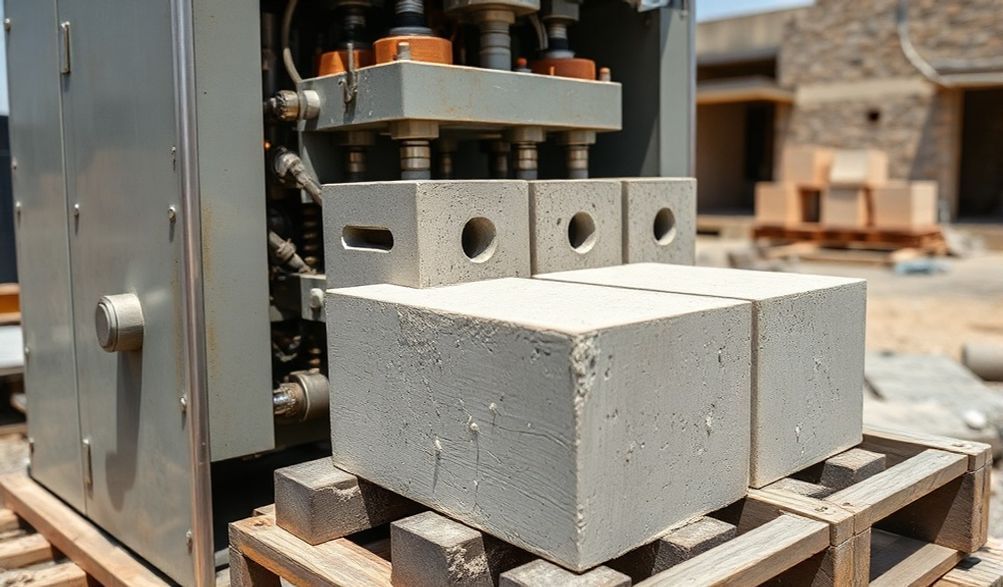
Uy Blok Yasalish Mashinalari Bo'yicha Yakuniy Qo'llanma: Turlari, Narxlari va Qanday Tanlash Kerak
Kirish
Arzon, bardoshli uylarga bo'lgan global talab doimiy muammo hisoblanadi. Shaharlarning kengayishidan tortib, qishloq rivojlanigacha, ishonchli va arzon qurilish materialiga bo'lgan ehtiyoj umumjahondir. Bu yerdauy bloklari yasash mashinasi—bu qudratli muhandislik mahsuli boʻlib, mahalliy xom ashyoni jamiyatlar uchun qurilish bloklariga aylantiradi. Quruvchilar, pudratchilar va tadbirkorlar uchun bu mashina nafaqat asbob, balki masshtablanuvchan, sifat nazoratli qurilish uchun asosiy yechimdir.
Ushbu qo'llanma yagona maqsadga xizmat qiladi: blok ishlab chiqarish mashinalari dunyosida harakatlanish uchun sizning to'liq qamrovli va xolis manbaingiz bo'lish. Biz marketing jargonidan voz kechib, texnik spetsifikatsiyalar, soha bilimi va amaliy tajriba asosida aniqlikni ta'minlaymiz. Yangi xaridorlar duch keladigan keng tarqalgan kamchilik - bu mahalliy xom ashyolarning ahamiyatini kam baholash, bu esa mashina va tuproq o'rtasida qimmat nomuvofiqligga olib keladi.
Bizning maqsadimiz sizni kuch-qudrat bilan ta'minlashdir. Ushbu qo‘llanma oxiriga kelib, siz o‘z ehtiyojlaringizni baholash, bozorni tushunish va ishonchli investitsiya qarorini qabul qilish uchun aniq tizimga ega bo‘lasiz. Biz har qanday brendni afzal ko‘rmasdan, sizga kerakli ishonchli ma'lumotlarni taqdim etib, afzalliklar, kamchiliklar va muhim mulohazalarni yoritamiz.
Uy bloklari yasash mashinasi nima? Asosiy vazifasi va afzalliklari
Uning asosida, biruy bloklari yasash mashinasiBu qurilma xom ashyo aralashmasini — odatda tuproq, sement, qum va shag'alni — zich, bir xil shakldagi blokka siqib chiqaradi. U an'anaviy ravishda qo'lda bajariladigan jarayonni avtomatlashtiradi va industrializatsiya qiladi, qo'l mehnati yeta olmaydigan aniqlik, mustahkamlik va samaradorlikni ta'minlaydi.
Xomashyodan tayyor blokgacha bo'lgan asosiy jarayon: Qanday ishlaydi.
Jarayon, mashina turiga qarab farq qilsa-da, doimiy prinsipga amal qiladi:
1. Aralash:Xom ashyo aralashtirgichda aniq miqdordagi suv bilan birlashtirilib, bir jinsli, yarim quruq konsistensiyaga erishiladi.
2. Oziqlantirish:Ushbu aralashma mashinaning bunkeriga beriladi.
3. Siqish va Qoliplash:Aralashma qolip bo'shlig'iga tashlanadi. Bu yerda yuqori chastotali tebranish va mexanik yoki gidravlik bosimning birikmasi materialni siqadi, havo cho'ntaklarini olib tashlaydi va maksimal zichlikni ta'minlaydi.
4. Ejektsiya:Yangi hosil bo‘lgan qattiq blok qolipdan pallet yoki yerga chiqariladi.
5. Davolash:Bloklar yig‘ib qo‘yiladi va to‘liq konstruktiv mustahkamlikka ega bo‘lishi uchun ma’lum muddatga (ko‘pincha 14-28 kun) qoldiriladi, bu jarayon ba’zan ilg‘or qurilmalarda bug‘ bilan tezlashtirilgan quritish orqali amalga oshiriladi.
Asosiy afzalliklar: Nima uchun maxsus mashinadan foydalanish kerak?
Maxsus mashinaga sarmoya kiritish transformativ afzalliklarni taqdim etadi.
* Xarajat samaradorligi:Bir blok uchun mehnat xarajatlarini keskin kamaytiradi va aniq nisbatlar orqali material chiqindilarini minimallashtiradi.
* Izchillik va Sifat:Har bir blok bir xil o'lcham va siqilish mustahkamligiga (MPa da o'lchanadi) ega bo'lib, bu konstruktiv butunlik va qurilish qoidalariga rioya qilish uchun majburiydir.
* Tezlik va Masshtablilik:Bir dona mashina kuniga yuzlab yoki minglab bloklarni ishlab chiqarishi mumkin, bu esa yirik loyihalarning jadval bo‘yicha bajarilishini ta’minlaydi va biznesning rivojlanishiga imkon yaratadi.
* Dizaynning ko‘p qirraliligi:Oddiy qolipni almashtirish orqali bitta mashina qattiq bloklar, ichi bo‘sh bloklar, bir-biriga bog‘lanadigan bloklar (ohak talab qilmaydi) va yo‘l toshlarini ishlab chiqarishi mumkin, bu esa mahsulot qatorining moslashuvchanligini ta’minlaydi.
Types of House Block Making Machines Explained
Choosing the right type of machine is your first major decision. The spectrum ranges from purely manual to fully automated systems.
Qo'lda Blok Yasalish Mashinalari
- Operatsiya va Natija Entirely human-powered. An operator manually fills the mold, engages a lever to apply pressure, and then removes the block. Output is low, typically 100-500 blocks per day.
- Ideal foydalanish holati: Extremely small-scale projects, personal use (e.g., building a home garden wall), or contexts with very limited capital and abundant cheap labor.
- Afzalliklari: Very low initial cost, no power required, simple to understand.
- Kamchiliklari: Labor-intensive, low and inconsistent output, highly dependent on operator skill, produces lower-strength blocks.
Yarim Avtomatik Blok Yasalish Mashinalari
- Operatsiya va Natija These machines automate the critical compaction process (using electric or diesel-powered vibration and pressure) but require operators to feed material and remove finished blocks. Output ranges from 500 to 3,000+ blocks per 8-hour shift.
- Ideal foydalanish holati: The sweet spot for most small to medium construction businesses and contractors. Offers an excellent balance between investment cost, output, and block quality.
- Afzalliklari: Significant productivity boost over manual, excellent quality control, moderate investment, more consistent block strength.
- Kamchiliklari: Still requires a small crew, output is not continuous.
To'liq avtomatik blok yasash mashinalari
- Operatsiya va Natija These are complete production lines. They feature automatic material feeding, molding, compaction, block ejection, stacking, and sometimes pallet return systems. Controlled by PLC (Programmable Logic Controller), they can produce 4,000 to 20,000+ blocks per day.
- Ideal foydalanish holati: Large-scale commercial block yards, major construction firms supplying entire housing developments, or entrepreneurs focusing solely on block manufacturing as a business.
- Afzalliklari: Maximum output with minimal labor, unparalleled consistency, often include advanced features like automatic color dosing or steam curing chambers.
- Kamchiliklari: High capital investment, complex installation, requires reliable utility connections and skilled maintenance.
Mobile vs. Stationary Block Plants: Key Differences
- Mobil Mashinalar: Mounted on a trailer, these are designed to be towed directly to a construction site. They produce blocks on-site, eliminating transport costs for the finished product. Ideal for remote projects or where the raw material (e.g., soil) is already at the location.
- Стационар ўсимликлар: Set up in a fixed yard. They require raw materials to be transported to the machine and finished blocks to be transported to job sites. They allow for more permanent, optimized setups with shelters, conveyor systems, and larger raw material stockpiles.
Critical Factors for Choosing Your Machine
Beyond the machine type, drill down into these specifics. An experienced buyer always prioritizes these factors over a flashy sales pitch.
Assessing Your Production Needs: Output Capacity
Don’t just think about today’s project. Consider your business over the next 2-3 years.
* Calculate your average daily block requirement based on project pipelines.
* Crucial Insight: Machine output is rated in cycles per hour. Multiply this by the number of blocks per cycle (e.g., a “4-block mold” makes 4 blocks per cycle). Always derate the manufacturer’s “ideal” output by 15-20% for real-world conditions like breaks, maintenance, and material loading.
Raw Material Considerations
The machine must suit your material, not the other way around.
* Soil Type: Not all soil is suitable. A simple on-site soil test for composition (clay, silt, sand ratio) is essential. High clay content can cause cracking; sandy soil may lack cohesion.
* Mix Design: The recipe matters. A standard Cement Stabilized Earth Block (CSEB) might be 5-10% cement, 30% sand, and 60-65% soil. Your local conditions will dictate the optimal mix. Professional Maslahat: Reputable suppliers should offer to test a sample of your local material in their machine.
Block Types and Sizes
What will you build? Your product determines the mold.
* Qattiq Bloklar: For heavy-load bearing walls and foundations.
* Pustak G'ishtlar: Lighter, provide better insulation, and are used for partition walls and some structural walls.
* O'zaro bog'langan bloklar: The edges are designed to fit together like puzzle pieces, minimizing or eliminating mortar. This drastically speeds up construction and reduces skilled labor needs.
* Pavement plitkalari:Haydov yo'llari, piyoda yo'llari va landshaft dizayni uchun.
Power Source: Electric, Diesel, or Hybrid?
- Elektr Cleaner, quieter, and lower operational cost per hour. Requires a stable and powerful grid connection.
- Dizel: Offers complete independence from the grid, crucial for sites without reliable electricity. Higher fuel and maintenance costs, and produces emissions/noise.
- Hybrid: Offers flexibility to switch between power sources, providing a valuable backup but at a higher purchase price.
Key Machine Features to Inspect
When evaluating models, look under the hood:
* Qoliplar Sifati: Molds should be made from hardened, high-grade steel. A worn or poorly machined mold produces out-of-spec blocks.
* Titrama Tizimi: This is the heart of compaction. Look for multiple high-frequency external vibrators mounted on the mold table. The amplitude and frequency determine block density.
* Gidravlik Tizim: For semi- and fully-automatic machines, check the quality of pumps, cylinders, and valves. Ask about pressure ratings and filtration systems to prevent contamination.
Understanding the Investment: Cost Analysis & ROI
A transparent look at the numbers builds trust and prevents nasty surprises.
Breakdown of Costs
The machine’s price tag is just the start.
* Machine Price: Varies wildly: Manual ($1,000-$5,000), Semi-Auto ($8,000-$50,000), Fully Auto ($60,000-$500,000+).
* Транспортировка ва логистика For imported machines, this can be 10-25% of the machine cost. Factor in port charges, customs duties, and inland transport.
* Installation & Foundation: Some machines require a concrete foundation. Installation may require a technician, potentially with travel costs.
* Initial Training: Don’t skip this. Budget for operator and basic maintenance training.
Operational Costs
Your ongoing expenses determine profitability.
* Xom ashyolar: The largest recurring cost. Source locally to minimize expense.
* Mehnat: Number of workers needed for operation, material handling, and curing yard management.
* Power/Fuel: Calculate based on your machine’s consumption and local utility/fuel rates.
* Maintenance & Spares: Set aside 2-5% of the machine’s cost annually for routine maintenance and spare parts (like wear plates on molds).
Calculating Potential Return on Investment (ROI)
A simplified model:
1. Calculate your cost per block (Material + Labor + Power + Maintenance/Depreciation).
2. Determine your selling price per block in your local market.
3. Calculate profit per block.
4. Estimate how many blocks you can realistically produce and sell per month.
5. ROI Time (in months) = Total Investment Cost / (Profit per Block x Blocks Sold per Month).
For a semi-automatic setup, a well-run operation often sees an ROI within 12-24 months.
Tips for Sourcing Reliable Suppliers
- Request Multiple Quotes: Ensure they are for the same specifications (output, mold type, power).
- Ask for References & Visit Existing Installations: If possible, talk to other buyers in a similar climate or region.
- Review After-Sales Support: What is their warranty? Do they have local technicians or a network for spare parts? This is often more important than a slight price difference.
Operation, Safety, and Maintenance Best Practices
The machine’s longevity and your team’s safety depend on disciplined practices.
Essential Safety Protocols for Operators
- PPE is Mandatory: Safety glasses, hearing protection (vibration is loud), steel-toe boots, and gloves.
- Lock-Out/Tag-Out: Always disconnect power and relieve hydraulic pressure before performing any maintenance or clearing a jam.
- Never Bypass Safety Guards: They are there for a reason, especially around moving parts and vibration units.
Maintenance Checklists
- Daily: Check hydraulic fluid levels, inspect for oil leaks, clean the machine thoroughly (built-up hardened material is a major cause of wear), and check mold and wear parts.
- Weekly: Tighten all bolts and nuts (vibration loosens them), check vibrator mounts, inspect electrical connections.
- Monthly: Change hydraulic oil filters, check and repack bearings, conduct a full inspection of the mold and compaction system.
Troubleshooting Common Issues
- Poor Compaction/Weak Blocks: Usually incorrect water content in the mix, insufficient vibration time/power, or worn mold liners.
- Blocks Sticking in Mold: Mold needs cleaning or a light application of recommended mold oil. Could also indicate a mix that is too wet.
- Machine Not Cycling: Check electrical connections, hydraulic pressure settings, and safety sensor positions.
Ensuring Long Machine Lifespan
Build a relationship with your supplier for genuine spare parts. Keep a small inventory of critical wear items (like mold liners and hydraulic seals) to minimize downtime. The adage “a clean machine is a long-lasting machine” holds absolutely true here.
Frequently Asked Questions (FAQ) About House Block Making Machines
Q1: What is the average production capacity of a standard house block making machine?
There is no single “standard.” Capacities range from ~500 blocks per day for a manual machine to over 10,000 for a fully automatic plant. A popular semi-automatic model might produce 1,500-2,500 high-quality blocks in an 8-hour shift.
Q2: Can I use local soil in a block making machine, or is a special mix required?
You can and should use local soil, but it often requires modification. A “special mix” is created by analyzing your local soil and blending it with stabilizers (like cement or lime) and aggregates (sand, gravel) to achieve the required strength and durability. Always test your specific soil first.
Q3: What is the typical price range for a good quality semi-automatic machine?
For a robust, well-built semi-automatic machine capable of professional output, expect a price range of $15,000 to $35,000, depending on features, level of automation, and brand. Significantly cheaper machines often compromise on the quality of components like the vibration motor or hydraulic system.
Q4: How much space (land) is needed to set up a small block production yard?
A minimum of 5,000 to 10,000 square feet (approx. 500-1,000 sq. meters) is recommended. This space must accommodate the machine shed, raw material stockpiles (sand, aggregate, soil), a mixing area, a large curing yard where blocks sit for weeks, and storage for finished blocks.
Q5: What kind of training is required to operate and maintain these machines?
Basic operation can be learned in a few days. Effective maintenance and troubleshooting require more in-depth training, often provided by the supplier over a week. Understanding the raw material mix design is a separate, critical skill that may require consultation with a local engineer or experienced block producer.
Q6: Are there eco-friendly or sustainable options for block production?
Absolutely. This is a major industry trend. Options include:
* Using compressed earth blocks (CEBs) with minimal (5%) or no cement, stabilized with lime.
* Incorporating industrial by-products like fly ash into the mix.
* Producing interlocking blocks, which reduce cement mortar use by up to 50% during construction.
* Using solar power to run electric machines.
Xulosa
To'g'ri tanlashuy bloklari yasash mashinasi is a strategic decision that hinges on a clear assessment of your project scale, budget, long-term business goals, and the characteristics of your locally available materials. There is no one-size-fits-all solution, but there is a right machine for your specific context.
Our final, most crucial recommendation is this: Do not skip the testing phase. Use this guide as a checklist when speaking with manufacturers. Insist on having your local soil tested in their machine to see the resulting block quality and strength. If at all possible, visit an existing installation to see the machine running in real-world conditions.
Before finalizing any investment, it is also wise to consult with a local civil or construction engineer. They can provide site-specific advice on optimal block specifications for your climate and soil conditions. The industry is steadily moving towards greater automation and a stronger focus on sustainable materials—positioning your investment with these trends in mind is a smart long-term strategy.
<