
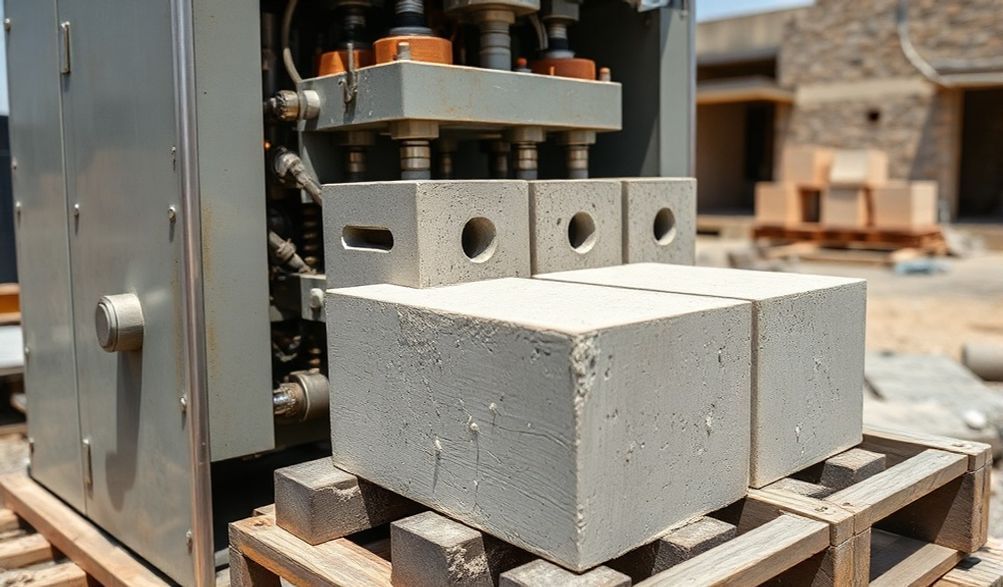
O Guia Definitivo para Máquinas de Fabricação de Blocos para Casas: Tipos, Custos e Como Escolher
Introdução
A procura global por habitação acessível e durável é um desafio constante. Da expansão urbana ao desenvolvimento rural, a necessidade de um material de construção confiável e económico é universal. Eis que surge omáquina de fabricação de blocos de casa—uma poderosa peça de engenharia que transforma matérias-primas locais nos próprios blocos de construção das comunidades. Para construtores, empreiteiros e empreendedores, essa máquina não é apenas uma ferramenta; é uma solução fundamental para construções escaláveis e com controle de qualidade.
Este guia tem um propósito singular: ser o seu recurso abrangente e imparcial para navegar no mundo das máquinas de produção de blocos. Cortamos o jargão de marketing para fornecer clareza com base em especificações técnicas, conhecimento do setor e experiência prática duramente conquistada. Uma armadilha comum que novos compradores enfrentam é subestimar a importância de suas matérias-primas locais, levando a incompatibilidades custosas entre máquina e solo.
Nosso objetivo é capacitá-lo. Ao final deste guia, você terá uma estrutura clara para avaliar suas necessidades, compreender o mercado e tomar uma decisão de investimento confiante. Abordaremos os prós, os contras e as considerações críticas, sem favorecer nenhuma marca, fornecendo a informação confiável que você precisa para seguir em frente.
O que é uma Máquina de Blocos para Construção? Função Principal e Benefícios
No seu cerne, ummáquina de fabricação de blocos de casaé um dispositivo que compacta uma mistura de matérias-primas — geralmente solo, cimento, areia e agregado — em um bloco denso e uniformemente moldado. Ele automatiza e industrializa um processo tradicionalmente feito à mão, garantindo precisão, resistência e eficiência que o trabalho manual não consegue igualar.
Como Funciona: O Processo Básico da Matéria-Prima ao Bloco Acabado
O processo, embora varie conforme o tipo de máquina, segue um princípio consistente:
1. Mistura:As matérias-primas são combinadas com uma quantidade precisa de água em um misturador para atingir uma consistência homogênea e semi-seca.
2. Alimentação:Esta mistura é alimentada no funil da máquina.
3. Compactação e Moldagem:A mistura é depositada na cavidade do molde. Aqui, uma combinação de vibração de alta frequência e pressão mecânica ou hidráulica compacta o material, eliminando bolsas de ar e garantindo a densidade máxima.
4. Ejeção:O bloco sólido recém-formado é ejetado do molde para um palete ou para o chão.
5. Cura:Os blocos são empilhados e deixados para curar por um período (geralmente 14 a 28 dias) para atingir a resistência estrutural total, um processo que às vezes é acelerado com cura a vapor em configurações avançadas.
Principais Vantagens: Por Que Usar uma Máquina Dedicada?
Investir em uma máquina dedicada oferece vantagens transformadoras:
* Custo-Eficiência:Reduz drasticamente os custos de mão de obra por bloco e minimiza o desperdício de materiais através da dosagem precisa.
* Consistência e Qualidade:Cada bloco tem dimensões idênticas e resistência à compressão (medida em MPa), o que é inegociável para a integridade estrutural e conformidade com os códigos de construção.
* Velocidade e Escalabilidade:Uma única máquina pode produzir centenas ou milhares de blocos por dia, mantendo grandes projetos dentro do cronograma e viabilizando o crescimento dos negócios.
* Versatilidade de Design:Ao simplesmente trocar os moldes, uma única máquina pode produzir blocos sólidos, blocos vazados, blocos de encaixe (que não exigem argamassa) e pavers, oferecendo flexibilidade na linha de produtos.
Tipos de Máquinas de Fazer Blocos para Casas Explicados
Escolher o tipo certo de máquina é sua primeira grande decisão. O espectro varia de sistemas puramente manuais a totalmente automatizados.
Máquinas Manuais para Fabricação de Blocos
- Operação e Saída:Totalmente manual. Um operador preenche o molde manualmente, aciona uma alavanca para aplicar pressão e, em seguida, remove o bloco. A produção é baixa, geralmente de 100 a 500 blocos por dia.
- Caso de Uso Ideal:Projetos de escala extremamente pequena, uso pessoal (por exemplo, construir um muro de jardim em casa) ou contextos com capital muito limitado e mão de obra barata abundante.
- Prós:Custo inicial muito baixo, sem necessidade de energia elétrica, simples de entender.
- Contras: Labor-intensive, low and inconsistent output, highly dependent on operator skill, produces lower-strength blocks.
Máquinas Semi-Automáticas para Fabricação de Blocos
- Operação e Saída: These machines automate the critical compaction process (using electric or diesel-powered vibration and pressure) but require operators to feed material and remove finished blocks. Output ranges from 500 to 3,000+ blocks per 8-hour shift.
- Caso de Uso Ideal: The sweet spot for most small to medium construction businesses and contractors. Offers an excellent balance between investment cost, output, and block quality.
- Prós: Significant productivity boost over manual, excellent quality control, moderate investment, more consistent block strength.
- Contras: Still requires a small crew, output is not continuous.
Máquinas de Blocos Totalmente Automáticas
- Operação e Saída: These are complete production lines. They feature automatic material feeding, molding, compaction, block ejection, stacking, and sometimes pallet return systems. Controlled by PLC (Programmable Logic Controller), they can produce 4,000 to 20,000+ blocks per day.
- Caso de Uso Ideal: Large-scale commercial block yards, major construction firms supplying entire housing developments, or entrepreneurs focusing solely on block manufacturing as a business.
- Prós: Maximum output with minimal labor, unparalleled consistency, often include advanced features like automatic color dosing or steam curing chambers.
- Contras: High capital investment, complex installation, requires reliable utility connections and skilled maintenance.
Mobile vs. Stationary Block Plants: Key Differences
- Máquinas Móveis: Mounted on a trailer, these are designed to be towed directly to a construction site. They produce blocks on-site, eliminating transport costs for the finished product. Ideal for remote projects or where the raw material (e.g., soil) is already at the location.
- Plantas Estacionárias: Set up in a fixed yard. They require raw materials to be transported to the machine and finished blocks to be transported to job sites. They allow for more permanent, optimized setups with shelters, conveyor systems, and larger raw material stockpiles.
Fatores Críticos para Escolher Sua Máquina
Beyond the machine type, drill down into these specifics. An experienced buyer always prioritizes these factors over a flashy sales pitch.
Assessing Your Production Needs: Output Capacity
Don’t just think about today’s project. Consider your business over the next 2-3 years.
* Calculate your average daily block requirement based on project pipelines.
* Crucial Insight: Machine output is rated in cycles per hour. Multiply this by the number of blocks per cycle (e.g., a “4-block mold” makes 4 blocks per cycle). Always derate the manufacturer’s “ideal” output by 15-20% for real-world conditions like breaks, maintenance, and material loading.
Raw Material Considerations
The machine must suit your material, not the other way around.
* Soil Type: Not all soil is suitable. A simple on-site soil test for composition (clay, silt, sand ratio) is essential. High clay content can cause cracking; sandy soil may lack cohesion.
* Dosagem de Concreto: The recipe matters. A standard Cement Stabilized Earth Block (CSEB) might be 5-10% cement, 30% sand, and 60-65% soil. Your local conditions will dictate the optimal mix. Dica Pro: Reputable suppliers should offer to test a sample of your local material in their machine.
Tipos e Tamanhos de Blocos
What will you build? Your product determines the mold.
* Blocos Sólidos: For heavy-load bearing walls and foundations.
* Blocos Vazados: Lighter, provide better insulation, and are used for partition walls and some structural walls.
* Blocos de Encaixe: The edges are designed to fit together like puzzle pieces, minimizing or eliminating mortar. This drastically speeds up construction and reduces skilled labor needs.
* Pavimentadoras:Para calçadas, caminhos e paisagismo.
Power Source: Electric, Diesel, or Hybrid?
- Elétrico: Cleaner, quieter, and lower operational cost per hour. Requires a stable and powerful grid connection.
- Diesel: Offers complete independence from the grid, crucial for sites without reliable electricity. Higher fuel and maintenance costs, and produces emissions/noise.
- Híbrido: Offers flexibility to switch between power sources, providing a valuable backup but at a higher purchase price.
Key Machine Features to Inspect
When evaluating models, look under the hood:
* Qualidade do Molde: Molds should be made from hardened, high-grade steel. A worn or poorly machined mold produces out-of-spec blocks.
* Sistema de Vibração: This is the heart of compaction. Look for multiple high-frequency external vibrators mounted on the mold table. The amplitude and frequency determine block density.
* Sistema Hidráulico: For semi- and fully-automatic machines, check the quality of pumps, cylinders, and valves. Ask about pressure ratings and filtration systems to prevent contamination.
Understanding the Investment: Cost Analysis & ROI
A transparent look at the numbers builds trust and prevents nasty surprises.
Breakdown of Costs
The machine’s price tag is just the start.
* Machine Price: Varies wildly: Manual ($1,000-$5,000), Semi-Auto ($8,000-$50,000), Fully Auto ($60,000-$500,000+).
* Envio e Logística: For imported machines, this can be 10-25% of the machine cost. Factor in port charges, customs duties, and inland transport.
* Installation & Foundation: Some machines require a concrete foundation. Installation may require a technician, potentially with travel costs.
* Initial Training: Don’t skip this. Budget for operator and basic maintenance training.
Operational Costs
Your ongoing expenses determine profitability.
* Matérias-primas: The largest recurring cost. Source locally to minimize expense.
* Trabalho: Number of workers needed for operation, material handling, and curing yard management.
* Power/Fuel: Calculate based on your machine’s consumption and local utility/fuel rates.
* Maintenance & Spares: Set aside 2-5% of the machine’s cost annually for routine maintenance and spare parts (like wear plates on molds).
Calculating Potential Return on Investment (ROI)
A simplified model:
1. Calculate your cost per block (Material + Labor + Power + Maintenance/Depreciation).
2. Determine your selling price per block in your local market.
3. Calculate profit per block.
4. Estimate how many blocks you can realistically produce and sell per month.
5. ROI Time (in months) = Total Investment Cost / (Profit per Block x Blocks Sold per Month).
For a semi-automatic setup, a well-run operation often sees an ROI within 12-24 months.
Tips for Sourcing Reliable Suppliers
- Request Multiple Quotes: Ensure they are for the same specifications (output, mold type, power).
- Ask for References & Visit Existing Installations: If possible, talk to other buyers in a similar climate or region.
- Review After-Sales Support: What is their warranty? Do they have local technicians or a network for spare parts? This is often more important than a slight price difference.
Operation, Safety, and Maintenance Best Practices
The machine’s longevity and your team’s safety depend on disciplined practices.
Essential Safety Protocols for Operators
- PPE is Mandatory: Safety glasses, hearing protection (vibration is loud), steel-toe boots, and gloves.
- Lock-Out/Tag-Out: Always disconnect power and relieve hydraulic pressure before performing any maintenance or clearing a jam.
- Never Bypass Safety Guards: They are there for a reason, especially around moving parts and vibration units.
Maintenance Checklists
- Daily: Check hydraulic fluid levels, inspect for oil leaks, clean the machine thoroughly (built-up hardened material is a major cause of wear), and check mold and wear parts.
- Weekly: Tighten all bolts and nuts (vibration loosens them), check vibrator mounts, inspect electrical connections.
- Monthly: Change hydraulic oil filters, check and repack bearings, conduct a full inspection of the mold and compaction system.
Troubleshooting Common Issues
- Poor Compaction/Weak Blocks: Usually incorrect water content in the mix, insufficient vibration time/power, or worn mold liners.
- Blocks Sticking in Mold: Mold needs cleaning or a light application of recommended mold oil. Could also indicate a mix that is too wet.
- Machine Not Cycling: Check electrical connections, hydraulic pressure settings, and safety sensor positions.
Ensuring Long Machine Lifespan
Build a relationship with your supplier for genuine spare parts. Keep a small inventory of critical wear items (like mold liners and hydraulic seals) to minimize downtime. The adage “a clean machine is a long-lasting machine” holds absolutely true here.
Frequently Asked Questions (FAQ) About House Block Making Machines
Q1: What is the average production capacity of a standard house block making machine?
There is no single “standard.” Capacities range from ~500 blocks per day for a manual machine to over 10,000 for a fully automatic plant. A popular semi-automatic model might produce 1,500-2,500 high-quality blocks in an 8-hour shift.
Q2: Can I use local soil in a block making machine, or is a special mix required?
You can and should use local soil, but it often requires modification. A “special mix” is created by analyzing your local soil and blending it with stabilizers (like cement or lime) and aggregates (sand, gravel) to achieve the required strength and durability. Always test your specific soil first.
Q3: What is the typical price range for a good quality semi-automatic machine?
For a robust, well-built semi-automatic machine capable of professional output, expect a price range of $15,000 to $35,000, depending on features, level of automation, and brand. Significantly cheaper machines often compromise on the quality of components like the vibration motor or hydraulic system.
Q4: How much space (land) is needed to set up a small block production yard?
A minimum of 5,000 to 10,000 square feet (approx. 500-1,000 sq. meters) is recommended. This space must accommodate the machine shed, raw material stockpiles (sand, aggregate, soil), a mixing area, a large curing yard where blocks sit for weeks, and storage for finished blocks.
Q5: What kind of training is required to operate and maintain these machines?
Basic operation can be learned in a few days. Effective maintenance and troubleshooting require more in-depth training, often provided by the supplier over a week. Understanding the raw material mix design is a separate, critical skill that may require consultation with a local engineer or experienced block producer.
Q6: Are there eco-friendly or sustainable options for block production?
Absolutely. This is a major industry trend. Options include:
* Using compressed earth blocks (CEBs) with minimal (5%) or no cement, stabilized with lime.
* Incorporating industrial by-products like fly ash into the mix.
* Producing interlocking blocks, which reduce cement mortar use by up to 50% during construction.
* Using solar power to run electric machines.
Conclusão
Escolhendo o certomáquina de fabricação de blocos de casa is a strategic decision that hinges on a clear assessment of your project scale, budget, long-term business goals, and the characteristics of your locally available materials. There is no one-size-fits-all solution, but there is a right machine for your specific context.
Our final, most crucial recommendation is this: Do not skip the testing phase. Use this guide as a checklist when speaking with manufacturers. Insist on having your local soil tested in their machine to see the resulting block quality and strength. If at all possible, visit an existing installation to see the machine running in real-world conditions.
Before finalizing any investment, it is also wise to consult with a local civil or construction engineer. They can provide site-specific advice on optimal block specifications for your climate and soil conditions. The industry is steadily moving towards greater automation and a stronger focus on sustainable materials—positioning your investment with these trends in mind is a smart long-term strategy.
<