
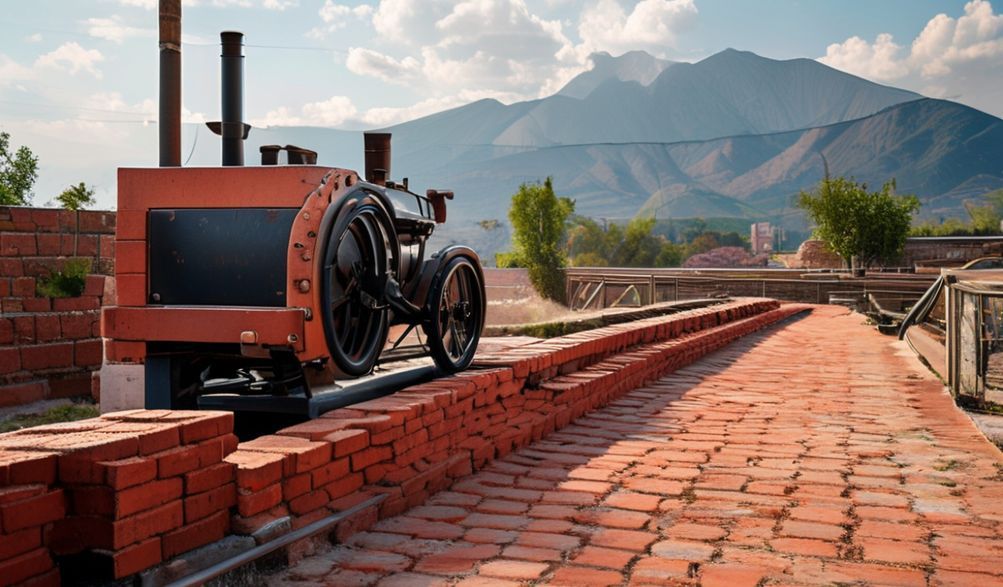
La Guía Definitiva de las Máquinas para Hacer Ladrillos Columbia: Eficiencia, Modelos e Inversión
Introducción
Estás en medio de un proyecto de construcción prometedor en Medellín, Bogotá o las prósperas regiones costeras. Los planos están aprobados, el equipo está listo, pero te tienes secuestrado por entregas de ladrillos retrasadas, costos de materiales por las nubes o una calidad inconsistente que amenaza la integridad estructural y tus márgenes de ganancia. Si este escenario te resulta familiar, no estás solo. Para constructores, desarrolladores y emprendedores en toda Colombia, conseguir materiales de construcción confiables y asequibles sigue siendo un desafío fundamental.
Esta guía integral está diseñada para ser tu recurso definitivo. Compilada a partir de un profundo análisis de la industria, especificaciones técnicas y una clara comprensión de las demandas únicas del sector de la construcción colombiano, elimina el ruido. Nuestro objetivo es proporcionarte la experiencia y la información confiable necesaria para tomar una decisión segura e informada.
Exploraremos las ventajas estratégicas innegables de automatizar su producción de ladrillos, desglosando los tipos precisos de máquinas adecuadas para el mercado local. Obtendrá criterios clave de selección, información sobre modelos líderes y abastecimiento responsable, además de una hoja de ruta clara para la inversión y operación. Al final, sabrá exactamente cómo elegir unaMáquina para hacer ladrillos Columbiaque aumenta su rentabilidad, garantiza la calidad y prepara su negocio para el futuro ante interrupciones en la cadena de suministro.
¿Por qué Automatizar la Producción de Ladrillos en Colombia? Las Ventajas Estratégicas
En una nación que construye activamente su futuro—desde iniciativas de infraestructura masiva comoAutopistas 4G y 5Ga proyectos de vivienda urgentes—el control sobre su material de construcción principal ya no es un lujo; es un imperativo estratégico. Automatizar la producción de ladrillos es un paso transformador.
Atendiendo las Demandas Locales de Construcción
El sector de la construcción en Colombia es un motor constante de crecimiento. Sin embargo, este crecimiento tensiona las cadenas de suministro tradicionales. Depender de proveedores externos de ladrillos introduce vulnerabilidades:
* Retrasos en el Proyecto:Los cuellos de botella en el transporte y los cronogramas de producción de los proveedores pueden descarrilar tu cronograma.
* Costos Logísticos:Transportar ladrillos pesados por el diverso terreno de Colombia añade un gasto significativo y variable.
Producir ladrillos en el sitio o en un patio dedicado te da control directo. Produces exactamente lo que necesitas, cuando lo necesitas, protegiendo tus proyectos de escaseces externas y alineándote perfectamente con los objetivos de desarrollo nacional.
Reducción Significativa de Costos y Minimización de Desperdicios
Si bien la inversión inicial requiere capital, la economía a largo plazo es convincente.
* Reduce los Costos de Materiales:Las materias primas para los ladrillos—arcilla, cemento, arena—a menudo se obtienen localmente y son mucho menos costosas que los ladrillos terminados y comprados.
* Reducción Dramática de Desechos:Las máquinas modernas utilizan compresión y moldeo precisos, minimizando el desperdicio y el uso de materiales. Esta precisión se traduce directamente en sus ganancias, especialmente cuando los precios de las materias primas fluctúan.
Calidad y Consistencia Innegociables
La producción manual o artesanal de ladrillos puede dar lugar a variaciones en tamaño, densidad y resistencia. Estas inconsistencias comprometen la integridad estructural y pueden causar problemas con las aprobaciones regulatorias.
AutomatizadoMáquinas para hacer ladrillos Columbiaasegure que cada unidad cumpla con las especificaciones exactas. Esto es crítico para el cumplimiento de las normas técnicas colombianas.Normas Técnicas Colombianas – NTC), particularmente:
* NTC 4017Bloques de Arcilla Huecos
* NTC 4026 (Concrete Blocks)
* NTC 4205 (Paving Units)
Consistent quality means stronger buildings, smoother inspections, and a superior reputation for your work.
Enhanced Productivity for Project Timelines
Compare the outputs:
* Trabajo Manual: A team might produce a few hundred bricks per day.
* Máquina Semiautomática: 1,500 to 3,000+ bricks per 8-hour shift.
* Máquina Completamente Automática: 10,000 to 30,000+ bricks per day.
This exponential increase in productivity allows you to meet aggressive deadlines, take on more projects, and scale your business efficiently.
Types of Brick Making Machines for the Colombian Market
Choosing the right type of machine is the first critical decision. Your choice should align with your business scale, budget, and project requirements.
Manual & Semi-Automatic Presses
- Mejor Para: Startups, small construction firms, artisanal producers, community projects, and those testing the market with lower initial investment.
- Operación y Salida: These machines require operator involvement to feed material and sometimes remove finished bricks. A semi-automatic system may use a mechanical or hydraulic press but doesn’t automate the entire cycle. Daily output can range from 500 to 3,000 bricks, depending on the model and crew.
- Ventajas y Desventajas:
- Pros: Lower upfront cost, simpler mechanics, easier to maintain, lower power consumption.
- Contras: Higher labor intensity, lower overall output, more potential for product variation.
Máquinas Estacionarias Completamente Automáticas
- Mejor Para: Established brick yards, medium-to-large construction companies, and entrepreneurs aiming to supply multiple projects or the local market.
- Operación y Salida: These are complete production lines. They automatically handle proportioning, mixing, molding, pressing, and sometimes even stacking or palletizing. Labor is primarily for supervision, feeding raw materials, and quality control.
- Ventajas y Desventajas:
- Pros: Very high, consistent output; excellent product uniformity; optimal labor efficiency.
- Contras: Significant capital investment; requires stable, high-capacity power supply; needs more space and proper foundation.
Máquinas Móviles para Fabricar Ladrillos
- Mejor Para: Large-scale infrastructure projects (road construction, dams), remote housing developments, or businesses that move between large sites.
- Operación y Salida: Mounted on a trailer or truck bed, these machines can be driven directly to the project site. They produce bricks exactly where they will be used, often using on-site soil or locally sourced materials.
- Ventajas y Desventajas:
- Pros: Eliminates 100% of brick transportation costs; ideal for remote locations; reduces material handling.
- Contras: Typically has a lower output than large stationary plants; requires on-site organization for power (often diesel) and raw material handling.
Key Features to Consider When Choosing Your Machine
Look beyond the price tag. These technical and support features determine your long-term success and return on investment.
Capacidad de Producción y Especificaciones de Producción
Don’t just look at a “theoretical” maximum speed. You need practical output.
* Calcula Tus Necesidades: Estimate your average daily or monthly brick requirement based on current and projected projects.
* Understand Cycle Time: A machine’s cycle time is how long it takes to produce one brick or block. A faster cycle time means higher output. Ask suppliers for real-world production data from similar operations in Colombia’s climate.
Brick Type & Size Versatility
The Colombian market uses diverse brick types. Your machine should offer adaptability.
* Tipos Comunes: Solid/hollow concrete blocks, interlocking paving stones, soil-cement blocks, clay bricks.
* The Key: Interchangeable Molds. Ensure the supplier offers or can source molds for the specific products you need to sell. This flexibility allows you to pivot with market demands.
Power Source: Electric, Diesel, or Hybrid?
This decision hinges on your location’s infrastructure.
* Eléctrico: Cleaner, quieter, and lower operational cost per hour. Ideal for urban/peri-urban areas with stable grid power.
* Diésel: Fully independent, powerful, and necessary for remote sites or areas with frequent power cuts. Higher fuel cost and maintenance.
* Híbrido: Offers the flexibility to switch between power sources, providing valuable resilience. A strong option for many Colombian regions.
Durability & After-Sales Support
This is the most critical non-technical factor. A machine is a long-term asset.
* Calidad de Construcción: Look for robust frames, high-quality hydraulic systems, and hardened steel components. It must withstand constant use.
* After-Sales Support is Non-Negotiable: Prioritize suppliers with a proven service network within Colombia. You need:
* Access to spare parts (wear parts like molds, seals, etc.) without waiting months for international shipping.
* Local technicians who can provide installation, training, and urgent repairs.
* Clear warranty terms from a local entity.
Leading Models & Trusted Suppliers for Colombia
Navigating the global market requires a focus on brands that offer reliability and, crucially, local presence.
Overview of Reputable Brands
Globally recognized brands like Zenit (Germany), BESS (Turkey), and Prensoland (Spain) are known for engineering and durability. However, the brand name is less important than its local footprint. Always verify:
1. Is there an authorized distributor or partner in Colombia?
2. Do they have a parts warehouse in the country?
3. Can they provide references from existing Colombian clients?
Spotlight on Specific Models (Examples)
-
Model Example: Semi-Automatic Hydraulic Press
- Ideal Para: A small cooperative or family-run construction business.
- Specs: Output of ~2,000 standard concrete blocks per 8-hour shift. Can produce hollow blocks and paving stones with mold changes. Runs on standard 220V single-phase or three-phase power.
- Ventaja: Balances affordability with improved quality and output over manual methods.
-
Model Example: Fully Automatic Stationary Plant
- Ideal Para: An expanding construction firm launching a commercial brick yard.
- Specs: Integrated mixer and conveyor, automatic palletizing. Output of 15,000+ blocks per day. Produces a wide array of block types and sizes.
- Ventaja: Turns raw materials into palletized, cured blocks with minimal labor, maximizing efficiency for large-scale supply.
Sourcing Responsibly: Local Dealers vs. Direct Import
- Local Dealer: Higher initial price, but includes invaluable support: import handling, warranty service, local spare parts, and often installation/training. This reduces risk significantly.
- Direct Import: May seem cheaper upfront, but you bear all risks: import duties, shipping logistics, technical setup, and sourcing spare parts. Any breakdown can lead to costly, prolonged downtime.
Vetting Checklist: Ask for client references, request to visit an active installation in Colombia, review the service contract in detail, and confirm the inventory status of common spare parts.
The Investment: Costs, Setup, and Operational Insights
A clear-eyed view of the total project prevents surprises and ensures a smooth launch.
Understanding the Total Cost of Ownership
Budget for all these elements:
* Machine Price: The base cost of the equipment.
* Envíos y Logística: International freight and domestic transport to your site.
* Derechos de Importación e Impuestos: Consult with a local customs broker for accurate rates for Colombia.
* Site Preparation: Foundation, shelter (warehouse), electrical hookups.
* Instalación y Capacificación: Often provided by the supplier for a fee.
* Initial Raw Material Inventory: Stockpile of cement, aggregate, and/or screened clay.
Site Preparation & Basic Requirements
A proper setup ensures safety and efficiency:
* Espacio: Adequate area for the machine, raw material storage, curing area, and finished product storage. Think about forklift access.
* Cimiento A level, reinforced concrete slab is essential for stationary machines to prevent vibration and misalignment.
* Power & Water: Ensure your electrical supply matches the machine’s requirements. A reliable water source for mixing is also critical.
Raw Materials: Sourcing Clay & Cement in Colombia
The quality of your bricks depends on the quality of your inputs.
* Abastecimiento Local: Colombia has abundant clay and cement production. Source from reliable local providers.
* Mix Design & Testing: Don’t guess. Work with your machine supplier or a local materials lab to develop the optimal mix ratio (cement:aggregate:sand/soil) for strength and durability. Test your first batches against NTC standards.
Skilled Operation & Basic Maintenance
Your machine is only as good as its operator.
* Entrenamiento: Insist on comprehensive training from your supplier for all operators. This ensures safety, optimal production, and basic troubleshooting.
* Maintenance Checklist:
* Diariamente Clean the machine, check hydraulic fluid levels, inspect for loose parts.
* Semanal Lubricate all moving parts as per manual, check mold wear.
* Monthly: Inspect hydraulic hoses and electrical connections thoroughly.
Frequently Asked Questions (FAQ)
Q1: What is the approximate price range for a good quality brick making machine in Colombia?
A: Prices vary dramatically. A basic manual press can start around COP 15-30 million. A robust semi-automatic machine may range from COP 80-200 million. Fully automatic stationary plants can begin around COP 300 million and go upwards of COP 1 billion+. Final cost depends on capacity, automation level, brand, and import factors. Always get detailed, all-inclusive quotes.
Q2: Can these machines produce bricks that meet Colombian technical standards (NTC)?
A: Absolutely. Reputable machines are engineered to produce bricks to precise international standards. The responsibility lies in using the correct mold dimensions and, most importantly, the proper raw material mix and curing process. We strongly recommend having sample bricks tested at a certified Colombian laboratory (e.g., ICONTEC-accredited labs) to verify compliance before full-scale production.
Q3: How do I handle maintenance and find spare parts in Colombia?
A: This should be your primary concern before purchasing. Only consider suppliers who can guarantee spare parts availability within Colombia. Ask to see their parts inventory list and confirm lead times for common wear items like seals, mold liners, and hydraulic components. A local service agreement is worth its weight in gold.
Q4: What is the typical payback period on this investment?
A: It varies based on scale, operational efficiency, and local brick prices. For a small to medium operation actively supplying a local project or market, a well-run business often sees a full return on investment (ROI) within 18 to 36 months. High-output machines serving large contracts can achieve ROI even faster.
Q5: Are there financing options available locally for this equipment?
A: Yes, several avenues exist. Many established equipment distributors offer in-house financing or leasing plans. Additionally, Colombian commercial banks often provide loans for capital equipment to registered businesses. It’s also worth exploring programs from development agencies like Bancóldex that support productivity and industrial investments for SMEs.
Conclusión
Investing in a Máquina para hacer ladrillos Columbia is more than a purchase; it’s a strategic decision to take control of your supply chain, costs, and quality. In the dynamic Colombian construction landscape, this move builds resilience, enhances competitiveness, and unlocks significant growth potential.
As a final, critical recommendation: prioritize total lifetime value over the lowest initial price. The right machine—backed by robust local support, durable engineering, and adaptable to your needs—is a partner that will generate profits for years to come.
Take the next step towards material independence and project security.
Contact reputable local distributors to request detailed specifications and a live demonstration. Analyze your specific output goals and financial model. Take action to boost your profitability and build the future of Colombia, brick by precise brick.