
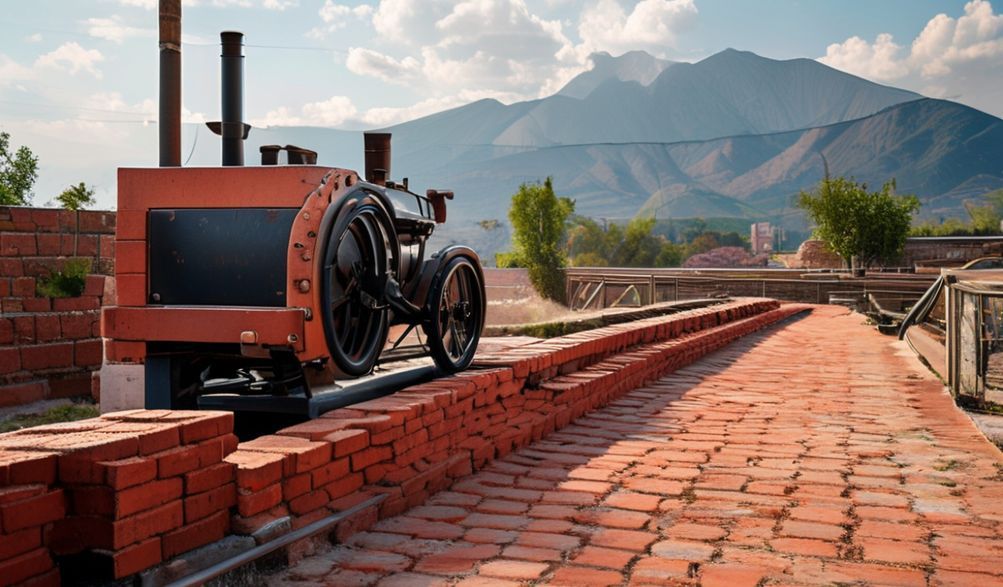
O Guia Definitivo das Máquinas de Tijolos Columbia: Eficiência, Modelos e Investimento
Introdução
Você está no meio de um projeto de construção promissor em Medellín, Bogotá ou nas prósperas regiões costeiras. Os planos estão aprovados, a equipe está pronta, mas você fica refém de atrasos na entrega de tijolos, custos de materiais disparados ou qualidade inconsistente que ameaça a integridade estrutural e as margens de lucro. Se esse cenário parece familiar, você não está sozinho. Para construtores, desenvolvedores e empreendedores em toda a Colômbia, garantir materiais de construção confiáveis e acessíveis continua sendo um desafio fundamental.
Este guia abrangente foi projetado para ser o seu recurso definitivo. Compilado a partir de uma análise profunda do setor, especificações técnicas e um entendimento claro das demandas únicas do setor de construção colombiano, ele elimina as distrações. Nosso objetivo é fornecer a você a experiência e as informações confiáveis necessárias para tomar uma decisão segura e bem fundamentada.
Vamos explorar as vantagens estratégicas inegáveis de automatizar sua produção de tijolos, detalhando os tipos precisos de máquinas adequadas para o mercado local. Você obterá critérios essenciais de seleção, insights sobre modelos líderes e fontes responsáveis, além de um roteiro claro para investimento e operação. Ao final, você saberá exatamente como escolher umaMáquina de fabricação de tijolos Columbiaque aumenta sua lucratividade, garante qualidade e protege seu negócio contra interrupções na cadeia de suprimentos.
Por que Automatizar a Produção de Tijolos na Colômbia? As Vantagens Estratégicas
Em uma nação que está construindo ativamente seu futuro—desde iniciativas massivas de infraestrutura, comoRodovias 4G e 5Gpara projetos habitacionais urgentes — o controle sobre seu principal material de construção não é mais um luxo; é uma necessidade estratégica. Automatizar a produção de tijolos é um passo transformador.
Atendendo às Demandas Locais de Construção
O setor de construção da Colômbia é um motor consistente de crescimento. No entanto, esse crescimento tensiona as cadeias de abastecimento tradicionais. Depender de fornecedores terceirizados de tijolos introduz vulnerabilidades:
* Atrasos no Projeto:Gargalos de transporte e cronogramas de produção dos fornecedores podem descarrilar seu cronograma.
* Custos Logísticos:Transportar tijolos pesados pelo diversificado terreno da Colômbia adiciona uma despesa significativa e variável.
Produção de tijolos no local ou em um pátio dedicado oferece controle direto. Você produz exatamente o que precisa, quando precisa, isolando seus projetos de escassez externa e alinhando-se perfeitamente com os objetivos de desenvolvimento nacional.
Redução Significativa de Custos e Minimização de Resíduos
Embora o investimento inicial exija capital, a economia de longo prazo é convincente.
* Reduza os Custos de Materiais:As matérias-primas para tijolos – argila, cimento, areia – são frequentemente obtidas localmente e muito mais baratas do que tijolos acabados e comprados.
* Reduza drasticamente o desperdício:Máquinas modernas utilizam compressão e moldagem precisas, minimizando o desperdício e o uso de material. Essa precisão se traduz diretamente em seus resultados financeiros, especialmente com as flutuações nos preços das matérias-primas.
Qualidade e Consistência Inabaláveis
A produção manual ou artesanal de tijolos pode levar a variações no tamanho, densidade e resistência. Essas inconsistências comprometem a integridade estrutural e podem causar problemas com as aprovações regulatórias.
AutomatizadoMáquinas de fabricação de tijolos Columbiagarantir que cada unidade atenda às especificações exatas. Isso é fundamental para a conformidade com as normas técnicas colombianas.Normas Técnicas Colombianas – NTC), particularmente:
* NTC 4017(Blocos de Argila Oca)
* NTC 4026(Blocos de Concreto)
* NTC 4205(Unidades de Pavimentação)
Qualidade consistente significa construções mais fortes, inspeções mais suaves e uma reputação superior para o seu trabalho.
Produtividade Aprimorada para Cronogramas de Projetos
Compare as saídas:
* Trabalho Manual: A team might produce a few hundred bricks per day.
* Máquina Semiautomática: 1,500 to 3,000+ bricks per 8-hour shift.
* Máquina Totalmente Automática: 10,000 to 30,000+ bricks per day.
This exponential increase in productivity allows you to meet aggressive deadlines, take on more projects, and scale your business efficiently.
Types of Brick Making Machines for the Colombian Market
Choosing the right type of machine is the first critical decision. Your choice should align with your business scale, budget, and project requirements.
Manual & Semi-Automatic Presses
- Melhor Para: Startups, small construction firms, artisanal producers, community projects, and those testing the market with lower initial investment.
- Operação e Saída: These machines require operator involvement to feed material and sometimes remove finished bricks. A semi-automatic system may use a mechanical or hydraulic press but doesn’t automate the entire cycle. Daily output can range from 500 to 3,000 bricks, depending on the model and crew.
- Prós e Contras:
- Prós: Lower upfront cost, simpler mechanics, easier to maintain, lower power consumption.
- Contras: Higher labor intensity, lower overall output, more potential for product variation.
Máquinas Estacionárias Totalmente Automáticas
- Melhor Para: Established brick yards, medium-to-large construction companies, and entrepreneurs aiming to supply multiple projects or the local market.
- Operação e Saída: These are complete production lines. They automatically handle proportioning, mixing, molding, pressing, and sometimes even stacking or palletizing. Labor is primarily for supervision, feeding raw materials, and quality control.
- Prós e Contras:
- Prós: Very high, consistent output; excellent product uniformity; optimal labor efficiency.
- Contras: Significant capital investment; requires stable, high-capacity power supply; needs more space and proper foundation.
Máquinas Móveis de Fabricação de Tijolos
- Melhor Para: Large-scale infrastructure projects (road construction, dams), remote housing developments, or businesses that move between large sites.
- Operação e Saída: Mounted on a trailer or truck bed, these machines can be driven directly to the project site. They produce bricks exactly where they will be used, often using on-site soil or locally sourced materials.
- Prós e Contras:
- Prós: Eliminates 100% of brick transportation costs; ideal for remote locations; reduces material handling.
- Contras: Typically has a lower output than large stationary plants; requires on-site organization for power (often diesel) and raw material handling.
Key Features to Consider When Choosing Your Machine
Look beyond the price tag. These technical and support features determine your long-term success and return on investment.
Capacidade de Produção & Especificações de Saída
Don’t just look at a “theoretical” maximum speed. You need practical output.
* Calcule Suas Necessidades: Estimate your average daily or monthly brick requirement based on current and projected projects.
* Entenda o Tempo de Ciclo: A machine’s cycle time is how long it takes to produce one brick or block. A faster cycle time means higher output. Ask suppliers for real-world production data from similar operations in Colombia’s climate.
Brick Type & Size Versatility
The Colombian market uses diverse brick types. Your machine should offer adaptability.
* Tipos Comuns: Solid/hollow concrete blocks, interlocking paving stones, soil-cement blocks, clay bricks.
* The Key: Interchangeable Molds. Ensure the supplier offers or can source molds for the specific products you need to sell. This flexibility allows you to pivot with market demands.
Power Source: Electric, Diesel, or Hybrid?
This decision hinges on your location’s infrastructure.
* Elétrico: Cleaner, quieter, and lower operational cost per hour. Ideal for urban/peri-urban areas with stable grid power.
* Diesel: Fully independent, powerful, and necessary for remote sites or areas with frequent power cuts. Higher fuel cost and maintenance.
* Híbrido: Offers the flexibility to switch between power sources, providing valuable resilience. A strong option for many Colombian regions.
Durability & After-Sales Support
This is the most critical non-technical factor. A machine is a long-term asset.
* Qualidade de Construção: Look for robust frames, high-quality hydraulic systems, and hardened steel components. It must withstand constant use.
* After-Sales Support is Non-Negotiable: Prioritize suppliers with a proven service network within Colombia. You need:
* Access to spare parts (wear parts like molds, seals, etc.) without waiting months for international shipping.
* Local technicians who can provide installation, training, and urgent repairs.
* Clear warranty terms from a local entity.
Leading Models & Trusted Suppliers for Colombia
Navigating the global market requires a focus on brands that offer reliability and, crucially, local presence.
Overview of Reputable Brands
Globally recognized brands like Zenith (Germany), BESS (Turkey), and Prensoland (Spain) are known for engineering and durability. However, the brand name is less important than its local footprint. Always verify:
1. Is there an authorized distributor or partner in Colombia?
2. Do they have a parts warehouse in the country?
3. Can they provide references from existing Colombian clients?
Spotlight on Specific Models (Examples)
-
Model Example: Semi-Automatic Hydraulic Press
- Ideal Para: A small cooperative or family-run construction business.
- Specs: Output of ~2,000 standard concrete blocks per 8-hour shift. Can produce hollow blocks and paving stones with mold changes. Runs on standard 220V single-phase or three-phase power.
- Vantagem: Balances affordability with improved quality and output over manual methods.
-
Model Example: Fully Automatic Stationary Plant
- Ideal Para: An expanding construction firm launching a commercial brick yard.
- Specs: Integrated mixer and conveyor, automatic palletizing. Output of 15,000+ blocks per day. Produces a wide array of block types and sizes.
- Vantagem: Turns raw materials into palletized, cured blocks with minimal labor, maximizing efficiency for large-scale supply.
Sourcing Responsibly: Local Dealers vs. Direct Import
- Local Dealer: Higher initial price, but includes invaluable support: import handling, warranty service, local spare parts, and often installation/training. This reduces risk significantly.
- Direct Import: May seem cheaper upfront, but you bear all risks: import duties, shipping logistics, technical setup, and sourcing spare parts. Any breakdown can lead to costly, prolonged downtime.
Vetting Checklist: Ask for client references, request to visit an active installation in Colombia, review the service contract in detail, and confirm the inventory status of common spare parts.
The Investment: Costs, Setup, and Operational Insights
A clear-eyed view of the total project prevents surprises and ensures a smooth launch.
Understanding the Total Cost of Ownership
Budget for all these elements:
* Machine Price: The base cost of the equipment.
* Envio & Logística: International freight and domestic transport to your site.
* Impostos e Taxas de Importação: Consult with a local customs broker for accurate rates for Colombia.
* Site Preparation: Foundation, shelter (warehouse), electrical hookups.
* Instalação & Treinamento: Often provided by the supplier for a fee.
* Initial Raw Material Inventory: Stockpile of cement, aggregate, and/or screened clay.
Site Preparation & Basic Requirements
A proper setup ensures safety and efficiency:
* Espaço: Adequate area for the machine, raw material storage, curing area, and finished product storage. Think about forklift access.
* Fundação A level, reinforced concrete slab is essential for stationary machines to prevent vibration and misalignment.
* Power & Water: Ensure your electrical supply matches the machine’s requirements. A reliable water source for mixing is also critical.
Raw Materials: Sourcing Clay & Cement in Colombia
The quality of your bricks depends on the quality of your inputs.
* Fornecimento Local: Colombia has abundant clay and cement production. Source from reliable local providers.
* Mix Design & Testing: Don’t guess. Work with your machine supplier or a local materials lab to develop the optimal mix ratio (cement:aggregate:sand/soil) for strength and durability. Test your first batches against NTC standards.
Skilled Operation & Basic Maintenance
Your machine is only as good as its operator.
* Treinamento: Insist on comprehensive training from your supplier for all operators. This ensures safety, optimal production, and basic troubleshooting.
* Maintenance Checklist:
* Diário: Clean the machine, check hydraulic fluid levels, inspect for loose parts.
* Semanal: Lubricate all moving parts as per manual, check mold wear.
* Mensalmente: Inspect hydraulic hoses and electrical connections thoroughly.
Perguntas Frequentes (FAQ)
Q1: What is the approximate price range for a good quality brick making machine in Colombia?
A: Prices vary dramatically. A basic manual press can start around COP 15-30 million. A robust semi-automatic machine may range from COP 80-200 million. Fully automatic stationary plants can begin around COP 300 million and go upwards of COP 1 billion+. Final cost depends on capacity, automation level, brand, and import factors. Always get detailed, all-inclusive quotes.
Q2: Can these machines produce bricks that meet Colombian technical standards (NTC)?
A: Absolutely. Reputable machines are engineered to produce bricks to precise international standards. The responsibility lies in using the correct mold dimensions and, most importantly, the proper raw material mix and curing process. We strongly recommend having sample bricks tested at a certified Colombian laboratory (e.g., ICONTEC-accredited labs) to verify compliance before full-scale production.
Q3: How do I handle maintenance and find spare parts in Colombia?
A: This should be your primary concern before purchasing. Only consider suppliers who can guarantee spare parts availability within Colombia. Ask to see their parts inventory list and confirm lead times for common wear items like seals, mold liners, and hydraulic components. A local service agreement is worth its weight in gold.
Q4: What is the typical payback period on this investment?
A: It varies based on scale, operational efficiency, and local brick prices. For a small to medium operation actively supplying a local project or market, a well-run business often sees a full return on investment (ROI) within 18 to 36 months. High-output machines serving large contracts can achieve ROI even faster.
Q5: Are there financing options available locally for this equipment?
A: Yes, several avenues exist. Many established equipment distributors offer in-house financing or leasing plans. Additionally, Colombian commercial banks often provide loans for capital equipment to registered businesses. It’s also worth exploring programs from development agencies like Bancóldex that support productivity and industrial investments for SMEs.
Conclusão
Investing in a Máquina de fabricação de tijolos Columbia is more than a purchase; it’s a strategic decision to take control of your supply chain, costs, and quality. In the dynamic Colombian construction landscape, this move builds resilience, enhances competitiveness, and unlocks significant growth potential.
As a final, critical recommendation: prioritize total lifetime value over the lowest initial price. The right machine—backed by robust local support, durable engineering, and adaptable to your needs—is a partner that will generate profits for years to come.
Take the next step towards material independence and project security.
Contact reputable local distributors to request detailed specifications and a live demonstration. Analyze your specific output goals and financial model. Take action to boost your profitability and build the future of Colombia, brick by precise brick.