
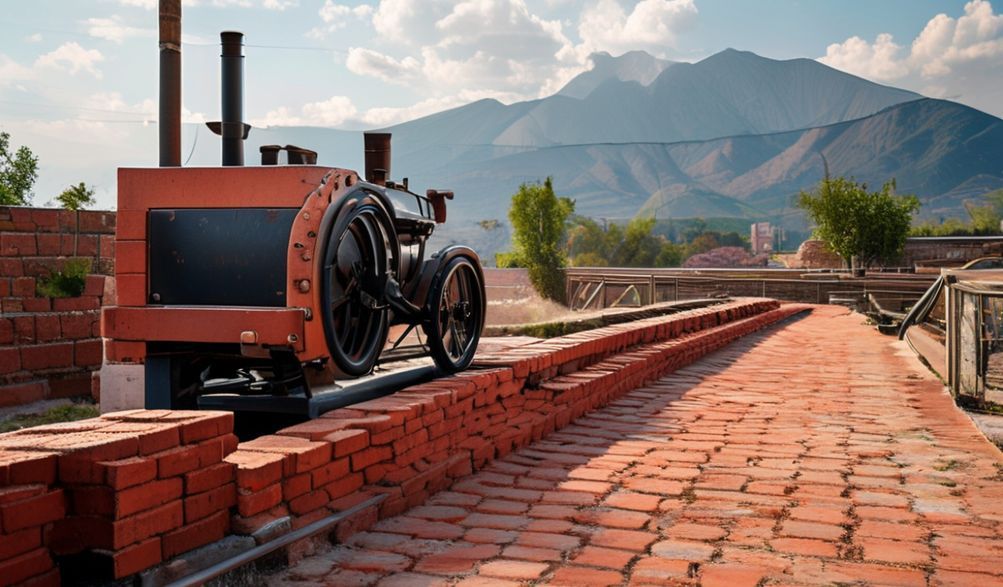
Hướng Dẫn Toàn Diện Về Máy Làm Gạch Columbia: Hiệu Suất, Mẫu Mã & Đầu Tư
Giới thiệu
Bạn đang ở giữa một dự án xây dựng đầy hứa hẹn tại Medellín, Bogotá, hoặc các vùng ven biển đang bùng nổ. Kế hoạch đã được phê duyệt, đội ngũ thi công sẵn sàng, nhưng bạn lại bị "con tin" bởi những lô gạch giao hàng chậm trễ, chi phí vật liệu tăng vọt, hay chất lượng không đồng đều đe dọa đến kết cấu công trình và biên lợi nhuận của bạn. Nếu tình huống này nghe quen thuộc, bạn không đơn độc. Đối với các nhà thầu, chủ đầu tư và doanh nhân khắp Colombia, việc đảm bảo nguồn vật liệu xây dựng tin cậy, giá cả phải chăng vẫn là một thách thức cốt lõi.
Hướng dẫn toàn diện này được thiết kế để trở thành nguồn tài nguyên đáng tin cậy nhất của bạn. Được biên soạn từ phân tích chuyên sâu về ngành, thông số kỹ thuật và hiểu biết rõ ràng về những yêu cầu đặc thù của lĩnh vực xây dựng Colombia, nó loại bỏ mọi thông tin gây nhiễu. Mục tiêu của chúng tôi là cung cấp cho bạn chuyên môn và thông tin đáng tin cậy cần thiết để đưa ra quyết định tự tin và sáng suốt.
Chúng ta sẽ khám phá những lợi thế chiến lược không thể phủ nhận của việc tự động hóa sản xuất gạch, phân tích chi tiết các loại máy móc phù hợp với thị trường địa phương. Bạn sẽ nắm được các tiêu chí lựa chọn quan trọng, hiểu sâu về các mẫu máy hàng đầu và nguồn cung có trách nhiệm, cùng một lộ trình rõ ràng để đầu tư và vận hành. Đến cuối cùng, bạn sẽ biết chính xác cách chọn mộtMáy làm gạch Columbiađiều này nâng cao lợi nhuận của bạn, đảm bảo chất lượng và giúp doanh nghiệp của bạn chống chịu trước các gián đoạn chuỗi cung ứng trong tương lai.
Tại sao Tự động hóa Sản xuất Gạch tại Colombia? Những Lợi thế Chiến lược
Trong một quốc gia đang tích cực xây dựng tương lai—từ những sáng kiến hạ tầng quy mô lớn nhưĐường cao tốc 4G và 5Gtừ các dự án nhà ở khẩn cấp – việc kiểm soát vật liệu xây dựng chính không còn là điều xa xỉ; đó là một yêu cầu chiến lược. Tự động hóa sản xuất gạch là một bước chuyển mình mang tính cách mạng.
Đáp Ứng Nhu Cầu Xây Dựng Địa Phương
Ngành xây dựng Colombia là một động lực tăng trưởng ổn định. Tuy nhiên, sự tăng trưởng này gây áp lực lên các chuỗi cung ứng truyền thống. Việc phụ thuộc vào các nhà cung cấp gạch bên thứ ba tạo ra những điểm yếu:
* Dự án Bị Trì Hoãn:Các nút cổ chai trong vận chuyển và lịch trình sản xuất của nhà cung cấp có thể làm đảo lộn thời gian biểu của bạn.
* Chi phí Hậu cần: Transporting heavy bricks over Colombia’s diverse terrain adds significant, variable expense.
Producing bricks on-site or at a dedicated yard gives you direct control. You produce exactly what you need, when you need it, insulating your projects from external shortages and aligning perfectly with national development goals.
Significant Cost Reduction & Waste Minimization
While the initial investment requires capital, the long-term economics are compelling.
* Slash Material Costs: The raw materials for bricks—clay, cement, sand—are often locally sourced and far less expensive than finished, purchased bricks.
* Dramatically Cut Waste: Modern machines use precise compression and molding, minimizing spillage and material use. This precision translates directly to your bottom line, especially as raw material prices fluctuate.
Uncompromising Quality & Consistency
Manual or artisanal brick production can lead to variations in size, density, and strength. These inconsistencies compromise structural integrity and can cause issues with regulatory approvals.
Automated Columbia brick making machines ensure every single unit meets exact specifications. This is critical for compliance with Colombian technical norms (Normas Técnicas Colombianas – NTC), particularly:
* NTC 4017 (Hollow Clay Blocks)
* NTC 4026 (Concrete Blocks)
* NTC 4205 (Paving Units)
Consistent quality means stronger buildings, smoother inspections, and a superior reputation for your work.
Enhanced Productivity for Project Timelines
Compare the outputs:
* Lao động chân tay: A team might produce a few hundred bricks per day.
* Máy Bán Tự Động: 1,500 to 3,000+ bricks per 8-hour shift.
* Máy Tự Động Hoàn Toàn: 10,000 to 30,000+ bricks per day.
This exponential increase in productivity allows you to meet aggressive deadlines, take on more projects, and scale your business efficiently.
Types of Brick Making Machines for the Colombian Market
Choosing the right type of machine is the first critical decision. Your choice should align with your business scale, budget, and project requirements.
Manual & Semi-Automatic Presses
- Tốt Nhất Cho: Startups, small construction firms, artisanal producers, community projects, and those testing the market with lower initial investment.
- Hoạt động & Đầu ra: These machines require operator involvement to feed material and sometimes remove finished bricks. A semi-automatic system may use a mechanical or hydraulic press but doesn’t automate the entire cycle. Daily output can range from 500 to 3,000 bricks, depending on the model and crew.
- Ưu điểm & Nhược điểm:
- Ưu điểm: Lower upfront cost, simpler mechanics, easier to maintain, lower power consumption.
- Nhược điểm: Higher labor intensity, lower overall output, more potential for product variation.
Máy Đứng Tự Động Hoàn Toàn
- Tốt Nhất Cho: Established brick yards, medium-to-large construction companies, and entrepreneurs aiming to supply multiple projects or the local market.
- Hoạt động & Đầu ra: These are complete production lines. They automatically handle proportioning, mixing, molding, pressing, and sometimes even stacking or palletizing. Labor is primarily for supervision, feeding raw materials, and quality control.
- Ưu điểm & Nhược điểm:
- Ưu điểm: Very high, consistent output; excellent product uniformity; optimal labor efficiency.
- Nhược điểm: Significant capital investment; requires stable, high-capacity power supply; needs more space and proper foundation.
Máy Sản Xuất Gạch Di Động
- Tốt Nhất Cho: Large-scale infrastructure projects (road construction, dams), remote housing developments, or businesses that move between large sites.
- Hoạt động & Đầu ra: Mounted on a trailer or truck bed, these machines can be driven directly to the project site. They produce bricks exactly where they will be used, often using on-site soil or locally sourced materials.
- Ưu điểm & Nhược điểm:
- Ưu điểm: Eliminates 100% of brick transportation costs; ideal for remote locations; reduces material handling.
- Nhược điểm: Typically has a lower output than large stationary plants; requires on-site organization for power (often diesel) and raw material handling.
Key Features to Consider When Choosing Your Machine
Look beyond the price tag. These technical and support features determine your long-term success and return on investment.
Thông số kỹ thuật về năng lực sản xuất và sản lượng đầu ra
Don’t just look at a “theoretical” maximum speed. You need practical output.
* Tính Toán Nhu Cầu Của Bạn: Estimate your average daily or monthly brick requirement based on current and projected projects.
* Hiểu về Thời Gian Chu Kỳ A machine’s cycle time is how long it takes to produce one brick or block. A faster cycle time means higher output. Ask suppliers for real-world production data from similar operations in Colombia’s climate.
Brick Type & Size Versatility
The Colombian market uses diverse brick types. Your machine should offer adaptability.
* Các Loại Phổ Biến: Solid/hollow concrete blocks, interlocking paving stones, soil-cement blocks, clay bricks.
* The Key: Interchangeable Molds. Ensure the supplier offers or can source molds for the specific products you need to sell. This flexibility allows you to pivot with market demands.
Power Source: Electric, Diesel, or Hybrid?
This decision hinges on your location’s infrastructure.
* Điện: Cleaner, quieter, and lower operational cost per hour. Ideal for urban/peri-urban areas with stable grid power.
* Đi-ê-zen Fully independent, powerful, and necessary for remote sites or areas with frequent power cuts. Higher fuel cost and maintenance.
* Lai tạo: Offers the flexibility to switch between power sources, providing valuable resilience. A strong option for many Colombian regions.
Durability & After-Sales Support
This is the most critical non-technical factor. A machine is a long-term asset.
* Chất Lượng Xây Dựng: Look for robust frames, high-quality hydraulic systems, and hardened steel components. It must withstand constant use.
* After-Sales Support is Non-Negotiable: Prioritize suppliers with a proven service network within Colombia. You need:
* Access to spare parts (wear parts like molds, seals, etc.) without waiting months for international shipping.
* Local technicians who can provide installation, training, and urgent repairs.
* Clear warranty terms from a local entity.
Leading Models & Trusted Suppliers for Colombia
Navigating the global market requires a focus on brands that offer reliability and, crucially, local presence.
Overview of Reputable Brands
Globally recognized brands like Zenith (Germany), BESS (Turkey), and Prensoland (Spain) are known for engineering and durability. However, the brand name is less important than its local footprint. Always verify:
1. Is there an authorized distributor or partner in Colombia?
2. Do they have a parts warehouse in the country?
3. Can they provide references from existing Colombian clients?
Spotlight on Specific Models (Examples)
-
Model Example: Semi-Automatic Hydraulic Press
- Lý Tưởng Cho: A small cooperative or family-run construction business.
- Specs: Output of ~2,000 standard concrete blocks per 8-hour shift. Can produce hollow blocks and paving stones with mold changes. Runs on standard 220V single-phase or three-phase power.
- Lợi thế: Balances affordability with improved quality and output over manual methods.
-
Model Example: Fully Automatic Stationary Plant
- Lý Tưởng Cho: An expanding construction firm launching a commercial brick yard.
- Specs: Integrated mixer and conveyor, automatic palletizing. Output of 15,000+ blocks per day. Produces a wide array of block types and sizes.
- Lợi thế: Turns raw materials into palletized, cured blocks with minimal labor, maximizing efficiency for large-scale supply.
Sourcing Responsibly: Local Dealers vs. Direct Import
- Local Dealer: Higher initial price, but includes invaluable support: import handling, warranty service, local spare parts, and often installation/training. This reduces risk significantly.
- Direct Import: May seem cheaper upfront, but you bear all risks: import duties, shipping logistics, technical setup, and sourcing spare parts. Any breakdown can lead to costly, prolonged downtime.
Vetting Checklist: Ask for client references, request to visit an active installation in Colombia, review the service contract in detail, and confirm the inventory status of common spare parts.
The Investment: Costs, Setup, and Operational Insights
A clear-eyed view of the total project prevents surprises and ensures a smooth launch.
Hiểu về Tổng Chi Phí Sở Hữu
Budget for all these elements:
* Machine Price: The base cost of the equipment.
* Vận chuyển & Hậu cần: International freight and domestic transport to your site.
* Import Duties & Taxes: Consult with a local customs broker for accurate rates for Colombia.
* Site Preparation: Foundation, shelter (warehouse), electrical hookups.
* Cài đặt & Đào tạo: Often provided by the supplier for a fee.
* Initial Raw Material Inventory: Stockpile of cement, aggregate, and/or screened clay.
Site Preparation & Basic Requirements
A proper setup ensures safety and efficiency:
* Không gian Adequate area for the machine, raw material storage, curing area, and finished product storage. Think about forklift access.
* Foundation: A level, reinforced concrete slab is essential for stationary machines to prevent vibration and misalignment.
* Power & Water: Ensure your electrical supply matches the machine’s requirements. A reliable water source for mixing is also critical.
Raw Materials: Sourcing Clay & Cement in Colombia
The quality of your bricks depends on the quality of your inputs.
* Nguồn cung ứng địa phương: Colombia has abundant clay and cement production. Source from reliable local providers.
* Mix Design & Testing: Don’t guess. Work with your machine supplier or a local materials lab to develop the optimal mix ratio (cement:aggregate:sand/soil) for strength and durability. Test your first batches against NTC standards.
Skilled Operation & Basic Maintenance
Your machine is only as good as its operator.
* Đào tạo: Insist on comprehensive training from your supplier for all operators. This ensures safety, optimal production, and basic troubleshooting.
* Maintenance Checklist:
* Hàng ngày: Clean the machine, check hydraulic fluid levels, inspect for loose parts.
* Hàng tuần: Lubricate all moving parts as per manual, check mold wear.
* Monthly: Inspect hydraulic hoses and electrical connections thoroughly.
Các Câu Hỏi Thường Gặp (FAQ)
Q1: What is the approximate price range for a good quality brick making machine in Colombia?
A: Prices vary dramatically. A basic manual press can start around COP 15-30 million. A robust semi-automatic machine may range from COP 80-200 million. Fully automatic stationary plants can begin around COP 300 million and go upwards of COP 1 billion+. Final cost depends on capacity, automation level, brand, and import factors. Always get detailed, all-inclusive quotes.
Q2: Can these machines produce bricks that meet Colombian technical standards (NTC)?
A: Absolutely. Reputable machines are engineered to produce bricks to precise international standards. The responsibility lies in using the correct mold dimensions and, most importantly, the proper raw material mix and curing process. We strongly recommend having sample bricks tested at a certified Colombian laboratory (e.g., ICONTEC-accredited labs) to verify compliance before full-scale production.
Q3: How do I handle maintenance and find spare parts in Colombia?
A: This should be your primary concern before purchasing. Only consider suppliers who can guarantee spare parts availability within Colombia. Ask to see their parts inventory list and confirm lead times for common wear items like seals, mold liners, and hydraulic components. A local service agreement is worth its weight in gold.
Q4: What is the typical payback period on this investment?
A: It varies based on scale, operational efficiency, and local brick prices. For a small to medium operation actively supplying a local project or market, a well-run business often sees a full return on investment (ROI) within 18 to 36 months. High-output machines serving large contracts can achieve ROI even faster.
Q5: Are there financing options available locally for this equipment?
A: Yes, several avenues exist. Many established equipment distributors offer in-house financing or leasing plans. Additionally, Colombian commercial banks often provide loans for capital equipment to registered businesses. It’s also worth exploring programs from development agencies like Bancóldex that support productivity and industrial investments for SMEs.
Conclusion
Investing in a Máy làm gạch Columbia is more than a purchase; it’s a strategic decision to take control of your supply chain, costs, and quality. In the dynamic Colombian construction landscape, this move builds resilience, enhances competitiveness, and unlocks significant growth potential.
As a final, critical recommendation: prioritize total lifetime value over the lowest initial price. The right machine—backed by robust local support, durable engineering, and adaptable to your needs—is a partner that will generate profits for years to come.
Take the next step towards material independence and project security.
Contact reputable local distributors to request detailed specifications and a live demonstration. Analyze your specific output goals and financial model. Take action to boost your profitability and build the future of Colombia, brick by precise brick.