
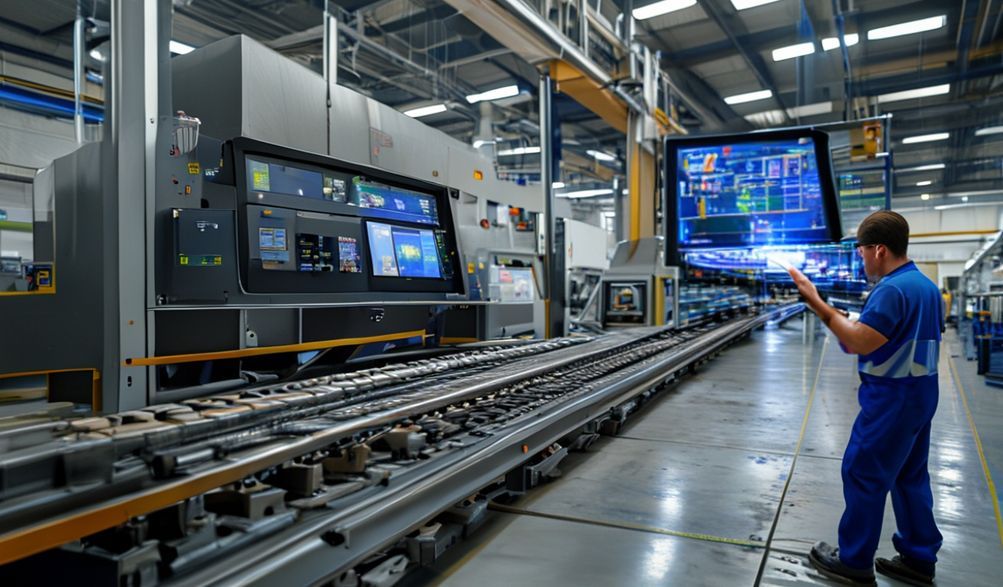
La Guía Definitiva para Máquinas de Fabricación de Bloques de Ladrillo Más Grandes: Impulsando la Escala y la Eficiencia
Introducción
¿Luchando para satisfacer la creciente demanda de bloques de concreto? ¿El trabajo manual o las máquinas de pequeña escala están creando un frustrante cuello de botella en la producción que está frenando tu negocio o proyecto? No estás solo. Este es precisamente el desafío que marca la transición de una operación pequeña a un productor a escala industrial.
En nuestros años de ingeniería y consultoría para la producción de bloques industriales, hemos visto constantemente que una decisión crucial transforma la producción y la rentabilidad: la mejora estratégica hacia una máquina más grande para fabricar ladrillos y bloques. Esto no se trata solo de un mayor tamaño; se trata de un salto fundamental en capacidad.
En esta guía, "más grande" se refiere específicamente a máquinas estacionarias para fabricar bloques, de alta capacidad y completamente automáticas—los gigantes industriales como la serie QGM, la Zenith 940 o la Hess Multibloc. Nos centramos en sistemas definidos por su producción (miles de bloques por hora), su sofisticada automatización y su papel como pieza central de un patio de bloques moderno.
¿Qué aprenderás? Analizaremos cómo evaluar, seleccionar y operar inteligentemente una máquina más grande para maximizar tu retorno de la inversión, garantizar una calidad de producto sin igual y escalar tu empresa de manera sostenible. Esta guía no está basada en especulaciones, sino en principios de ingeniería, datos verificables de la industria y mejores prácticas operativas ganadas con esfuerzo. Construyamos una base para tu crecimiento.
¿Por qué Escalar? Los Beneficios Convincentes de una Máquina de Fabricación de Bloques Más Grande
Mudarse a una máquina a escala industrial es una decisión de capital significativa. Sin embargo, la justificación se encuentra en un poderoso conjunto de beneficios que trabajan en conjunto para mejorar drásticamente su rentabilidad y ventaja competitiva.
Aumento Dramático en la Producción
Esta es la ventaja más obvia pero impactante. La producción pasa de un crecimiento lineal a uno exponencial.
* Comparación:Una máquina semiautomática robusta podría producir entre 4,000 y 6,000 bloques estándar en un turno de 8 horas. Un sistema grande y completamente automático puede producir30,000 a 50,000 bloques en el mismo período de tiempo.
* Impacto Estratégico:Esta capacidad te permite cumplir de manera confiable con contratos a gran escala—piensa en proyectos de infraestructura municipal, desarrollos habitacionales extensos o complejos comerciales. Cambia tu modelo de negocio de perseguir pedidos pequeños a comandar proyectos importantes, aumentando significativamente tu participación en el mercado y tu potencial de ingresos.
Consistencia Superior y Calidad del Producto
Las máquinas más grandes están diseñadas para la precisión, no solo para el volumen. La consistencia está integrada en su diseño.
* Compactación Avanzada:Estas máquinas emplean sistemas de vibración de alta frecuencia y multidireccional combinados con presión hidráulica controlada. Esto garantiza una densidad uniforme y una compactación óptima en cada bloque, lo que resulta en una resistencia a la compresión consistente que cumple o supera los estándares ASTM/CEN.
* Precisión Dimensional:Los moldes de ingeniería de precisión y los ciclos controlados de llenado y compactación producen bloques con tolerancias dimensionales exactas. Esto reduce el desperdicio por bloques rechazados, simplifica la colocación de ladrillos y mejora la estética de la estructura final.
Reducción Significativa en Costos Laborales y Dependencia
La automatización es el diferenciador clave. Transforma la mano de obra de una fuerza de trabajo manual a un equipo capacitado de supervisión y gestión.
* Flujo de Trabajo Integrado:El proceso—desde la alimentación y mezcla de materias primas hasta el moldeo, curado, apilado y paletizado—está automatizado. La intervención humana se destina principalmente a la supervisión, verificaciones de control de calidad y a gestionar el flujo de materiales y productos terminados.
* Ahorros Cuantificables:Una operación a pequeña escala puede requerir de 6 a 8 personas para el manejo de materiales, moldeo y apilado. Un sistema automatizado grande a menudo puede ser gestionado por1-2 skilled operators. This drastically cuts long-term labor costs and mitigates risks associated with labor shortages or skill gaps.
Enhanced Operational Efficiency and Lower Per-Unit Cost
This is where economies of scale become tangible. Higher output spreads fixed costs over more units.
* Tiempos de Ciclo Más Rápidos: Advanced hydraulics and control systems minimize the time between each block production cycle.
* Uso Optimizado de Materiales: Precise batching and reduced waste from higher quality control mean more blocks from the same amount of raw material.
* La conclusión: While the absolute cost of production may be higher, the cost per block plummets. This gives you greater pricing flexibility and healthier profit margins, funding further growth and innovation.
Key Features to Look for in a Bigger Brick Block Making Machine
Selecting the right machine requires looking beyond brochures to the core specifications that dictate performance and longevity. Here’s what truly matters.
Core Production Specifications
These numbers define the machine’s capacity and capability.
* Cycle Time & Output Capacity: Don’t just look at “maximum” output. Ask for verified output figures for the specific block types you produce (e.g., 200mm hollow blocks, pavers, solid blocks) under standard conditions. A cycle time of 10-15 seconds is typical for high-end machines.
* Molding Pressure & Vibration System: This is the heart of the machine. Seek out systems offering:
* High-frequency vibration (7,000-10,000 RPM) for thorough aggregate settlement.
* Multi-directional (vertical and horizontal) vibration for uniform compaction in complex molds.
* Electronically controlled hydraulic pressure for consistent molding force.
* Pallet Size and Circulation System: This is the logistics backbone. A robust, smooth pallet circulation system is essential for non-stop production. Ensure it uses a standardized pallet size (like 1100x550mm or 1200x600mm) and has a sufficient number of pallets in circulation to maintain output.
Automation and Control Systems
The “intelligence” of the machine determines its ease of use and operational insight.
* PLC with Touchscreen Interface: The machine’s brain. A modern Programmable Logic Controller (PLC) with a user-friendly touchscreen allows for:
* Easy recipe changes for different block types.
* Real-time fault diagnosis and alerts.
* Production data tracking (output counts, downtime, efficiency reports).
* Automatic Material Feeding & Mixing Integration: The best systems are part of a seamless plant. Look for compatibility with automatic batching plants and conveyor systems that feed mixed concrete directly into the machine hopper, ensuring consistent feed quality.
* Automatic Stacking and Curing Handling: Post-molding automation is critical. Integrated stackers, cross-transfer cars, and systems that place “green” blocks onto curing racks or carts eliminate heavy manual labor and prevent product damage.
Calidad de Construcción y Durabilidad
This determines your total lifespan and cost of ownership. Prioritize robustness.
* Heavy-Duty Steel Frame and Components: The frame should be fabricated from high-grade steel plate to withstand 20+ years of constant vibration and load. Inspect weld quality and structural design.
* Quality of Hydraulics and Electricals: Brand reputation matters here. Recognizable, industrial-grade components (e.g., Bosch Rexroth hydraulics, Siemens PLCs) often translate to greater reliability, easier servicing, and less downtime.
* Facilidad de Mantenimiento: Design for serviceability is a sign of good engineering. Check for easy access to lubrication points, vibration motors, and hydraulic valves. Ask for maintenance manuals and spare parts lists upfront.
Critical Considerations Before You Invest
A successful investment requires thorough preparation. Overlooking these areas can lead to costly delays and underperformance.
Comprehensive Site and Infrastructure Assessment
Your site must be a partner to the machine.
* Espacio: You need space for the machine’s footprint plus ample area for raw material storage, block curing, and finished product storage. Include space for maintenance access.
* Poder: These are power-hungry units. Typically, they require a stable 380V/415V, 50Hz, 3-phase electrical supply with sufficient amperage. Consult with an electrician and your supplier for exact specifications.
* Cimiento A massive, reinforced concrete foundation is non-negotiable. It must be perfectly level and designed to absorb the machine’s dynamic loads. The supplier should provide detailed foundation drawings.
* Raw Material Logistics: Plan for efficient handling of bulk cement, aggregates, and sand. Consider silos, conveyor belts, and loader access to keep the machine fed without interruption.
Total Cost of Ownership (TCO) Analysis
The machine’s price tag is just the entry ticket.
* Upfront Costs: Include international shipping, insurance, customs duties, installation, commissioning, and operator training.
* Long-Term Operational Costs: Factor in:
* Energy consumption of the machine and entire plant.
* Cost of routine spare parts (wear parts like mold liners, vibration shafts).
* Budget for preventive maintenance and potential major overhauls.
* Financial Modeling: Project your increased revenue against this full TCO to calculate a realistic payback period and ROI.
Matching the Machine to Your Product Mix and Market
Avoid buying excess capacity you don’t need, or worse, a machine that can’t make your core products.
* Flexibilidad del Producto: Verify the machine can produce the exact block types, sizes, and strengths your current and future customers demand. Ask about mold changeover time and cost.
* Market Alignment: If your market values specialty pavers or interlocking blocks, ensure the machine’s vibration system and control software are suited for these often more complex products. Don’t buy a machine designed only for standard hollow blocks if your strategy is diversification.
Operational Best Practices for Maximum ROI
Owning the machine is step one. Operating it optimally is where the promised ROI is captured.
Proper Installation and Commissioning
Never cut corners here. This phase sets the stage for the machine’s entire operational life.
* Professional Installation: Insist on installation by factory-trained technicians or highly qualified local engineers under remote factory guidance. Proper alignment and calibration are critical.
* Structured Commissioning: This should include mechanical alignment checks, hydraulic system calibration, vibration system tuning, and extensive test runs with your actual raw materials to fine-tune settings.
Routine Maintenance Schedule (A Sample Checklist)
Preventive maintenance is infinitely cheaper than emergency repairs and prolonged downtime.
* Diariamente Visual inspection for leaks, unusual noises, or loose parts. Clean spillage and the pallet circulation area.
* Semanal Lubricate all designated points per the manual. Check and tighten critical bolts on the frame and vibration assembly.
* Monthly: Check hydraulic fluid levels and condition. Inspect vibration motors for wear. Clean sensors and electrical contacts.
* Annually: Perform a comprehensive overhaul. This may involve replacing wear parts, changing hydraulic filters and fluid, and having a specialist inspect the control system.
Optimizing Raw Material Mix Design
The machine can only be as good as the concrete mix it receives.
* Consistency is Key: The #1 rule for automated block making is a consistent, well-graded aggregate supply. Variations in sand moisture content or aggregate size will cause production issues and quality fluctuations.
* Mix Design Collaboration: Work with a material engineer or your machine supplier to develop an optimal mix design. The right cement-aggregate-water ratio and potential admixtures will maximize block strength, cure properly, and reduce abrasive wear on the machine’s molds and hopper.
Frequently Asked Questions (FAQ) About Bigger Block Machines
Q1: What is the typical price range for a large, fully automatic block making machine?
A: Prices vary widely based on capacity, automation level, and brand. A realistic range is $150,000 to $500,000+. A mid-range, high-output machine from a reputable manufacturer often falls between $250,000 and $400,000. Always view this as a capital investment—the focus should be on the machine’s contribution to profit, not just its initial cost.
Q2: How much manpower is really needed to operate one of these large machines?
A: While the core molding process is fully automated, a typical operation requires 1-3 skilled personnel per shift. Their roles involve monitoring the control panel, performing periodic quality checks (weight, dimensions), managing the inflow of raw materials from the batching plant, and overseeing the offloading of cured blocks from the stacking/curing system.
Q3: Can I use local raw materials, or do I need special mixes?
A: These machines are absolutely designed for locally available materials—standard Portland cement, sand, gravel, and crushed stone. The critical factor is not the origin, but the consistency and grading of your aggregates. A well-designed, stable mix formula tailored to your local materials is essential for smooth operation.
Q4: What is the lead time from order to operational machine?
A: Plan for a 3 to 6-month timeline, minimum. This includes manufacturing (8-12 weeks), sea freight (4-8 weeks), customs clearance, and on-site installation/commissioning (2-4 weeks). Smart buyers use this lead time to complete all site preparation, foundation work, and utility connections.
Q5: How do I ensure I get reliable after-sales service and spare parts?
A: This is a critical due diligence step. Before purchasing:
* Verify the supplier has a service network or trained agents in your region.
* Request technical documentation (manuals, diagrams) in your language.
* Ask for a list of common spare parts, their prices, and guaranteed availability.
* Ask for and contact references from existing clients in a similar climate or region. Their experience is your best predictor.
Conclusión
Upgrading to a bigger brick block making machine is far more than a simple equipment purchase; it is a strategic investment in the future scale, quality, and efficiency of your operation. The journey from manual or semi-automatic production to fully automated industrial output is defined by unmatched production capacity, superior and consistent product quality, and the powerful economics of scale that drive long-term profitability.
The path forward requires moving from research to informed action. We strongly advise conducting a detailed production audit of your current output, costs, and future growth goals. Reputable manufacturers and industry consultants often provide this service. With clear, data-driven specifications in hand, you can engage with potential suppliers from a position of knowledge and confidence.
Ultimately, this investment is about building resilience and capacity. It empowers you to not just participate in the construction market, but to shape the infrastructure and communities of tomorrow with remarkable efficiency and strength. The foundation for that future starts with the right machine.
<