
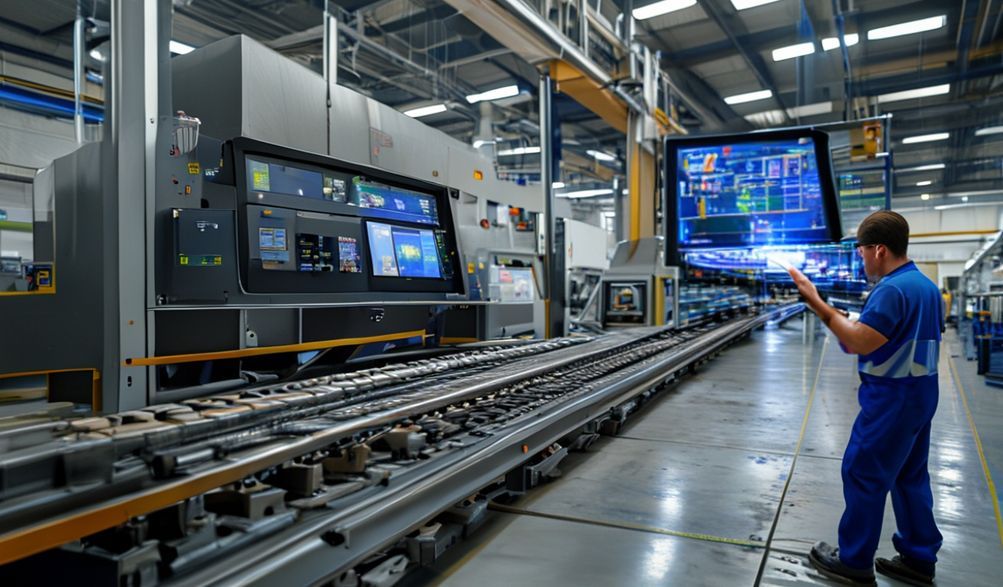
대형 벽돌 블록 제작 기계의 궁극적인 가이드: 규모와 효율성 향상하기
소개
콘크리트 블록에 대한 급증하는 수요를 충족시키기 위해 고군분투 중이신가요? 수작업이나 소규모 기계가 귀하의 사업이나 프로젝트를 가로막는 좌절스러운 생산 병목 현상을 일으키고 있나요? 여러분만 그런 것이 아닙니다. 이것이 바로 소규모 운영에서 산업 규모의 생산자로 전환하는 것을 가르는 바로 그 도전과제입니다.
산업용 블록 생산에 대한 수년간의 엔지니어링 및 컨설팅 경험에서, 우리는 생산량과 수익성을 변화시키는 하나의 핵심적인 결정을 꾸준히 목격해 왔습니다: 바로 더 큰 벽돌 블록 제조 기계로의 전략적 업그레이드입니다. 이는 단순히 더 큰 규모를 의미하는 것이 아니라, 능력의 근본적인 도약에 관한 것입니다.
이 가이드에서 "더 큰" 기계는 특히 고용량, 완전 자동, 고정식 블록 제조 기계—QGM 시리즈, Zenith 940 또는 Hess Multibloc과 같은 산업용 동력 장치를 의미합니다. 우리는 시간당 수천 개의 블록을 생산하는 출력, 정교한 자동화, 그리고 현대적인 블록 야드의 중심 역할로 정의되는 시스템에 초점을 맞추고 있습니다.
무엇을 배우게 될까요? 우리는 투자 수익률을 극대화하고, 뛰어난 제품 품질을 보장하며, 기업을 지속 가능하게 성장시키기 위해 대형 장비를 지능적으로 평가, 선택, 운영하는 방법을 분석해 나갈 것입니다. 이 가이드는 추측이 아닌 공학적 원칙, 검증 가능한 업계 데이터, 그리고 노력 끝에 얻은 운영상의 모범 사례에 기반을 두고 있습니다. 여러분의 성장을 위한 기초를 함께 다져봅시다.
왜 규모를 키워야 할까? 대형 블록 제작기의 강력한 이점
산업 규모의 기계로 전환하는 것은 상당한 자본 결정입니다. 그러나 이러한 결정의 정당성은 수익성과 경쟁력을 극적으로 향상시키는 강력한 혜택들의 집합에서 찾아볼 수 있습니다.
생산량의 극적인 증가
이것은 가장 명백하면서도 영향력 있는 장점입니다. 산출량이 선형에서 기하급수적 성장으로 도약합니다.
* 비교:견고한 반자동 기계는 8시간 교대 근무 동안 4,000~6,000개의 표준 블록을 생산할 수 있습니다. 대형 완전 자동 시스템은동일한 시간대에 3만에서 5만 블록.
* 전략적 영향:이러한 역량은 대규모 계약을 안정적으로 이행할 수 있게 해줍니다. 예를 들어, 시립 기반 시설 프로젝트, 대규모 주택 개발, 또는 상업 단지 건설 등을 생각해 볼 수 있습니다. 이는 사업 모델을 소규모 주문을 추구하는 것에서 주요 계약을 주도하는 것으로 전환시켜, 시장 점유율과 수익 잠재력을 크게 증가시킵니다.
뛰어난 일관성과 제품 품질
더 큰 기계는 단순히 양이 아닌 정밀도를 위해 설계되었습니다. 일관성은 그들의 설계에 내재되어 있습니다.
* Advanced Compaction: These machines employ high-frequency, multi-directional vibration systems combined with controlled hydraulic pressure. This ensures uniform density and optimal compaction in every single block, leading to consistent compressive strength that meets or exceeds ASTM/CEN standards.
* 치수 정밀도 Precision-engineered molds and controlled filling/compaction cycles produce blocks with exacting dimensional tolerances. This reduces waste from rejected blocks, simplifies bricklaying, and enhances the final structure’s aesthetic.
인건비와 의존도 대폭 감소
Automation is the key differentiator. It transforms labor from a manual task force to a skilled monitoring and management team.
* Integrated Workflow: The process—from raw material feeding and mixing to molding, curing, stacking, and palletizing—is automated. Human intervention is primarily for supervision, quality control checks, and managing the flow of materials and finished products.
* Quantifiable Savings: A small-scale operation may require 6-8 people for material handling, molding, and stacking. A large automated system can often be managed by 1-2 skilled operators. This drastically cuts long-term labor costs and mitigates risks associated with labor shortages or skill gaps.
Enhanced Operational Efficiency and Lower Per-Unit Cost
This is where economies of scale become tangible. Higher output spreads fixed costs over more units.
* 더 빠른 사이클 타임 Advanced hydraulics and control systems minimize the time between each block production cycle.
* 최적화된 자재 사용: Precise batching and reduced waste from higher quality control mean more blocks from the same amount of raw material.
* 결론적으로 말하면: While the absolute cost of production may be higher, the cost per block plummets. This gives you greater pricing flexibility and healthier profit margins, funding further growth and innovation.
Key Features to Look for in a Bigger Brick Block Making Machine
Selecting the right machine requires looking beyond brochures to the core specifications that dictate performance and longevity. Here’s what truly matters.
Core Production Specifications
These numbers define the machine’s capacity and capability.
* Cycle Time & Output Capacity: Don’t just look at “maximum” output. Ask for verified output figures for the specific block types you produce (e.g., 200mm hollow blocks, pavers, solid blocks) under standard conditions. A cycle time of 10-15 seconds is typical for high-end machines.
* Molding Pressure & Vibration System: This is the heart of the machine. Seek out systems offering:
* High-frequency vibration (7,000-10,000 RPM) for thorough aggregate settlement.
* Multi-directional (vertical and horizontal) vibration for uniform compaction in complex molds.
* Electronically controlled hydraulic pressure for consistent molding force.
* Pallet Size and Circulation System: This is the logistics backbone. A robust, smooth pallet circulation system is essential for non-stop production. Ensure it uses a standardized pallet size (like 1100x550mm or 1200x600mm) and has a sufficient number of pallets in circulation to maintain output.
Automation and Control Systems
The “intelligence” of the machine determines its ease of use and operational insight.
* PLC with Touchscreen Interface: The machine’s brain. A modern Programmable Logic Controller (PLC) with a user-friendly touchscreen allows for:
* Easy recipe changes for different block types.
* Real-time fault diagnosis and alerts.
* Production data tracking (output counts, downtime, efficiency reports).
* Automatic Material Feeding & Mixing Integration: The best systems are part of a seamless plant. Look for compatibility with automatic batching plants and conveyor systems that feed mixed concrete directly into the machine hopper, ensuring consistent feed quality.
* Automatic Stacking and Curing Handling: Post-molding automation is critical. Integrated stackers, cross-transfer cars, and systems that place “green” blocks onto curing racks or carts eliminate heavy manual labor and prevent product damage.
빌드 품질과 내구성
This determines your total lifespan and cost of ownership. Prioritize robustness.
* Heavy-Duty Steel Frame and Components: The frame should be fabricated from high-grade steel plate to withstand 20+ years of constant vibration and load. Inspect weld quality and structural design.
* Quality of Hydraulics and Electricals: Brand reputation matters here. Recognizable, industrial-grade components (e.g., Bosch Rexroth hydraulics, Siemens PLCs) often translate to greater reliability, easier servicing, and less downtime.
* 유지보수 용이성: Design for serviceability is a sign of good engineering. Check for easy access to lubrication points, vibration motors, and hydraulic valves. Ask for maintenance manuals and spare parts lists upfront.
Critical Considerations Before You Invest
A successful investment requires thorough preparation. Overlooking these areas can lead to costly delays and underperformance.
Comprehensive Site and Infrastructure Assessment
Your site must be a partner to the machine.
* 우주 You need space for the machine’s footprint 플러스 ample area for raw material storage, block curing, and finished product storage. Include space for maintenance access.
* 힘 These are power-hungry units. Typically, they require a stable 380V/415V, 50Hz, 3-phase electrical supply with sufficient amperage. Consult with an electrician and your supplier for exact specifications.
* 기반 A massive, reinforced concrete foundation is non-negotiable. It must be perfectly level and designed to absorb the machine’s dynamic loads. The supplier should provide detailed foundation drawings.
* Raw Material Logistics: Plan for efficient handling of bulk cement, aggregates, and sand. Consider silos, conveyor belts, and loader access to keep the machine fed without interruption.
Total Cost of Ownership (TCO) Analysis
The machine’s price tag is just the entry ticket.
* Upfront Costs: Include international shipping, insurance, customs duties, installation, commissioning, and operator training.
* Long-Term Operational Costs: Factor in:
* Energy consumption of the machine and entire plant.
* Cost of routine spare parts (wear parts like mold liners, vibration shafts).
* Budget for preventive maintenance and potential major overhauls.
* Financial Modeling: Project your increased revenue against this full TCO to calculate a realistic payback period and ROI.
Matching the Machine to Your Product Mix and Market
Avoid buying excess capacity you don’t need, or worse, a machine that can’t make your core products.
* 제품 유연성 Verify the machine can produce the exact block types, sizes, and strengths your current and future customers demand. Ask about mold changeover time and cost.
* Market Alignment: If your market values specialty pavers or interlocking blocks, ensure the machine’s vibration system and control software are suited for these often more complex products. Don’t buy a machine designed only for standard hollow blocks if your strategy is diversification.
Operational Best Practices for Maximum ROI
Owning the machine is step one. Operating it optimally is where the promised ROI is captured.
Proper Installation and Commissioning
Never cut corners here. This phase sets the stage for the machine’s entire operational life.
* Professional Installation: Insist on installation by factory-trained technicians or highly qualified local engineers under remote factory guidance. Proper alignment and calibration are critical.
* Structured Commissioning: This should include mechanical alignment checks, hydraulic system calibration, vibration system tuning, and extensive test runs with your actual raw materials to fine-tune settings.
Routine Maintenance Schedule (A Sample Checklist)
Preventive maintenance is infinitely cheaper than emergency repairs and prolonged downtime.
* Daily: Visual inspection for leaks, unusual noises, or loose parts. Clean spillage and the pallet circulation area.
* Weekly: Lubricate all designated points per the manual. Check and tighten critical bolts on the frame and vibration assembly.
* Monthly: Check hydraulic fluid levels and condition. Inspect vibration motors for wear. Clean sensors and electrical contacts.
* Annually: Perform a comprehensive overhaul. This may involve replacing wear parts, changing hydraulic filters and fluid, and having a specialist inspect the control system.
Optimizing Raw Material Mix Design
The machine can only be as good as the concrete mix it receives.
* 일관성이 핵심입니다 The #1 rule for automated block making is a consistent, well-graded aggregate supply. Variations in sand moisture content or aggregate size will cause production issues and quality fluctuations.
* Mix Design Collaboration: Work with a material engineer or your machine supplier to develop an optimal mix design. The right cement-aggregate-water ratio and potential admixtures will maximize block strength, cure properly, and reduce abrasive wear on the machine’s molds and hopper.
Frequently Asked Questions (FAQ) About Bigger Block Machines
Q1: What is the typical price range for a large, fully automatic block making machine?
A: Prices vary widely based on capacity, automation level, and brand. A realistic range is $150,000 to $500,000+. A mid-range, high-output machine from a reputable manufacturer often falls between $250,000 and $400,000. Always view this as a capital investment—the focus should be on the machine’s contribution to profit, not just its initial cost.
Q2: How much manpower is really needed to operate one of these large machines?
A: While the core molding process is fully automated, a typical operation requires 1-3 skilled personnel per shift. Their roles involve monitoring the control panel, performing periodic quality checks (weight, dimensions), managing the inflow of raw materials from the batching plant, and overseeing the offloading of cured blocks from the stacking/curing system.
Q3: Can I use local raw materials, or do I need special mixes?
A: These machines are absolutely designed for locally available materials—standard Portland cement, sand, gravel, and crushed stone. The critical factor is not the origin, but the consistency and grading of your aggregates. A well-designed, stable mix formula tailored to your local materials is essential for smooth operation.
Q4: What is the lead time from order to operational machine?
A: Plan for a 3 to 6-month timeline, minimum. This includes manufacturing (8-12 weeks), sea freight (4-8 weeks), customs clearance, and on-site installation/commissioning (2-4 weeks). Smart buyers use this lead time to complete all site preparation, foundation work, and utility connections.
Q5: How do I ensure I get reliable after-sales service and spare parts?
A: This is a critical due diligence step. Before purchasing:
* Verify the supplier has a service network or trained agents in your region.
* Request technical documentation (manuals, diagrams) in your language.
* Ask for a list of common spare parts, their prices, and guaranteed availability.
* Ask for and contact references from existing clients in a similar climate or region. Their experience is your best predictor.
결론
Upgrading to a bigger brick block making machine is far more than a simple equipment purchase; it is a strategic investment in the future scale, quality, and efficiency of your operation. The journey from manual or semi-automatic production to fully automated industrial output is defined by unmatched production capacity, superior and consistent product quality, and the powerful economics of scale that drive long-term profitability.
The path forward requires moving from research to informed action. We strongly advise conducting a detailed production audit of your current output, costs, and future growth goals. Reputable manufacturers and industry consultants often provide this service. With clear, data-driven specifications in hand, you can engage with potential suppliers from a position of knowledge and confidence.
Ultimately, this investment is about building resilience and capacity. It empowers you to not just participate in the construction market, but to shape the infrastructure and communities of tomorrow with remarkable efficiency and strength. The foundation for that future starts with the right machine.
<