
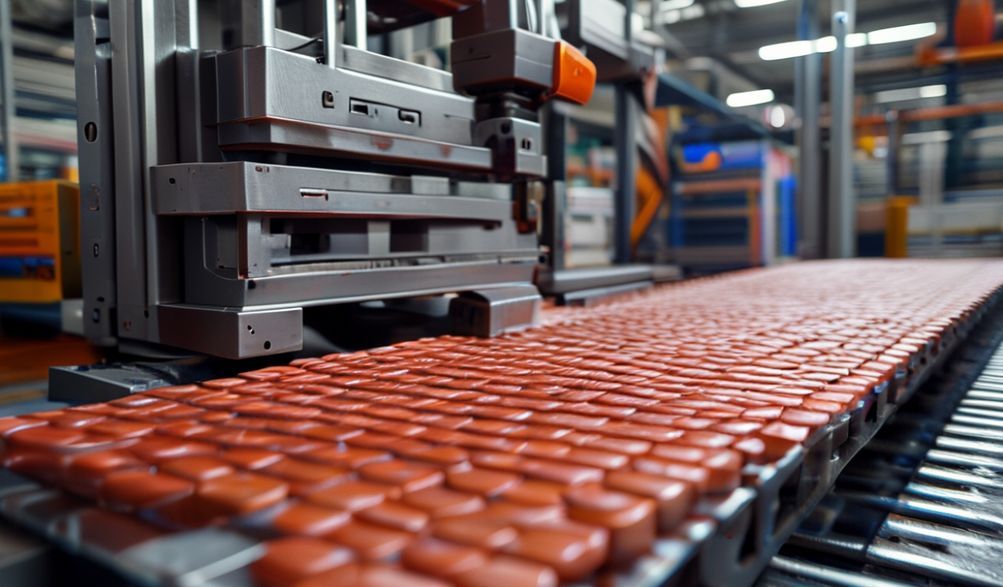
La Guía Definitiva de Máquinas para Bloques de Pavimento: Dentro de la Fábrica de Fabricación de Bloques FUDA
Introducción
El panorama global está siendo transformado, metro cuadrado por metro cuadrado. Desde elegantes entradas residenciales y bulliciosas plazas comerciales hasta sostenibles pasarelas urbanas, la demanda de soluciones de pavimentación de alta calidad y durabilidad nunca ha sido mayor. Este auge presenta una oportunidad de oro para emprendedores y empresas de construcción. Sin embargo, aprovecharla depende de una decisión crítica: seleccionar la maquinaria de producción adecuada.
El mercado está inundado de opciones, lo que hace que sea una tarea abrumadora encontrar equipos que realmente equilibren el costo inicial con la eficiencia a largo plazo, la calidad del producto y una confiabilidad inquebrantable. Muchos compradores enfrentan el ciclo frustrante de averías, calidad inconsistente del producto y un soporte postventa que desaparece.
Aquí es donde enfocarse en fabricantes establecidos y especializados marca toda la diferencia. Entre los nombres prominentes en maquinaria para fabricar bloques, la fábrica de bloques FUDA se ha labrado una reputación por sus máquinas robustas y eficientes para adoquines. Esta guía no es un argumento de ventas. Es un recorrido experto, basado en conocimiento de la industria y principios de manufactura, diseñado para aclarar qué debe buscar en una máquina para adoquines y cómo una fábrica como FUDA aborda su construcción.
Al final de esta guía, comprenderás:
* La función principal y los tipos de máquinas para fabricar adoquines.
* Las características clave de ingeniería y diseño que distinguen a una máquina de prestigio.
* Cómo es el compromiso con la calidad dentro de una fábrica de manufactura.
* Factores críticos e imparciales para evaluar antes de realizar tu inversión.
Primero construyamos una base de conocimiento.
¿Qué es una Máquina de Bloques Pavimentadores? Función Principal y Tipos
En esencia, una máquina para fabricar adoquines es un sistema de ingeniería de precisión diseñado para transformar mezcla de concreto cruda en unidades de pavimento densas, de forma consistente y estéticamente agradables. Comprender su principio fundamental es el primer paso para realizar una compra informada.
El Principio Básico de Funcionamiento
El proceso, aunque automatizado en modelos avanzados, sigue una secuencia lógica para garantizar resistencia y consistencia:
- Lotes y Mezclado:Se combinan cantidades medidas con precisión de cemento, arena, agregados y agua para formar una mezcla de concreto semiseco. El contenido de humedad es crucial para una compactación adecuada.
- Alimentación:Esta mezcla se vierte en la tolva de alimentación de la máquina, que luego la distribuye uniformemente en la cavidad del molde sobre una paleta de acero.
- Compactación:Esta es la fase más crítica. Una poderosa combinación de vibración de alta frecuencia y presión hidráulica sustancial comprime la mezcla. Esta acción dual elimina las bolsas de aire y obliga a las partículas a unirse, creando un bloque de densidad y resistencia extremadamente altas.
- Moldeo y Desmoldeo:Bajo presión, la mezcla adopta la forma exacta del molde. Luego, el molde se eleva (se desprende) verticalmente, dejando el bloque recién formado sobre el pallet.
- Curado:Los bloques verdes (frescos) en sus tarimas se transfieren a un área de curado. Aquí, adquieren resistencia durante días a través de una hidratación controlada, a menudo en cámaras de curado especializadas, antes de estar listos para la venta o instalación.
Tipos Clave de Máquinas para Bloques de Pavimento
Las máquinas se clasifican según su nivel de automatización y movilidad.
-
Máquinas Manuales/Semiautomáticas:
- Operación:Requiere mano de obra significativa para alimentar la mezcla, operar las palancas y retirar los bloques.
- Salida:Bajo (por ejemplo, 500-2000 bloques por turno de 8 horas).
- Mejor Para:Empresas emergentes muy pequeñas, proyectos personalizados de nicho o mercados con costos laborales muy bajos. Representan una inversión inicial menor pero un costo operativo a largo plazo más alto.
-
Máquinas Estacionarias Completamente Automáticas:
- Operación: Integrated systems handle mixing, feeding, compacting, block ejection, and stacking with minimal human intervention, typically controlled by a Programmable Logic Controller (PLC).
- Salida: High and consistent (e.g., from 5,000 to over 30,000 blocks per 8-hour shift, depending on model).
- Mejor Para: Serious businesses focused on volume production, consistency, and operational efficiency. This is typically where factories like FUDA excel.
-
Máquinas Móviles para Fabricar Bloques:
- Operación: Mounted on a trailer, they can produce blocks directly on a construction site, eliminating transport costs for the final product.
- Salida: Variable, often lower than large stationary plants.
- Nota: It’s essential to check if a specific factory like FUDA offers this mobile variant within their portfolio.
-
Concrete Paver vs. Interlocking Paver Machines:
- The core machine is often the same. The defining difference is the moho. Interlocking pavers have specially designed edges that fit together, transferring load laterally and creating a stable, flexible pavement without mortar. Most modern paver block machines, including those from FUDA, are designed to produce interlocking pavers due to their superior market demand.
Why Choose a FUDA Paver Block Machine? Analyzing the Factory’s Edge
When evaluating a “paver block machine FUDA block making factory,” you’re assessing a product born from a specific manufacturing philosophy. Here’s what gives a reputable factory like FUDA its competitive edge.
Engineering and Design Expertise
The durability of the machine itself is paramount. Look for features that indicate heavy-duty construction:
* Robust Steel Frame: The chassis must withstand constant, powerful vibrations without flexing. A welded, reinforced frame ensures machine stability and longevity.
* Powerful Vibration System: Multiple high-frequency, synchronized vibrators under the mold table are key. They ensure the concrete mix is fluidized and compacted evenly into every corner of the mold for uniform density.
* Efficient Hydraulic System: A reliable, sealed hydraulic system provides the immense pressure needed for compaction. Quality components reduce heat generation, leakage, and energy consumption.
Production Capacity and Model Range
A one-size-fits-all approach doesn’t work. A good factory offers a spectrum to match your business scale.
* Variedad de Modelos: A range like the QCM4-30 (for standard blocks and pavers) to higher-output models like the QMJ4-45 (for higher production of pavers and interlocking blocks) allows for targeted selection.
* Clear Specifications: Output is measured in blocks per hour (e.g., 1,500 – 4,500 pcs/hr), with clear pallet size (e.g., 1100x550mm) and machine footprint details. This lets you plan your factory layout and business forecast accurately.
Automation and Ease of Operation
Automation isn’t just about reducing labor; it’s about consistency and control.
* Sistema de Control PLC: The brain of the machine. A user-friendly touchscreen interface allows operators to set parameters, monitor operations, and diagnose issues. It ensures every block cycle is identical.
* Manejo Automatizado de Materiales: Integrated conveyors, automatic batching, and block stackers create a seamless production line, minimizing manual handling and boosting overall plant efficiency.
Versatility in Product Output
Your market needs may change. A versatile machine protects your investment.
* Mold-Based Flexibility: The core machine can produce an array of products—different paver shapes (herringbone, cobble, circle), curb stones, hollow blocks, and solid blocks—simply by changing the mold. This allows you to diversify your product line to meet customer demand.
Durability and Low Maintenance Design
Downtime is lost revenue. Intelligent design minimizes it.
* Wear-Resistant Materials: Critical components like mold liners, feedbox shoes, and pallet surfaces are made from hardened steel or special alloys to withstand abrasive concrete mix.
* Service-Friendly Layout: Easy access to hydraulic valves, vibrator motors, and electrical panels simplifies routine maintenance and repairs, keeping your operational costs predictable.
A Virtual Tour: The FUDA Block Making Factory’s Commitment to Quality
Trust is built on transparency. Understanding what happens inside the factory tells you more about the machine than any brochure can.
Estándares de Fabricación y Control de Calidad
Quality isn’t inspected in; it’s built in through a controlled process.
* Staged Production: From cutting and welding the frame to assembling hydraulic lines and wiring the PLC, each stage has defined checkpoints.
* Pruebas Rigorosas: Before shipment, machines undergo comprehensive testing—empty runs, loaded runs with concrete, and pressure tests—to ensure they perform to specification.
* Certificaciones: While specifics vary, reputable factories often adhere to international standards (like CE marking for the European market), which mandate strict safety and quality protocols.
R&D and Innovation
A static factory is a falling-behind factory. Investment in research is key.
* Focus Areas: This includes improving energy efficiency of motors and hydraulics, developing smarter PLC software for easier operation, and experimenting with new vibration techniques for even denser blocks.
Technical Support and Training
The relationship begins at purchase, not ends there.
* Comprehensive Package: Support should include detailed foundation drawings, installation supervision (onsite or remote), thorough operator and maintenance training, and clear troubleshooting manuals.
* Ecosistema de Refacciones: A reliable supply of genuine spare parts, with clear part numbers and diagrams, is non-negotiable for long-term machine health.
The Supply Chain and Sourcing
The machine is only as good as its weakest component.
* Strategic Sourcing: Factories with strong reputations partner with known brands for key components—Siemens or Schneider for PLCs, Rexroth or Yuken for hydraulic parts, WEG or Siemens for motors. This ensures reliability and simplifies future repairs.
Critical Factors Before Buying Your Paver Block Machine
Armed with knowledge about what makes a good machine and factory, use this practical checklist to evaluate any supplier, including FUDA.
Assessing Your Business Needs
Start with introspection:
* Daily Output Target: How many square meters of pavers do you need to produce per day to meet demand?
* Available Space & Infrastructure: Do you have the floor space, ceiling height, and 3-phase electrical power required?
* Presupuesto: Consider total cost of ownership (machine, shipping, installation, foundation, initial spare parts).
* Target Market: Are you supplying residential projects, municipal contracts, or landscapers? This influences the paver types and quality needed.
Especificaciones Clave de la Máquina para Examinar a Fondo
Go beyond the sales talk. Get these details in writing:
* Compaction Force: Measured in tons or kN. Higher force generally means denser, stronger blocks.
* Tiempo de Ciclo: Seconds per block. This directly determines your maximum hourly output.
* Total Installed Power: The combined kW of all motors. This dictates your electricity cost.
* Warranty Period: What is covered (parts, labor?) and for how long (typically 1-2 years)?
* Standard Mold Compatibility: What mold systems does the machine use? Are they proprietary or industry-standard?
The Importance of After-Sales Service
Ask direct questions:
* “What is the guaranteed response time for technical support?”
* “Can you provide a list of recommended spare parts for the first year?”
* “What is the typical lead time for ordering and shipping a critical spare part?”
Requesting a Factory Visit or Live Demo
This is the most powerful due diligence step.
* Factory Visit: Seeing the manufacturing environment, quality controls, and inventory of parts builds immense trust.
* Live Demo: Request a video of the exact model you’re interested in running with concrete. Observe the cycle, the finished block quality, and the noise/vibration levels.
FAQ: Your Questions on Paver Block Machines & FUDA Answered
Q1: What is the approximate price range for a FUDA automatic paver block machine?
A: Prices vary significantly based on the level of automation, output capacity, and configuration (e.g., with or without a mixer and stacker). A basic automatic machine may start in the range of $30,000 – $50,000, while fully integrated high-output production lines can be $100,000+. For an accurate quote, you must contact the factory directly with your specific output and product requirements.
Q2: Can FUDA machines produce other products besides pavers?
A: Absolutely. This is a key advantage of stationary block machines. By changing the mold, the same machine can typically produce a wide range of concrete products, including hollow blocks, solid blocks, curb stones, garden tiles, and retaining wall units.
Q3: What kind of raw materials are required?
A: The standard raw materials are Portland cement, clean sand (fine aggregate), crushed stone or gravel (coarse aggregate, typically 3-8mm for pavers), water, and optionally, iron oxide pigments for colored pavers. The machine is designed for a semi-dry mix with low water content.
Q4: How long does it take to install and commission the machine?
A: After delivery, the process includes preparing a level concrete foundation, assembling the machine (which can take 3-7 days for a skilled team), connecting utilities, and conducting test runs. With proper preparation and factory guidance, the machine can often be producing saleable blocks within 2-4 weeks of arrival on site.
Q5: Does FUDA provide molds, and are they customizable?
A: Yes, reputable factories like FUDA usually supply a set of standard paver molds with the machine. Crucially, they also offer custom mold design and manufacturing services, allowing you to produce unique paver shapes and profiles to differentiate your products in the market.
Conclusión
Choosing a paver block machine is a significant capital investment that forms the backbone of your production business. The decision must look beyond the initial price tag to the core pillars of machine quality, production reliability, and the tangible support of the manufacturer behind it.
Factories like FUDA, with a focused approach on robust engineering, controlled manufacturing processes, and a structured support system, represent a credible pathway for businesses aiming to establish or scale their paver production. They embody the principle that a reliable machine is a profit center, not a cost center.
Use the criteria and checklist outlined in this guide as your unbiased evaluation framework for all potential suppliers. For the most accurate specifications, pricing, and to discuss your specific project needs, the best course of action is to contact the FUDA factory directly through their official channels to request a detailed consultation, a live machine demonstration, and a formal quotation.
<