
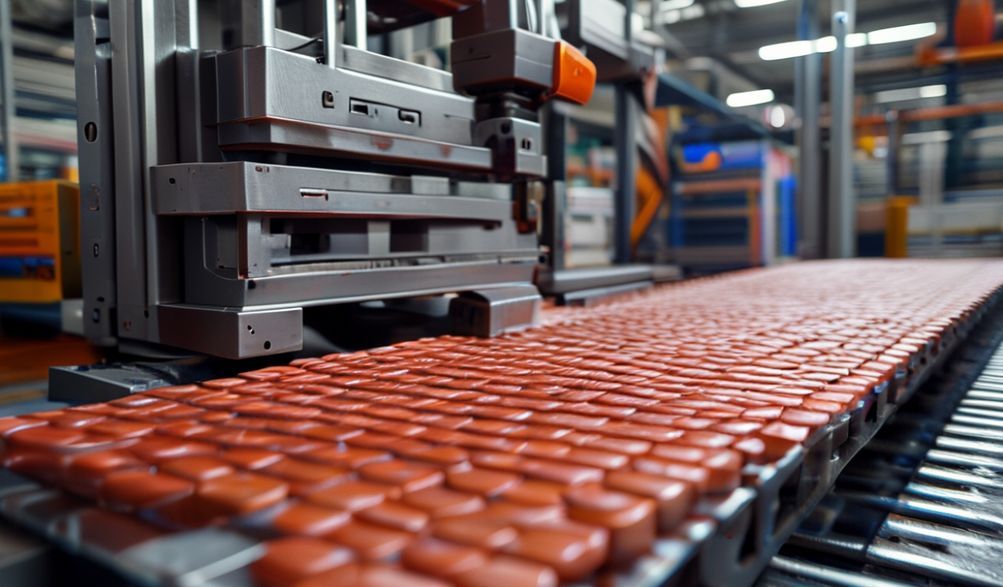
Jagorar Cikakke na Injin Yin Tubalin Paver: Cikin Masana'antar Yin Tubalin FUDA
Gabatarwa
Duniya tana canzawa, kowace murabba'in mita ta hanyar gini. Daga manyan hanyoyin gidaje masu kyau da filayen kasuwanci masu cike da hargitsi, zuwa hanyoyin birane masu dorewa, buƙatar ingantattun hanyoyin shimfiɗa masu ɗorewa ba ta taɓa yin girma ba. Wannan haɓaka yana ba da dama mai mahimmanci ga ƴan kasuwa da kamfanonin gine-gine. Duk da haka, cin gajiyar ta ta'allaka ne akan wani muhimmin yanke shawara: zaɓar ingantaccen injin samarwa.
Kasuwanni cike take da zaɓuɓɓuka, wanda ya sa ya zama wani aiki mai wahala don nemo kayan aiki da gaske ke daidaita farashin farko tare da ingantaccen aiki na dogon lokaci, ingancin fitarwa, da amintaccen dogaro. Yawancin masu siye suna fuskantar zagayowar lalacewa, rashin daidaiton ingancin samfur, da raguwar tallafin bayan siyarwa.
Nan ne inda mai da hankali kan ƙwararrun masana'antun da suka kafa ya haifar da bambanci. Daga cikin manyan sunaye a cikin injinan yin bulo, masana'antar yin bulo ta FUDA ta sami suna don ƙaƙƙarfan injinanta na yin bulo mai inganci. Wannan jagorar ba tallace-tallace ba ce. Taƙaitaccen bayani ne na ƙwararru, wanda aka gina akan ilimin masana'antu da ƙa'idodin masana'antu, wanda aka tsara don bayyana abin da ya kamata ku kalli a cikin injin yin bulo da kuma yadda masana'anta kamar FUDA ke tunkarar gina shi.
A ƙarshen wannan jagorar, za ka fahimci:
* Aikin cibiyar da nau'ikan injinan tubalin shimfidawa.
* Siffofin injiniyanci da ƙira masu muhimmanci waɗanda ke bambanta ingantacciyar inji.
Abin da sadaukarwa ga inganci yake kama da a cikin masana'antar masana'anta.
* Muhimman abubuwa masu mahimmanci da ba a nuna son kai ba don kimantawa kafin yin zuba jarurruka.
Bari mu gina tushen ilimi da farko.
Menene Injin Block ɗin Paver? Aikin Cibiya da Nau'ukan
A cikin tsarinsa, na'urar yin tubalin shinge tsari ce da aka ƙera daidai don canza cakuda siminti danye zuwa ƙaƙƙarfan ginshiƙai, masu daidaitaccen siffa, da kyan gani. Fahimtar ainihin ƙa'idarta shine matakin farko don yin sayayya mai hikima.
Tsarin Aiki na Asali
Tsarin, ko da yake ana sarrafa shi ta atomatik a cikin ƙirar ci-gaba, yana bin tsari mai ma'ana don tabbatar da ƙarfi da daidaito:
- Batching & Mixing:Ana haɗa ƙayyadadden adadin siminti, yashi, guga, da ruwa don samar da cakuda kankare mai ɗan bushe. Matsakaicin danshin yana da mahimmanci don ingantacciyar tattarawa.
- Ciyarwa:Ana kai wannan cakuda cikin injin mai ɗaukar abinci, wanda daga nan sai ya rarraba shi daidai cikin ramin ƙirar da ke kan pallet ɗin ƙarfe.
- Ƙarfafawa: This is the most critical phase. A powerful combination of high-frequency vibration and substantial hydraulic pressure compresses the mix. This dual action removes air pockets and forces the particles together, creating a block of extremely high density and strength.
- Gyare-gyare & Cirewa: While under pressure, the mix takes the exact shape of the mold. The mold then lifts (strips) vertically, leaving the freshly formed block on the pallet.
- Maganin Ciwon Ciki: The green (fresh) blocks on their pallets are transferred to a curing area. Here, they gain strength over days through controlled hydration, often in specialized curing chambers, before being ready for sale or installation.
Key Types of Paver Block Machines
Ana rarraba injuna ta matakin sarrafa kansu da motsi:
-
Na'urorin Wucin Gadi/Na'urorin Wucin Gadi na Rago-Rago:
- Aiki: Require significant manual labor for feeding mix, operating levers, and removing blocks.
- Sakamako: Low (e.g., 500-2000 blocks per 8-hour shift).
- Mafi Kyau Don: Very small startups, niche custom projects, or markets with very low labor costs. They represent a lower initial investment but higher long-term operational cost.
-
Na'urorin Aiki na Gaba Daya na Tsaye:
- Aiki: Integrated systems handle mixing, feeding, compacting, block ejection, and stacking with minimal human intervention, typically controlled by a Programmable Logic Controller (PLC).
- Sakamako: High and consistent (e.g., from 5,000 to over 30,000 blocks per 8-hour shift, depending on model).
- Mafi Kyau Don: Serious businesses focused on volume production, consistency, and operational efficiency. This is typically where factories like FUDA excel.
-
Na'urorin Sake Kera Tubalan Wayoyin Hannu:
- Aiki: Mounted on a trailer, they can produce blocks directly on a construction site, eliminating transport costs for the final product.
- Sakamako: Variable, often lower than large stationary plants.
- Note: It’s essential to check if a specific factory like FUDA offers this mobile variant within their portfolio.
-
Concrete Paver vs. Interlocking Paver Machines:
- The core machine is often the same. The defining difference is the tsatsa. Interlocking pavers have specially designed edges that fit together, transferring load laterally and creating a stable, flexible pavement without mortar. Most modern paver block machines, including those from FUDA, are designed to produce interlocking pavers due to their superior market demand.
Why Choose a FUDA Paver Block Machine? Analyzing the Factory’s Edge
When evaluating a “paver block machine FUDA block making factory,” you’re assessing a product born from a specific manufacturing philosophy. Here’s what gives a reputable factory like FUDA its competitive edge.
Engineering and Design Expertise
The durability of the machine itself is paramount. Look for features that indicate heavy-duty construction:
* Robust Steel Frame: The chassis must withstand constant, powerful vibrations without flexing. A welded, reinforced frame ensures machine stability and longevity.
* Powerful Vibration System: Multiple high-frequency, synchronized vibrators under the mold table are key. They ensure the concrete mix is fluidized and compacted evenly into every corner of the mold for uniform density.
* Efficient Hydraulic System: A reliable, sealed hydraulic system provides the immense pressure needed for compaction. Quality components reduce heat generation, leakage, and energy consumption.
Production Capacity and Model Range
A one-size-fits-all approach doesn’t work. A good factory offers a spectrum to match your business scale.
* Model Variety: A range like the QCM4-30 (for standard blocks and pavers) to higher-output models like the QMJ4-45 (for higher production of pavers and interlocking blocks) allows for targeted selection.
* Clear Specifications: Output is measured in blocks per hour (e.g., 1,500 – 4,500 pcs/hr), with clear pallet size (e.g., 1100x550mm) and machine footprint details. This lets you plan your factory layout and business forecast accurately.
Automation and Ease of Operation
Automation isn’t just about reducing labor; it’s about consistency and control.
* Tsarin Gudanarwa na PLC: The brain of the machine. A user-friendly touchscreen interface allows operators to set parameters, monitor operations, and diagnose issues. It ensures every block cycle is identical.
* Sarraf Kayan Aiki ta Atomatik: Integrated conveyors, automatic batching, and block stackers create a seamless production line, minimizing manual handling and boosting overall plant efficiency.
Versatility in Product Output
Your market needs may change. A versatile machine protects your investment.
* Mold-Based Flexibility: The core machine can produce an array of products—different paver shapes (herringbone, cobble, circle), curb stones, hollow blocks, and solid blocks—simply by changing the mold. This allows you to diversify your product line to meet customer demand.
Durability and Low Maintenance Design
Downtime is lost revenue. Intelligent design minimizes it.
* Wear-Resistant Materials: Critical components like mold liners, feedbox shoes, and pallet surfaces are made from hardened steel or special alloys to withstand abrasive concrete mix.
* Service-Friendly Layout: Easy access to hydraulic valves, vibrator motors, and electrical panels simplifies routine maintenance and repairs, keeping your operational costs predictable.
A Virtual Tour: The FUDA Block Making Factory’s Commitment to Quality
Trust is built on transparency. Understanding what happens inside the factory tells you more about the machine than any brochure can.
Ka'idojin Masana'antu da Kula da Inganci
Quality isn’t inspected in; it’s built in through a controlled process.
* Staged Production: From cutting and welding the frame to assembling hydraulic lines and wiring the PLC, each stage has defined checkpoints.
* Gwajin Tsantsa: Before shipment, machines undergo comprehensive testing—empty runs, loaded runs with concrete, and pressure tests—to ensure they perform to specification.
* Takaddun shaida: While specifics vary, reputable factories often adhere to international standards (like CE marking for the European market), which mandate strict safety and quality protocols.
R&D and Innovation
A static factory is a falling-behind factory. Investment in research is key.
* Focus Areas: This includes improving energy efficiency of motors and hydraulics, developing smarter PLC software for easier operation, and experimenting with new vibration techniques for even denser blocks.
Technical Support and Training
The relationship begins at purchase, not ends there.
* Comprehensive Package: Support should include detailed foundation drawings, installation supervision (onsite or remote), thorough operator and maintenance training, and clear troubleshooting manuals.
* Spare Parts Ecosystem: A reliable supply of genuine spare parts, with clear part numbers and diagrams, is non-negotiable for long-term machine health.
The Supply Chain and Sourcing
The machine is only as good as its weakest component.
* Strategic Sourcing: Factories with strong reputations partner with known brands for key components—Siemens or Schneider for PLCs, Rexroth or Yuken for hydraulic parts, WEG or Siemens for motors. This ensures reliability and simplifies future repairs.
Critical Factors Before Buying Your Paver Block Machine
Armed with knowledge about what makes a good machine and factory, use this practical checklist to evaluate any supplier, including FUDA.
Assessing Your Business Needs
Start with introspection:
* Daily Output Target: How many square meters of pavers do you need to produce per day to meet demand?
* Available Space & Infrastructure: Do you have the floor space, ceiling height, and 3-phase electrical power required?
* Kasafin kuɗi: Consider total cost of ownership (machine, shipping, installation, foundation, initial spare parts).
* Target Market: Are you supplying residential projects, municipal contracts, or landscapers? This influences the paver types and quality needed.
Mahimman Ƙayyadaddun Injin da Ya Kamata a Bincika
Go beyond the sales talk. Get these details in writing:
* Compaction Force: Measured in tons or kN. Higher force generally means denser, stronger blocks.
* Lokacin Zagayowar: Seconds per block. This directly determines your maximum hourly output.
* Total Installed Power: The combined kW of all motors. This dictates your electricity cost.
* Warranty Period: What is covered (parts, labor?) and for how long (typically 1-2 years)?
* Standard Mold Compatibility: What mold systems does the machine use? Are they proprietary or industry-standard?
The Importance of After-Sales Service
Ask direct questions:
* “What is the guaranteed response time for technical support?”
* “Can you provide a list of recommended spare parts for the first year?”
* “What is the typical lead time for ordering and shipping a critical spare part?”
Requesting a Factory Visit or Live Demo
This is the most powerful due diligence step.
* Factory Visit: Seeing the manufacturing environment, quality controls, and inventory of parts builds immense trust.
* Live Demo: Request a video of the exact model you’re interested in running with concrete. Observe the cycle, the finished block quality, and the noise/vibration levels.
FAQ: Your Questions on Paver Block Machines & FUDA Answered
Q1: What is the approximate price range for a FUDA automatic paver block machine?
A: Prices vary significantly based on the level of automation, output capacity, and configuration (e.g., with or without a mixer and stacker). A basic automatic machine may start in the range of $30,000 – $50,000, while fully integrated high-output production lines can be $100,000+. For an accurate quote, you must contact the factory directly with your specific output and product requirements.
Q2: Can FUDA machines produce other products besides pavers?
A: Absolutely. This is a key advantage of stationary block machines. By changing the mold, the same machine can typically produce a wide range of concrete products, including hollow blocks, solid blocks, curb stones, garden tiles, and retaining wall units.
Q3: What kind of raw materials are required?
A: The standard raw materials are Portland cement, clean sand (fine aggregate), crushed stone or gravel (coarse aggregate, typically 3-8mm for pavers), water, and optionally, iron oxide pigments for colored pavers. The machine is designed for a semi-dry mix with low water content.
Q4: How long does it take to install and commission the machine?
A: After delivery, the process includes preparing a level concrete foundation, assembling the machine (which can take 3-7 days for a skilled team), connecting utilities, and conducting test runs. With proper preparation and factory guidance, the machine can often be producing saleable blocks within 2-4 weeks of arrival on site.
Q5: Does FUDA provide molds, and are they customizable?
A: Yes, reputable factories like FUDA usually supply a set of standard paver molds with the machine. Crucially, they also offer custom mold design and manufacturing services, allowing you to produce unique paver shapes and profiles to differentiate your products in the market.
Ƙarshe
Choosing a paver block machine is a significant capital investment that forms the backbone of your production business. The decision must look beyond the initial price tag to the core pillars of machine quality, production reliability, and the tangible support of the manufacturer behind it.
Factories like FUDA, with a focused approach on robust engineering, controlled manufacturing processes, and a structured support system, represent a credible pathway for businesses aiming to establish or scale their paver production. They embody the principle that a reliable machine is a profit center, not a cost center.
Use the criteria and checklist outlined in this guide as your unbiased evaluation framework for all potential suppliers. For the most accurate specifications, pricing, and to discuss your specific project needs, the best course of action is to contact the FUDA factory directly through their official channels to request a detailed consultation, a live machine demonstration, and a formal quotation.
<