
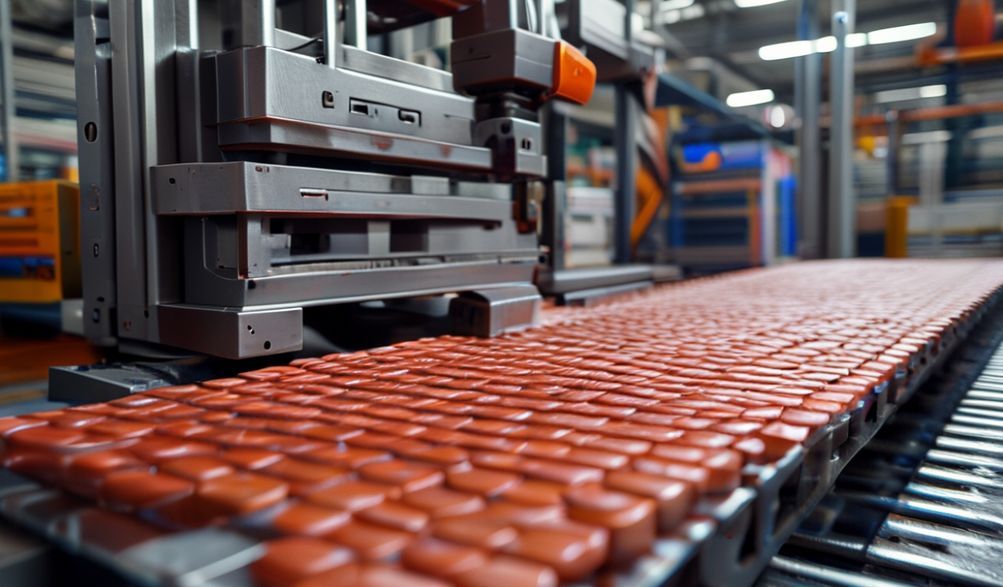
Le Guide Ultime des Machines à Pavés : À l'Intérieur de l'Usine de Fabrication de Blocs FUDA
Introduction
Le paysage mondial se redessine, mètre carré par mètre carré. Des allées résidentielles élégantes aux places commerciales animées, en passant par les promenades urbaines durables, la demande pour des solutions de pavage de haute qualité et durables n'a jamais été aussi forte. Cet essor représente une opportunité en or pour les entrepreneurs et les entreprises du bâtiment. Cependant, en tirer parti dépend d'une décision cruciale : choisir la bonne machinerie de production.
Le marché est inondé d'options, ce qui rend la recherche d'équipements qui allient vraiment coût initial, efficacité à long terme, qualité de production et fiabilité inébranlable, une tâche ardue. De nombreux acheteurs sont confrontés au cycle frustrant des pannes, de l'inconstance de la qualité des produits et du support après-vente qui disparaît.
C'est là que l'accent mis sur des fabricants établis et spécialisés fait toute la différence. Parmi les noms éminents dans la machinerie de fabrication de blocs, l'usine de fabrication de blocs FUDA s'est forgée une réputation pour ses machines à pavés robustes et efficaces. Ce guide n'est pas un argumentaire de vente. C'est une visite guidée d'expert, fondée sur la connaissance du secteur et les principes de fabrication, conçue pour démystifier ce que vous devez rechercher dans une machine à pavés et comment une usine comme FUDA aborde sa construction.
À la fin de ce guide, vous comprendrez :
* La fonction principale et les types de machines à pavés.
* Les caractéristiques clés d'ingénierie et de conception qui distinguent une machine de réputation.
* À quoi ressemble un engagement envers la qualité à l'intérieur d'une usine de fabrication.
* Facteurs critiques et impartiaux à évaluer avant de réaliser votre investissement.
Commençons par construire une base de connaissances.
Qu'est-ce qu'une Machine à Pavés ? Fonction Principale et Types
Au cœur de l'appareil, une machine à pavés est un système conçu avec précision pour transformer un mélange de béton brut en unités de pavage denses, de forme régulière et esthétiquement plaisantes. Comprendre son principe fondamental est la première étape vers un achat éclairé.
Le Principe de Travail de Base
Le processus, bien qu'automatisé dans les modèles avancés, suit une séquence logique pour garantir la robustesse et la cohérence :
- Batching & Mixing:Des quantités précisément mesurées de ciment, de sable, d'agrégats et d'eau sont combinées pour former un mélange de béton semi-sec. La teneur en humidité est cruciale pour un compactage adéquat.
- Alimentation :Ce mélange est acheminé dans la trémie d'alimentation de la machine, qui le répartit ensuite uniformément dans la cavité du moule sur une palette en acier.
- Compactage :C'est la phase la plus critique. Une combinaison puissante de vibrations haute fréquence et d'une pression hydraulique substantielle comprime le mélange. Cette double action élimine les poches d'air et force les particules à se rapprocher, créant ainsi un bloc d'une densité et d'une résistance extrêmement élevées.
- Moulage & Démoulage :Sous pression, le mélange épouse parfaitement la forme du moule. Le moule se soulève ensuite (se dégage) verticalement, laissant le bloc fraîchement formé sur la palette.
- Guérison :Les blocs verts (frais) sur leurs palettes sont transférés vers une zone de cure. Là, ils acquièrent de la solidité pendant plusieurs jours grâce à une hydratation contrôlée, souvent dans des chambres de cure spécialisées, avant d'être prêts pour la vente ou l'installation.
Types Clés de Machines à Blocs de Pavage
Les machines sont classées selon leur niveau d'automatisation et de mobilité.
-
Machines Manuelles/Semi-Automatiques :
- Opération :Nécessite un travail manuel important pour le mélange alimentaire, le maniement des leviers et le retrait des blocs.
- Sortie :Faible (par exemple, 500 à 2000 blocs par équipe de 8 heures).
- Idéal pour :Les très petites startups, les projets personnalisés de niche ou les marchés avec des coûts de main-d'œuvre très bas. Ils représentent un investissement initial plus faible, mais des coûts opérationnels à long terme plus élevés.
-
Machines Stationnaires Entièrement Automatiques :
- Opération : Integrated systems handle mixing, feeding, compacting, block ejection, and stacking with minimal human intervention, typically controlled by a Programmable Logic Controller (PLC).
- Sortie : High and consistent (e.g., from 5,000 to over 30,000 blocks per 8-hour shift, depending on model).
- Idéal pour : Serious businesses focused on volume production, consistency, and operational efficiency. This is typically where factories like FUDA excel.
-
Machines de fabrication de blocs mobiles :
- Opération : Mounted on a trailer, they can produce blocks directly on a construction site, eliminating transport costs for the final product.
- Sortie : Variable, often lower than large stationary plants.
- Note : It’s essential to check if a specific factory like FUDA offers this mobile variant within their portfolio.
-
Concrete Paver vs. Interlocking Paver Machines:
- The core machine is often the same. The defining difference is the moisissure. Interlocking pavers have specially designed edges that fit together, transferring load laterally and creating a stable, flexible pavement without mortar. Most modern paver block machines, including those from FUDA, are designed to produce interlocking pavers due to their superior market demand.
Why Choose a FUDA Paver Block Machine? Analyzing the Factory’s Edge
When evaluating a “paver block machine FUDA block making factory,” you’re assessing a product born from a specific manufacturing philosophy. Here’s what gives a reputable factory like FUDA its competitive edge.
Engineering and Design Expertise
The durability of the machine itself is paramount. Look for features that indicate heavy-duty construction:
* Robust Steel Frame: The chassis must withstand constant, powerful vibrations without flexing. A welded, reinforced frame ensures machine stability and longevity.
* Powerful Vibration System: Multiple high-frequency, synchronized vibrators under the mold table are key. They ensure the concrete mix is fluidized and compacted evenly into every corner of the mold for uniform density.
* Efficient Hydraulic System: A reliable, sealed hydraulic system provides the immense pressure needed for compaction. Quality components reduce heat generation, leakage, and energy consumption.
Production Capacity and Model Range
A one-size-fits-all approach doesn’t work. A good factory offers a spectrum to match your business scale.
* Model Variety: A range like the QCM4-30 (for standard blocks and pavers) to higher-output models like the QMJ4-45 (for higher production of pavers and interlocking blocks) allows for targeted selection.
* Clear Specifications: Output is measured in blocks per hour (e.g., 1,500 – 4,500 pcs/hr), with clear pallet size (e.g., 1100x550mm) and machine footprint details. This lets you plan your factory layout and business forecast accurately.
Automation and Ease of Operation
Automation isn’t just about reducing labor; it’s about consistency and control.
* Système de Commande par Automate Programmable (PLC) The brain of the machine. A user-friendly touchscreen interface allows operators to set parameters, monitor operations, and diagnose issues. It ensures every block cycle is identical.
* Manutention Automatisée des Matières : Integrated conveyors, automatic batching, and block stackers create a seamless production line, minimizing manual handling and boosting overall plant efficiency.
Versatility in Product Output
Your market needs may change. A versatile machine protects your investment.
* Mold-Based Flexibility: The core machine can produce an array of products—different paver shapes (herringbone, cobble, circle), curb stones, hollow blocks, and solid blocks—simply by changing the mold. This allows you to diversify your product line to meet customer demand.
Durability and Low Maintenance Design
Downtime is lost revenue. Intelligent design minimizes it.
* Wear-Resistant Materials: Critical components like mold liners, feedbox shoes, and pallet surfaces are made from hardened steel or special alloys to withstand abrasive concrete mix.
* Service-Friendly Layout: Easy access to hydraulic valves, vibrator motors, and electrical panels simplifies routine maintenance and repairs, keeping your operational costs predictable.
A Virtual Tour: The FUDA Block Making Factory’s Commitment to Quality
Trust is built on transparency. Understanding what happens inside the factory tells you more about the machine than any brochure can.
Normes de fabrication et contrôle de la qualité
Quality isn’t inspected in; it’s built in through a controlled process.
* Staged Production: From cutting and welding the frame to assembling hydraulic lines and wiring the PLC, each stage has defined checkpoints.
* Test rigoureux : Before shipment, machines undergo comprehensive testing—empty runs, loaded runs with concrete, and pressure tests—to ensure they perform to specification.
* Certifications : While specifics vary, reputable factories often adhere to international standards (like CE marking for the European market), which mandate strict safety and quality protocols.
R&D and Innovation
A static factory is a falling-behind factory. Investment in research is key.
* Focus Areas: This includes improving energy efficiency of motors and hydraulics, developing smarter PLC software for easier operation, and experimenting with new vibration techniques for even denser blocks.
Technical Support and Training
The relationship begins at purchase, not ends there.
* Comprehensive Package: Support should include detailed foundation drawings, installation supervision (onsite or remote), thorough operator and maintenance training, and clear troubleshooting manuals.
* Écosystème des Pièces Détachées : A reliable supply of genuine spare parts, with clear part numbers and diagrams, is non-negotiable for long-term machine health.
The Supply Chain and Sourcing
The machine is only as good as its weakest component.
* Strategic Sourcing: Factories with strong reputations partner with known brands for key components—Siemens or Schneider for PLCs, Rexroth or Yuken for hydraulic parts, WEG or Siemens for motors. This ensures reliability and simplifies future repairs.
Critical Factors Before Buying Your Paver Block Machine
Armed with knowledge about what makes a good machine and factory, use this practical checklist to evaluate any supplier, including FUDA.
Assessing Your Business Needs
Start with introspection:
* Daily Output Target: How many square meters of pavers do you need to produce per day to meet demand?
* Available Space & Infrastructure: Do you have the floor space, ceiling height, and 3-phase electrical power required?
* Budget : Consider total cost of ownership (machine, shipping, installation, foundation, initial spare parts).
* Target Market: Are you supplying residential projects, municipal contracts, or landscapers? This influences the paver types and quality needed.
Spécifications clés des machines à examiner attentivement
Go beyond the sales talk. Get these details in writing:
* Compaction Force: Measured in tons or kN. Higher force generally means denser, stronger blocks.
* Temps de cycle : Seconds per block. This directly determines your maximum hourly output.
* Total Installed Power: The combined kW of all motors. This dictates your electricity cost.
* Warranty Period: What is covered (parts, labor?) and for how long (typically 1-2 years)?
* Standard Mold Compatibility: What mold systems does the machine use? Are they proprietary or industry-standard?
The Importance of After-Sales Service
Ask direct questions:
* “What is the guaranteed response time for technical support?”
* “Can you provide a list of recommended spare parts for the first year?”
* “What is the typical lead time for ordering and shipping a critical spare part?”
Requesting a Factory Visit or Live Demo
This is the most powerful due diligence step.
* Factory Visit: Seeing the manufacturing environment, quality controls, and inventory of parts builds immense trust.
* Live Demo: Request a video of the exact model you’re interested in running with concrete. Observe the cycle, the finished block quality, and the noise/vibration levels.
FAQ: Your Questions on Paver Block Machines & FUDA Answered
Q1: What is the approximate price range for a FUDA automatic paver block machine?
A: Prices vary significantly based on the level of automation, output capacity, and configuration (e.g., with or without a mixer and stacker). A basic automatic machine may start in the range of $30,000 – $50,000, while fully integrated high-output production lines can be $100,000+. For an accurate quote, you must contact the factory directly with your specific output and product requirements.
Q2: Can FUDA machines produce other products besides pavers?
A: Absolutely. This is a key advantage of stationary block machines. By changing the mold, the same machine can typically produce a wide range of concrete products, including hollow blocks, solid blocks, curb stones, garden tiles, and retaining wall units.
Q3: What kind of raw materials are required?
A: The standard raw materials are Portland cement, clean sand (fine aggregate), crushed stone or gravel (coarse aggregate, typically 3-8mm for pavers), water, and optionally, iron oxide pigments for colored pavers. The machine is designed for a semi-dry mix with low water content.
Q4: How long does it take to install and commission the machine?
A: After delivery, the process includes preparing a level concrete foundation, assembling the machine (which can take 3-7 days for a skilled team), connecting utilities, and conducting test runs. With proper preparation and factory guidance, the machine can often be producing saleable blocks within 2-4 weeks of arrival on site.
Q5: Does FUDA provide molds, and are they customizable?
A: Yes, reputable factories like FUDA usually supply a set of standard paver molds with the machine. Crucially, they also offer custom mold design and manufacturing services, allowing you to produce unique paver shapes and profiles to differentiate your products in the market.
Conclusion
Choosing a paver block machine is a significant capital investment that forms the backbone of your production business. The decision must look beyond the initial price tag to the core pillars of machine quality, production reliability, and the tangible support of the manufacturer behind it.
Factories like FUDA, with a focused approach on robust engineering, controlled manufacturing processes, and a structured support system, represent a credible pathway for businesses aiming to establish or scale their paver production. They embody the principle that a reliable machine is a profit center, not a cost center.
Use the criteria and checklist outlined in this guide as your unbiased evaluation framework for all potential suppliers. For the most accurate specifications, pricing, and to discuss your specific project needs, the best course of action is to contact the FUDA factory directly through their official channels to request a detailed consultation, a live machine demonstration, and a formal quotation.
<