
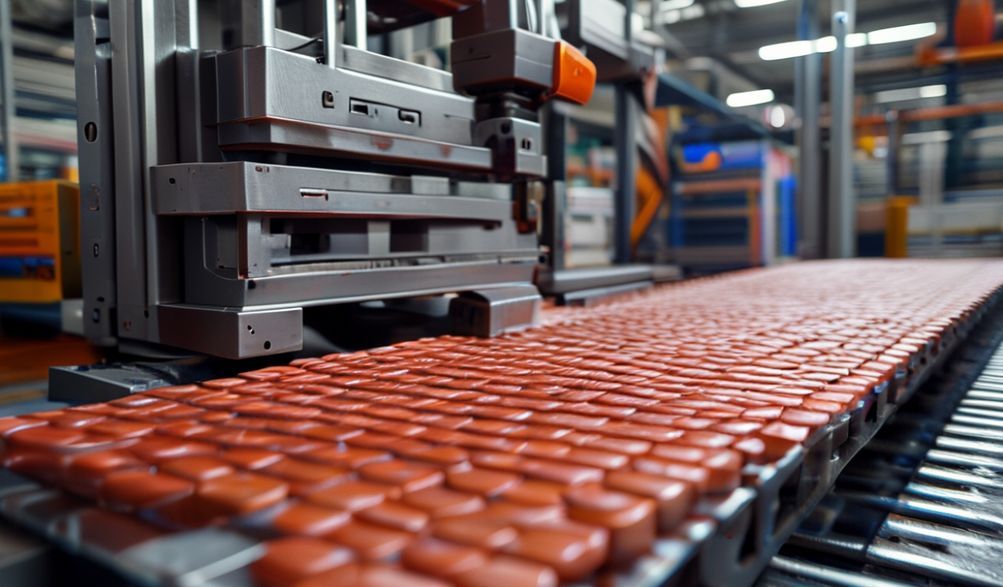
Panduan Utama untuk Mesin Blok Paver: Di Dalam Kilang Pembuatan Blok FUDA
Pengenalan
Landskap global sedang dibentuk semula, satu meter persegi demi satu meter persegi. Dari laluan masuk kediaman yang elegan dan dataran komersial yang sibuk hingga ke laluan pejalan kaki bandar yang mampan, permintaan terhadap penyelesaian pembuatan laluan yang berkualiti tinggi dan tahan lama tidak pernah lebih besar. Ledakan ini memberikan peluang emas kepada usahawan dan perniagaan pembinaan. Walau bagaimanapun, untuk memanfaatkannya bergantung pada satu keputusan kritikal: memilih mesin pengeluaran yang tepat.
Pasaran dipenuhi dengan pilihan, menjadikannya tugas yang sukar untuk mencari peralatan yang benar-benar menyeimbangkan kos permulaan dengan kecekapan jangka panjang, kualiti output, dan kebolehpercayaan yang teguh. Ramai pembeli menghadapi kitaran yang mengecewakan kerosakan, kualiti produk yang tidak konsisten, dan sokongan selepas jualan yang semakin pudar.
Di sinilah fokus kepada pengeluar khusus yang mantap membuat perbezaan. Antara nama-nama terkemuka dalam mesin pembuat blok, kilang pembuat blok FUDA telah membina reputasi untuk mesin blok paver yang kukuh dan cekap. Panduan ini bukanlah satu promosi jualan. Ia adalah penerangan pakar, dibina atas pengetahuan industri dan prinsip pembuatan, direka untuk menerangkan apa yang patut anda cari dalam mesin blok paver dan bagaimana kilang seperti FUDA mendekati pembinaannya.
Menjelang akhir panduan ini, anda akan memahami:
* Fungsi teras dan jenis mesin blok paver.
Ciri-ciri kejuruteraan dan reka bentuk utama yang membezakan mesin yang bereputasi tinggi.
* Rupa komitmen terhadap kualiti di dalam sebuah kilang pembuatan.
* Faktor kritikal dan tidak berat sebelah untuk dinilai sebelum membuat pelaburan anda.
Mari kita bina asas pengetahuan terlebih dahulu.
Apakah itu Mesin Blok Paver? Fungsi Teras dan Jenis-jenisnya
Pada terasnya, mesin blok paver adalah sistem yang direka bentuk dengan ketepatan untuk mengubah campuran konkrit mentah menjadi unit paving yang padat, berbentuk konsisten, dan menarik secara estetik. Memahami prinsip terasnya adalah langkah pertama untuk membuat pembelian yang berinformasi.
Prinsip Asas Kerja
Proses ini, walaupun diautomasikan dalam model-model canggih, mengikut urutan logik untuk memastikan kekuatan dan konsistensi:
- Pembungkusan & Pencampuran:Kuantiti simen, pasir, agregat dan air yang diukur tepat digabungkan untuk membentuk campuran konkrit separa kering. Kandungan lembapan adalah penting untuk pemadatan yang betul.
- Pemberian Makan:Campuran ini disalurkan ke dalam corong suapan mesin, yang kemudiannya mengedarkannya secara sekata ke dalam rongga acuan di atas palet keluli.
- Pemadatan:Ini adalah fasa paling kritikal. Gabungan kuat getaran frekuensi tinggi dan tekanan hidraulik yang besar memampatkan campuran. Tindakan dwi ini menghilangkan poket udara dan memaksa zarah-zarah bersatu, menghasilkan blok dengan ketumpatan dan kekuatan yang amat tinggi.
- Pembentukan & Penyingkiran:Semasa berada di bawah tekanan, campuran itu mengambil bentuk acuan yang tepat. Acuan kemudiannya diangkat (dikeluarkan) secara menegak, meninggalkan blok yang baru terbentuk di atas palet.
- Penyembuhan:Blok hijau (segar) di atas palet mereka dipindahkan ke kawasan pematangan. Di sini, mereka memperoleh kekuatan selama beberapa hari melalui penghidratan terkawal, selalunya dalam ruang pematangan khusus, sebelum siap untuk dijual atau dipasang.
Jenis Utama Mesin Blok Paving
Mesin dikategorikan mengikut tahap automasi dan mobiliti mereka:
-
Mesin Manual/Separa Automatik:
- Operasi:Memerlukan tenaga kerja manual yang banyak untuk memberi campuran makanan, mengendalikan tuil, dan mengeluarkan blok.
- Output:Rendah (contohnya, 500-2000 blok setiap syif 8 jam).
- Terbaik Untuk:Permulaan yang sangat kecil, projek khas khusus, atau pasaran dengan kos buruh yang sangat rendah. Mereka mewakili pelaburan awal yang lebih rendah tetapi kos operasi jangka panjang yang lebih tinggi.
-
Mesin Stesen Automatik Sepenuhnya:
- Operasi: Integrated systems handle mixing, feeding, compacting, block ejection, and stacking with minimal human intervention, typically controlled by a Programmable Logic Controller (PLC).
- Output: High and consistent (e.g., from 5,000 to over 30,000 blocks per 8-hour shift, depending on model).
- Terbaik Untuk: Serious businesses focused on volume production, consistency, and operational efficiency. This is typically where factories like FUDA excel.
-
Mesin Pembuatan Blok Mudah Alih:
- Operasi: Mounted on a trailer, they can produce blocks directly on a construction site, eliminating transport costs for the final product.
- Output: Variable, often lower than large stationary plants.
- Nota: It’s essential to check if a specific factory like FUDA offers this mobile variant within their portfolio.
-
Concrete Paver vs. Interlocking Paver Machines:
- The core machine is often the same. The defining difference is the kulat. Interlocking pavers have specially designed edges that fit together, transferring load laterally and creating a stable, flexible pavement without mortar. Most modern paver block machines, including those from FUDA, are designed to produce interlocking pavers due to their superior market demand.
Why Choose a FUDA Paver Block Machine? Analyzing the Factory’s Edge
When evaluating a “paver block machine FUDA block making factory,” you’re assessing a product born from a specific manufacturing philosophy. Here’s what gives a reputable factory like FUDA its competitive edge.
Engineering and Design Expertise
The durability of the machine itself is paramount. Look for features that indicate heavy-duty construction:
* Robust Steel Frame: The chassis must withstand constant, powerful vibrations without flexing. A welded, reinforced frame ensures machine stability and longevity.
* Powerful Vibration System: Multiple high-frequency, synchronized vibrators under the mold table are key. They ensure the concrete mix is fluidized and compacted evenly into every corner of the mold for uniform density.
* Efficient Hydraulic System: A reliable, sealed hydraulic system provides the immense pressure needed for compaction. Quality components reduce heat generation, leakage, and energy consumption.
Production Capacity and Model Range
A one-size-fits-all approach doesn’t work. A good factory offers a spectrum to match your business scale.
* Kepelbagaian Model: A range like the QCM4-30 (for standard blocks and pavers) to higher-output models like the QMJ4-45 (for higher production of pavers and interlocking blocks) allows for targeted selection.
* Clear Specifications: Output is measured in blocks per hour (e.g., 1,500 – 4,500 pcs/hr), with clear pallet size (e.g., 1100x550mm) and machine footprint details. This lets you plan your factory layout and business forecast accurately.
Automation and Ease of Operation
Automation isn’t just about reducing labor; it’s about consistency and control.
* Sistem Kawalan PLC: The brain of the machine. A user-friendly touchscreen interface allows operators to set parameters, monitor operations, and diagnose issues. It ensures every block cycle is identical.
* Pengendalian Bahan Automatik: Integrated conveyors, automatic batching, and block stackers create a seamless production line, minimizing manual handling and boosting overall plant efficiency.
Versatility in Product Output
Your market needs may change. A versatile machine protects your investment.
* Mold-Based Flexibility: The core machine can produce an array of products—different paver shapes (herringbone, cobble, circle), curb stones, hollow blocks, and solid blocks—simply by changing the mold. This allows you to diversify your product line to meet customer demand.
Durability and Low Maintenance Design
Downtime is lost revenue. Intelligent design minimizes it.
* Wear-Resistant Materials: Critical components like mold liners, feedbox shoes, and pallet surfaces are made from hardened steel or special alloys to withstand abrasive concrete mix.
* Service-Friendly Layout: Easy access to hydraulic valves, vibrator motors, and electrical panels simplifies routine maintenance and repairs, keeping your operational costs predictable.
A Virtual Tour: The FUDA Block Making Factory’s Commitment to Quality
Trust is built on transparency. Understanding what happens inside the factory tells you more about the machine than any brochure can.
Piawaian Pembuatan dan Kawalan Kualiti
Quality isn’t inspected in; it’s built in through a controlled process.
* Staged Production: From cutting and welding the frame to assembling hydraulic lines and wiring the PLC, each stage has defined checkpoints.
* Ujian Ketat: Before shipment, machines undergo comprehensive testing—empty runs, loaded runs with concrete, and pressure tests—to ensure they perform to specification.
* Pensijilan: While specifics vary, reputable factories often adhere to international standards (like CE marking for the European market), which mandate strict safety and quality protocols.
R&D and Innovation
A static factory is a falling-behind factory. Investment in research is key.
* Focus Areas: This includes improving energy efficiency of motors and hydraulics, developing smarter PLC software for easier operation, and experimenting with new vibration techniques for even denser blocks.
Technical Support and Training
The relationship begins at purchase, not ends there.
* Comprehensive Package: Support should include detailed foundation drawings, installation supervision (onsite or remote), thorough operator and maintenance training, and clear troubleshooting manuals.
* Ekosistem Alat Ganti: A reliable supply of genuine spare parts, with clear part numbers and diagrams, is non-negotiable for long-term machine health.
The Supply Chain and Sourcing
The machine is only as good as its weakest component.
* Strategic Sourcing: Factories with strong reputations partner with known brands for key components—Siemens or Schneider for PLCs, Rexroth or Yuken for hydraulic parts, WEG or Siemens for motors. This ensures reliability and simplifies future repairs.
Critical Factors Before Buying Your Paver Block Machine
Armed with knowledge about what makes a good machine and factory, use this practical checklist to evaluate any supplier, including FUDA.
Assessing Your Business Needs
Start with introspection:
* Daily Output Target: How many square meters of pavers do you need to produce per day to meet demand?
* Available Space & Infrastructure: Do you have the floor space, ceiling height, and 3-phase electrical power required?
* Bajet: Consider total cost of ownership (machine, shipping, installation, foundation, initial spare parts).
* Target Market: Are you supplying residential projects, municipal contracts, or landscapers? This influences the paver types and quality needed.
Spesifikasi Utama Mesin yang Perlu Diteliti
Go beyond the sales talk. Get these details in writing:
* Compaction Force: Measured in tons or kN. Higher force generally means denser, stronger blocks.
* Masa Kitaran: Seconds per block. This directly determines your maximum hourly output.
* Total Installed Power: The combined kW of all motors. This dictates your electricity cost.
* Warranty Period: What is covered (parts, labor?) and for how long (typically 1-2 years)?
* Standard Mold Compatibility: What mold systems does the machine use? Are they proprietary or industry-standard?
The Importance of After-Sales Service
Ask direct questions:
* “What is the guaranteed response time for technical support?”
* “Can you provide a list of recommended spare parts for the first year?”
* “What is the typical lead time for ordering and shipping a critical spare part?”
Requesting a Factory Visit or Live Demo
This is the most powerful due diligence step.
* Factory Visit: Seeing the manufacturing environment, quality controls, and inventory of parts builds immense trust.
* Live Demo: Request a video of the exact model you’re interested in running with concrete. Observe the cycle, the finished block quality, and the noise/vibration levels.
FAQ: Your Questions on Paver Block Machines & FUDA Answered
Q1: What is the approximate price range for a FUDA automatic paver block machine?
A: Prices vary significantly based on the level of automation, output capacity, and configuration (e.g., with or without a mixer and stacker). A basic automatic machine may start in the range of $30,000 – $50,000, while fully integrated high-output production lines can be $100,000+. For an accurate quote, you must contact the factory directly with your specific output and product requirements.
Q2: Can FUDA machines produce other products besides pavers?
A: Absolutely. This is a key advantage of stationary block machines. By changing the mold, the same machine can typically produce a wide range of concrete products, including hollow blocks, solid blocks, curb stones, garden tiles, and retaining wall units.
Q3: What kind of raw materials are required?
A: The standard raw materials are Portland cement, clean sand (fine aggregate), crushed stone or gravel (coarse aggregate, typically 3-8mm for pavers), water, and optionally, iron oxide pigments for colored pavers. The machine is designed for a semi-dry mix with low water content.
Q4: How long does it take to install and commission the machine?
A: After delivery, the process includes preparing a level concrete foundation, assembling the machine (which can take 3-7 days for a skilled team), connecting utilities, and conducting test runs. With proper preparation and factory guidance, the machine can often be producing saleable blocks within 2-4 weeks of arrival on site.
Q5: Does FUDA provide molds, and are they customizable?
A: Yes, reputable factories like FUDA usually supply a set of standard paver molds with the machine. Crucially, they also offer custom mold design and manufacturing services, allowing you to produce unique paver shapes and profiles to differentiate your products in the market.
Kesimpulan
Choosing a paver block machine is a significant capital investment that forms the backbone of your production business. The decision must look beyond the initial price tag to the core pillars of machine quality, production reliability, and the tangible support of the manufacturer behind it.
Factories like FUDA, with a focused approach on robust engineering, controlled manufacturing processes, and a structured support system, represent a credible pathway for businesses aiming to establish or scale their paver production. They embody the principle that a reliable machine is a profit center, not a cost center.
Use the criteria and checklist outlined in this guide as your unbiased evaluation framework for all potential suppliers. For the most accurate specifications, pricing, and to discuss your specific project needs, the best course of action is to contact the FUDA factory directly through their official channels to request a detailed consultation, a live machine demonstration, and a formal quotation.
<