
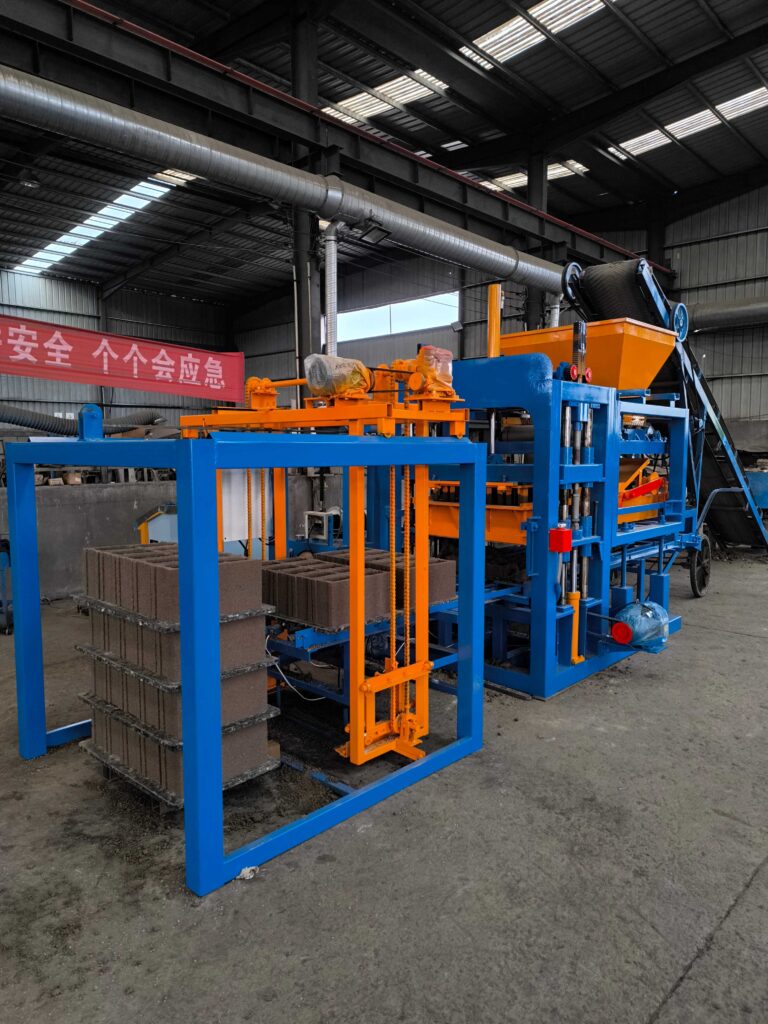
1. Dinámica del Mercado y el Caso de Negocio para los Ladrillos de Cenizas Volantes
Antes de analizar los costos de las máquinas, es crucial comprender el convincente entorno empresarial. Los ladrillos de ceniza volante ofrecen varias ventajas sobre los ladrillos de arcilla tradicionales, incluida mayor resistencia, tamaño uniforme, mejor aislamiento térmico y, lo más importante, una huella ambiental significativamente menor, ya que utilizan un producto de desecho industrial. Las políticas gubernamentales en muchos países que exigen o incentivan el uso de ceniza volante en la construcción han creado un mercado sólido y a menudo subsidiado. Para un distribuidor, esto se traduce en vender a un sector con impulsores de demanda integrados. El costo de la máquina no es meramente un gasto, sino un billete de entrada a este ecosistema sostenible y a menudo rentable. La inversión está justificada por el creciente desplazamiento de los ladrillos de arcilla cocida en proyectos de infraestructura, comerciales y residenciales.
2. Deconstruyendo la Estructura de Costos: Determinantes Clave del Precio
El precio de una máquina para fabricar ladrillos de cenizas volantes no es una cifra única, sino un espectro influenciado por una matriz de factores interdependientes. Comprender estos factores permite realizar un presupuesto preciso y una comparación efectiva entre las opciones.
2.1. Nivel de Automatización y Capacidad de Producción
Este es el principal impulsor de costos. Las máquinas se clasifican ampliamente según su metodología operativa:
- Máquinas Manuales o de Operación Manual.Estas son prensas mecánicas que requieren una mano de obra significativa para la alimentación, compactación y extracción de ladrillos. Representan el punto de entrada más asequible, adecuado para operaciones a muy pequeña escala o comunitarias. Su producción es baja, generalmente entre 500 y 1.500 ladrillos por turno de 8 horas.
- Máquinas Semiautomáticas:Esta categoría representa un salto significativo en rendimiento. Incorporan sistemas hidráulicos para la compresión y pueden incluir sistemas mecanizados de alimentación o expulsión. Su operación requiere menos mano de obra física y ofrece una mejor consistencia. La capacidad de producción oscila entre 1.500 y 6.000 ladrillos por turno. Esta categoría ofrece el mejor equilibrio entre costo y producción para muchas pequeñas y medianas empresas (PYMES).
- Máquinas Completamente Automáticas:Estas son líneas de producción completas con dosificación automática de materiales, mezcla, transporte, compresión a alta presión, apilado de ladrillos y paletizado. Requieren una intervención manual mínima, garantizan una uniformidad excepcional del producto y maximizan la producción, que puede superar los 10,000 ladrillos por turno. Naturalmente, esto representa la mayor inversión de capital pero el menor costo laboral por unidad.
2.2. Especificaciones de la Máquina y Características Técnicas
Dentro de cada categoría de automatización, las especificaciones causan variaciones en el precio.
- Capacidad de Presión (Tonelaje):La fuerza de compresión, medida en toneladas (por ejemplo, 60 toneladas, 100 toneladas, 150 toneladas), impacta directamente la densidad y resistencia del ladrillo. Las máquinas de mayor tonelaje producen ladrillos de calidad superior, aptos para estructuras portantes, pero a un costo más elevado.
- Calidad del Sistema Hidráulico:El corazón de la máquina. Los sistemas que utilizan bombas, válvulas y cilindros de eficiencia energética y de fabricantes certificados son más confiables y duraderos, pero aumentan el costo inicial.
- Sofisticación del Sistema de ControlLos paneles de relés básicos son más económicos que los sistemas basados en Controladores Lógicos Programables (PLC) con Interfaces Hombre-Máquina (HMI) de pantalla táctil. Los sistemas PLC ofrecen precisión, una resolución de problemas más sencilla y un mejor control de procesos.
- Construcción y Materiales: Machines built with heavy-duty structural steel, hardened steel molds, and quality wear plates have longer lifespans and lower maintenance costs but involve higher material and fabrication expenses.
2.3. Output Versatility and Mold Configuration
A machine capable of producing multiple brick types (solid, hollow, paver, interlocking) using quick-change mold systems will be priced higher than a single-product machine. The number of cavities in the mold (e.g., 4-brick mold vs. 6-brick mold) also affects both output and price.
3. Beyond the Sticker Price: Calculating the Total Cost of Ownership (TCO)
For a prudent distributor or end-user, the purchase price is only the first component of the financial outlay. The Total Cost of Ownership (TCO) provides a holistic view and is critical for advising clients or evaluating suppliers.
- Installation and Commissioning: Costs for foundation preparation, electrical work, and on-site assembly by technicians. For automatic lines, this is a more complex and costly process.
- Equipo Auxiliar: A functional plant requires more than just the brick press. Costs for pan mixers, conveyor belts, belt feeders, pallet trucks, and curing racks must be factored into the overall project budget.
- Shipping, Logistics, and Import Duties: For international distributors, freight costs, insurance, and applicable tariffs can add 15-40% to the ex-factory price, depending on origin and destination.
- Spare Parts Inventory: A prudent initial investment in a kit of critical spare parts (hydraulic seals, hoses, relief valves) prevents prolonged downtime.
- Consumo de Energía: Automated, high-tonnage machines have higher horsepower motors. Their energy efficiency impacts long-term operational costs.
- Maintenance and Service: Machines with simpler designs and better service accessibility may have lower long-term maintenance costs. Availability and cost of spare parts are crucial.
4. Strategic Pricing Models and Supplier Evaluation
When engaging with manufacturers, understanding their pricing philosophy is key.
- Modular vs. Turnkey Pricing: Some suppliers quote for the core machine only, while others offer a “plant and machinery” package. The latter, though seemingly more expensive upfront, often provides better integration and single-point responsibility.
- Quality-to-Price Correlation: The market often segments into tiers: economy, standard, and premium. Economy machines may have lower-grade components, thinner steel, and limited after-sales support. Premium machines justify their price with superior engineering, components, warranties, and support services. The best value often lies in the standard-to-premium range, avoiding the false economy of frequent breakdowns.
- Warranty and After-Sales Support Value: A machine with a comprehensive 12-18 month warranty on major components and a commitment to providing timely technical support (remote or on-site) carries intrinsic value that mitigates risk. This support structure should be a evaluated as a core part of the “cost.”
5. Financial Analysis and Return on Investment (ROI) Framework
Distributors must be equipped to help clients justify the investment. A basic ROI analysis should consider:
- Total Project Cost: Sum of machine, auxiliaries, installation, and working capital.
- Capacidad de Producción: Shifts per day, bricks per shift, annual output.
- Costos Operativos: Raw materials (fly ash, cement, sand), labor, power, maintenance, and overheads per brick.
- Revenue Projections: Selling price per brick, based on local market rates.
- Gross Profit per Brick: Revenue minus operational cost.
- Período de Recuperación de la Inversión: Total Project Cost / (Gross Profit per Brick * Annual Brick Output).
Machines with higher automation, while costlier, typically show a faster payback due to drastically reduced labor costs and higher, more consistent output, leading to greater overall profitability.
Conclusión
The cost of a fly ash brick making machine is a multi-faceted variable, deeply intertwined with production goals, desired quality, and long-term business strategy. For industry partners, a sophisticated understanding that moves beyond the initial price tag to encompass automation levels, technical specifications, total cost of ownership, and the supplier’s value-added services is non-negotiable. The most economically sound decision is rarely the cheapest machine on the market; rather, it is the machine that offers the optimal balance of reliable performance, operational efficiency, and durable construction for the target production scale. By focusing on the lifetime value and productivity of the equipment, distributors can make procurement choices—and provide guidance to their clients—that ensure sustainable profitability and a strong competitive position in the burgeoning green construction materials market. The investment in the right machinery is fundamentally an investment in the future stability and growth of the business.
FAQ
Q1: What is the typical price range for a fly ash brick making machine?
A: Prices vary dramatically based on type. Basic manual presses can start from a few thousand dollars. Semi-automatic hydraulic machines commonly range from approximately $5,000 to $10,000. Fully automatic production lines can begin around $12,000 and exceed $60,000 for high-capacity, sophisticated models. These are broad estimates; final costs depend on specifications and configuration.
Q2: Does a higher price always mean better quality and output?
A: Generally, yes, within the offerings of reputable manufacturers. A higher price typically reflects better-grade materials (e.g., superior steel, branded hydraulics), more precise engineering, higher automation, and greater production capacity. However, thorough due diligence on the supplier’s reputation, component origins, and testing standards is essential to ensure value aligns with price.
Q3: What are the key operating costs beyond the machine purchase?
A: Major ongoing costs include raw materials (fly ash, cement, sand, water), electrical power for running motors and hydraulic systems, labor for operation and handling, routine maintenance and spare parts, and the cost of pallets or racks for brick curing and storage.
Q4: How long is the average payback period for such an investment?
A: The payback period is highly sensitive to local market conditions, management efficiency, and scale. For a well-run, medium-sized semi-automatic plant, it can typically range from 1.5 to 3 years. Fully automatic plants, with their higher output and lower per-unit cost, can sometimes achieve payback in 12-24 months if operating near capacity with good market demand.
Q5: What should be included in the supplier’s quotation?
A: A comprehensive quotation should clearly list: machine model and detailed specifications, production capacity, pictorial or diagrammatic view, detailed price breakdown, warranty terms, delivery time, shipping terms (e.g., FOB, CIF), list of included accessories and spare parts, and scope of installation and training services, if any.
Q6: Are there financing options available for this equipment?
A: Yes, many equipment manufacturers or their regional partners collaborate with financial institutions to offer leasing or loan programs. Additionally, in countries promoting fly ash utilization, government subsidies or soft loans may be available for qualifying projects. It is advisable to inquire with the supplier about potential financing avenues.
