
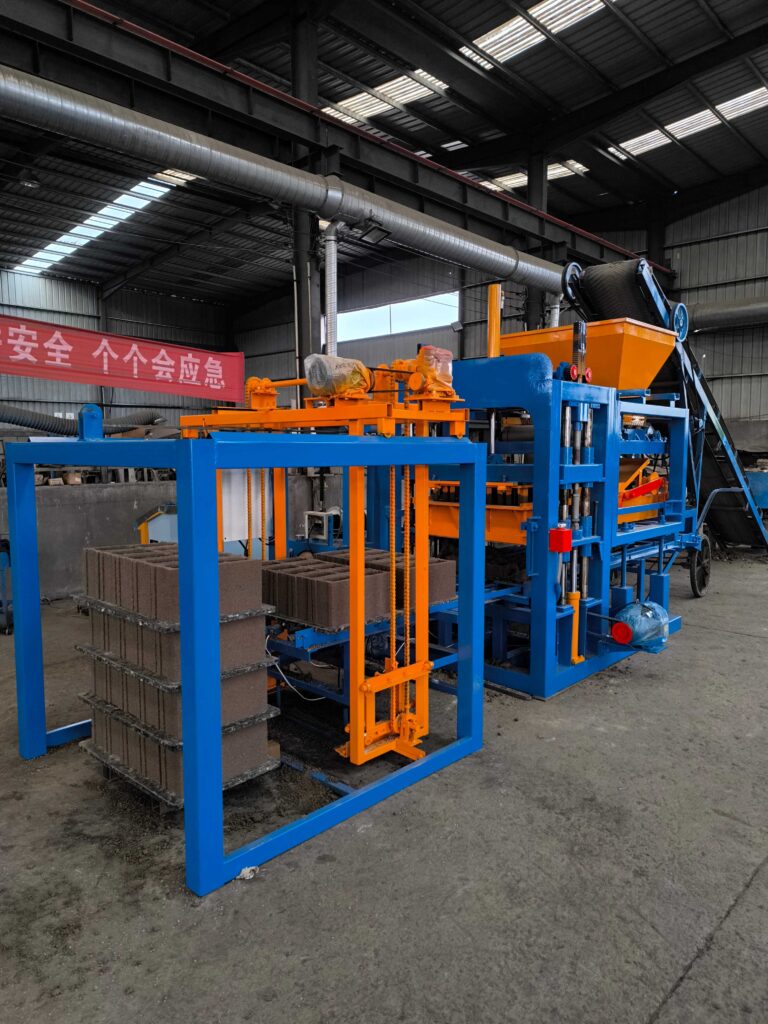
1. Dinamika Pasar dan Kasus Bisnis untuk Bata Abu Terbang
Sebelum menganalisis biaya mesin, sangat penting untuk memahami lingkungan bisnis yang menarik. Batu bata fly ash menawarkan beberapa keunggulan dibandingkan batu bata tanah liat tradisional, termasuk kekuatan yang lebih tinggi, ukuran seragam, insulasi termal yang lebih baik, dan yang paling penting, jejak lingkungan yang jauh lebih rendah karena memanfaatkan limbah industri. Kebijakan pemerintah di banyak negara yang mewajibkan atau memberikan insentif penggunaan fly ash dalam konstruksi telah menciptakan pasar yang kuat dan sering disubsidi. Bagi seorang distributor, ini berarti menjual ke sektor dengan pendorong permintaan yang sudah terbangun. Biaya mesin bukan sekadar pengeluaran, tetapi tiket masuk ke ekosistem yang berkelanjutan dan sering menguntungkan ini. Investasi tersebut dibenarkan oleh semakin tergantikannya batu bata tanah liat bakar dalam proyek infrastruktur, komersial, dan perumahan.
2. Mendekonstruksi Struktur Biaya: Penentu Harga Utama
Harga mesin pembuat bata fly ash bukanlah angka tunggal melainkan spektrum yang dipengaruhi oleh matriks faktor-faktor yang saling bergantung. Memahami hal ini memungkinkan penganggaran yang akurat dan perbandingan efektif antar pilihan.
2.1. Tingkat Otomatisasi dan Kapasitas Produksi
Ini adalah penggerak biaya utama. Mesin secara luas dikategorikan berdasarkan metodologi operasionalnya:
- Mesin Manual atau Dioperasikan dengan Tangan:Ini adalah mesin press mekanis yang membutuhkan tenaga manusia yang signifikan untuk pengisian, pemadatan, dan pengambilan batu bata. Ini adalah titik masuk paling terjangkau, cocok untuk operasi skala sangat kecil atau berbasis komunitas. Outputnya rendah, biasanya berkisar antara 500 hingga 1.500 batu bata per shift 8 jam.
- Mesin Semi-Otomatis:Kategori ini merepresentasikan lompatan kinerja yang signifikan. Mereka menggabungkan sistem hidrolik untuk kompresi dan dapat mencakup sistem pengumpanan atau pengeluaran yang termekanisasi. Operasinya membutuhkan tenaga fisik yang lebih sedikit dan menawarkan konsistensi yang lebih baik. Kapasitas produksi berkisar antara 1.500 hingga 6.000 bata per shift. Kategori ini menawarkan keseimbangan terbaik antara biaya dan hasil bagi banyak usaha kecil dan menengah (UKM).
- Mesin Sepenuhnya Otomatis:Ini adalah lini produksi lengkap dengan pencampuran bahan otomatis, pengadukan, pengangkutan, kompresi bertekanan tinggi, penumpukan bata, dan paletisasi. Mereka memerlukan intervensi manual minimal, menjamin keseragaman produk yang luar biasa, dan memaksimalkan output, yang dapat melebihi 10.000 bata per shift. Secara alami, ini mewakili investasi modal tertinggi namun biaya tenaga kerja per unit terendah.
2.2. Spesifikasi Mesin dan Fitur Teknis
Dalam setiap kategori otomasi, spesifikasi menyebabkan variasi harga:
- Kapasitas Tekanan (Tonase):Gaya kompresi, yang diukur dalam ton (misalnya, 60 ton, 100 ton, 150 ton), secara langsung memengaruhi kepadatan dan kekuatan bata. Mesin dengan tonase lebih tinggi menghasilkan bata berkualitas lebih unggul yang cocok untuk struktur penahan beban, namun dengan biaya lebih tinggi.
- Kualitas Sistem Hidraulik:Jantung mesin. Sistem yang menggunakan pompa, katup, dan silinder hemat energi dari produsen bersertifikat lebih andal dan tahan lama, namun menambah biaya awal.
- Tingkat Kanggihan Sistem KontrolPanel relai dasar lebih murah dibandingkan sistem berbasis Programmable Logic Controller (PLC) dengan antarmuka Human-Machine Interface (HMI) layar sentuh. Sistem PLC menawarkan presisi, pemecahan masalah yang lebih mudah, dan kontrol proses yang lebih baik.
- Konstruksi dan Bahan:Mesin yang dibangun dengan baja struktural tahan lama, cetakan baja yang dikeraskan, dan pelat aus berkualitas memiliki umur lebih panjang dan biaya perawatan lebih rendah, namun melibatkan biaya material dan fabrikasi yang lebih tinggi.
2.3. Keluaran Serbaguna dan Konfigurasi Cetakan
Mesin yang mampu memproduksi berbagai jenis bata (padat, berlubang, konblok, interlocking) dengan sistem cetakan yang dapat diganti dengan cepat akan dihargai lebih tinggi daripada mesin yang hanya menghasilkan satu jenis produk. Jumlah rongga dalam cetakan (misalnya, cetakan 4 bata versus cetakan 6 bata) juga mempengaruhi output dan harga.
3. Di Balik Harga Stiker: Menghitung Total Biaya Kepemilikan (TCO)
Bagi distributor atau pengguna akhir yang bijaksana, harga pembelian hanyalah komponen pertama dari pengeluaran keuangan. Total Biaya Kepemilikan (TCO) memberikan pandangan holistik dan sangat penting untuk menasihati klien atau mengevaluasi pemasok.
- Pemasangan dan Komisioning:Biaya untuk persiapan fondasi, pekerjaan listrik, dan perakitan di lokasi oleh teknisi. Untuk jalur otomatis, ini adalah proses yang lebih kompleks dan mahal.
- Peralatan Bantu:Sebuah pabrik yang berfungsi memerlukan lebih dari sekadar mesin press bata. Biaya untuk pengaduk adonan, ban berjalan, pengumpan sabuk, truk palet, dan rak perawatan harus diperhitungkan dalam anggaran keseluruhan proyek.
- Shipping, Logistics, and Import Duties: For international distributors, freight costs, insurance, and applicable tariffs can add 15-40% to the ex-factory price, depending on origin and destination.
- Spare Parts Inventory: A prudent initial investment in a kit of critical spare parts (hydraulic seals, hoses, relief valves) prevents prolonged downtime.
- Konsumsi Energi: Automated, high-tonnage machines have higher horsepower motors. Their energy efficiency impacts long-term operational costs.
- Maintenance and Service: Machines with simpler designs and better service accessibility may have lower long-term maintenance costs. Availability and cost of spare parts are crucial.
4. Strategic Pricing Models and Supplier Evaluation
When engaging with manufacturers, understanding their pricing philosophy is key.
- Modular vs. Turnkey Pricing: Some suppliers quote for the core machine only, while others offer a “plant and machinery” package. The latter, though seemingly more expensive upfront, often provides better integration and single-point responsibility.
- Quality-to-Price Correlation: The market often segments into tiers: economy, standard, and premium. Economy machines may have lower-grade components, thinner steel, and limited after-sales support. Premium machines justify their price with superior engineering, components, warranties, and support services. The best value often lies in the standard-to-premium range, avoiding the false economy of frequent breakdowns.
- Warranty and After-Sales Support Value: A machine with a comprehensive 12-18 month warranty on major components and a commitment to providing timely technical support (remote or on-site) carries intrinsic value that mitigates risk. This support structure should be a evaluated as a core part of the “cost.”
5. Financial Analysis and Return on Investment (ROI) Framework
Distributors must be equipped to help clients justify the investment. A basic ROI analysis should consider:
- Total Project Cost: Sum of machine, auxiliaries, installation, and working capital.
- Kapasitas Produksi: Shifts per day, bricks per shift, annual output.
- Biaya Operasional: Raw materials (fly ash, cement, sand), labor, power, maintenance, and overheads per brick.
- Revenue Projections: Selling price per brick, based on local market rates.
- Gross Profit per Brick: Revenue minus operational cost.
- Periode Pengembalian Modal: Total Project Cost / (Gross Profit per Brick * Annual Brick Output).
Machines with higher automation, while costlier, typically show a faster payback due to drastically reduced labor costs and higher, more consistent output, leading to greater overall profitability.
Kesimpulan
The cost of a fly ash brick making machine is a multi-faceted variable, deeply intertwined with production goals, desired quality, and long-term business strategy. For industry partners, a sophisticated understanding that moves beyond the initial price tag to encompass automation levels, technical specifications, total cost of ownership, and the supplier’s value-added services is non-negotiable. The most economically sound decision is rarely the cheapest machine on the market; rather, it is the machine that offers the optimal balance of reliable performance, operational efficiency, and durable construction for the target production scale. By focusing on the lifetime value and productivity of the equipment, distributors can make procurement choices—and provide guidance to their clients—that ensure sustainable profitability and a strong competitive position in the burgeoning green construction materials market. The investment in the right machinery is fundamentally an investment in the future stability and growth of the business.
FAQ
Q1: What is the typical price range for a fly ash brick making machine?
A: Prices vary dramatically based on type. Basic manual presses can start from a few thousand dollars. Semi-automatic hydraulic machines commonly range from approximately $5,000 to $10,000. Fully automatic production lines can begin around $12,000 and exceed $60,000 for high-capacity, sophisticated models. These are broad estimates; final costs depend on specifications and configuration.
Q2: Does a higher price always mean better quality and output?
A: Generally, yes, within the offerings of reputable manufacturers. A higher price typically reflects better-grade materials (e.g., superior steel, branded hydraulics), more precise engineering, higher automation, and greater production capacity. However, thorough due diligence on the supplier’s reputation, component origins, and testing standards is essential to ensure value aligns with price.
Q3: What are the key operating costs beyond the machine purchase?
A: Major ongoing costs include raw materials (fly ash, cement, sand, water), electrical power for running motors and hydraulic systems, labor for operation and handling, routine maintenance and spare parts, and the cost of pallets or racks for brick curing and storage.
Q4: How long is the average payback period for such an investment?
A: The payback period is highly sensitive to local market conditions, management efficiency, and scale. For a well-run, medium-sized semi-automatic plant, it can typically range from 1.5 to 3 years. Fully automatic plants, with their higher output and lower per-unit cost, can sometimes achieve payback in 12-24 months if operating near capacity with good market demand.
Q5: What should be included in the supplier’s quotation?
A: A comprehensive quotation should clearly list: machine model and detailed specifications, production capacity, pictorial or diagrammatic view, detailed price breakdown, warranty terms, delivery time, shipping terms (e.g., FOB, CIF), list of included accessories and spare parts, and scope of installation and training services, if any.
Q6: Are there financing options available for this equipment?
A: Yes, many equipment manufacturers or their regional partners collaborate with financial institutions to offer leasing or loan programs. Additionally, in countries promoting fly ash utilization, government subsidies or soft loans may be available for qualifying projects. It is advisable to inquire with the supplier about potential financing avenues.
