
Tu Guía Definitiva sobre Fabricantes y Proveedores de Máquinas para Hacer Bloques de Cubierta
Introducción
En el mundo de la construcción de hormigón armado, los componentes más pequeños a menudo soportan la mayor responsabilidad. Los separadores de recubrimiento—esos discretos espaciadores de hormigón o plástico—son los guardianes silenciosos de la integridad estructural. Garantizan el recubrimiento de hormigón crítico que protege la armadura de acero de la corrosión, el fuego y los daños ambientales, impactando directamente la vida útil y la seguridad de una estructura. Sin embargo, la calidad y consistencia de estos componentes vitales dependen de un factor crucial: la máquina que los produce.
Para las empresas constructoras, los fabricantes de productos prefabricados y los emprendedores, encontrar una máquina confiable para fabricar bloques de cubierta puede ser un desafío abrumador. El mercado está lleno de opciones, pero navegar por él a menudo conduce a frustraciones: máquinas que producen dimensiones de bloque inconsistentes, sufren averías frecuentes o vienen con un soporte insignificante. La elección incorrecta no solo afecta la producción; arriesga comprometer las especificaciones del proyecto, lo que lleva a retrabajos costosos y posibles problemas de cumplimiento.
Aquí es donde la decisión trasciende la máquina misma y se centra en la fuente. Elegir la correctaFabricante de máquinas para hacer bloqueses una inversión estratégica en su productividad a largo plazo, eficiencia de costos y tranquilidad. Un socio confiable no solo le vende equipos; proporciona una solución respaldada por experiencia en ingeniería, construcción duradera y un apoyo postventa inquebrantable.
Esta guía integral está elaborada a partir de conocimientos técnicos y perspectivas de la industria para capacitarte. Nuestro objetivo es llevarte más allá de comparar precios y equiparte con los criterios para evaluar a los fabricantes según su mérito técnico, reputación comprobada y compromiso con el servicio. Construyamos la base para una decisión de compra más inteligente.
¿Qué es una Máquina para Fabricar Bloques de Cubierta?
Antes de evaluar quién construye la mejor máquina, es esencial entender qué hace y por qué su precisión no es negociable.
Función Principal e Importancia
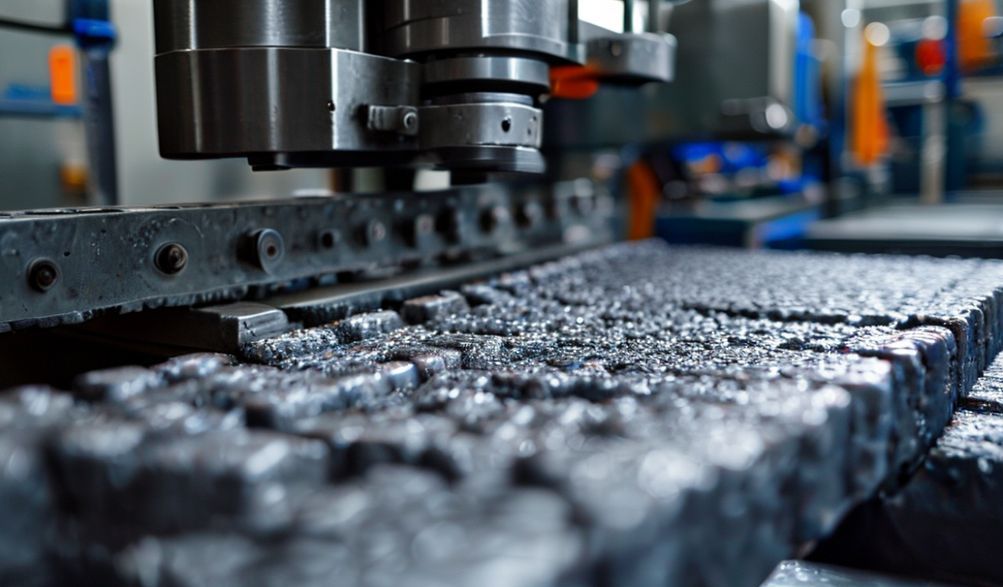
Una máquina para fabricar bloques de separación es un equipo especializado diseñado para la producción en gran volumen de separadores de concreto o PVC (bloques de separación). Estas máquinas suelen operar mediante presión hidráulica o mecanismos de vibración (o una combinación de ambos) para compactar material crudo—una mezcla seca de concreto o compuesto plástico—en bloques precisos, densos y uniformes dentro de un molde.
La importancia de la máquina no puede ser exagerada. Su precisión dicta directamente la exactitud dimensional de cada bloque de cubierta que produce. En la construcción, incluso una desviación de unos pocos milímetros en el recubrimiento de concreto puede violar los estándares de ingeniería, comoIS 456:2000 (Hormigón Simple y Armado – Código de Práctica)En la India, se especifican requisitos mínimos de recubrimiento basados en la exposición ambiental. Una máquina de alta calidad garantiza que cada bloque cumpla con la altura exacta especificada (por ejemplo, 20 mm, 40 mm, 50 mm), asegurando que la protección del acero diseñada se logre de manera consistente en el sitio.
Tipos Comunes y Salidas
Las máquinas se clasifican según su nivel de automatización y su método de operación.
- Máquinas Manuales:Operado mediante palancas manuales o mecanismos simples. Costo más bajo, adecuado para uso a muy pequeña escala u ocasional. La producción depende de la mano de obra y es relativamente baja.
- Máquinas Semiautomáticas:Involucra una combinación de alimentación manual y prensado/eyección automatizado. Ofrece un buen equilibrio entre costo, producción y consistencia para pequeñas y medianas empresas.
- Máquinas Completamente Automáticas:Cuentan con alimentación automática de material, prensado y expulsión de bloques, a menudo controlados por un PLC (Controlador Lógico Programmable). Ofrecen la mayor producción con mínima intervención manual, ideales para producción a gran escala.
Estas máquinas pueden producir una amplia variedad de tipos de bloques de cubierta, incluyendo:
* Bloques Circulares/Cilíndricos
* Bloques Cúbicos
* Bloques de Tipo Rueda/Carretes
* Separadores tipo silla
* PVC Cover Blocks (using a different mold and material hopper)
Key Factors When Choosing a Cover Block Machine Manufacturer
This is the heart of your decision-making process. Look beyond glossy brochures and evaluate manufacturers on these critical pillars.
Technical Expertise and Machine Quality
The core of a manufacturer’s value lies in their engineering capability and the build quality of their machines.
-
Material & Build: Inspect the fundamentals.
- The machine frame should be constructed from heavy-duty, welded steel sections to withstand constant vibration and pressure without deformation.
- Molds must be precision-machined from high-grade, hardened steel to resist wear and maintain dimensional accuracy over thousands of cycles.
- Hydraulic systems should use reputed brand pumps, valves, and cylinders. For vibration-based machines, the motor and vibrator assembly quality is paramount.
-
Capacidad de Producción: Align the machine with your needs.
- Output is typically measured in blocks per hour or per 8-hour shift. A small contractor might need 2,000-5,000 blocks/day, while a large precast plant may require 20,000+.
- Clearly communicate your volume requirements and ask for the tested output capacity of the specific model under consideration.
-
Nivel de Automatización: Choose based on your operational scale.
- Manual/Semi-Auto: Lower capital cost, higher variable labor cost, suitable for fluctuating demand.
- Totalmente Automático: Higher initial investment, but significantly lower per-unit labor cost, superior consistency, and higher output. Justifies itself quickly for steady, high-volume production.
-
Customization Ability: A sign of a responsive manufacturer.
- Can they modify the machine’s pressure settings for different concrete mix designs?
- Do they offer custom mold designs for proprietary or non-standard block shapes?
- This flexibility can be crucial for niche applications or optimizing production for your specific raw materials.
Manufacturer’s Reputation & Industry Experience
A manufacturer’s past performance is the most reliable indicator of your future experience.
-
Years in Business: Longevity in the heavy machinery sector generally suggests resilience, accumulated technical knowledge, and an established supply chain for parts. It indicates they’ve evolved with industry demands.
-
Portafolio de Clientes y Casos de Estudio: Ask for specifics.
- Request a list of clients, particularly those in a similar industry (e.g., other precast plants, construction firms).
- Genuine testimonials, photos, or videos of machines operating in client facilities are powerful validators.
- Case studies that detail a client’s challenge and the solution provided are excellent indicators of problem-solving capability.
-
Certifications & Compliance: Look for objective standards.
- ISO 9001:2015 Certification is a strong signal of a structured quality management system in design, manufacturing, and service.
- Compliance with industrial machinery safety standards (like those from the Bureau of Indian Standards) is essential.
- Certifications demonstrate a commitment to process-driven quality, not just ad-hoc assembly.
After-Sales Support and Service
This is where many manufacturers are separated from the suppliers. The machine will need support; ensure it’s part of the package.
-
Warranty Period: Scrutinize the details.
- A standard warranty of 12-24 months on the machine is common for reputable manufacturers.
- Understand what is covered (e.g., parts, labor) and, crucially, what is excluded (e.g., wear-and-tear items like mold liners, misuse).
-
Disponibilidad de Repuestos: Critical for minimizing downtime.
- Inquire about the inventory of critical spares (hydraulic seals, electrical components, mold parts).
- Do they have a systematic parts catalog and a streamlined process for ordering?
- Long lead times for imported parts can be a major operational risk.
-
Technical Support & Training:
- Will they provide an engineer for installation and commissioning?
- Do they offer comprehensive training for your operators on machine use, routine maintenance, and basic troubleshooting?
- Is technical support available via phone, email, or remote diagnostics?
-
Red de Servicios: Evaluate responsiveness.
- What is the geographical coverage of their service engineers?
- What is the typical response time for a service call?
- A manufacturer with a wide network or trained local partners can resolve issues faster.
The Manufacturing Process: A Sign of a Quality Manufacturer
Understanding how a manufacturer builds their machines offers deep insight into their commitment to quality. A transparent process is a hallmark of a trustworthy partner.
Del Diseño al Ensamblaje
A vertically integrated manufacturer with in-house control over key stages typically delivers more reliable products.
- R&D & Design: It begins with engineering design using CAD software, focusing on structural integrity, force distribution, and ergonomics. This phase should consider real-world operational stresses.
- Sourcing: Quality components (hydraulic systems, electrical panels, motors) should be sourced from reputable, traceable suppliers. The best manufacturers have long-standing relationships with their component vendors.
- Fabrication: Cutting, drilling, and welding of the steel frame should occur in a controlled workshop environment using skilled labor and precision tools, ensuring perfect alignment.
- Assembly: This is where components come together. Look for manufacturers who perform assembly in-station, with rigorous checks at each step, rather than just bolting together outsourced sub-assemblies.
Quality Control and Testing Protocols
The final gate before dispatch separates exceptional manufacturers from the rest. Rigorous testing should be non-negotiable.
- Hydraulic System Testing: The system is pressure-tested to well above its standard operating pressure to check for leaks, gauge accuracy, and valve function.
- Vibration & Electrical Tests: For vibration machines, frequency and amplitude are measured. Electrical panels are checked for proper earthing, insulation, and safe operation of all controls.
- Trial Run & Output Inspection: The machine should undergo a full production trial run with the material you intend to use (or a standard mix).
- The produced blocks are checked for dimensional accuracy (length, width, height, density).
- The surface finish should be smooth and consistent.
- The output rate is verified against the claimed capacity.
- Final Inspection: A comprehensive check of all safety features, guards, lubrication points, and paint finish before crating.
Questions to Ask Potential Cover Block Machine Suppliers
Arm yourself with this due-diligence checklist during your discussions with shortlisted manufacturers.
Questions About the Product
- “Can you provide the technical data sheet for this model, detailing motor power, hydraulic pressure, cycle time, and power consumption?”
- “What is the expected output (in blocks per hour) for a standard 40mm concrete cover block using a XYZ mix design?”
- “Which specific brands are used for the hydraulic pump, PLC, and electrical components? Can I see them during a unit visit?”
- “How many block impressions can I expect from the standard mold before re-lining or significant wear?”
- “Can we arrange a live video demonstration or, preferably, visit your facility to see this model under production?”
Questions About Business Practices
- “Please share the detailed warranty document. What is the process for claiming warranty support?”
- “What is your standard delivery timeline ex-works? What are the installation and commissioning timelines at our site?”
- “Can you provide 2-3 references from clients who purchased a similar model in the last 18 months?”
- “Do you offer any financing options or partnerships with financial institutions?”
- “What is the estimated cost and lead time for a standard set of critical spare parts (e.g., hydraulic seal kit, main relay set)?”
FAQ: Cover Block Making Machine Manufacturers
Q1: What is the approximate price range for a cover block making machine?
A: Prices vary significantly based on automation, capacity, and brand. A basic manual machine may start around ₹ 1.5 – 2.5 lakhs, while semi-automatic models typically range from ₹ 3 – 6 lakhs. High-capacity, fully automatic machines with advanced features can range from ₹ 8 lakhs to over ₹ 20 lakhs. It’s imperative to get detailed, model-specific quotations based on your technical requirements.
Q2: How do I maintain my cover block machine for optimal lifespan?
A: Consistent maintenance is key:
* Clean the machine daily to prevent concrete buildup.
* Check hydraulic oil levels and quality monthly; change oil as per the manufacturer’s schedule.
* Lubricate all moving parts (guide rods, bearings) regularly with recommended grease.
* Inspect electrical connections for tightness and wear.
* Store molds properly when not in use to prevent rust.
Q3: Can one machine produce different sizes and shapes of cover blocks?
A: Yes, this is a standard and vital feature. Reputable manufacturers provide Moldes intercambiables. You can purchase additional mold sets for different block sizes (e.g., 20mm, 30mm, 40mm) and shapes (circular, cubical). Changing molds is usually a straightforward process.
Q4: What is the typical delivery and installation timeline?
A: For a standard, in-stock model, delivery might take 2-4 weeks after order confirmation. For customized machines, it can extend to 6-10 weeks. Installation and commissioning by a technician typically add 3-7 days on-site, depending on machine complexity.
Q5: Are there any safety features I should look for?
A: Absolutely. Essential safety features include:
* Emergency Stop Buttons: Prominently placed at multiple points.
* Safety Guards: Physical guards covering all pinch points, moving parts, and the vibration unit.
* Electrical Safety: Proper earthing, overload protection in the circuit, and moisture-protected panels.
* Two-Hand Operation: On semi/auto machines, to ensure the operator’s hands are clear during the pressing cycle.
Conclusión
Selecting a Fabricante de máquinas para hacer bloques is a decision that reverberates through your projects and balance sheet for years. It’s a choice between a mere transaction and forging a productive partnership. As we’ve outlined, the key lies in a balanced evaluation of technical quality (robust design, precision), proven reputation (experience, client proof), and comprehensive support (warranty, service, training).
Move forward by shortlisting 2-3 manufacturers who score well on these criteria. Request their detailed technical proposals, scrutinize the warranty terms, and insist on client references. If feasible, a visit to their manufacturing facility is invaluable—it allows you to witness their processes, quality checks, and operational ethos firsthand.
Ready to discuss your specific requirements with a trusted partner? Contact our team of experts today for a personalized consultation and a detailed, transparent quote tailored to your production goals.
Want to ensure you don’t miss any critical details? Download our comprehensive checklist for evaluating machinery suppliers to guide your final decision.
<