
Gid Komplè ou pou Manifakti ak Founisè Machin pou Fè Blòk Kouvèti
Entwodiksyon
Nan mond konstriksyon beton anfòme, se pi piti eleman yo ki souvan pote pi gwo responsablite yo. Blòk kouvèti—sa yo distansye an beton oswa plastik ki sanble senp—se gad silansye entegrite estrikti yo. Yo asire kouvèti beton kritik la ki pwoteje fè anfòmaj kont korozyon, dife, ak domaj anviwònman, ki afekte dirèkteman dire lavi ak sekirite yon estrikti. Men, bon jan kalite ak konsistans eleman vital sa yo depann de yon faktè kle: machin ki pwodui yo.
Pou konpayi konstriksyon, manifakti pwodwi prefabrike, ak antreprenè, jwenn yon machin pou fè blòk kouvèti ki serye ka reprezante yon gwo defi. Mache a plen ak opsyon, men navige ladan l souvan mennen nan fristrasyon: machin ki bay dimansyon blòk ki pa konsistan, ki soufri avèk pannes souvan, oswa ki vini ak sipò neglijab. Chwa a ki pa bon pa afekte pwodiksyon an sèlman; li mete espesifikasyon pwojè yo an danje, sa ki mennen nan travay refè ki koute chè ak pwoblèm konfòmite potansyèl.
Se la desizyon an depase machin nan menm epi konsantre sou sous la. Chwazi bon...Manufaktirè machin pou fè blòk kouvrise yon envestisman estratejik nan pwodiktivite alontèm ou, efikasite nan depans, ak kè poze. Yon patnè ki gen bon repitasyon pa jis vann ou ekipman; yo bay yon solisyon ki gen ekspètiz enjenyeri dèyè li, konstriksyon ki dire lontan, ak sipò apre lavant ki pa janm febli.
Gid konplè sa a fèt ak eksperyans endistri ak konesans teknik pou bay ou plis pouvwa. Objektif nou se pou w sispann sèlman konpare pri epi ba w kritè pou w evalye manifaktirè yo sou baz konpetans teknik yo, repitasyon yo pwouve, ak angajman yo nan sèvis. Ann bati fondasyon pou yon desizyon acha ki pi entelijan.
Kisa yon Machin Fè Blòk Kouvèti?
Anvan n evalye ki moun ki konstwi machin ki pi bon an, li esansyèl pou konprann sa l fè ak poukisa presizyon li se yon bagay ki pa ka negosye.
Fonksyon Debaz ak Enpòtans
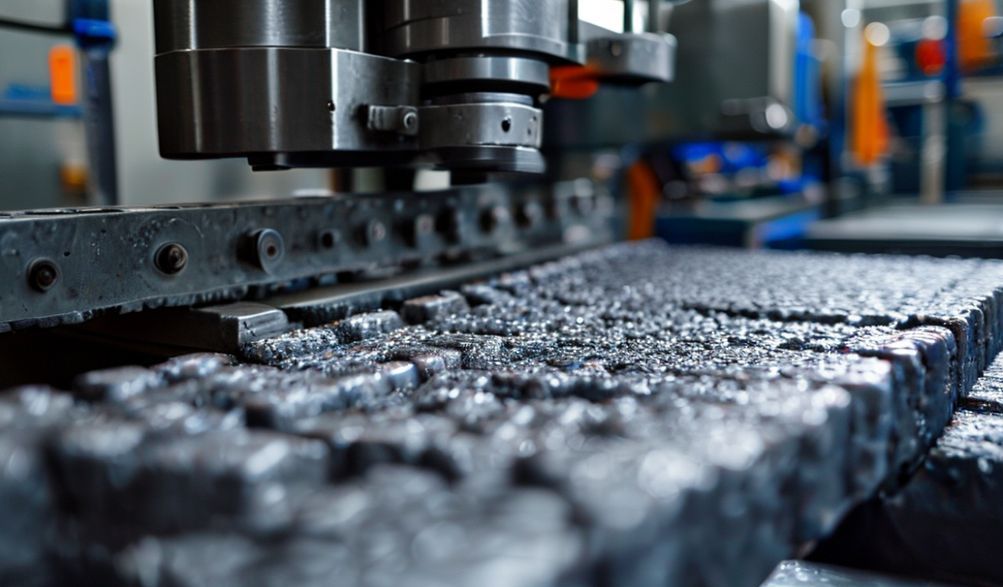
Yon machin pou fè blòk kouvèti se yon ekipman espesyalize ki fèt pou pwodiksyon an gwo kantite blòk kouvèti an beton oswa an PVC. Anjeneral, machin sa yo fonksyone lè l sèvi avèk presyon idwolik oswa mekanis vibwasyon (oswa yon konbinezon toulede) pou konpakte materyo prensipal yo—yon melanj beton sèch oswa konpoze plastik—nan yon mwazi pou fòme blòk ki gen fòm egzak, dans, ak inifòm.
Enpòtans machin nan pa ka souvanse. Presizyon li dirèkteman detèmine egzatite dimansyonèl chak blòk kouvèti li pwodui. Nan konstriksyon, menm kèk milimèt devyasyon nan kouvèti beton an ka vyole estanda jeni, tankouIS 456:2000 (Beton Senp ak Beton Ame – Kòd Pratik)Nan peyi Zend, genyen espesifikasyon ki detèmine kondisyon kouvèti minimòm yo dwe respekte selon ekspoze anviwònman an. Yon machin kalite wo asire chak blòk rive nan wotè egzak ki espesifye a (pa egzanp, 20mm, 40mm, 50mm), sa ki garanti pwoteksyon fè a ki te fèt la reyalize nèt sou teren an.
Kalite ak Rezilta Komen
Machin yo klase dapre nivo otomatizasyon yo ak metòd operasyon yo.
- Machin Manyèl: Operated via hand levers or simple mechanisms. Lowest cost, suitable for very small-scale or occasional use. Output is labor-dependent and relatively low.
- Machin Semi-Otomatik: Involve a mix of manual feeding and automated pressing/ejection. Offer a good balance between cost, output, and consistency for small to medium businesses.
- Machin Otomatik Konplè: Feature automated material feeding, pressing, and block ejection, often controlled by a PLC (Programmable Logic Controller). They deliver the highest output with minimal manual intervention, ideal for large-scale production.
These machines can produce a wide array of cover block types, including:
* Circular/Cylindrical Blocks
* Cubical Blocks
* Wheel/Reel Type Blocks
* Chair-type Spacers
* PVC Cover Blocks (using a different mold and material hopper)
Key Factors When Choosing a Cover Block Machine Manufacturer
This is the heart of your decision-making process. Look beyond glossy brochures and evaluate manufacturers on these critical pillars.
Technical Expertise and Machine Quality
The core of a manufacturer’s value lies in their engineering capability and the build quality of their machines.
-
Material & Build: Inspect the fundamentals.
- The machine frame should be constructed from heavy-duty, welded steel sections to withstand constant vibration and pressure without deformation.
- Molds must be precision-machined from high-grade, hardened steel to resist wear and maintain dimensional accuracy over thousands of cycles.
- Hydraulic systems should use reputed brand pumps, valves, and cylinders. For vibration-based machines, the motor and vibrator assembly quality is paramount.
-
Kapasite Pwodiksyon: Align the machine with your needs.
- Output is typically measured in blocks per hour or per 8-hour shift. A small contractor might need 2,000-5,000 blocks/day, while a large precast plant may require 20,000+.
- Clearly communicate your volume requirements and ask for the tested output capacity of the specific model under consideration.
-
Nivo Otomatizasyon: Choose based on your operational scale.
- Manual/Semi-Auto: Lower capital cost, higher variable labor cost, suitable for fluctuating demand.
- Otomatik Konplè: Higher initial investment, but significantly lower per-unit labor cost, superior consistency, and higher output. Justifies itself quickly for steady, high-volume production.
-
Customization Ability: A sign of a responsive manufacturer.
- Can they modify the machine’s pressure settings for different concrete mix designs?
- Do they offer custom mold designs for proprietary or non-standard block shapes?
- This flexibility can be crucial for niche applications or optimizing production for your specific raw materials.
Manufacturer’s Reputation & Industry Experience
A manufacturer’s past performance is the most reliable indicator of your future experience.
-
Years in Business: Longevity in the heavy machinery sector generally suggests resilience, accumulated technical knowledge, and an established supply chain for parts. It indicates they’ve evolved with industry demands.
-
Client Portfolio & Case Studies: Ask for specifics.
- Request a list of clients, particularly those in a similar industry (e.g., other precast plants, construction firms).
- Genuine testimonials, photos, or videos of machines operating in client facilities are powerful validators.
- Case studies that detail a client’s challenge and the solution provided are excellent indicators of problem-solving capability.
-
Certifications & Compliance: Look for objective standards.
- ISO 9001:2015 Certification is a strong signal of a structured quality management system in design, manufacturing, and service.
- Compliance with industrial machinery safety standards (like those from the Bureau of Indian Standards) is essential.
- Certifications demonstrate a commitment to process-driven quality, not just ad-hoc assembly.
After-Sales Support and Service
This is where many manufacturers are separated from the suppliers. The machine will need support; ensure it’s part of the package.
-
Warranty Period: Scrutinize the details.
- A standard warranty of 12-24 months on the machine is common for reputable manufacturers.
- Understand what is covered (e.g., parts, labor) and, crucially, what is excluded (e.g., wear-and-tear items like mold liners, misuse).
-
Availability of Spare Parts: Critical for minimizing downtime.
- Inquire about the inventory of critical spares (hydraulic seals, electrical components, mold parts).
- Do they have a systematic parts catalog and a streamlined process for ordering?
- Long lead times for imported parts can be a major operational risk.
-
Technical Support & Training:
- Will they provide an engineer for installation and commissioning?
- Do they offer comprehensive training for your operators on machine use, routine maintenance, and basic troubleshooting?
- Is technical support available via phone, email, or remote diagnostics?
-
Rezo Sèvis: Evaluate responsiveness.
- What is the geographical coverage of their service engineers?
- What is the typical response time for a service call?
- A manufacturer with a wide network or trained local partners can resolve issues faster.
The Manufacturing Process: A Sign of a Quality Manufacturer
Understanding how a manufacturer builds their machines offers deep insight into their commitment to quality. A transparent process is a hallmark of a trustworthy partner.
From Design to Assembly
A vertically integrated manufacturer with in-house control over key stages typically delivers more reliable products.
- R&D & Design: It begins with engineering design using CAD software, focusing on structural integrity, force distribution, and ergonomics. This phase should consider real-world operational stresses.
- Sourcing: Quality components (hydraulic systems, electrical panels, motors) should be sourced from reputable, traceable suppliers. The best manufacturers have long-standing relationships with their component vendors.
- Fabrication: Cutting, drilling, and welding of the steel frame should occur in a controlled workshop environment using skilled labor and precision tools, ensuring perfect alignment.
- Assembly: This is where components come together. Look for manufacturers who perform assembly in-station, with rigorous checks at each step, rather than just bolting together outsourced sub-assemblies.
Quality Control and Testing Protocols
The final gate before dispatch separates exceptional manufacturers from the rest. Rigorous testing should be non-negotiable.
- Hydraulic System Testing: The system is pressure-tested to well above its standard operating pressure to check for leaks, gauge accuracy, and valve function.
- Vibration & Electrical Tests: For vibration machines, frequency and amplitude are measured. Electrical panels are checked for proper earthing, insulation, and safe operation of all controls.
- Trial Run & Output Inspection: The machine should undergo a full production trial run with the material you intend to use (or a standard mix).
- The produced blocks are checked for dimensional accuracy (length, width, height, density).
- The surface finish should be smooth and consistent.
- The output rate is verified against the claimed capacity.
- Final Inspection: A comprehensive check of all safety features, guards, lubrication points, and paint finish before crating.
Questions to Ask Potential Cover Block Machine Suppliers
Arm yourself with this due-diligence checklist during your discussions with shortlisted manufacturers.
Questions About the Product
- “Can you provide the technical data sheet for this model, detailing motor power, hydraulic pressure, cycle time, and power consumption?”
- “What is the expected output (in blocks per hour) for a standard 40mm concrete cover block using a XYZ mix design?”
- “Which specific brands are used for the hydraulic pump, PLC, and electrical components? Can I see them during a unit visit?”
- “How many block impressions can I expect from the standard mold before re-lining or significant wear?”
- “Can we arrange a live video demonstration or, preferably, visit your facility to see this model under production?”
Questions About Business Practices
- “Please share the detailed warranty document. What is the process for claiming warranty support?”
- “What is your standard delivery timeline ex-works? What are the installation and commissioning timelines at our site?”
- “Can you provide 2-3 references from clients who purchased a similar model in the last 18 months?”
- “Do you offer any financing options or partnerships with financial institutions?”
- “What is the estimated cost and lead time for a standard set of critical spare parts (e.g., hydraulic seal kit, main relay set)?”
FAQ: Cover Block Making Machine Manufacturers
Q1: What is the approximate price range for a cover block making machine?
A: Prices vary significantly based on automation, capacity, and brand. A basic manual machine may start around ₹ 1.5 – 2.5 lakhs, while semi-automatic models typically range from ₹ 3 – 6 lakhs. High-capacity, fully automatic machines with advanced features can range from ₹ 8 lakhs to over ₹ 20 lakhs. It’s imperative to get detailed, model-specific quotations based on your technical requirements.
Q2: How do I maintain my cover block machine for optimal lifespan?
A: Consistent maintenance is key:
* Clean the machine daily to prevent concrete buildup.
* Check hydraulic oil levels and quality monthly; change oil as per the manufacturer’s schedule.
* Lubricate all moving parts (guide rods, bearings) regularly with recommended grease.
* Inspect electrical connections for tightness and wear.
* Store molds properly when not in use to prevent rust.
Q3: Can one machine produce different sizes and shapes of cover blocks?
A: Yes, this is a standard and vital feature. Reputable manufacturers provide interchangeable molds. You can purchase additional mold sets for different block sizes (e.g., 20mm, 30mm, 40mm) and shapes (circular, cubical). Changing molds is usually a straightforward process.
Q4: What is the typical delivery and installation timeline?
A: For a standard, in-stock model, delivery might take 2-4 weeks after order confirmation. For customized machines, it can extend to 6-10 weeks. Installation and commissioning by a technician typically add 3-7 days on-site, depending on machine complexity.
Q5: Are there any safety features I should look for?
A: Absolutely. Essential safety features include:
* Emergency Stop Buttons: Prominently placed at multiple points.
* Safety Guards: Physical guards covering all pinch points, moving parts, and the vibration unit.
* Electrical Safety: Proper earthing, overload protection in the circuit, and moisture-protected panels.
* Two-Hand Operation: On semi/auto machines, to ensure the operator’s hands are clear during the pressing cycle.
Konklizyon
Selecting a Manufaktirè machin pou fè blòk kouvri is a decision that reverberates through your projects and balance sheet for years. It’s a choice between a mere transaction and forging a productive partnership. As we’ve outlined, the key lies in a balanced evaluation of technical quality (robust design, precision), proven reputation (experience, client proof), and comprehensive support (warranty, service, training).
Move forward by shortlisting 2-3 manufacturers who score well on these criteria. Request their detailed technical proposals, scrutinize the warranty terms, and insist on client references. If feasible, a visit to their manufacturing facility is invaluable—it allows you to witness their processes, quality checks, and operational ethos firsthand.
Ready to discuss your specific requirements with a trusted partner? Contact our team of experts today for a personalized consultation and a detailed, transparent quote tailored to your production goals.
Want to ensure you don’t miss any critical details? Download our comprehensive checklist for evaluating machinery suppliers to guide your final decision.
<