
Panduan Utama Anda untuk Pengilang & Pembekal Mesin Pembuat Blok Penutup
Pengenalan
Dalam dunia pembinaan konkrit bertetulang, komponen terkecil sering menanggung tanggungjawab terbesar. Blok penutup—spacer konkrit atau plastik yang tidak mencolok—adalah penjaga senyap integriti struktur. Ia memastikan liputan konkrit kritikal yang melindungi tetulang keluli daripada kakisan, kebakaran, dan kerosakan persekitaran, secara langsung mempengaruhi jangka hayat dan keselamatan sesebuah struktur. Namun, kualiti dan konsistensi komponen penting ini bergantung pada satu faktor utama: mesin yang menghasilkannya.
Bagi syarikat pembinaan, pengeluar produk pratuang, dan usahawan, mencari mesin pembuat blok penutup yang boleh dipercayai boleh menjadi satu cabaran yang sukar. Pasaran dipenuhi dengan pilihan, tetapi menelusurinya sering membawa kepada kekecewaan: mesin yang menghasilkan dimensi blok tidak konsisten, kerap mengalami kerosakan, atau disertai dengan sokongan yang tidak memadai. Pilihan yang salah bukan sahaja menjejaskan pengeluaran; ia berisiko menjejaskan spesifikasi projek, membawa kepada kerja semula yang mahal dan isu pematuhan yang berpotensi.
Di sinilah keputusan itu melangkaui mesin itu sendiri dan tertumpu kepada sumbernya. Memilih yang tepatpengeluar mesin pembuat blok penutupadalah pelaburan strategik untuk produktiviti jangka panjang, kecekapan kos, dan ketenangan fikiran anda. Rakan kongsi yang bereputasi bukan sekadar menjual peralatan; mereka memberikan penyelesaian yang disokong oleh kepakaran kejuruteraan, pembinaan tahan lasak, dan sokongan selepas jualan yang teguh.
Panduan komprehensif ini dihasilkan daripada pandangan industri dan pengetahuan teknikal untuk memperkasakan anda. Matlamat kami adalah untuk mengalihkan tumpuan anda daripada sekadar membandingkan harga, serta melengkapkan anda dengan kriteria untuk menilai pengilang berdasarkan kelebihan teknikal, reputasi terbukti, dan komitmen perkhidmatan. Mari kita bina asas untuk keputusan pembelian yang lebih bijak.
Apakah itu Mesin Pembuat Blok Penutup?
Sebelum menilai siapa yang membina mesin terbaik, adalah penting untuk memahami apa yang dilakukannya dan mengapa ketepatannya tidak boleh dirunding.
Fungsi Teras dan Kepentingan
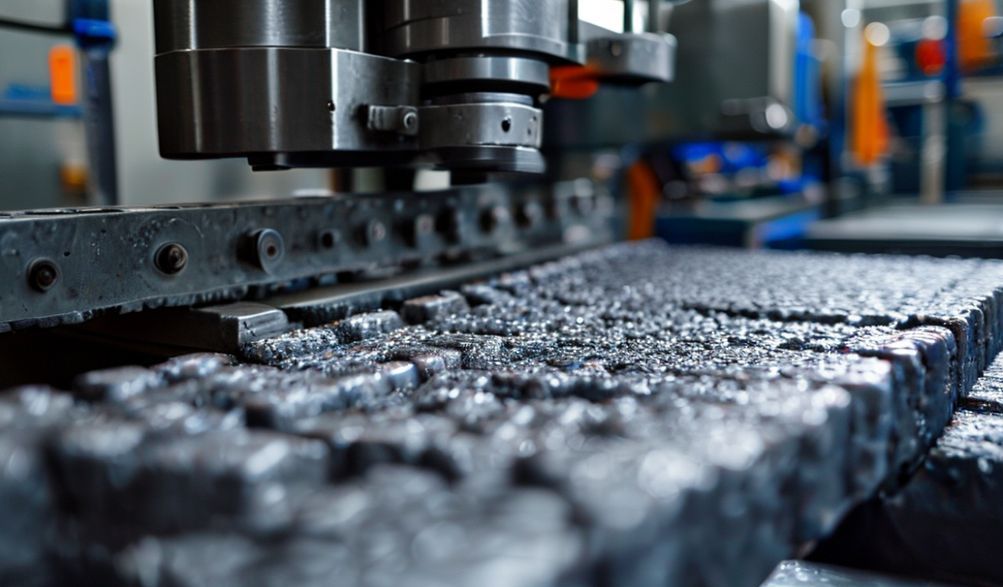
Mesin pembuat blok penutup adalah peralatan khusus yang direka untuk pengeluaran besar-besaran penutup blok konkrit atau PVC (blok penutup). Mesin ini biasanya beroperasi menggunakan tekanan hidraulik atau mekanisme getaran (atau gabungan kedua-duanya) untuk memadatkan bahan mentah—campuran konkrit kering atau sebatian plastik—menjadi blok yang tepat, padat dan seragam di dalam acuan.
Kepentingan mesin ini tidak boleh dilebih-lebihkan. Ketepatannya secara langsung menentukan ketepatan dimensi setiap blok penutup yang dihasilkannya. Dalam pembinaan, walaupun penyimpangan beberapa milimeter dalam penutup konkrit boleh melanggar piawaian kejuruteraan, sepertiIS 456:2000 (Konkrit Biasa dan Bertetulang – Kod Amalan)di India, yang menentukan keperluan penutup minimum berdasarkan pendedahan persekitaran. Mesin berkualiti tinggi memastikan setiap blok memenuhi ketinggian tepat yang ditetapkan (contohnya 20mm, 40mm, 50mm), menjamin perlindungan keluli yang direka dicapai secara konsisten di tapak.
Jenis dan Output Biasa
Mesin dikategorikan mengikut tahap automasi dan kaedah operasi mereka:
- Mesin Manual:Dikendalikan melalui tuil tangan atau mekanisme mudah. Kos terendah, sesuai untuk penggunaan berskala sangat kecil atau sekali-sekala. Output bergantung kepada tenaga kerja dan agak rendah.
- Mesin Semi-Automatik:Melibatkan gabungan suapan manual dan penekanan/penyingkiran automatik. Menawarkan keseimbangan yang baik antara kos, pengeluaran, dan konsistensi untuk perniagaan kecil hingga sederhana.
- Mesin Sepenuhnya Automatik:Mempunyai ciri pemakanan bahan automatik, penekanan, dan penyingkiran blok, sering dikawal oleh PLC (Pengawal Logik Boleh Aturcara). Ia memberikan output tertinggi dengan campur tangan manual yang minimum, sesuai untuk pengeluaran berskala besar.
Mesin-mesin ini mampu menghasilkan pelbagai jenis blok penutup, termasuk:
* Blok Bulat/Silinder
* Blok Kubik
* Blok Jenis Roda/Gegelung
* Penyelang Kerusi
* Blok Penutup PVC(menggunakan acuan dan corong bahan yang berbeza)
Faktor Utama Semasa Memilih Pengilang Mesin Blok Penutup
Inilah teras proses pembuatan keputusan anda. Pandang melampaui brosur berkilat dan nilai pengeluar berdasarkan tiang-tiang kritikal ini.
Kepakaran Teknikal dan Kualiti Mesin
Teras nilai pengilang terletak pada keupayaan kejuruteraan dan kualiti binaan mesin mereka.
-
Bahan & Pembinaan:Periksa asas-asasnya.
- The machine frame should be constructed from heavy-duty, welded steel sections to withstand constant vibration and pressure without deformation.
- Molds must be precision-machined from high-grade, hardened steel to resist wear and maintain dimensional accuracy over thousands of cycles.
- Hydraulic systems should use reputed brand pumps, valves, and cylinders. For vibration-based machines, the motor and vibrator assembly quality is paramount.
-
Kapasiti Pengeluaran: Align the machine with your needs.
- Output is typically measured in blocks per hour or per 8-hour shift. A small contractor might need 2,000-5,000 blocks/day, while a large precast plant may require 20,000+.
- Clearly communicate your volume requirements and ask for the tested output capacity of the specific model under consideration.
-
Tahap Automasi: Choose based on your operational scale.
- Manual/Semi-Auto: Lower capital cost, higher variable labor cost, suitable for fluctuating demand.
- Sepenuhnya Automatik: Higher initial investment, but significantly lower per-unit labor cost, superior consistency, and higher output. Justifies itself quickly for steady, high-volume production.
-
Customization Ability: A sign of a responsive manufacturer.
- Can they modify the machine’s pressure settings for different concrete mix designs?
- Do they offer custom mold designs for proprietary or non-standard block shapes?
- This flexibility can be crucial for niche applications or optimizing production for your specific raw materials.
Manufacturer’s Reputation & Industry Experience
A manufacturer’s past performance is the most reliable indicator of your future experience.
-
Years in Business: Longevity in the heavy machinery sector generally suggests resilience, accumulated technical knowledge, and an established supply chain for parts. It indicates they’ve evolved with industry demands.
-
Client Portfolio & Case Studies: Ask for specifics.
- Request a list of clients, particularly those in a similar industry (e.g., other precast plants, construction firms).
- Genuine testimonials, photos, or videos of machines operating in client facilities are powerful validators.
- Case studies that detail a client’s challenge and the solution provided are excellent indicators of problem-solving capability.
-
Certifications & Compliance: Look for objective standards.
- ISO 9001:2015 Certification is a strong signal of a structured quality management system in design, manufacturing, and service.
- Compliance with industrial machinery safety standards (like those from the Bureau of Indian Standards) is essential.
- Certifications demonstrate a commitment to process-driven quality, not just ad-hoc assembly.
After-Sales Support and Service
This is where many manufacturers are separated from the suppliers. The machine will need support; ensure it’s part of the package.
-
Warranty Period: Scrutinize the details.
- A standard warranty of 12-24 months on the machine is common for reputable manufacturers.
- Understand what is covered (e.g., parts, labor) and, crucially, what is excluded (e.g., wear-and-tear items like mold liners, misuse).
-
Availability of Spare Parts: Critical for minimizing downtime.
- Inquire about the inventory of critical spares (hydraulic seals, electrical components, mold parts).
- Do they have a systematic parts catalog and a streamlined process for ordering?
- Long lead times for imported parts can be a major operational risk.
-
Technical Support & Training:
- Will they provide an engineer for installation and commissioning?
- Do they offer comprehensive training for your operators on machine use, routine maintenance, and basic troubleshooting?
- Is technical support available via phone, email, or remote diagnostics?
-
Rangkaian Perkhidmatan: Evaluate responsiveness.
- What is the geographical coverage of their service engineers?
- What is the typical response time for a service call?
- A manufacturer with a wide network or trained local partners can resolve issues faster.
The Manufacturing Process: A Sign of a Quality Manufacturer
Understanding how a manufacturer builds their machines offers deep insight into their commitment to quality. A transparent process is a hallmark of a trustworthy partner.
From Design to Assembly
A vertically integrated manufacturer with in-house control over key stages typically delivers more reliable products.
- R&D & Design: It begins with engineering design using CAD software, focusing on structural integrity, force distribution, and ergonomics. This phase should consider real-world operational stresses.
- Sourcing: Quality components (hydraulic systems, electrical panels, motors) should be sourced from reputable, traceable suppliers. The best manufacturers have long-standing relationships with their component vendors.
- Fabrication: Cutting, drilling, and welding of the steel frame should occur in a controlled workshop environment using skilled labor and precision tools, ensuring perfect alignment.
- Assembly: This is where components come together. Look for manufacturers who perform assembly in-station, with rigorous checks at each step, rather than just bolting together outsourced sub-assemblies.
Quality Control and Testing Protocols
The final gate before dispatch separates exceptional manufacturers from the rest. Rigorous testing should be non-negotiable.
- Hydraulic System Testing: The system is pressure-tested to well above its standard operating pressure to check for leaks, gauge accuracy, and valve function.
- Vibration & Electrical Tests: For vibration machines, frequency and amplitude are measured. Electrical panels are checked for proper earthing, insulation, and safe operation of all controls.
- Trial Run & Output Inspection: The machine should undergo a full production trial run with the material you intend to use (or a standard mix).
- The produced blocks are checked for dimensional accuracy (length, width, height, density).
- The surface finish should be smooth and consistent.
- The output rate is verified against the claimed capacity.
- Final Inspection: A comprehensive check of all safety features, guards, lubrication points, and paint finish before crating.
Questions to Ask Potential Cover Block Machine Suppliers
Arm yourself with this due-diligence checklist during your discussions with shortlisted manufacturers.
Questions About the Product
- “Can you provide the technical data sheet for this model, detailing motor power, hydraulic pressure, cycle time, and power consumption?”
- “What is the expected output (in blocks per hour) for a standard 40mm concrete cover block using a XYZ mix design?”
- “Which specific brands are used for the hydraulic pump, PLC, and electrical components? Can I see them during a unit visit?”
- “How many block impressions can I expect from the standard mold before re-lining or significant wear?”
- “Can we arrange a live video demonstration or, preferably, visit your facility to see this model under production?”
Questions About Business Practices
- “Please share the detailed warranty document. What is the process for claiming warranty support?”
- “What is your standard delivery timeline ex-works? What are the installation and commissioning timelines at our site?”
- “Can you provide 2-3 references from clients who purchased a similar model in the last 18 months?”
- “Do you offer any financing options or partnerships with financial institutions?”
- “What is the estimated cost and lead time for a standard set of critical spare parts (e.g., hydraulic seal kit, main relay set)?”
FAQ: Cover Block Making Machine Manufacturers
Q1: What is the approximate price range for a cover block making machine?
A: Prices vary significantly based on automation, capacity, and brand. A basic manual machine may start around ₹ 1.5 – 2.5 lakhs, while semi-automatic models typically range from ₹ 3 – 6 lakhs. High-capacity, fully automatic machines with advanced features can range from ₹ 8 lakhs to over ₹ 20 lakhs. It’s imperative to get detailed, model-specific quotations based on your technical requirements.
Q2: How do I maintain my cover block machine for optimal lifespan?
A: Consistent maintenance is key:
* Clean the machine daily to prevent concrete buildup.
* Check hydraulic oil levels and quality monthly; change oil as per the manufacturer’s schedule.
* Lubricate all moving parts (guide rods, bearings) regularly with recommended grease.
* Inspect electrical connections for tightness and wear.
* Store molds properly when not in use to prevent rust.
Q3: Can one machine produce different sizes and shapes of cover blocks?
A: Yes, this is a standard and vital feature. Reputable manufacturers provide acuan boleh tukar. You can purchase additional mold sets for different block sizes (e.g., 20mm, 30mm, 40mm) and shapes (circular, cubical). Changing molds is usually a straightforward process.
Q4: What is the typical delivery and installation timeline?
A: For a standard, in-stock model, delivery might take 2-4 weeks after order confirmation. For customized machines, it can extend to 6-10 weeks. Installation and commissioning by a technician typically add 3-7 days on-site, depending on machine complexity.
Q5: Are there any safety features I should look for?
A: Absolutely. Essential safety features include:
* Emergency Stop Buttons: Prominently placed at multiple points.
* Safety Guards: Physical guards covering all pinch points, moving parts, and the vibration unit.
* Electrical Safety: Proper earthing, overload protection in the circuit, and moisture-protected panels.
* Two-Hand Operation: On semi/auto machines, to ensure the operator’s hands are clear during the pressing cycle.
Kesimpulan
Selecting a pengeluar mesin pembuat blok penutup is a decision that reverberates through your projects and balance sheet for years. It’s a choice between a mere transaction and forging a productive partnership. As we’ve outlined, the key lies in a balanced evaluation of technical quality (robust design, precision), proven reputation (experience, client proof), and comprehensive support (warranty, service, training).
Move forward by shortlisting 2-3 manufacturers who score well on these criteria. Request their detailed technical proposals, scrutinize the warranty terms, and insist on client references. If feasible, a visit to their manufacturing facility is invaluable—it allows you to witness their processes, quality checks, and operational ethos firsthand.
Ready to discuss your specific requirements with a trusted partner? Contact our team of experts today for a personalized consultation and a detailed, transparent quote tailored to your production goals.
Want to ensure you don’t miss any critical details? Download our comprehensive checklist for evaluating machinery suppliers to guide your final decision.
<