
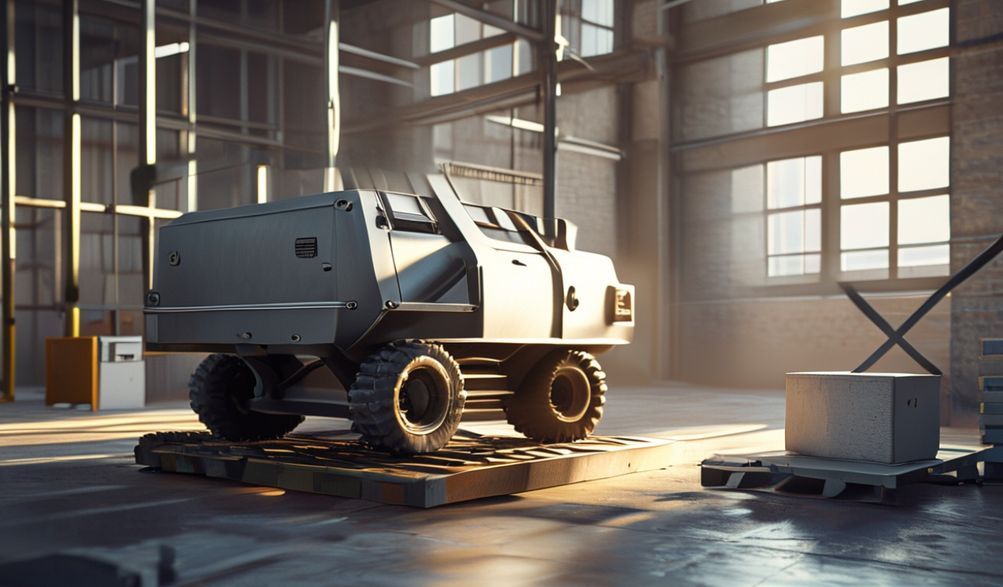
Votre guide ultime sur les machines à fabriquer des blocs au Royaume-Uni : Focus sur l'usine FUDA
Introduction
Le secteur de la construction au Royaume-Uni est sur une trajectoire ascendante régulière, alimentée par les projets d'infrastructure, les demandes en logement et le développement commercial. Au cœur de cette croissance se trouve un besoin critique et constant de matériaux de construction fiables et de haute qualité. Les blocs de béton, l'épine dorsale omniprésente de la construction moderne, sont plus demandés que jamais.
Pour les constructeurs, les entrepreneurs et les chefs d'entreprise, cette demande représente à la fois une opportunité et un défi. S'approvisionner en blocs à l'extérieur peut entraîner des retards dans la chaîne d'approvisionnement, des coûts fluctuants et une qualité variable. Beaucoup se tournent désormais vers l'intérieur, envisageant la décision stratégique de produire leurs propres blocs. Cependant, naviguer sur le marché des équipements de fabrication de blocs au Royaume-Uni peut être intimidant. Les principaux défis ? Trouver des machines qui sont non seulement rentables et efficaces, mais aussi suffisamment durables pour résister à une utilisation rigoureuse et conformes aux réglementations strictes du Royaume-Uni.
La solution réside dans l'investissement dans une machine à fabriquer les blocs de qualité professionnelle. Il ne s'agit pas seulement d'un achat, mais d'une décision stratégique pour une plus grande productivité, un contrôle qualité plus strict et une résilience à long terme de l'entreprise. Lorsqu'on explore les fabricants, un nom qui apparaît constamment sur la scène mondiale est la FUDA Block Making Factory. Réputée pour son ingénierie robuste et une large gamme de produits, FUDA a adapté ses offres pour répondre aux demandes et aux normes spécifiques du marché britannique.
Ce guide constitue votre ressource experte et impartiale. Nous analyserons les types de machines, approfondirons les facteurs cruciaux pour les acheteurs britanniques et offrirons un examen détaillé et transparent de ce que propose l'usine FUDA, vous permettant ainsi de prendre une décision d'investissement parfaitement éclairée.
Comprendre les machines de fabrication de blocs : types et applications
Avant d'investir, il est crucial de comprendre la technologie et ses possibilités. Cette connaissance fondamentale distingue un acheteur avisé d'un spéculateur.
Comment fonctionnent les machines à fabriquer des blocs?
À la base, une machine à fabriquer des blocs automatise le processus de transformation d'un mélange de béton brut en blocs de construction solides et précis. Le principe est le même pour la plupart des machines, bien que le niveau d'automatisation varie.
- Mélange et alimentation :Un mélange de béton sec préparé (granulats, sable, ciment) est chargé dans la trémie de la machine.
- Moulage:Le mélange est introduit dans une boîte de moulage. La conception de ce moule détermine la forme finale du bloc (creux, plein, pavé, etc.).
- Compactage :C'est la phase critique. Une combinaison de vibrations et de haute pression hydraulique compacte le mélange de manière dense dans le moule, éliminant les poches d'air et assurant l'intégrité structurelle.
- Éjection et durcissement :Le bloc nouvellement formé, dit « vert », est éjecté sur une palette ou le sol. Il subit ensuite un processus de durcissement, impliquant généralement la rétention d'humidité pendant plusieurs jours, pour atteindre sa pleine résistance.
Les composants clés dont vous entendrez parler comprennent la trémie d'alimentation, le système de moule, le groupe hydraulique, les moteurs vibrants et l'automate programmable (PLC) qui orchestre le tout.
Types de machines clés pour les opérations au Royaume-Uni
Choisir le bon type de machine dépend entièrement de votre production prévue, de votre budget et de votre modèle de main-d'œuvre.
-
Machines manuelles et semi-automatiques :
- Idéal pour :Démarrages, projets à petite échelle, gammes de produits spécialisés (par exemple, blocs décoratifs) ou entreprises testant le marché.
- Opération :Nécessite plus d'intervention manuelle pour l'alimentation du mélange et le retrait des blocs finis. Le compactage est souvent actionné mécaniquement ou hydrauliquement.
- Considération au Royaume-Uni :Idéal lorsque les coûts de main-d'œuvre sont maîtrisés et que l'espace de production est limité. Ils représentent un investissement initial en capital moins élevé.
-
Machines entièrement automatiques :
- Idéal pour :Production commerciale de moyenne à grande échelle approvisionnant des marchands ou de grands projets.
- Opération :Ce sont des lignes de production. Elles mélangent, alimentent, moulent, compactent et empilent automatiquement les blocs avec une supervision humaine minimale. Elles s'intègrent avec des alimenteurs de palettes et des empileurs.
- Considération au Royaume-Uni :La haute productivité et la constance justifient l'investissement. Elles sont essentielles pour être compétitif sur les prix et le volume sur le marché élargi. Assurez-vous que votre site dispose de l'alimentation électrique industrielle nécessaire (généralement triphasée).
-
Machines à blocs mobiles :
- Idéal pour :Les grands chantiers de construction, comme les nouveaux lotissements ou les projets d'infrastructure éloignés.
- Avantage :Produire des blocs directement sur le site, réduisant considérablement les coûts de transport et la logistique pour de grandes quantités de matériaux. Ils sont souvent montés sur des remorques.
- Considération au Royaume-Uni :Idéal pour les développeurs avec un plan de site pluriannuel. Prenez en compte l'accès, les conditions du terrain et le stockage des matériaux sur place.
Types de blocs courants produits
Les machines modernes sont polyvalentes. Au-delà des blocs standards, elles peuvent produire une gamme de produits très demandés :
- Blocs de béton pleins et creux :Le matériau de base pour les murs porteurs et de séparation.
- Dalles de pavage et bordures de trottoir :Pour l'aménagement paysager, les entrées de cour et les projets de génie civil.
- Blocs d'emboîtement : Used for retaining walls, flood defences, and storage bays without mortar.
- Specialist Shapes: Including grass blocks (for permeable paving), chimney blocks, and architectural decorative blocks.
Why Choose a FUDA Block Making Machine for the UK Market?
FUDA has built its reputation on serving diverse international markets. Here’s how their approach aligns with the needs of a UK-based operation.
Engineering for Durability and UK Conditions
The UK’s variable climate, with its dampness and potential for cold temperatures, demands robust equipment.
* Construction Lourde: FUDA machines are built with high-grade steel at critical stress points, designed to endure the constant vibration and pressure of block production.
* Résistance à la corrosion : Look for powder-coated finishes and treatments on frames and components to combat moisture, a vital feature for machines operating in open-sided sheds or across seasons in the UK.
* Qualité des composants The use of reputable brand hydraulics, motors, and PLCs (e.g., Siemens, Schneider) is a sign of a machine built for longevity, not just a low sticker price.
Focus on Efficiency and Output
Profitability hinges on output per hour and operational cost.
* Fast Cycle Times: Efficient hydraulic systems and mold design allow for quicker block formation and ejection, maximising daily production.
* Moules à cavités multiples : Many FUDA models can produce multiple blocks (e.g., 4, 6, 10) per machine cycle, significantly boosting output without increasing machine footprint.
* Low Waste & Energy Efficiency: Precise mix feeding and compaction reduce material waste. Modern, well-calibrated hydraulic systems are designed to be energy efficient, a key factor given UK industrial electricity costs.
Versatility and Customisation
Your product line may need to evolve.
* Moules interchangeables : The ability to switch molds allows one machine to produce different block types, from standard 100mm solids to 200mm hollow blocks or paving flags.
* Custom Mold Development: For unique architectural or civil specifications, FUDA can often engineer custom molds. This is a significant advantage for businesses targeting niche markets or fulfilling specific contract requirements.
Technological Integration
Ease of use and safety are non-negotiable.
* User-Friendly PLC Controls: Touchscreen panels allow operators to set parameters, monitor production, and diagnose issues. Clear fault displays minimise downtime.
* Safety Features: Integrated safety guards, emergency stop buttons, and hydraulic safety locks are standard on professional machines, helping you comply with UK workplace HSE regulations from day one.
* Intégration des systèmes : Machines can be designed to connect with automated batching plants and robotic pallet stackers, creating a seamless production line.
Critical Factors for UK Buyers: Beyond the Machine
The machine’s price tag is just the beginning. Your due diligence here separates a successful investment from a costly mistake.
Navigating UK Regulations and Standards
Compliance is legal and commercial necessity.
* CE/UKCA Marking: This is mandatory. It certifies the machine meets the essential health and safety requirements of the Machinery Directive (2006/42/EC). Never purchase a machine without this certification. A reputable manufacturer like FUDA will provide full documentation.
* Noise and Vibration: Ensure the machine’s specifications are within acceptable limits for an industrial workplace, considering both operator health and potential site neighbour issues.
* Electrical Compliance: The machine must be supplied wired for UK voltage standards (typically 400V 3-phase) or easily adaptable by a qualified UK electrician.
Analyse du coût total de possession
Think in terms of total investment over 5-10 years.
* Upfront Costs: Machine price + shipping (CIF/FOB terms matter) + UK import duty and VAT (currently 20%) + delivery to your site.
* Setup Costs: Foundation preparation (a level, reinforced concrete pad is typical), electrical connection by a certified engineer, and possible crane hire for installation.
* Ongoing Costs: Regular maintenance (filters, hydraulic oil), wear parts (mold liners, vibration motors), energy consumption, and labour.
* The Value Proposition: A slightly more expensive, well-built machine with lower failure rates and higher efficiency will almost always outperform a cheaper alternative in the long run.
After-Sales Support: Your UK Lifeline
This is the single most critical factor in your decision. A machine without support is a future paperweight.
* Support technique local : Does FUDA have a dedicated UK agent or partner with engineers who can provide phone support and, if needed, site visits? What are the response time guarantees?
* Disponibilité des pièces de rechange : Are common wear parts (seals, bearings, liner plates) held in UK stock? If not, what is the typical shipping time from the factory? A reliable parts pipeline is essential for minimising downtime.
* Formation complète : What training is provided? It should cover operation, routine maintenance, basic troubleshooting, and safety procedures. Is it on-site, at the factory, or via detailed video manuals?
* Warranty Terms: Get the warranty terms in writing. What is covered (parts, labour)? How long does it last? What is the process for making a claim?
The FUDA Factory Advantage: A Closer Look
Let’s examine the manufacturer’s credentials and the practical journey of procurement.
Manufacturing Expertise and Quality Control
FUDA operates as a full-scale manufacturing facility, not just an assembler.
* In-House Production: Controlling the production of key components like mold boxes and frames allows for stricter quality oversight.
* Tests rigoureux : Machines should undergo running tests before shipment. Inquire about their quality control protocols—do they test hydraulic pressure, vibration frequency, and control system sequences?
* Investissement en R&D : A manufacturer that invests in research and development is more likely to offer modern, efficient technology. Ask about recent innovations in their model range.
Global Reputation and UK References
A global footprint indicates experience, but local proof is king.
* Export History: FUDA’s presence in multiple continents suggests an ability to adapt machinery to different market standards.
* The Crucial Step – Verification: You must seek and verify UK-based references. A credible supplier should be able to connect you with existing UK customers. Ask those customers pointed questions about machine reliability, output accuracy, and, most importantly, the quality of after-sales support. If possible, arrange to visit a working FUDA machine in the UK.
The Procurement Process: From Inquiry to Installation
Understanding this flow prevents surprises.
1. Consultation: Provide details on your desired output, block types, and site specifications.
2. Quotation: You should receive a detailed quote including machine specs, optional extras, shipping terms (e.g., FOB Shanghai), and a proposed delivery timeline.
3. Order & Payment: Terms are agreed upon (often a deposit followed by balance before shipment).
4. Manufacturing & Pre-Shipment Testing: The machine is built and tested. Request photos or video of the final product before it’s crated.
5. Shipping & Customs: The machine is shipped. As the UK importer, you or your agent will handle customs clearance and pay due taxes.
6. Delivery & Installation: The machine is delivered to your site. Clarify in advance: will a FUDA engineer supervise installation and commissioning, or will you need to hire a local specialist with the provided manuals?
Foire aux questions (FAQ)
What is the lead time for a FUDA machine to be delivered to the UK?
Lead times vary. A standard model might be shipped in 4-6 weeks, while a fully customised line could take 8-12 weeks. Factor in an additional 2-4 weeks for sea freight and customs clearance. Always get a written timeline estimate.
Can FUDA machines use UK-standard raw materials (aggregates, cement)?
Yes, they are designed to be adaptable. However, the optimal mix design (cement-to-aggregate ratio, moisture content) is crucial for block quality and machine performance. FUDA should provide baseline mix guidelines, but you may need to fine-tune it with your local materials.
Who will install and commission the machine in the UK?
This must be clarified in your contract. Options include: FUDA sending an engineer, their UK agent providing the service, or you hiring a qualified local engineer using FUDA’s comprehensive installation manual. The first option, while potentially an extra cost, is often the smoothest.
How do I source spare parts once the machine is in the UK?
Establish the process before buying. Ideally, a UK-based agent holds common parts. If not, you’ll order directly from the factory. Ask for a list of common wear parts and their estimated lifespans to help you plan and budget.
What training is provided for my operators?
Training should be comprehensive. It often includes detailed operation manuals, instructional videos, and, ideally, on-site training during commissioning covering daily operation, lubrication, routine maintenance, and safety procedures.
Are there any grants or financing options available in the UK for this equipment?
This is outside a manufacturer’s direct scope. However, investing in capital equipment for business growth may qualify for government-backed schemes or finance leases. We strongly recommend consulting with a UK business advisor, accountant, or specialist equipment finance broker to explore options.
Conclusion
Selecting a block making machine for your UK operation is a significant strategic investment. The decision must balance upfront cost with long-term durability, efficiency, and crucially, the quality of after-sales support. It’s about finding a partner in production, not just a supplier of machinery.
FUDA Block Making Factory presents itself as a viable contender, with its engineering focus on robust construction, efficiency, and versatility. Their experience in international markets suggests an ability to meet varied demands. However, the cornerstone of a successful purchase for any UK buyer is verifiable, on-the-ground support.
Therefore, your final step must be one of thorough due diligence. Request detailed specifications and a full breakdown of all costs. Get all support promises—response times, parts availability, warranty—in writing. Most importantly, act on the advice to seek out and speak directly with existing UK customers. Their firsthand experience is the most valuable specification sheet you can read.
Ready to take the next step? Contact a FUDA representative with your specific project requirements, and be sure to ask for a detailed proposal alongside references from their current UK client base.
<