
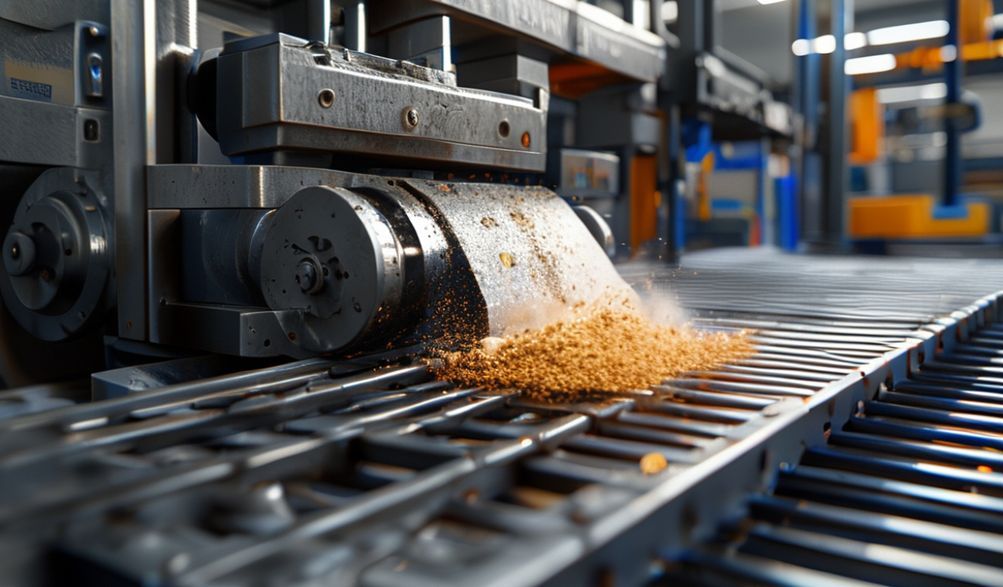
Regardez à l'intérieur : Vidéo de la machine à fabriquer des blocs de l'usine de fabrication de briques FUDA
Pour les constructeurs, les entrepreneurs et les entrepreneurs, la recherche de l'équipement de construction adéquat est un casse-tête à enjeux élevés. Vous devez équilibrer les coûts initiaux, la productivité à long terme et la pression incessante de livrer les projets à temps et dans le budget. Les brochures regorgent de spécifications impressionnantes, mais elles laissent souvent une question cruciale sans réponse : « Comment cette machine...effectivementfonctionner dans une opération réelle, au jour le jour ?
Ce message coupe à travers le bruit. Nous offrons une analyse exclusive et détaillée, ancrée dans uneVidéo de machine à fabriquer des blocsde laUsine de fabrication de briques FUDANotre objectif n'est pas de vous vendre une machine, mais de vous doter d'une réelle compréhension. En appliquant un regard d'expert à des séquences vidéo d'usines réelles, nous transformons les preuves visuelles en connaissances exploitables, vous aidant à prendre une décision fondée sur des performances démontrées, et non sur de simples promesses. Vous apprendrez ce qu'il faut rechercher dans toute vidéo d'usine, obtiendrez une analyse technique d'une machine FUDA en action, et découvrirez les étapes cruciales de vérification qui suivent.
Pourquoi l'analyse vidéo est cruciale pour choisir une machine à fabriquer des blocs
Dans un secteur où l'équipement représente un investissement important, la diligence raisonnable n'est pas négociable. Bien que les fiches techniques fournissent une base de référence nécessaire, elles ne sont qu'un instantané bidimensionnel d'un processus dynamique et tridimensionnel. L'analyse vidéo comble cet écart, vous transformant d'un examinateur passif de données en un auditeur actif de la performance.
Au-delà des brochures : Voir, c'est croire
Une brochure peut indiquer un temps de cycle de 20 secondes. Une vidéo vous montre si ce temps de cycle est constant sur 50 cycles ou s'il fluctue avec l'intervention de l'opérateur. Elle révèle le rythme de la machine — la danse fluide et synchronisée (ou les pas saccadés et hésitants) entre l'alimentation, le moulage, le compactage et l'éjection.
Principales limites de l'information statique que la vidéo surmonte :
* Intégration des flux de travail :Comment la machine s'intègre-t-elle dans la chaîne de production ? La manutention des matériaux est-elle efficace, ou y a-t-il des goulots d'étranglement évidents ?
* Qualité réelle de la sortie :Vous pouvez voir les blocs au moment où ils sont éjectés. Gardent-ils leur forme ? Les surfaces sont-elles lisses et les arêtes vives ?
* Facilité d'utilisation :Observez les interactions de l'opérateur. Le panneau de contrôle semble-t-il intuitif ? La manipulation manuelle est-elle laborieuse ou minimale ?
Indicateurs de performance clés à surveiller dans toute vidéo d'usine
Quand vous regardez une vidéo d'usine, ne vous contentez pas de regarder la machine—analysez-la. Exercez votre œil à repérer ces indicateurs critiques :
- Uniformité du temps de cycle :Chronométrez plusieurs cycles consécutifs. Une incohérence peut signaler des problèmes de système de contrôle ou d'alimentation en matériaux.
- Vibration et Stabilité :La machine secoue-t-elle violemment, ou les vibrations sont-elles contrôlées et concentrées sur le moule? Un mouvement excessif du châssis peut indiquer une conception défectueuse ou de l'usure.
- Produit fini à la sortie :Mettez la vidéo en pause lorsque les blocs sont éjectés. Cherchez :
- Intégrité structurelle (pas d'affaissement ni de fissures).
- Cohérence dimensionnelle dans toutes les cavités du moule.
- Des arêtes et des coins nets et bien définis.
- Charge de travail de l'opérateurCombien d'opérateurs sont actuellement en service ? Effectuent-ils une simple surveillance ou un travail manuel exigeant ?
Analyse détaillée : La machine à fabriquer des blocs FUDA en action
Appliquons ce cadre analytique à une situation typiqueVidéo de machine à fabriquer des blocsdeUsine de fabrication de briques FUDANous allons disséquer le processus, de la matière première au bloc fini.
Profil de la machine : Modèle et spécifications du cœur
Bien que les modèles spécifiques varient, FUDA présente couramment des modèles semi-automatiques et entièrement automatiques, tels que le QT4-25 ou le QT6-15, dans leurs démonstrations. À partir d'une vidéo typique, nous pouvons déduire les spécifications clés :
- Type:Probablement une presse hydraulique stationnaire avec vibration à haute fréquence (une norme pour des blocs pleins/creux de qualité).
- Capacité de production :Selon le modèle, la production peut varier de 1 500 à 6 000 blocs standards par quart de travail de 8 heures.
- Niveau d'automatisation : Videos often show a semi-automatic system, where an operator initiates the cycle and may handle raw material feeding, but the molding, compaction, and ejection are automated.
- Variété de blocs : These machines typically use interchangeable molds to produce a range of products: solid blocks, hollow blocks, paving stones, and curbstones.
The Raw Material Process: From Mix to Hopper
The journey begins before the machine. In a well-organized factory like FUDA’s, you’ll see:
- Raw Material Storage: Bins or sacks of cement, fly ash (a common eco-friendly additive), and aggregates (sand, stone chips).
- Mélange : A separate mixer (pan or planetary) combines materials with water to achieve a uniform, semi-dry concrete consistency. This mix is critical—too wet, and blocks slump; too dry, and they won’t compact properly.
- Alimentation : The mixed material is conveyed or fed into the block machine’s hopper. In the video, note the consistency of the feed. A steady, uninterrupted flow is a sign of good material preparation and hopper design.
The Heart of the Operation: Molding and Compaction
This is the core of the Vidéo de machine à fabriquer des blocs. The hopper feeds material into the mold chamber on a steel pallet. Then, a two-stage process begins:
- Vibration : High-frequency, directed vibrations fluidize the concrete mix, allowing it to flow into every corner of the mold cavity. This ensures density and eliminates air pockets.
- Pressage hydraulique : A hydraulic ram then applies substantial downward pressure (measurable in tons) to the material. This simultaneous vibration and pressure is what creates a densely compacted, strong block with a smooth surface finish.
What to observe: The stability of the mold table during this phase. Effective vibration should be intense but contained, not causing the entire machine frame to shudder.
Ejection and Handling: Assessing Stability and Finish
After compaction, the mold rises, leaving the freshly formed blocks on the steel pallet. This is a telling moment.
- Éjection : The pallet, with blocks, is smoothly transferred out of the press area. A well-tuned machine does this without any jarring that could damage the green (uncured) blocks.
- Initial Quality Check: At this point, you can visually assess:
- Edge Sharpness: Blocks should have clean, 90-degree edges.
- Finition de surface : Top and bottom surfaces should be smooth and even.
- Intégrité structurelle : No cracks or deformities should be visible.
- Handling: The pallet is then moved by a forklift or roller conveyor to a curing area. This highlights the need for a logical factory layout to support the machine’s output.
Expertise Insights: What This FUDA Machine Video Tells Us About Quality
Translating observations into insights separates casual viewing from expert analysis. Here’s what a detailed look at the FUDA operation suggests.
Design Features for Efficiency and Durability
- Construction robuste : The machine frame visible in these videos is typically made from heavy-duty steel plates and profiles, designed to withstand constant vibration. Look for clean, substantial welds.
- Système de contrôle : The operator panel is usually centralized and accessible. While we can’t see the software, the repetitive, consistent cycle suggests reliable PLC (Programmable Logic Controller) automation.
- Integration Focus: The fact that the video shows material handling and curing hints at FUDA’s understanding that a machine is part of a system, not an isolated island.
Output Quality Analysis from the Video Feed
Zooming in on the finished product in the video reveals key quality markers:
- Précision dimensionnelle : Blocks appear uniform in size, suggesting precise mold machining and stable vibration.
- Cohérence : From the first block to the last in a batch, there is no visible deviation in form or finish, indicating a stable and repeatable process.
- Surface Density: The blocks have a sheen of cement paste on the surface, a sign of good compaction that leads to higher strength and better weather resistance.
Comparative Context: How This Machine Stacks Up
A balanced view is essential. Based on typical FUDA factory videos:
- Potential Strengths:
- Simplicity & Reliability: The semi-automatic operation is less complex than a fully robotic line, which can mean easier maintenance and lower initial cost.
- Solid Output Quality: The core vibration and hydraulic process appears effective for producing standard construction blocks.
- System Awareness: Demonstrating the production line context is a mark of a knowledgeable manufacturer.
- Questions for Further Inquiry:
- Long-Term Wear: How accessible are key wear parts like mold liners, vibration motors, and hydraulic seals?
- Noise and Dust: The video may not convey operational noise levels or dust generation, important for workshop planning.
- Changeover Time: How long does it take to switch molds for a different block product?
Trust and Verification: Next Steps After Watching a Factory Video
A compelling factory video is an excellent first step, but it is just the beginning of your verification process. Here’s how to build on that foundation.
Questions to Ask the Manufacturer (Like FUDA)
When you contact FUDA or any manufacturer, use this checklist. Their willingness and ability to answer thoroughly is a major trust signal.
- Specifications & Performance: “Can you provide a certified test report for the compressive strength of blocks produced by this specific model?”
- Support & Warranty: “What is the detailed warranty coverage? What is your guaranteed response time for technical support?”
- Logistics & Parts: “What is the lead time for critical spare parts? Do you provide a recommended spare parts list for the first two years of operation?”
- Vérification : “Can you connect me with a current customer in a region with similar climate/raw materials to mine?”
The Importance of Factory Visits and Customer Testimonials
- The Gold Standard: A Physical Visit. If the investment is significant, arrange a factory visit. It allows you to inspect build quality up close, hear the machine run, and gauge the company’s operational culture.
- Virtual Alternative: If travel isn’t feasible, request a live video tour or a video call with their technical team.
- Seek Independent Voices: Search for reviews and videos not published by the manufacturer. Forum discussions, LinkedIn testimonials, and YouTube videos from factory tour vloggers can provide unfiltered perspectives.
Foire aux questions (FAQ)
Q1: What is the estimated production capacity of the FUDA block machine shown in the video?
A : Based on common models like the QT4-25 featured in many videos, capacity can range from approximately 3,000 to 5,000 standard blocks per 8-hour shift, depending on block type and operator efficiency. Always confirm the exact model number with the factory for precise, guaranteed output figures.
Q2: Can this type of machine produce different block sizes and shapes?
A : Yes. Modern block makers like those from FUDA use a system of interchangeable steel molds. The video typically showcases one product. Be sure to inquire about their available mold library and the time required to change molds for different production runs.
Q3: How automated is the process shown? Does it require many operators?
A : The typical FUDA factory video shows a semi-automatic system. This level of automation usually requires 1-3 operators for tasks like feeding raw material into the mixer or hopper, monitoring the machine cycle, and handling pallets of finished green blocks.
Q4: What kind of after-sales service can be expected from a manufacturer like FUDA?
A : Reputable manufacturers should offer comprehensive service packages, including installation guidance (via video or manual), operator training documentation, detailed technical manuals, and a reliable supply of spare parts. Before purchasing, explicitly discuss service level agreements, communication channels, and the availability of local or regional technical agents.
Q5: Where can I find more authentic videos of block making machines in operation?
A : For a well-rounded view, look beyond official channels. Search for:
* Trade Show Footage: Videos from industry exhibitions like BAUMA or Conexpo.
* Independent Reviewers: Channels dedicated to construction machinery.
* End-User Uploads: The most credible sources are often videos posted by current factory owners, which show real, long-term use.
Conclusion
Choosing a block making machine is a decision that reverberates through your projects and profitability for years. As we’ve demonstrated through this breakdown of a FUDA brick making factory video, moving beyond specifications to analyze real-world operation is not just helpful—it’s essential. By focusing on workflow rhythm, machine stability, and tangible output quality, you gain a profound advantage.
Informed decisions are built on a combination of Expérience (seeing the machine work), Expertise (understanding the technical process), Autorité (evaluating the manufacturer’s reputation), and Fiabilité (conducting thorough verification). Use the framework from this post as a guide to critically evaluate any equipment video you encounter.
Your next step is clear: Take these insights and engage with manufacturers from a position of knowledge. Seek multiple quotations, demand detailed answers to the questions outlined above, and wherever possible, validate claims through factory audits or independent customer references. Your ideal machine is out there—equip yourself to find it.
<