
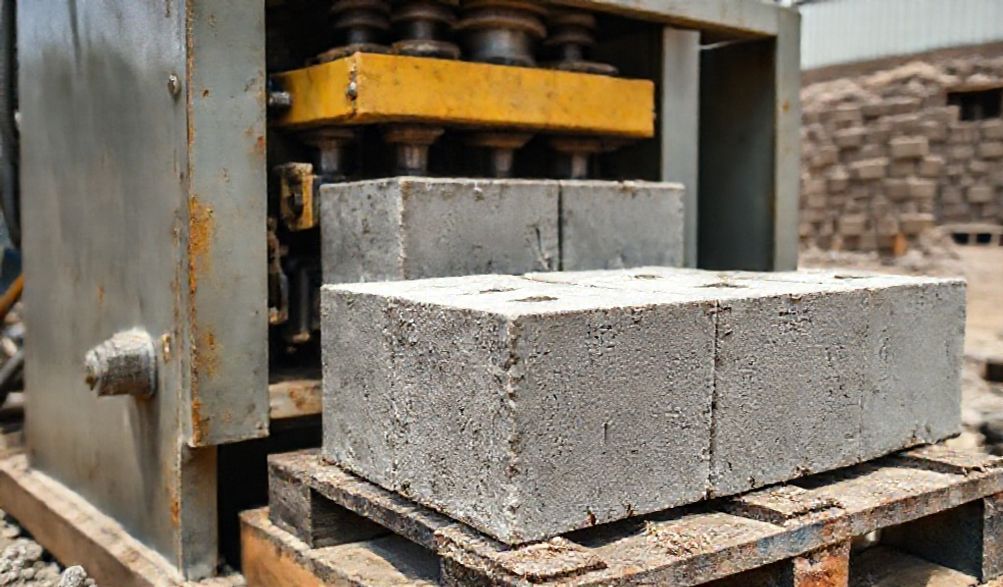
Le Guide Ultime des Machines à Fabriquer des Blocs au Ghana : Types, Prix et Meilleurs Fournisseurs (2024)
Introduction
Le paysage urbain du Ghana est en pleine mutation. Des rues animées d'Accra aux centres urbains en expansion de Kumasi et Tamale, un boom de la construction est en cours, alimenté par la croissance démographique, l'urbanisation et d'importants projets d'infrastructure. Au cœur de presque chacune de ces structures se trouve un matériau de construction fondamental : le bloc de béton. Pour les entrepreneurs, les contractants et les entreprises de construction, cela représente une opportunité cruciale. Mais le succès dépend d'une décision critique : choisir la bonne machine à fabriquer les blocs.
Naviguer sur le marché des machines à fabriquer des blocs au Ghana peut s'avérer complexe. Avec des options allant de simples presses manuelles à des usines entièrement automatisées, et des prix variant considérablement, réaliser un investissement éclairé est primordial. Ce guide est élaboré à partir d'années d'engagement direct avec le secteur des machines de construction au Ghana. Nous avons analysé les tendances du marché, examiné des fournisseurs à travers le pays et recueilli des conseils pratiques auprès de producteurs de blocs qui ont réussi.
Notre objectif est simple : vous offrir une ressource complète, impartiale et pratique. Nous démystifierons les différents types de machines, fournirons des fourchettes de prix transparentes pour 2024 en Cedis ghanéens (GHS), mettrons en lumière les caractéristiques clés qui comptent dans le contexte local, et, plus important encore, nous vous montrerons comment identifier un fournisseur digne de confiance. Considérez ceci comme votre feuille de route pour un investissement solide et rentable dans l'avenir du bâtiment au Ghana.
Pourquoi investir dans une machine à fabriquer des blocs au Ghana ?
Avant de plonger dans les spécifications et les prix, il est crucial de comprendre le "pourquoi". Investir dans la production de blocs ne consiste pas seulement à acheter une machine ; c'est s'engager dans un marché dynamique aux avantages tangibles.
Croissance de l'industrie de la construction au Ghana : Opportunités pour les producteurs de blocs
Les chiffres parlent d'eux-mêmes. La priorité du gouvernement en matière d'infrastructures—routes, ponts, projets de logements abordables comme l'initiative Saglemi—et un secteur immobilier privé florissant génèrent une demande soutenue en matériaux de construction. Les blocs de béton restent le matériau de prédilection pour les murs en raison de leur rentabilité, de leur durabilité et de leurs propriétés thermiques. En investissant dans la capacité de production, vous vous positionnez directement au sein de cette chaîne de valeur, en fournissant un produit dont la demande est constante et élevée.
Analyse Coût-Avantage : Posséder une Machine vs Acheter des Blocs
Pour les entrepreneurs, le calcul est convaincant. Alors que l'achat de blocs auprès d'un fournisseur externe implique des coûts directs, posséder sa propre machine transforme une dépense récurrente en un actif immobilisé. Avec le temps, le coût par bloc produit en interne est nettement inférieur. Vous obtenez le contrôle sur :
* Qualité :Assurez-vous que chaque bloc répond aux normes spécifiques de résistance et de dimensions de votre projet.
* Fourniture :Éliminez les retards et les tracas logistiques liés aux fournisseurs externes.
* Emploi du temps :Produisez des blocs à la demande, exactement quand votre calendrier de projet l'exige.
* Centre de profit :La production excédentaire peut être vendue à d'autres entrepreneurs, générant ainsi une source de revenus supplémentaire.
Soutenir le Développement Local et la Création d'Emplois
Au-delà du profit personnel, cet investissement a un effet multiplicateur sur la communauté. La création d'une entreprise de production de blocs, même à petite échelle, génère des emplois directs pour les opérateurs de machines, les manœuvres et les chauffeurs. Elle stimule les activités économiques locales annexes, des fournisseurs de matières premières (sable, gravier) aux services de transport. Vous ne construisez pas seulement des structures ; vous contribuez à la résilience et au développement économiques locaux.
Types de machines de fabrication de blocs disponibles au Ghana
La "bonne" machine dépend entièrement de l'échelle de votre entreprise, de votre budget et de vos objectifs de production. Voici un aperçu des principaux types disponibles sur le marché ghanéen.
Machines à blocs manuelles
- Description & Utilisateur Idéal :Ce sont des presses manuelles, comme les populaires machines "pondeuses" ou les presses manuelles stationnaires. Elles constituent le point d'entrée dans le secteur, idéales pour les très petites startups, les constructeurs individuels ou les projets communautaires disposant d'un capital limité.
- Capacité de sortie :Généralement 300 à 800 blocs par journée de 8 heures, selon l'efficacité de l'opérateur.
- Avantages :
- Coût d'investissement initial très faible.
- Facile à comprendre et à utiliser avec un minimum de formation.
- Faible entretien, aucune dépendance à l'électricité ou au diesel.
- Inconvénients :
- Très exigeant en main-d'œuvre et physiquement pénible.
- Faible rendement inadapté aux contrats commerciaux.
- Qualité de bloc incohérente si elle n'est pas manipulée avec soin.
Machines à fabriquer des blocs semi-automatiques
- Description & Utilisateur Idéal :Cette catégorie représente le « point idéal » pour la plupart des petites et moyennes entreprises (PME) au Ghana. Ces machines utilisent un système mécanique ou hydraulique, souvent avec une table vibrante, pour compacter le béton. L'opération implique d'alimenter manuellement la bétonnière et de déplacer les palettes ou les blocs, mais le processus central de compactage est motorisé.
- Plage de sortie :Une machine semi-automatique robuste peut produire entre 2 000 et 5 000 blocs en un poste de 8 heures.
- Types de Blocs Courants : They offer excellent versatility with interchangeable moulds for 9″, 6″, and 4″ solid blocks, hollow blocks (often 4-6 inch), and paving bricks (interlocking or standard).
Machines à fabriquer des blocs entièrement automatiques
- Description & Utilisateur Idéal : Designed for large-scale commercial production, these are complete systems. They integrate automatic batching, mixing, conveying, block molding, curing, and stacking. Human intervention is minimal, primarily for monitoring and maintenance.
- Investment Scale: This is a major industrial investment requiring significant capital, space, and a reliable three-phase power supply. Output can exceed 10,000 blocks per day.
- Infrastructure requise : A large, paved yard for block curing and storage, and potentially a dedicated shed for the machine and control systems.
Mobile vs. Stationary Block Machines: Which is Better for Your Site?
This is a critical consideration for contractors.
* Machines à blocs mobiles : Mounted on a trailer, these can be towed directly to a construction site. This eliminates block transportation costs and damage, ideal for large, remote projects. They are typically diesel-powered.
* Machines à blocs stationnaires : Set up in a fixed location (a production yard). They are generally more heavy-duty, offer higher output, and benefit from established workflows for material supply and block storage. They are better suited for a dedicated block-selling business.
Caractéristiques clés à considérer avant l'achat
Look beyond the brochure. These features will determine your long-term success and profitability.
Production Capacity (Blocks per Hour/Day): Matching Output to Your Business Plan
Don’t buy based on a theoretical maximum. Consider realistic, sustainable output. A machine rated for 5,000 blocks/day might only achieve 3,500 under normal working conditions. Assess your current and projected demand. Over-investing leads to idle capital; under-investing means missed opportunities.
Block Types and Moulds: Versatility for Market Demand
The ability to produce different block types future-proofs your investment. Ensure the supplier offers a range of standard moulds and that additional moulds can be sourced later. The demand for hollow blocks (lighter, better insulation) and paving bricks for landscaping is growing rapidly in Ghana.
Power Source: Electric, Diesel, or Manual? Considering Ghana’s Power Context
- Électrique : Cleaner, quieter, and lower operating cost, but vulnerable to “dumsor” (power outages). A generator backup is almost mandatory.
- Diesel : Higher fuel cost and noise, but offers complete independence from the grid. Essential for mobile machines or areas with unreliable power.
- Manuel : Only for the smallest scale; not feasible for commercial production.
Durability & After-Sales Support: The Most Critical Factor for Ghana
This cannot be overstated. A machine is a long-term asset. Prioritize build quality: thick steel frames, reputable brand hydraulics, and powerful vibration motors. Crucially, after-sales support is more important than the initial price. You must have answers to:
* Where is the supplier’s workshop located?
* Do they stock critical spare parts (springs, shafts, hydraulic seals)?
* What is their response time for technical support?
* Do they provide comprehensive operator training?
Price Range of Block Making Machines in Ghana (2024)
Prices are indicative ranges in Ghana Cedis (GHS) and can vary based on brand, configuration, and supplier. Always get a formal quotation.
Manual Machine Prices (GHS Range)
- Basic Egg-Layer / Manual Press: GHS 3,000 – GHS 8,000
Semi-Automatic Machine Prices (GHS Range)
- Single Mould Stationary Machine: GHS 25,000 – GHS 60,000
- Multi-Mould (3-4) Stationary Machine: GHS 65,000 – GHS 120,000
- Mobile Block Machine (Diesel): GHS 80,000 – GHS 180,000
Fully Automatic Plant Investment Costs (GHS Range)
- This is a custom project. Budget GHS 300,000 to well over GHS 1,000,000+ for a complete setup with mixer, conveyor, block machine, and pallet return system.
Important Note: Factors Affecting Final Price
The sticker price is not the final cost. Factor in:
* Droits de douane et taxes : If dealing directly with an overseas supplier.
* Shipping and Logistics: Cost of delivery to your site.
* Installation and Commissioning:Certains fournisseurs l'incluent, d'autres facturent un supplément.
* Initial Set of Moulds: Often sold separately.
* Foundation/Setup Costs: For stationary machines.
How to Choose a Reliable Supplier in Ghana
Mitigating risk at this stage saves immense cost and stress later.
Local Dealers vs. Direct Import: A Balanced View
- Local Dealer: Higher price, but you pay for peace of mind. You get local warranty, faster service, available spare parts, and hands-on training. This is the recommended route for most buyers.
- Direct Import (e.g., from China): Lower upfront cost, but high risk. You handle all shipping, customs, and taxes. After-sales support is often slow (via email) or non-existent. Spare parts can take months to arrive.
Vetting Your Supplier: Checklist
Do not buy from a brochure or website alone. Your due diligence must include:
1. Physical Visit: Insist on visiting their showroom or workshop in Accra, Tema, or Kumasi. See the machines.
2. Références clients : Ask for contacts of 2-3 recent buyers. Call them. Ask about machine performance and the supplier’s service responsiveness.
3. Spare Parts Inventory: Ask to see their spare parts store. A serious supplier will have common wear parts in stock.
4. Warranty Terms: Get the warranty in writing. What is covered (parts/labor)? For how long? What are the terms?
The Importance of Training and Comprehensive After-Sales Service
A proper supplier will provide 1-2 days of training for your operators on-site. This training should cover operation, daily maintenance, and basic troubleshooting. Confirm their service team’s availability and typical response time.
Red Flags to Avoid When Purchasing Machinery
- Supplier who only communicates online with no physical address.
- Unrealistically low prices compared to the market.
- Pressure to pay 100% upfront before delivery.
- Vague or verbal warranty promises.
- Inability to provide local client references.
Top Block Making Machine Brands and Suppliers in Ghana
This is an unbiased overview based on market presence and reputation, not a paid listing.
Overview of Reputable International Brands Available Locally
Several global brands have established a presence through local distributors. These include:
* Zenith (Germany): Known for high-quality, fully automatic plants.
* QGM (Germany/China): Offers a wide range from semi to fully automatic.
* Bess (Turkey): Popular for robust semi-automatic and automatic machines.
* Prensoland (Spain): A premium brand for stationary machines.
* Various Chinese Brands (Hongfa, Lontto, etc.): Offer a wide price range; quality varies significantly, so supplier vetting is critical.
Established Local Ghanaian Distributors and Their Specialties
Numerous well-established Ghanaian companies import, stock, and service these machines. Look for distributors with a long track record (10+ years) in the construction equipment space. Many are clustered in industrial areas of Tema, Accra (Spintex, Industrial Area), and Kumasi. Their specialty often lies in the mid-range semi-automatic and stationary automatic machines that serve the core of the Ghanaian market.
Tips for Getting the Best Quotation and Service Agreement
- Be Specific: Provide your required block types, daily output target, and power source preference.
- Get Multiple Quotes: Approach 3-4 reputable suppliers with the same specifications.
- Compare Apples to Apples: Ensure quotes include the same items (machine, moulds, training, delivery, warranty).
- Negotiate the Service Contract: Discuss and agree on service response times and spare parts availability as part of the deal.
Operating and Maintaining Your Block Machine for Longevity
Your machine’s productivity is directly tied to how you care for it.
Best Practices for Efficient Operation
- Follow the recommended concrete mix design (cement-sand-aggregate ratio) precisely.
- Ensure raw materials are clean and free of debris.
- Keep the machine, especially the moulds and vibration table, clean after every production run.
Routine Maintenance Schedule to Prevent Downtime
- Daily: Lubricate all moving parts as per manual. Check for loose bolts and nuts.
- Weekly: Inspect hydraulic hoses for leaks. Check vibration motor mounts.
- Monthly: Thoroughly clean and inspect the entire machine. Replace any visibly worn parts immediately.
Sourcing Quality Raw Materials (Cement, Sand, Aggregate) in Ghana
Block strength starts with material quality.
* Ciment : Use fresh, branded cement (GHACEM, Diamond, etc.) from reputable distributors. Avoid damp or clumped cement.
* Sable: Use coarse, sharp sand (from places like Shai Hills) for better bonding. Avoid fine, “silty” sand.
* Aggregate (Quarry Dust/Granite): Ensure it is well-graded and clean. The quality of your aggregate is a major determinant of final block strength.
FAQ Section
Q1: What is the cheapest block making machine I can get in Ghana?
A: The cheapest option is a manual egg-layer or press machine, costing between GHS 3,000 – GHS 8,000. However, be aware of its severe limitations in output and labor requirements. It’s only suitable for very small, personal projects, not a commercial venture.
Q2: How many blocks can a semi-automatic machine produce in a day?
A: A well-operated semi-automatic machine can produce between 2,000 to 5,000 standard 9-inch blocks in an 8-hour shift. The actual yield depends on the machine model, number of operators, efficiency of the workflow, and block type (smaller blocks like 4″ or pavers can have higher counts).
Q3: Can I get a loan or financing for a block machine in Ghana?
A: Yes, options exist. Some equipment suppliers offer in-house installment plans. Alternatively, you can explore business loans from banks or microfinance institutions. A solid business plan is essential for loan approval.
Q4: What is the most common problem with block machines in Ghana, and how do I fix it?
A: A common issue is blocks sticking to the moulds or breaking during ejection. This is often caused by insufficient vibration time, an incorrect or wet concrete mix, or worn/dirty moulds. The fix is to adjust the mix consistency, ensure proper compaction time, and regularly clean and apply a recommended mould oil. For persistent mechanical issues, always contact your supplier’s service team.
Q5: Are there any government regulations or standards for block production in Ghana?
A: Yes. The Ghana Standards Authority (GSA) has guidelines for concrete blocks (e.g., GS 719). These specify required compressive strengths for load-bearing and non-load-bearing blocks. Adhering to these standards is crucial for producing quality, marketable blocks, especially for official projects.
Conclusion
Investing in a block making machine in Ghana is a strategic decision with the potential for significant reward. The journey begins with a clear understanding of your own needs and the local market dynamics. Remember, the goal is not to find the cheapest machine, but the most appropriate and reliable one for your business scale.
Prioritize durability and, above all, proven after-sales support from your supplier. The relationships you build with a trustworthy distributor are as valuable as the machine itself. We encourage you to use this guide as a foundation for your research. Visit multiple suppliers, inspect their machines, talk to their past clients, and ask detailed questions.
Arm yourself with this knowledge, and you will be equipped to make a confident, profitable investment that contributes to building Ghana, one block at a time.
<