
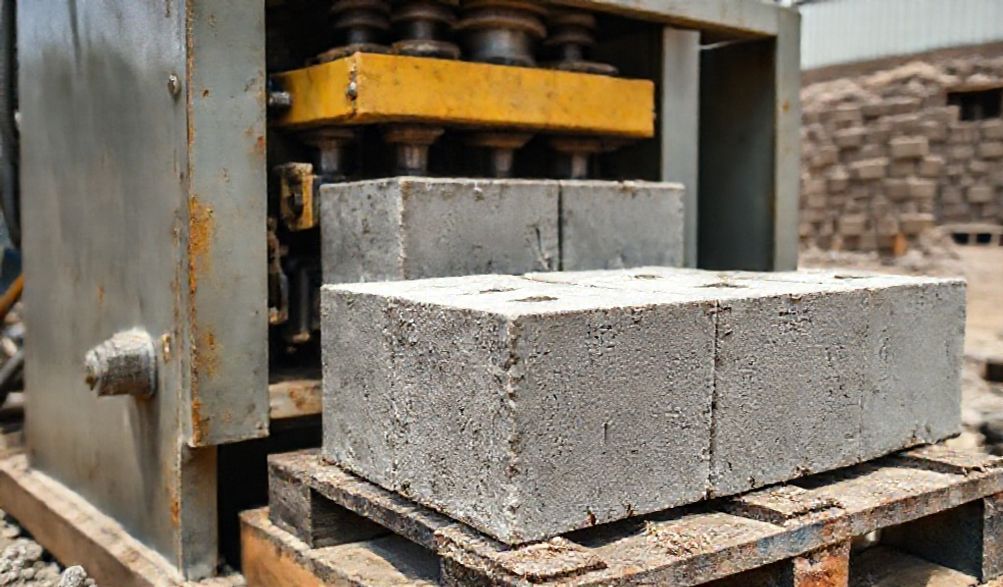
Hướng Dẫn Toàn Diện Về Máy Sản Xuất Gạch Tại Ghana: Các Loại, Giá Cả & Nhà Cung Cấp Hàng Đầu (2024)
Giới thiệu
Bầu trời Ghana đang thay đổi. Từ những con phố nhộn nhịp ở Accra đến các trung tâm đô thị đang phát triển ở Kumasi và Tamale, một làn sóng xây dựng đang diễn ra mạnh mẽ, được thúc đẩy bởi sự gia tăng dân số, đô thị hóa và các dự án cơ sở hạ tầng quy mô lớn. Trọng tâm của hầu hết mọi công trình này đều nằm ở một vật liệu xây dựng cơ bản: khối bê tông. Đối với các doanh nhân, nhà thầu và công ty xây dựng, đây là một cơ hội then chốt. Nhưng thành công phụ thuộc vào một quyết định quan trọng — lựa chọn đúng máy sản xuất khối bê tông.
Việc tìm hiểu thị trường máy sản xuất gạch block tại Ghana có thể khá phức tạp. Với nhiều lựa chọn từ máy ép thủ công đơn giản đến các nhà máy tự động hoàn toàn, cùng mức giá chênh lệch lớn, việc đưa ra quyết định đầu tư sáng suốt là vô cùng quan trọng. Hướng dẫn này được đúc kết từ nhiều năm kinh nghiệm trực tiếp trong lĩnh vực máy móc xây dựng tại Ghana. Chúng tôi đã phân tích xu hướng thị trường, thẩm định các nhà cung cấp trên toàn quốc, và thu thập những kinh nghiệm thực tiễn từ các nhà sản xuất gạch block thành công.
Mục tiêu của chúng tôi rất đơn giản: cung cấp cho bạn một nguồn thông tin toàn diện, khách quan và thiết thực. Chúng tôi sẽ giải mã các loại máy móc khác nhau, cung cấp mức giá minh bạch năm 2024 bằng Cedi Ghana (GHS), làm nổi bật những tính năng quan trọng trong bối cảnh địa phương, và quan trọng nhất là hướng dẫn bạn cách xác định một nhà cung cấp đáng tin cậy. Hãy xem đây như lộ trình giúp bạn thực hiện một khoản đầu tư vững chắc và sinh lời, góp phần xây dựng tương lai của Ghana.
Tại sao nên đầu tư vào máy sản xuất gạch ở Ghana?
Trước khi đi sâu vào thông số kỹ thuật và giá cả, điều quan trọng là phải hiểu "lý do tại sao." Đầu tư vào sản xuất khối không chỉ đơn thuần là mua một cỗ máy; mà là tham gia vào một thị trường năng động với những lợi ích hữu hình.
Sự Phát Triển của Ngành Xây Dựng Ghana: Cơ Hội cho Nhà Sản Xuất Khối Xây
Các con số đã nói lên tất cả. Việc chính phủ tập trung vào cơ sở hạ tầng—đường xá, cầu cống, các dự án nhà ở giá rẻ như sáng kiến Saglemi—cùng với khu vực bất động sản tư nhân đang phát triển mạnh tạo ra nhu cầu ổn định cho vật liệu xây dựng. Gạch bê tông vẫn là vật liệu xây tường được ưa chuộng nhờ tính hiệu quả về chi phí, độ bền và khả năng cách nhiệt. Bằng cách đầu tư vào năng lực sản xuất, bạn sẽ tự định vị mình ngay trong chuỗi giá trị này, cung cấp một sản phẩm có nhu cầu cao và ổn định.
Phân Tích Chi Phí - Lợi Ích: Sở Hữu Máy So Với Mua Khối
Đối với các nhà thầu, con số tính toán rất thuyết phục. Trong khi việc mua khối từ nhà cung cấp bên thứ ba bao gồm các chi phí trực tiếp, sở hữu máy móc của riêng mình biến một khoản chi phí định kỳ thành tài sản cố định. Theo thời gian, chi phí cho mỗi khối sản xuất nội bộ thấp hơn đáng kể. Bạn giành được quyền kiểm soát đối với:
* Chất lượng:Đảm bảo mỗi khối đáp ứng các tiêu chuẩn về độ bền và kích thước cụ thể của dự án bạn.
* Cung cấp:Loại bỏ sự chậm trễ và những vấn đề hậu cần từ các nhà cung cấp bên ngoài.
* Schedule: Produce blocks on-demand, exactly when your project timeline requires them.
* Profit Center: Excess production can be sold to other contractors, creating an additional revenue stream.
Supporting Local Development and Job Creation
Beyond personal profit, this investment has a community multiplier effect. Establishing a block production enterprise, even a small-scale one, creates direct employment for machine operators, laborers, and drivers. It stimulates ancillary local businesses, from raw material suppliers (sand, gravel) to transportation services. You’re not just building structures; you’re contributing to local economic resilience and development.
Types of Block Making Machines Available in Ghana
The “right” machine depends entirely on your business scale, budget, and production goals. Here’s a breakdown of the primary types available in the Ghanaian market.
Máy Sản Xuất Gạch Thủ Công
- Description & Ideal User: These are hand-operated presses, such as the popular “egg-layer” or stationary manual machines. They are the entry point into the business, ideal for very small-scale startups, individual builders, or community projects with limited capital.
- Công suất đầu ra: Typically 300-800 blocks per 8-hour day, depending on operator efficiency.
- Ưu điểm:
- Chi phí đầu tư ban đầu rất thấp.
- Simple to understand and operate with minimal training.
- Low maintenance, no reliance on electricity or diesel.
- Nhược điểm:
- Đòi hỏi lao động thủ công cao và cường độ thể chất lớn.
- Low output unsuitable for commercial contracts.
- Inconsistent block quality if not operated carefully.
Máy Làm Khối Bán Tự Động
- Description & Ideal User: This category represents the “sweet spot” for most small and medium-sized enterprises (SMEs) in Ghana. These machines use a mechanical or hydraulic system, often with a vibrating table, to compact the concrete. Operation involves manually feeding the mixer and moving pallets or blocks, but the core compaction process is powered.
- Phạm vi đầu ra A robust semi-automatic machine can produce between 2,000 to 5,000 blocks in an 8-hour shift.
- Các Loại Khối Phổ Biến: They offer excellent versatility with interchangeable moulds for 9″, 6″, and 4″ solid blocks, hollow blocks (often 4-6 inch), and paving bricks (interlocking or standard).
Máy Làm Khối Tự Động Hoàn Toàn
- Description & Ideal User: Designed for large-scale commercial production, these are complete systems. They integrate automatic batching, mixing, conveying, block molding, curing, and stacking. Human intervention is minimal, primarily for monitoring and maintenance.
- Investment Scale: This is a major industrial investment requiring significant capital, space, and a reliable three-phase power supply. Output can exceed 10,000 blocks per day.
- Cơ sở hạ tầng cần thiết: A large, paved yard for block curing and storage, and potentially a dedicated shed for the machine and control systems.
Mobile vs. Stationary Block Machines: Which is Better for Your Site?
This is a critical consideration for contractors.
* Máy đúc khối di động: Mounted on a trailer, these can be towed directly to a construction site. This eliminates block transportation costs and damage, ideal for large, remote projects. They are typically diesel-powered.
* Máy Định Vị Khối Cố Định: Set up in a fixed location (a production yard). They are generally more heavy-duty, offer higher output, and benefit from established workflows for material supply and block storage. They are better suited for a dedicated block-selling business.
Key Features to Consider Before Buying
Look beyond the brochure. These features will determine your long-term success and profitability.
Production Capacity (Blocks per Hour/Day): Matching Output to Your Business Plan
Don’t buy based on a theoretical maximum. Consider realistic, sustainable output. A machine rated for 5,000 blocks/day might only achieve 3,500 under normal working conditions. Assess your current and projected demand. Over-investing leads to idle capital; under-investing means missed opportunities.
Block Types and Moulds: Versatility for Market Demand
The ability to produce different block types future-proofs your investment. Ensure the supplier offers a range of standard moulds and that additional moulds can be sourced later. The demand for hollow blocks (lighter, better insulation) and paving bricks for landscaping is growing rapidly in Ghana.
Power Source: Electric, Diesel, or Manual? Considering Ghana’s Power Context
- Điện: Cleaner, quieter, and lower operating cost, but vulnerable to “dumsor” (power outages). A generator backup is almost mandatory.
- Đi-ê-zen Higher fuel cost and noise, but offers complete independence from the grid. Essential for mobile machines or areas with unreliable power.
- Hướng dẫn sử dụng: Only for the smallest scale; not feasible for commercial production.
Durability & After-Sales Support: The Most Critical Factor for Ghana
This cannot be overstated. A machine is a long-term asset. Prioritize build quality: thick steel frames, reputable brand hydraulics, and powerful vibration motors. Crucially, after-sales support is more important than the initial price. You must have answers to:
* Where is the supplier’s workshop located?
* Do they stock critical spare parts (springs, shafts, hydraulic seals)?
* What is their response time for technical support?
* Do they provide comprehensive operator training?
Price Range of Block Making Machines in Ghana (2024)
Prices are indicative ranges in Ghana Cedis (GHS) and can vary based on brand, configuration, and supplier. Always get a formal quotation.
Manual Machine Prices (GHS Range)
- Basic Egg-Layer / Manual Press: GHS 3,000 – GHS 8,000
Semi-Automatic Machine Prices (GHS Range)
- Single Mould Stationary Machine: GHS 25,000 – GHS 60,000
- Multi-Mould (3-4) Stationary Machine: GHS 65,000 – GHS 120,000
- Mobile Block Machine (Diesel): GHS 80,000 – GHS 180,000
Fully Automatic Plant Investment Costs (GHS Range)
- This is a custom project. Budget GHS 300,000 to well over GHS 1,000,000+ for a complete setup with mixer, conveyor, block machine, and pallet return system.
Important Note: Factors Affecting Final Price
The sticker price is not the final cost. Factor in:
* Thuế và Phí Nhập Khẩu: If dealing directly with an overseas supplier.
* Shipping and Logistics: Cost of delivery to your site.
* Installation and Commissioning: Some suppliers include this, others charge extra.
* Initial Set of Moulds: Often sold separately.
* Foundation/Setup Costs: For stationary machines.
How to Choose a Reliable Supplier in Ghana
Mitigating risk at this stage saves immense cost and stress later.
Local Dealers vs. Direct Import: A Balanced View
- Local Dealer: Higher price, but you pay for peace of mind. You get local warranty, faster service, available spare parts, and hands-on training. This is the recommended route for most buyers.
- Direct Import (e.g., from China): Lower upfront cost, but high risk. You handle all shipping, customs, and taxes. After-sales support is often slow (via email) or non-existent. Spare parts can take months to arrive.
Vetting Your Supplier: Checklist
Do not buy from a brochure or website alone. Your due diligence must include:
1. Physical Visit: Insist on visiting their showroom or workshop in Accra, Tema, or Kumasi. See the machines.
2. Client References: Ask for contacts of 2-3 recent buyers. Call them. Ask about machine performance and the supplier’s service responsiveness.
3. Spare Parts Inventory: Ask to see their spare parts store. A serious supplier will have common wear parts in stock.
4. Warranty Terms: Get the warranty in writing. What is covered (parts/labor)? For how long? What are the terms?
The Importance of Training and Comprehensive After-Sales Service
A proper supplier will provide 1-2 days of training for your operators on-site. This training should cover operation, daily maintenance, and basic troubleshooting. Confirm their service team’s availability and typical response time.
Red Flags to Avoid When Purchasing Machinery
- Supplier who only communicates online with no physical address.
- Unrealistically low prices compared to the market.
- Pressure to pay 100% upfront before delivery.
- Vague or verbal warranty promises.
- Inability to provide local client references.
Top Block Making Machine Brands and Suppliers in Ghana
This is an unbiased overview based on market presence and reputation, not a paid listing.
Overview of Reputable International Brands Available Locally
Several global brands have established a presence through local distributors. These include:
* Zenith (Germany): Known for high-quality, fully automatic plants.
* QGM (Germany/China): Offers a wide range from semi to fully automatic.
* Bess (Turkey): Popular for robust semi-automatic and automatic machines.
* Prensoland (Spain): A premium brand for stationary machines.
* Various Chinese Brands (Hongfa, Lontto, etc.): Offer a wide price range; quality varies significantly, so supplier vetting is critical.
Established Local Ghanaian Distributors and Their Specialties
Numerous well-established Ghanaian companies import, stock, and service these machines. Look for distributors with a long track record (10+ years) in the construction equipment space. Many are clustered in industrial areas of Tema, Accra (Spintex, Industrial Area), and Kumasi. Their specialty often lies in the mid-range semi-automatic and stationary automatic machines that serve the core of the Ghanaian market.
Tips for Getting the Best Quotation and Service Agreement
- Be Specific: Provide your required block types, daily output target, and power source preference.
- Get Multiple Quotes: Approach 3-4 reputable suppliers with the same specifications.
- Compare Apples to Apples: Ensure quotes include the same items (machine, moulds, training, delivery, warranty).
- Negotiate the Service Contract: Discuss and agree on service response times and spare parts availability as part of the deal.
Operating and Maintaining Your Block Machine for Longevity
Your machine’s productivity is directly tied to how you care for it.
Best Practices for Efficient Operation
- Follow the recommended concrete mix design (cement-sand-aggregate ratio) precisely.
- Ensure raw materials are clean and free of debris.
- Keep the machine, especially the moulds and vibration table, clean after every production run.
Routine Maintenance Schedule to Prevent Downtime
- Hàng ngày: Lubricate all moving parts as per manual. Check for loose bolts and nuts.
- Hàng tuần: Inspect hydraulic hoses for leaks. Check vibration motor mounts.
- Monthly: Thoroughly clean and inspect the entire machine. Replace any visibly worn parts immediately.
Sourcing Quality Raw Materials (Cement, Sand, Aggregate) in Ghana
Block strength starts with material quality.
* Xi măng: Use fresh, branded cement (GHACEM, Diamond, etc.) from reputable distributors. Avoid damp or clumped cement.
* Cát Use coarse, sharp sand (from places like Shai Hills) for better bonding. Avoid fine, “silty” sand.
* Aggregate (Quarry Dust/Granite): Ensure it is well-graded and clean. The quality of your aggregate is a major determinant of final block strength.
FAQ Section
Q1: What is the cheapest block making machine I can get in Ghana?
A: The cheapest option is a manual egg-layer or press machine, costing between GHS 3,000 – GHS 8,000. However, be aware of its severe limitations in output and labor requirements. It’s only suitable for very small, personal projects, not a commercial venture.
Q2: How many blocks can a semi-automatic machine produce in a day?
A: A well-operated semi-automatic machine can produce between 2,000 to 5,000 standard 9-inch blocks in an 8-hour shift. The actual yield depends on the machine model, number of operators, efficiency of the workflow, and block type (smaller blocks like 4″ or pavers can have higher counts).
Q3: Can I get a loan or financing for a block machine in Ghana?
A: Yes, options exist. Some equipment suppliers offer in-house installment plans. Alternatively, you can explore business loans from banks or microfinance institutions. A solid business plan is essential for loan approval.
Q4: What is the most common problem with block machines in Ghana, and how do I fix it?
A: A common issue is blocks sticking to the moulds or breaking during ejection. This is often caused by insufficient vibration time, an incorrect or wet concrete mix, or worn/dirty moulds. The fix is to adjust the mix consistency, ensure proper compaction time, and regularly clean and apply a recommended mould oil. For persistent mechanical issues, always contact your supplier’s service team.
Q5: Are there any government regulations or standards for block production in Ghana?
A: Yes. The Ghana Standards Authority (GSA) has guidelines for concrete blocks (e.g., GS 719). These specify required compressive strengths for load-bearing and non-load-bearing blocks. Adhering to these standards is crucial for producing quality, marketable blocks, especially for official projects.
Conclusion
Investing in a block making machine in Ghana is a strategic decision with the potential for significant reward. The journey begins with a clear understanding of your own needs and the local market dynamics. Remember, the goal is not to find the cheapest machine, but the most appropriate and reliable one for your business scale.
Prioritize durability and, above all, proven after-sales support from your supplier. The relationships you build with a trustworthy distributor are as valuable as the machine itself. We encourage you to use this guide as a foundation for your research. Visit multiple suppliers, inspect their machines, talk to their past clients, and ask detailed questions.
Arm yourself with this knowledge, and you will be equipped to make a confident, profitable investment that contributes to building Ghana, one block at a time.
<