
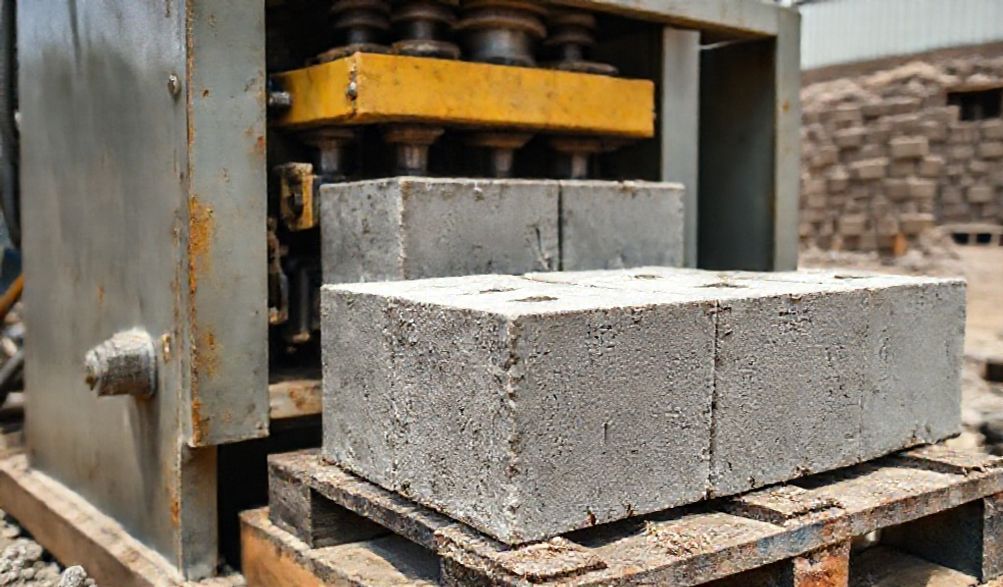
Guia Definitivo para Máquinas de Fabricação de Blocos em Gana: Tipos, Preços e Principais Fornecedores (2024)
Introdução
O horizonte de Gana está se transformando. Das movimentadas ruas de Acra aos crescentes centros urbanos de Kumasi e Tamale, um boom de construção está em andamento, impulsionado pelo crescimento populacional, urbanização e projetos significativos de infraestrutura. No cerne de quase todas essas estruturas está um material de construção fundamental: o bloco de concreto. Para empreendedores, contratantes e empresas de construção, isso representa uma oportunidade crucial. Mas o sucesso depende de uma decisão crítica — escolher a máquina de fazer blocos certa.
Navegar pelo mercado de máquinas de fabricação de blocos em Gana pode ser complexo. Com opções que variam de prensas manuais simples a plantas totalmente automatizadas, e preços que oscilam drasticamente, fazer um investimento bem informado é fundamental. Este guia foi elaborado a partir de anos de envolvimento direto com o setor de máquinas de construção de Gana. Analisamos as tendências do mercado, examinamos fornecedores em todo o país e coletamos insights práticos de produtores de blocos bem-sucedidos.
Nosso objetivo é simples: fornecer a você um recurso abrangente, imparcial e prático. Vamos desmistificar os diferentes tipos de máquinas, fornecer faixas de preços transparentes para 2024 em Cedis Ganenses (GHS), destacar as principais características que importam no contexto local e, mais importante, mostrar como identificar um fornecedor confiável. Considere este o seu roteiro para um investimento sólido e lucrativo no futuro da construção em Gana.
Por que investir em uma máquina de fabricação de blocos em Gana?
Antes de mergulhar nas especificações e preços, é crucial entender o "porquê". Investir na produção de blocos não se trata apenas de comprar uma máquina; trata-se de acessar um mercado dinâmico com benefícios tangíveis.
Crescimento da Indústria da Construção em Gana: Oportunidades para Produtores de Blocos
Os números falam por si mesmos. O foco do governo em infraestrutura — estradas, pontes, projetos habitacionais acessíveis como a iniciativa Saglemi — e um setor imobiliário privado próspero criam uma demanda sustentada por materiais de construção. Os blocos de concreto continuam sendo o material de vedação preferido devido ao seu custo-benefício, durabilidade e propriedades térmicas. Ao investir em capacidade de produção, você se posiciona diretamente dentro dessa cadeia de valor, fornecendo um produto com demanda alta e consistente.
Análise de Custo-Benefício: Possuir uma Máquina vs. Comprar Blocos
Para os empreiteiros, a matemática é convincente. Embora a compra de blocos de um fornecedor terceirizado envolva custos diretos, possuir sua própria máquina transforma uma despesa recorrente em um ativo de capital. Com o tempo, o custo por bloco produzido internamente é significativamente menor. Você ganha controle sobre:
* Qualidade:Garanta que cada bloco atenda aos padrões específicos de resistência e dimensão do seu projeto.
* Fornecer:Elimine atrasos e dores de cabeça logísticas de fornecedores externos.
* Cronograma:Produza blocos sob demanda, exatamente quando o cronograma do seu projeto exigir.
* Centro de LucroO excesso de produção pode ser vendido para outros contratantes, criando uma fonte de receita adicional.
Apoiando o Desenvolvimento Local e a Criação de Empregos
Além do lucro pessoal, este investimento tem um efeito multiplicador na comunidade. Estabelecer uma empresa de produção de blocos, mesmo que em pequena escala, cria empregos diretos para operadores de máquinas, trabalhadores braçais e motoristas. Estimula negócios locais auxiliares, desde fornecedores de matéria-prima (areia, brita) até serviços de transporte. Você não está apenas construindo estruturas; está contribuindo para a resiliência e o desenvolvimento econômico local.
Tipos de Máquinas de Fabricação de Blocos Disponíveis em Gana
A "máquina certa" depende inteiramente da escala do seu negócio, orçamento e objetivos de produção. Aqui está uma análise dos principais tipos disponíveis no mercado ganense.
Máquinas Manuais para Fabricação de Blocos
- Descrição e Usuário Ideal:Essas são prensas manuais, como as populares "botadeiras" ou máquinas manuais estacionárias. Elas representam o ponto de entrada no negócio, ideais para empreendimentos em pequeníssima escala, construtores individuais ou projetos comunitários com capital limitado.
- Capacidade de Saída:Normalmente 300 a 800 blocos por dia de 8 horas, dependendo da eficiência do operador.
- Prós:
- Custo inicial de investimento muito baixo.
- Fácil de entender e operar com treinamento mínimo.
- Baixa manutenção, sem dependência de eletricidade ou diesel.
- Contras:
- Altamente intensivo em mão de obra e fisicamente exigente.
- Baixa produção inadequada para contratos comerciais.
- Qualidade de bloco inconsistente se não operado com cuidado.
Máquinas Semi-Automáticas para Fabricação de Blocos
- Descrição e Usuário Ideal:Esta categoria representa o "ponto ideal" para a maioria das pequenas e médias empresas (PMEs) em Gana. Essas máquinas utilizam um sistema mecânico ou hidráulico, frequentemente com uma mesa vibratória, para compactar o concreto. A operação envolve alimentar a betoneira manualmente e mover paletes ou blocos, mas o processo central de compactação é motorizado.
- Intervalo de Saída:Uma máquina semiautomática robusta pode produzir entre 2.000 e 5.000 blocos em um turno de 8 horas.
- Tipos Comuns de Blocos:Eles oferecem excelente versatilidade com moldes intercambiáveis para blocos maciços de 9″, 6″ e 4″, blocos vazados (geralmente de 4 a 6 polegadas) e tijolos de pavimentação (entrelaçados ou padrão).
Máquinas de Fabricação de Blocos Totalmente Automáticas
- Descrição e Usuário Ideal:Projetados para produção comercial em larga escala, estes são sistemas completos. Eles integram dosagem automática, mistura, transporte, moldagem de blocos, cura e empilhamento. A intervenção humana é mínima, principalmente para monitoramento e manutenção.
- Escala de Investimento:Este é um grande investimento industrial que exige capital significativo, espaço e um fornecimento de energia trifásico confiável. A produção pode ultrapassar 10.000 blocos por dia.
- Infraestrutura Necessária:Um grande pátio pavimentado para cura e armazenamento de blocos, e possivelmente um galpão dedicado para a máquina e sistemas de controle.
Mobile vs. Stationary Block Machines: Which is Better for Your Site?
This is a critical consideration for contractors.
* Máquinas de Blocos Móveis: Mounted on a trailer, these can be towed directly to a construction site. This eliminates block transportation costs and damage, ideal for large, remote projects. They are typically diesel-powered.
* Máquinas de Blocos Estacionárias: Set up in a fixed location (a production yard). They are generally more heavy-duty, offer higher output, and benefit from established workflows for material supply and block storage. They are better suited for a dedicated block-selling business.
Key Features to Consider Before Buying
Look beyond the brochure. These features will determine your long-term success and profitability.
Production Capacity (Blocks per Hour/Day): Matching Output to Your Business Plan
Don’t buy based on a theoretical maximum. Consider realistic, sustainable output. A machine rated for 5,000 blocks/day might only achieve 3,500 under normal working conditions. Assess your current and projected demand. Over-investing leads to idle capital; under-investing means missed opportunities.
Block Types and Moulds: Versatility for Market Demand
The ability to produce different block types future-proofs your investment. Ensure the supplier offers a range of standard moulds and that additional moulds can be sourced later. The demand for hollow blocks (lighter, better insulation) and paving bricks for landscaping is growing rapidly in Ghana.
Power Source: Electric, Diesel, or Manual? Considering Ghana’s Power Context
- Elétrico: Cleaner, quieter, and lower operating cost, but vulnerable to “dumsor” (power outages). A generator backup is almost mandatory.
- Diesel: Higher fuel cost and noise, but offers complete independence from the grid. Essential for mobile machines or areas with unreliable power.
- Manual: Only for the smallest scale; not feasible for commercial production.
Durability & After-Sales Support: The Most Critical Factor for Ghana
This cannot be overstated. A machine is a long-term asset. Prioritize build quality: thick steel frames, reputable brand hydraulics, and powerful vibration motors. Crucially, after-sales support is more important than the initial price. You must have answers to:
* Where is the supplier’s workshop located?
* Do they stock critical spare parts (springs, shafts, hydraulic seals)?
* What is their response time for technical support?
* Do they provide comprehensive operator training?
Price Range of Block Making Machines in Ghana (2024)
Prices are indicative ranges in Ghana Cedis (GHS) and can vary based on brand, configuration, and supplier. Always get a formal quotation.
Manual Machine Prices (GHS Range)
- Basic Egg-Layer / Manual Press: GHS 3,000 – GHS 8,000
Semi-Automatic Machine Prices (GHS Range)
- Single Mould Stationary Machine: GHS 25,000 – GHS 60,000
- Multi-Mould (3-4) Stationary Machine: GHS 65,000 – GHS 120,000
- Mobile Block Machine (Diesel): GHS 80,000 – GHS 180,000
Fully Automatic Plant Investment Costs (GHS Range)
- This is a custom project. Budget GHS 300,000 to well over GHS 1,000,000+ for a complete setup with mixer, conveyor, block machine, and pallet return system.
Important Note: Factors Affecting Final Price
The sticker price is not the final cost. Factor in:
* Impostos e Taxas de Importação: If dealing directly with an overseas supplier.
* Shipping and Logistics: Cost of delivery to your site.
* Installation and Commissioning:Alguns fornecedores incluem isso, outros cobram a mais.
* Initial Set of Moulds: Often sold separately.
* Foundation/Setup Costs: For stationary machines.
How to Choose a Reliable Supplier in Ghana
Mitigating risk at this stage saves immense cost and stress later.
Local Dealers vs. Direct Import: A Balanced View
- Local Dealer: Higher price, but you pay for peace of mind. You get local warranty, faster service, available spare parts, and hands-on training. This is the recommended route for most buyers.
- Direct Import (e.g., from China): Lower upfront cost, but high risk. You handle all shipping, customs, and taxes. After-sales support is often slow (via email) or non-existent. Spare parts can take months to arrive.
Vetting Your Supplier: Checklist
Do not buy from a brochure or website alone. Your due diligence must include:
1. Physical Visit: Insist on visiting their showroom or workshop in Accra, Tema, or Kumasi. See the machines.
2. Client References: Ask for contacts of 2-3 recent buyers. Call them. Ask about machine performance and the supplier’s service responsiveness.
3. Spare Parts Inventory: Ask to see their spare parts store. A serious supplier will have common wear parts in stock.
4. Warranty Terms: Get the warranty in writing. What is covered (parts/labor)? For how long? What are the terms?
The Importance of Training and Comprehensive After-Sales Service
A proper supplier will provide 1-2 days of training for your operators on-site. This training should cover operation, daily maintenance, and basic troubleshooting. Confirm their service team’s availability and typical response time.
Red Flags to Avoid When Purchasing Machinery
- Supplier who only communicates online with no physical address.
- Unrealistically low prices compared to the market.
- Pressure to pay 100% upfront before delivery.
- Vague or verbal warranty promises.
- Inability to provide local client references.
Top Block Making Machine Brands and Suppliers in Ghana
This is an unbiased overview based on market presence and reputation, not a paid listing.
Overview of Reputable International Brands Available Locally
Several global brands have established a presence through local distributors. These include:
* Zenith (Germany): Known for high-quality, fully automatic plants.
* QGM (Germany/China): Offers a wide range from semi to fully automatic.
* Bess (Turkey): Popular for robust semi-automatic and automatic machines.
* Prensoland (Spain): A premium brand for stationary machines.
* Various Chinese Brands (Hongfa, Lontto, etc.): Offer a wide price range; quality varies significantly, so supplier vetting is critical.
Established Local Ghanaian Distributors and Their Specialties
Numerous well-established Ghanaian companies import, stock, and service these machines. Look for distributors with a long track record (10+ years) in the construction equipment space. Many are clustered in industrial areas of Tema, Accra (Spintex, Industrial Area), and Kumasi. Their specialty often lies in the mid-range semi-automatic and stationary automatic machines that serve the core of the Ghanaian market.
Tips for Getting the Best Quotation and Service Agreement
- Be Specific: Provide your required block types, daily output target, and power source preference.
- Get Multiple Quotes: Approach 3-4 reputable suppliers with the same specifications.
- Compare Apples to Apples: Ensure quotes include the same items (machine, moulds, training, delivery, warranty).
- Negotiate the Service Contract: Discuss and agree on service response times and spare parts availability as part of the deal.
Operating and Maintaining Your Block Machine for Longevity
Your machine’s productivity is directly tied to how you care for it.
Best Practices for Efficient Operation
- Follow the recommended concrete mix design (cement-sand-aggregate ratio) precisely.
- Ensure raw materials are clean and free of debris.
- Keep the machine, especially the moulds and vibration table, clean after every production run.
Routine Maintenance Schedule to Prevent Downtime
- Diário: Lubricate all moving parts as per manual. Check for loose bolts and nuts.
- Semanal: Inspect hydraulic hoses for leaks. Check vibration motor mounts.
- Mensalmente: Thoroughly clean and inspect the entire machine. Replace any visibly worn parts immediately.
Sourcing Quality Raw Materials (Cement, Sand, Aggregate) in Ghana
Block strength starts with material quality.
* Cimento: Use fresh, branded cement (GHACEM, Diamond, etc.) from reputable distributors. Avoid damp or clumped cement.
* Areia Use coarse, sharp sand (from places like Shai Hills) for better bonding. Avoid fine, “silty” sand.
* Aggregate (Quarry Dust/Granite): Ensure it is well-graded and clean. The quality of your aggregate is a major determinant of final block strength.
FAQ Section
Q1: What is the cheapest block making machine I can get in Ghana?
A: The cheapest option is a manual egg-layer or press machine, costing between GHS 3,000 – GHS 8,000. However, be aware of its severe limitations in output and labor requirements. It’s only suitable for very small, personal projects, not a commercial venture.
Q2: How many blocks can a semi-automatic machine produce in a day?
A: A well-operated semi-automatic machine can produce between 2,000 to 5,000 standard 9-inch blocks in an 8-hour shift. The actual yield depends on the machine model, number of operators, efficiency of the workflow, and block type (smaller blocks like 4″ or pavers can have higher counts).
Q3: Can I get a loan or financing for a block machine in Ghana?
A: Yes, options exist. Some equipment suppliers offer in-house installment plans. Alternatively, you can explore business loans from banks or microfinance institutions. A solid business plan is essential for loan approval.
Q4: What is the most common problem with block machines in Ghana, and how do I fix it?
A: A common issue is blocks sticking to the moulds or breaking during ejection. This is often caused by insufficient vibration time, an incorrect or wet concrete mix, or worn/dirty moulds. The fix is to adjust the mix consistency, ensure proper compaction time, and regularly clean and apply a recommended mould oil. For persistent mechanical issues, always contact your supplier’s service team.
Q5: Are there any government regulations or standards for block production in Ghana?
A: Yes. The Ghana Standards Authority (GSA) has guidelines for concrete blocks (e.g., GS 719). These specify required compressive strengths for load-bearing and non-load-bearing blocks. Adhering to these standards is crucial for producing quality, marketable blocks, especially for official projects.
Conclusão
Investing in a block making machine in Ghana is a strategic decision with the potential for significant reward. The journey begins with a clear understanding of your own needs and the local market dynamics. Remember, the goal is not to find the cheapest machine, but the most appropriate and reliable one for your business scale.
Prioritize durability and, above all, proven after-sales support from your supplier. The relationships you build with a trustworthy distributor are as valuable as the machine itself. We encourage you to use this guide as a foundation for your research. Visit multiple suppliers, inspect their machines, talk to their past clients, and ask detailed questions.
Arm yourself with this knowledge, and you will be equipped to make a confident, profitable investment that contributes to building Ghana, one block at a time.
<