
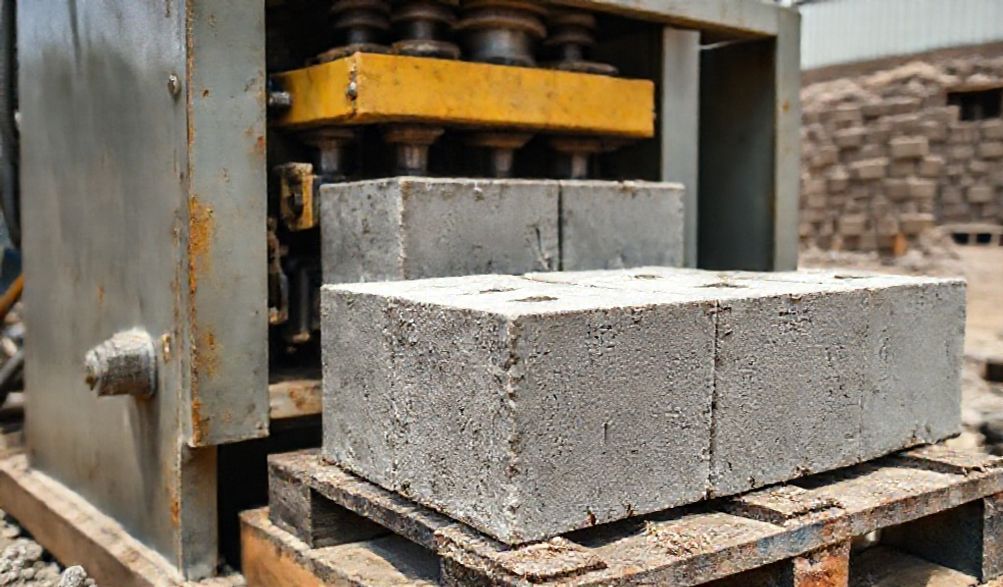
Jagorar Cikakke na Injinan Yin Tubali a Ghana: Nau'uka, Farashi & Manyan Masu Kaya (2024)
Gabatarwa
Ghana na samun sauyi a yanayin gine-ginen birane. Daga titunan Accra masu cike da hargitsi zuwa cibiyoyin birane masu tasowa a Kumasi da Tamale, ana samun haɓakar gine-gine, wanda ke samun ƙarfafawa daga haɓakar yawan jama'a, ƙaura zuwa birane, da manyan ayyukan samar da kayayyakin more rayuwa. A tsakiyar kusan kowane ɗayan waɗannan gine-ginen akwai wani muhimmin kayan gini: tubalin siminti. Ga 'yan kasuwa, kwangila, da kamfanonin gine-gine, wannan yana ba da dama mai mahimmanci. Amma nasara ta dogara ne akan wani muhimmin yanke shawara—zaɓar injin yin tubali da ya dace.
Kewaya kasuwar na’urorin yin tubali a Ghana na iya zama mai sarkakiya. Tare da zaɓuɓɓuka daga na’urorin matsi na hannu masu sauƙi zuwa cikakkun masana’antu masu sarrafa kansu, da farashi ya bambanta sosai, yin zuba jari mai fa’ida yana da mahimmanci. An ƙirƙiri wannan jagora ne daga shekaru da yawa na mu’amala kai tsaye da sashin injinan gini na Ghana. Mun yi nazarin yanayin kasuwa, bincika masu kayan aiki a duk faɗin ƙasar, kuma mun tattara haske mai amfani daga masu samar da tubali masu nasara.
Manufarmu mu bayyananne ce: mu samar muku da cikakkiyar albarkatu, mara son kai, kuma mai amfani. Za mu bayyana nau'ikan injuna daban-daban, mu ba da farashin 2024 a fili a cikin Ghana Cedis (GHS), mu haskaka mahimman fasali masu muhimmanci a cikin mahallin gida, kuma, mafi mahimmanci, mu nuna muku yadda ake gano mai siyarwa amintacce. Yi la'akari da wannan a matsayin taswirar ku zuwa ga ingantaccen saka hannun jari mai riba a nan gaba ginin Ghana.
Me Yasa Ya Kamata Ka Zuba Jari a Cikin Injin Yin Buloci a Ghana?
Kafin a nutsa cikin cikakkun bayanai da farashi, yana da mahimmanci a fahimci "dalilin." Zuba jari a samar da tubalan ba wai kawai sayan na'ura ba ne; yana nufin shiga cikin kasuwa mai ƙarfi tare da fa'idodi na zahiri.
Ci gaban Masana'antar Gina Gidaje ta Ghana: Damar ga Masu Samar da Tubali
Lambobin suna magana da kansu. Mai da hankalin gwamnati kan ababen more rayuwa—hanyoyi, gadoji, ayyukan gidaje masu araha kamar shirin Saglemi—da kuma bunƙasar sashin gidaje na masu zaman kansu sun haifar da buƙatar kayan gini mai dorewa. Tubalan siminti sun kasance abin da ake fi so don gina bango saboda tsada mai araha, ƙarfi, da kaddarorin zafi. Ta hanyar saka hannun jari a cikin ƙarfin samarwa, kuna kafa kanku kai tsaye a cikin wannan sarkar darajar, kuna samar da samfuri mai ci gaba da buƙata mai yawa.
Nazarin Fa'ida da Tsada: Mallakar Na'ura da Sayen Tubalan
Ga kwastomomi, lissafin yana da ƙarfi. Yayin da siyan tubalan daga mai siyarwa na ɓangare na uku ya ƙunshi farashi kai tsaye, mallakar injin ku yana canza kuɗin da ake kashewa akai-akai zuwa kadara. Bayan ɗan lokaci, farashin kowane tubalin da aka ƙera a cikin gida ya yi ƙasa sosai. Kun sami iko akan:
* Inganci:Tabbatar cewa kowane bulo ya cika ƙa'idodin ƙarfi da ma'auni na musamman na aikin ku.
* WadataKawar da jinkiri da matsalolin kula da kayayyaki daga masu samarwa na waje.
* Jadawali:Samar da tubalan bisa buƙata, daidai lokacin da jadawalin aikin ku ya buƙace su.
* Cibiyar Ribar:Samar da yawa za a iya sayar da su ga wasu kwangila, wanda ke haifar da ƙarin hanyar samun kudaden shiga.
Tallafawa Ci Gaban Gida da Samar da Ayyukan Yi
Bayan ribar sirri, wannan zuba jari yana da tasirin ninka al'umma. Kafa kamfanin samar da tubali, ko da na kananan sikelin, yana haifar da ayyukan yi kai tsaye ga masu sarrafa injina, ma'aikata, da direbobi. Yana karfafa kasuwancin gida masu alaƙa, tun daga masu samar da albarkatun ƙasa (yashi, tsakuwa) har zuwa sabis na sufuri. Ba kawai gina gine-gine ba kuke yi; kuna ba da gudummawa ga ƙarfin tattalin arzikin gida da ci gaba.
Nau'ikan Injinan Yin Tubali da Ake Samu a Ghana
“Dama” na’ura ya dogara gaba ɗaya akan girman kasuwancin ku, kasafin ku, da manufofin samarwa. Ga taƙaitaccen bayani game da manyan nau’ikan da ake samu a kasuwar Ghana.
Matsarorin Tukwane na Hannu
- Bayanin & Mai Amfani Mafi Dacewa: These are hand-operated presses, such as the popular “egg-layer” or stationary manual machines. They are the entry point into the business, ideal for very small-scale startups, individual builders, or community projects with limited capital.
- Ƙarfin Fitowa: Typically 300-800 blocks per 8-hour day, depending on operator efficiency.
- Abubuwan da suka fi kyau:
- ƙarancin farashi na farko sosai.
- Simple to understand and operate with minimal training.
- Low maintenance, no reliance on electricity or diesel.
- Rashin Kyau:
- Yana da ƙwazo sosai na aiki da ƙarfi na jiki.
- Low output unsuitable for commercial contracts.
- Inconsistent block quality if not operated carefully.
Matsarori na Yin Tubali na Semi-Automatic
- Bayanin & Mai Amfani Mafi Dacewa: This category represents the “sweet spot” for most small and medium-sized enterprises (SMEs) in Ghana. These machines use a mechanical or hydraulic system, often with a vibrating table, to compact the concrete. Operation involves manually feeding the mixer and moving pallets or blocks, but the core compaction process is powered.
- Kewayon Fitarwa A robust semi-automatic machine can produce between 2,000 to 5,000 blocks in an 8-hour shift.
- Nau'ikan Tubalan Gama Gari: They offer excellent versatility with interchangeable moulds for 9″, 6″, and 4″ solid blocks, hollow blocks (often 4-6 inch), and paving bricks (interlocking or standard).
Matsarorin Block Masu Sarrafa Kansu Gabaɗaya
- Bayanin & Mai Amfani Mafi Dacewa: Designed for large-scale commercial production, these are complete systems. They integrate automatic batching, mixing, conveying, block molding, curing, and stacking. Human intervention is minimal, primarily for monitoring and maintenance.
- Investment Scale: This is a major industrial investment requiring significant capital, space, and a reliable three-phase power supply. Output can exceed 10,000 blocks per day.
- Abubuwan da ake bukata na ababen more rayuwa: A large, paved yard for block curing and storage, and potentially a dedicated shed for the machine and control systems.
Mobile vs. Stationary Block Machines: Which is Better for Your Site?
This is a critical consideration for contractors.
* Na'urorin Tura Tubalin na Wayar Hanka: Mounted on a trailer, these can be towed directly to a construction site. This eliminates block transportation costs and damage, ideal for large, remote projects. They are typically diesel-powered.
* Injin Tukin Tsayayyen Tubali: Set up in a fixed location (a production yard). They are generally more heavy-duty, offer higher output, and benefit from established workflows for material supply and block storage. They are better suited for a dedicated block-selling business.
Key Features to Consider Before Buying
Look beyond the brochure. These features will determine your long-term success and profitability.
Production Capacity (Blocks per Hour/Day): Matching Output to Your Business Plan
Don’t buy based on a theoretical maximum. Consider realistic, sustainable output. A machine rated for 5,000 blocks/day might only achieve 3,500 under normal working conditions. Assess your current and projected demand. Over-investing leads to idle capital; under-investing means missed opportunities.
Block Types and Moulds: Versatility for Market Demand
The ability to produce different block types future-proofs your investment. Ensure the supplier offers a range of standard moulds and that additional moulds can be sourced later. The demand for hollow blocks (lighter, better insulation) and paving bricks for landscaping is growing rapidly in Ghana.
Power Source: Electric, Diesel, or Manual? Considering Ghana’s Power Context
- Lantarki: Cleaner, quieter, and lower operating cost, but vulnerable to “dumsor” (power outages). A generator backup is almost mandatory.
- Dizal: Higher fuel cost and noise, but offers complete independence from the grid. Essential for mobile machines or areas with unreliable power.
- Manual: Only for the smallest scale; not feasible for commercial production.
Durability & After-Sales Support: The Most Critical Factor for Ghana
This cannot be overstated. A machine is a long-term asset. Prioritize build quality: thick steel frames, reputable brand hydraulics, and powerful vibration motors. Crucially, after-sales support is more important than the initial price. You must have answers to:
* Where is the supplier’s workshop located?
* Do they stock critical spare parts (springs, shafts, hydraulic seals)?
* What is their response time for technical support?
* Do they provide comprehensive operator training?
Price Range of Block Making Machines in Ghana (2024)
Prices are indicative ranges in Ghana Cedis (GHS) and can vary based on brand, configuration, and supplier. Always get a formal quotation.
Manual Machine Prices (GHS Range)
- Basic Egg-Layer / Manual Press: GHS 3,000 – GHS 8,000
Semi-Automatic Machine Prices (GHS Range)
- Single Mould Stationary Machine: GHS 25,000 – GHS 60,000
- Multi-Mould (3-4) Stationary Machine: GHS 65,000 – GHS 120,000
- Mobile Block Machine (Diesel): GHS 80,000 – GHS 180,000
Fully Automatic Plant Investment Costs (GHS Range)
- This is a custom project. Budget GHS 300,000 to well over GHS 1,000,000+ for a complete setup with mixer, conveyor, block machine, and pallet return system.
Important Note: Factors Affecting Final Price
The sticker price is not the final cost. Factor in:
* Harajin Shigo da Haraji: If dealing directly with an overseas supplier.
* Shipping and Logistics: Cost of delivery to your site.
* Installation and Commissioning: Some suppliers include this, others charge extra.
* Initial Set of Moulds: Often sold separately.
* Foundation/Setup Costs: For stationary machines.
How to Choose a Reliable Supplier in Ghana
Mitigating risk at this stage saves immense cost and stress later.
Local Dealers vs. Direct Import: A Balanced View
- Local Dealer: Higher price, but you pay for peace of mind. You get local warranty, faster service, available spare parts, and hands-on training. This is the recommended route for most buyers.
- Direct Import (e.g., from China): Lower upfront cost, but high risk. You handle all shipping, customs, and taxes. After-sales support is often slow (via email) or non-existent. Spare parts can take months to arrive.
Vetting Your Supplier: Checklist
Do not buy from a brochure or website alone. Your due diligence must include:
1. Physical Visit: Insist on visiting their showroom or workshop in Accra, Tema, or Kumasi. See the machines.
2. Abokan Kasuwanci: Ask for contacts of 2-3 recent buyers. Call them. Ask about machine performance and the supplier’s service responsiveness.
3. Spare Parts Inventory: Ask to see their spare parts store. A serious supplier will have common wear parts in stock.
4. Warranty Terms: Get the warranty in writing. What is covered (parts/labor)? For how long? What are the terms?
The Importance of Training and Comprehensive After-Sales Service
A proper supplier will provide 1-2 days of training for your operators on-site. This training should cover operation, daily maintenance, and basic troubleshooting. Confirm their service team’s availability and typical response time.
Red Flags to Avoid When Purchasing Machinery
- Supplier who only communicates online with no physical address.
- Unrealistically low prices compared to the market.
- Pressure to pay 100% upfront before delivery.
- Vague or verbal warranty promises.
- Inability to provide local client references.
Top Block Making Machine Brands and Suppliers in Ghana
This is an unbiased overview based on market presence and reputation, not a paid listing.
Overview of Reputable International Brands Available Locally
Several global brands have established a presence through local distributors. These include:
* Zenith (Germany): Known for high-quality, fully automatic plants.
* QGM (Germany/China): Offers a wide range from semi to fully automatic.
* Bess (Turkey): Popular for robust semi-automatic and automatic machines.
* Prensoland (Spain): A premium brand for stationary machines.
* Various Chinese Brands (Hongfa, Lontto, etc.): Offer a wide price range; quality varies significantly, so supplier vetting is critical.
Established Local Ghanaian Distributors and Their Specialties
Numerous well-established Ghanaian companies import, stock, and service these machines. Look for distributors with a long track record (10+ years) in the construction equipment space. Many are clustered in industrial areas of Tema, Accra (Spintex, Industrial Area), and Kumasi. Their specialty often lies in the mid-range semi-automatic and stationary automatic machines that serve the core of the Ghanaian market.
Tips for Getting the Best Quotation and Service Agreement
- Be Specific: Provide your required block types, daily output target, and power source preference.
- Get Multiple Quotes: Approach 3-4 reputable suppliers with the same specifications.
- Compare Apples to Apples: Ensure quotes include the same items (machine, moulds, training, delivery, warranty).
- Negotiate the Service Contract: Discuss and agree on service response times and spare parts availability as part of the deal.
Operating and Maintaining Your Block Machine for Longevity
Your machine’s productivity is directly tied to how you care for it.
Best Practices for Efficient Operation
- Follow the recommended concrete mix design (cement-sand-aggregate ratio) precisely.
- Ensure raw materials are clean and free of debris.
- Keep the machine, especially the moulds and vibration table, clean after every production run.
Routine Maintenance Schedule to Prevent Downtime
- Kullum: Lubricate all moving parts as per manual. Check for loose bolts and nuts.
- Mako-mako: Inspect hydraulic hoses for leaks. Check vibration motor mounts.
- Kowane wata: Thoroughly clean and inspect the entire machine. Replace any visibly worn parts immediately.
Sourcing Quality Raw Materials (Cement, Sand, Aggregate) in Ghana
Block strength starts with material quality.
* Siminti: Use fresh, branded cement (GHACEM, Diamond, etc.) from reputable distributors. Avoid damp or clumped cement.
* Yashi: Use coarse, sharp sand (from places like Shai Hills) for better bonding. Avoid fine, “silty” sand.
* Aggregate (Quarry Dust/Granite): Ensure it is well-graded and clean. The quality of your aggregate is a major determinant of final block strength.
FAQ Section
Q1: What is the cheapest block making machine I can get in Ghana?
A: The cheapest option is a manual egg-layer or press machine, costing between GHS 3,000 – GHS 8,000. However, be aware of its severe limitations in output and labor requirements. It’s only suitable for very small, personal projects, not a commercial venture.
Q2: How many blocks can a semi-automatic machine produce in a day?
A: A well-operated semi-automatic machine can produce between 2,000 to 5,000 standard 9-inch blocks in an 8-hour shift. The actual yield depends on the machine model, number of operators, efficiency of the workflow, and block type (smaller blocks like 4″ or pavers can have higher counts).
Q3: Can I get a loan or financing for a block machine in Ghana?
A: Yes, options exist. Some equipment suppliers offer in-house installment plans. Alternatively, you can explore business loans from banks or microfinance institutions. A solid business plan is essential for loan approval.
Q4: What is the most common problem with block machines in Ghana, and how do I fix it?
A: A common issue is blocks sticking to the moulds or breaking during ejection. This is often caused by insufficient vibration time, an incorrect or wet concrete mix, or worn/dirty moulds. The fix is to adjust the mix consistency, ensure proper compaction time, and regularly clean and apply a recommended mould oil. For persistent mechanical issues, always contact your supplier’s service team.
Q5: Are there any government regulations or standards for block production in Ghana?
A: Yes. The Ghana Standards Authority (GSA) has guidelines for concrete blocks (e.g., GS 719). These specify required compressive strengths for load-bearing and non-load-bearing blocks. Adhering to these standards is crucial for producing quality, marketable blocks, especially for official projects.
Ƙarshe
Investing in a block making machine in Ghana is a strategic decision with the potential for significant reward. The journey begins with a clear understanding of your own needs and the local market dynamics. Remember, the goal is not to find the cheapest machine, but the most appropriate and reliable one for your business scale.
Prioritize durability and, above all, proven after-sales support from your supplier. The relationships you build with a trustworthy distributor are as valuable as the machine itself. We encourage you to use this guide as a foundation for your research. Visit multiple suppliers, inspect their machines, talk to their past clients, and ask detailed questions.
Arm yourself with this knowledge, and you will be equipped to make a confident, profitable investment that contributes to building Ghana, one block at a time.
<