
Le Guide Ultime des Machines à Fabriquer les Blocs de Tourbe de Coco : Processus, Avantages et Comment Choisir
Introduction
Depuis plus de 15 ans, notre équipe est au cœur de l'industrie de transformation de la fibre de coco, concevant, fabriquant et fournissant des machines qui transforment de modestes coques de noix de coco en précieuses marchandises mondiales. Nous avons travaillé directement avec des startups et des opérations à l'échelle industrielle en Asie du Sud-Est, en Europe et dans les Amériques, ce qui nous a offert une place de premier plan pour observer les défis et les succès de la production de tourbe de coco. Cette expérience pratique nourrit chaque conseil présent dans ce guide.
La fibre de coco, cette poussière résiliente et spongieuse extraite de la coque de noix de coco, a révolutionné les milieux de culture durables. Des jardiniers amateurs aux exploitants de serres commerciales, la demande pour cette alternative à la tourbe de sphaigne est en plein essor. Pour les entreprises qui cherchent à pénétrer ou à dominer ce marché, la différence entre une exploitation rentable et un casse-tête logistique repose souvent sur un équipement crucial : lemachine à fabriquer des blocs de tourbe de coco.
Il ne s'agit pas seulement de compression ; il s'agit de transformer une matière lâche et volumineuse en un produit cohérent, expédiable et prêt pour le marché. Ce guide complet s'appuie sur notre expertise approfondie du secteur pour vous accompagner à travers tout l'écosystème des machines à fabriquer des blocs. Nous allons démystifier leur fonctionnement, quantifier leurs avantages et fournir une liste de contrôle détaillée pour choisir celle qui convient à votre projet. Considérez ceci comme votre plan directeur pour construire une ligne de production de blocs de tourbe de coco réussie.
Qu'est-ce qu'une machine à fabriquer des blocs de tourbe de coco ?
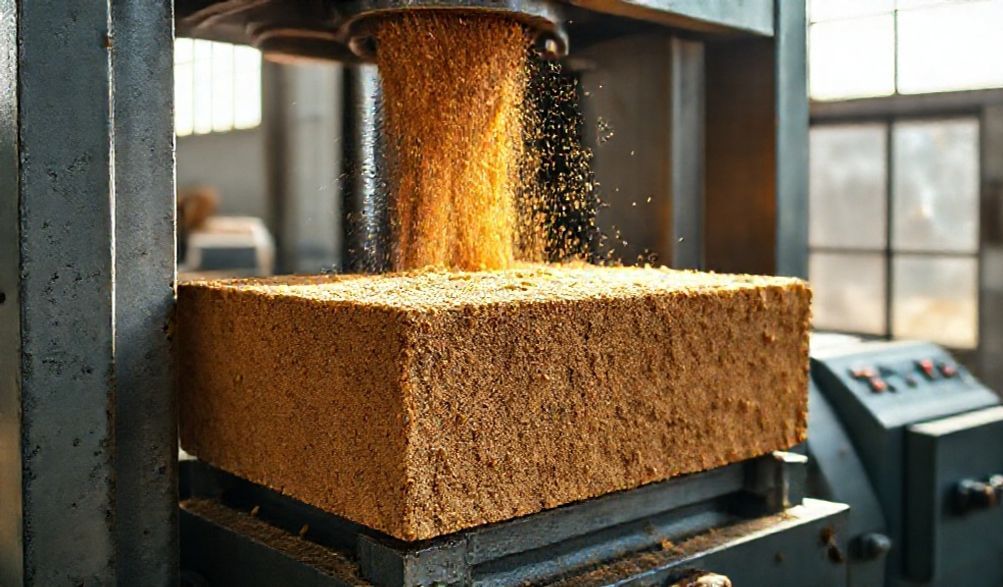
Au cœur du processus, une machine à fabriquer des blocs de tourbe de coco est une presse de précision conçue pour ajouter une valeur maximale au stade final de la transformation. Elle prend la tourbe de coco préparée, légère et duveteuse, et la transforme en une unité dense et facile à manipuler.
Fonction principale et sortie
- Fonction principale :Pour appliquer une pression immense et contrôlée à la tourbe de coco (poussière de coco) traitée, en la compactant en formes solides et uniformes.
- Formulaires de sortie standard :La machine fabrique les produits familiers que vous voyez sur les étagères :
- Briques/Blocs :La forme la plus courante, généralement rectangulaire.
- Sacs de Culture :Tourbe compressée dans un sac en filet biodégradable.
- Disques/Pastilles :Formes plus petites et arrondies, souvent utilisées pour le démarrage des semences.
De la balle au bloc : le rôle de la machine dans la chaîne de valeur
Le fabricant de blocs est l'aboutissement d'un processus en plusieurs étapes. Comprendre sa place est essentiel :
1. Défibrage :Séparer les longues fibres de coco de la coque.
2. Extraction de la tourbe :Broyer et collecter la moelle fine.
3. Séchage :Réduire l'humidité à un niveau optimal (généralement 12-15 %).
4. Tamissage :Éliminer les impuretés et garantir une granulométrie uniforme.
5. COMPRESSION (Rôle de cette machine) :C'est là que la valeur se solidifie. Cela réduit considérablement le volume, crée un produit stable et permet le branding.
6. Emballage : Wrapping the blocks for retail or bulk palletizing.
The block making machine is the crucial link that makes the product economically viable for distant markets by slashing logistics costs.
How Does a Coco Peat Block Making Machine Work?
The process is a marvel of simple yet effective engineering. Let’s break it down from the inside out.
Composants clés et leurs fonctions
Every machine is built around several key components:
* Hopper : The entry point where pre-processed, dry coco peat is fed into the machine. Its design ensures a consistent, jam-free flow.
* Compression Chamber & Mold (Die): This is the “heart” that defines the block’s shape and size. It’s a hardened steel cavity where the peat is compressed.
* Press Mechanism (Hydraulic or Mechanical): The source of power. A hydraulic system uses fluid pressure, while a mechanical system uses a crank or flywheel to drive a ram.
* Panneau de configuration : The brain of the operation, especially in advanced models. It allows operators to set pressure, cycle time, and monitor functions.
* Mécanisme d'éjection : Once compressed, a system (often part of the ram’s return stroke or a separate pusher) discharges the finished block onto a conveyor or table.
The Step-by-Step Compression Process
The operation follows a precise, repeatable cycle:
1. Alimentation : Sieved coco peat is loaded into the machine’s hopper, either manually or via an automated feeding system.
2. Metering: A precise volume of peat is measured into the compression chamber. This ensures every block has identical weight and dimensions.
3. Compression : The hydraulic ram or mechanical press drives forward with immense force (often 20-100+ tonnes), compacting the loose peat into a dense, solid block within the mold.
4. Éjection : The ram retracts, and the ejection mechanism pushes the finished block out of the mold.
5. Stacking/Packaging: Blocks are conveyed or manually moved to be wrapped, labeled, and palletized for storage or shipment.
Types of Machines: Hydraulic vs. Mechanical
Choosing between these two core technologies is a fundamental decision.
-
Presses hydrauliques :
- Avantages : Offer superior control with adjustable pressure, which is perfect for creating blocks of varying densities. They provide a smoother compression stroke, are generally quieter, and are easier to automate. Ideal for high-quality, high-density blocks.
- Inconvénients : Can have a slightly slower cycle time than mechanical presses. The hydraulic system requires regular maintenance (fluid checks, seal inspections) and can have a higher initial cost.
-
Mechanical Press Machines:
- Avantages : Known for robustness, high speed, and fast cycle times. Often have a simpler design with potentially lower upfront costs and can be very efficient for high-volume production of standard-density blocks.
- Inconvénients : Less flexibility in adjusting pressure. The mechanical action (cranks, flywheels) can create more vibration and noise. May be less suitable for producing very high-density blocks without significant design adjustments.
Key Benefits of Using a Dedicated Block Making Machine
Moving from manual packing or using inadequate equipment to a dedicated machine is transformative. Here’s why.
Unmatched Product Consistency and Quality
- A machine eliminates human variability. Every block has the exact same dimensions, weight, and density.
- This consistency is non-negotiable for building a trusted brand. Commercial buyers, in particular, rely on predictable block expansion and performance.
Dramatic Increase in Production Efficiency
- Compare a machine producing 500-1000 blocks per hour to a team of workers manually packing. The labor savings are immediate and substantial.
- Machines enable 24/7 operation, allowing you to scale output to meet large orders without a linear increase in labor costs.
Significant Cost Savings on Logistics and Storage
- This is the most compelling financial benefit. Compression can reduce the volume of coco peat by 5 to 10 times.
- You ship and store “product,” not “air.” This directly translates to lower freight costs, fewer pallets, and reduced warehouse space requirements.
Enhanced Marketability and Professional Appeal
- Neat, uniform, and tightly wrapped blocks look professional. They allow for clear branding with labels or printed packaging.
- A premium, consistent product commands a better price point and appeals to discerning retail customers and large-scale agricultural operations alike.
Critical Factors to Consider Before Buying
This is where due diligence separates a wise investment from a costly mistake. Use this as your checklist.
Évaluation de Vos Besoins de Production
Ask yourself these questions first:
* What is my target daily/weekly output? (e.g., 2 tons per day vs. 20 tons per day).
* What block size and density does my target market demand? (e.g., 5kg bricks for retail, 650g blocks for hydroponics).
* What is the quality of my raw coco peat? Is it consistently sieved and dried? The machine can only work with what you feed it.
Machine Specifications and Features to Scrutinize
When reviewing supplier brochures, go beyond the price tag:
* Capacité de pression Measured in tonnes. Higher pressure (e.g., 50-100T) allows for denser, more compact blocks.
* Temps de cycle : Seconds per block. This directly determines your hourly output.
* Niveau d'automatisation : Manual (operator feeds and removes each block), Semi-Automatic (auto compression, manual feed/eject), or Fully Automatic (integrated feeding and ejection conveyor systems).
* Qualité de construction : Inspect the quality of steel used, the welding, and the reputation of key components like hydraulic pumps or electrical systems.
Source d'alimentation et coûts opérationnels
- Électrique : Cleaner, quieter, and often more cost-effective for fixed installations with reliable grid power. Consider your local electricity costs and stability.
- Diesel : Essential for locations with unreliable electricity. Offers mobility but comes with fuel costs, exhaust, and higher maintenance.
- Always calculate the Total Cost of Ownership, including energy consumption, routine maintenance, and part replacement.
Supplier Reliability and After-Sales Support (A Key Trust Signal)
The machine is only as good as the company behind it.
* Garantie : What is covered and for how long?
* Pièces de rechange : Are they readily available? What is the lead time for critical components?
* Assistance technique : Do they offer installation, on-site training, and remote troubleshooting?
* Vérification : Request client references. If possible, visit an existing installation to see the machine running.
Common Challenges and Maintenance Tips
Proactive knowledge prevents downtime. Here’s wisdom from the field.
Troubleshooting Frequent Operational Issues
- Blocks Not Holding Shape/Crumbling: Almost always a raw material issue. Check the moisture content—it’s likely too low (<10%) or uneven.
- Machine Jamming or Block Sticking in Mold: Can be caused by foreign material (stones, metal) in the peat or by peat that is too wet and sticky. A damaged or poorly finished mold surface can also cause sticking.
- Inconsistent Block Weight: Check the feeding and metering system for clogs or irregularities. Ensure a consistent flow of material into the hopper.
Essential Daily and Periodic Maintenance
- Daily: Thoroughly clean the hopper, compression chamber, and molds to prevent peat buildup. Check hydraulic fluid levels and look for leaks. Lubricate all moving points as per the manual.
- Weekly/Monthly: Inspect wear parts like the mold liners, ram head, and seals. Tighten any loose bolts and connections. Check electrical connections.
- Annually: Consider a full professional service, including hydraulic fluid change and a comprehensive system check.
Ensuring Optimal Raw Material Input
The machine is not a miracle worker. It requires proper input:
* Moisture Content is King: Aim for 12-15%. Use a moisture meter. Peat that is too wet won’t compress properly and risks mold; peat that is too dry creates dusty blocks that don’t expand well.
* Sieving is Non-Negotiable: All peat must pass through a fine sieve (e.g., 6mm) to remove fibers, husk chips, and impurities that will damage the machine and create an inferior product.
Frequently Asked Questions (FAQ)
What is the average production capacity of these machines?
Capacity varies widely. Small-scale manual machines may produce 100-200 kg per hour. Semi-automatic models range from 300-600 kg/hr. Industrial, fully automatic lines can exceed 1000-1500 kg/hr. Your required output is the first spec to define.
Can one machine produce different block sizes and shapes?
Yes, but this depends on the machine’s design. Most quality machines allow for interchangeable molds. You can swap the mold/die to produce different brick sizes, grow bags, or discs. Always confirm this flexibility and the cost of additional molds with your supplier.
What is the approximate price range for a coco peat block making machine?
It’s a broad spectrum. Basic manual presses can start from $5,000 – $10,000. Robust semi-automatic hydraulic machines typically range from 15 000 $ – 40 000 $. High-capacity, fully automated production lines with conveyors and PLC controls can reach $70,000 – $150,000+. Always get a detailed quotation based on your specific specifications.
How important is the moisture content of the coco peat before compression?
It is the single most critical factor for quality and machine health. The industry standard is 12-15%. At this level, the peat particles bind under pressure without requiring additives. Incorrect moisture leads to production failures, poor block expansion, and potential mold growth in the final product.
Are there any safety precautions for operating this machinery?
Absolutely. Always:
* Ensure all safety guards are in place before operation.
* Provide thorough operator training on start-up, shutdown, and emergency procedures.
* Implement lock-out/tag-out (LOTO) protocols during any maintenance or clearing of jams.
* Wear appropriate personal protective equipment (PPE), including safety glasses and hearing protection, especially near mechanical presses.
Conclusion
Investing in a machine à fabriquer des blocs de tourbe de coco is more than a capital expenditure; it’s a strategic commitment to quality, efficiency, and scalability. It is the essential engine that converts your processed raw material into a profitable, globally competitive product. By understanding the intricate workings, tangible benefits, and critical selection factors outlined in this guide—knowledge distilled from years of direct industry involvement—you are now equipped to make a confident, informed decision.
Ready to take the next step? We strongly recommend moving from research to engagement. Contact several reputable suppliers, request detailed specifications and quotations, and insist on seeing video demonstrations or, ideally, arranging a visit to a working installation. The right machine is not just a piece of equipment; it’s the foundation of your business’s growth and reputation in the sustainable agriculture market.
For over 15 years, CoirTech Solutions has been engineering and supplying durable, high-performance coco processing machinery to businesses worldwide. Contact our expert team today for a personalized consultation to find the perfect block making solution tailored to your production goals.
<