
Panduan Terakhir untuk Mesin Pembuat Blok Sabut Kelapa: Proses, Manfaat & Cara Memilih
Pengenalan
Lebih 15 tahun, pasukan kami telah berada di teras industri pemprosesan sabut kelapa, mereka bentuk, mengilang, dan membekalkan mesin yang mengubah sabut kelapa yang sederhana menjadi komoditi global yang berharga. Kami telah bekerja secara langsung dengan syarikat permulaan dan operasi berskala industri di seluruh Asia Tenggara, Eropah, dan Amerika, memberikan kami pandangan terdekat tentang cabaran dan kejayaan dalam pengeluaran koko peat. Pengalaman langsung ini menjadi asas kepada setiap nasihat dalam panduan ini.
Coco peat, debu yang tangguh dan seperti span yang diekstrak daripada sabut kelapa, telah merevolusikan media tumbuhan mampan. Daripada tukang kebun hobi kepada pengendali rumah hijau komersial, permintaan untuk alternatif lumut gambut ini sedang melonjak. Bagi perniagaan yang ingin memasuki atau mendominasi pasaran ini, perbezaan antara operasi yang menguntungkan dan sakit kepala logistik sering bergantung kepada satu peralatan kritikal:mesin pembuatan blok sabut kelapa.
Ini bukan sekadar tentang pemampatan; ia mengenai mengubah bahan yang longgar dan besar menjadi produk yang konsisten, boleh dihantar, dan sedia untuk dipasarkan. Panduan komprehensif ini memanfaatkan kepakaran industri kami yang mendalam untuk membimbing anda melalui seluruh ekosistem mesin pembuat blok. Kami akan menerangkan cara kerjanya, mengukur manfaatnya, dan menyediakan senarai semak terperinci untuk memilih mesin yang tepat bagi usaha anda. Anggap ini sebagai cetak biru asas untuk membina barisan pengeluaran blok sabut kelapa yang berjaya.
Apakah itu Mesin Pembuat Blok Sabut Kelapa?
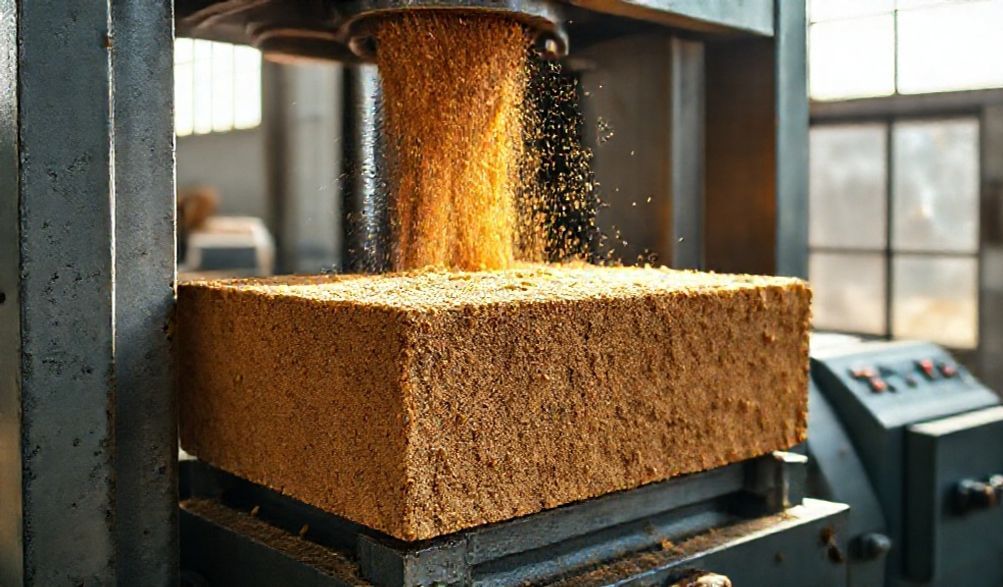
Pada terasnya, mesin pembuatan blok sabut kelapa adalah sebuah penekan berketepatan tinggi yang direka untuk memberikan nilai maksimum pada peringkat akhir pemprosesan. Ia mengambil sabut kelapa yang telah disediakan dan gebu, lalu mengubahnya menjadi unit yang padat dan mudah diurus.
Fungsi Teras dan Output
- Fungsi Utama:Untuk mengenakan tekanan yang besar dan terkawal ke atas sabut kelapa yang diproses (serbuk sabut), memampatkannya menjadi bentuk pepejal dan seragam.
- Bentuk Output Piawai:Mesin itu mencipta produk-produk biasa yang anda lihat di rak:
- Batu Bata/Blok:Bentuk yang paling biasa, biasanya segi empat tepat.
- Beg Tumbuh:Gambut termampat dalam beg jaring yang boleh terurai.
- Cakera/Pelet:Bentuk bulat yang lebih kecil sering digunakan untuk menyemai benih.
Dari Sekam ke Blok: Peranan Mesin dalam Rantaian Nilai
Pembuat blok adalah kemuncak proses pelbagai langkah. Memahami kedudukannya adalah kunci:
1. Penghilangan gentian:Memisahkan serat sabut panjang dari tempurung.
2. Pengekstrakan Gambut:Mengisar dan mengumpul empulur halus.
3. Pengeringan:Mengurangkan kelembapan ke tahap optimum (biasanya 12-15%).
4. Penapisan:Membuang kekotoran dan memastikan saiz zarah yang konsisten.
5. KOMPRESI (Peranan Mesin Ini):Di sinilah nilai diperkukuh. Ia mengurangkan jumlah dengan ketara, menghasilkan produk yang stabil, dan membolehkan penjenamaan.
6. Pembungkusan:Membungkus blok untuk runcit atau palletizing pukal.
Mesin pembuat blok adalah pautan penting yang menjadikan produk itu berdaya maju secara ekonomi untuk pasaran jauh dengan mengurangkan kos logistik.
Bagaimana Mesin Pembuatan Blok Sabut Kelapa Berfungsi?
Proses ini merupakan keajaiban kejuruteraan yang ringkas namun berkesan. Mari kita pecahkannya dari dalam ke luar.
Komponen Utama dan Fungsinya
Setiap mesin dibina di sekitar beberapa komponen utama:
* Hopper:Titik masuk di mana koko gambut kering yang telah diproses dimasukkan ke dalam mesin. Reka bentuknya memastikan aliran yang konsisten dan bebas daripada tersekat.
* Kebuk Mampatan & Acuan (Die):Ini adalah "jantung" yang menentukan bentuk dan saiz blok. Ia adalah rongga keluli yang dikeraskan di mana gambut dimampatkan.
* Press Mechanism (Hydraulic or Mechanical): The source of power. A hydraulic system uses fluid pressure, while a mechanical system uses a crank or flywheel to drive a ram.
* Panel Kawalan: The brain of the operation, especially in advanced models. It allows operators to set pressure, cycle time, and monitor functions.
* Mekanisme Pengusiran: Once compressed, a system (often part of the ram’s return stroke or a separate pusher) discharges the finished block onto a conveyor or table.
The Step-by-Step Compression Process
The operation follows a precise, repeatable cycle:
1. Pemberian Makan: Sieved coco peat is loaded into the machine’s hopper, either manually or via an automated feeding system.
2. Metering: A precise volume of peat is measured into the compression chamber. This ensures every block has identical weight and dimensions.
3. Pemampatan: The hydraulic ram or mechanical press drives forward with immense force (often 20-100+ tonnes), compacting the loose peat into a dense, solid block within the mold.
4. Pengusiran: The ram retracts, and the ejection mechanism pushes the finished block out of the mold.
5. Stacking/Packaging: Blocks are conveyed or manually moved to be wrapped, labeled, and palletized for storage or shipment.
Types of Machines: Hydraulic vs. Mechanical
Choosing between these two core technologies is a fundamental decision.
-
Hydraulic Press Machines:
- Kelebihan: Offer superior control with adjustable pressure, which is perfect for creating blocks of varying densities. They provide a smoother compression stroke, are generally quieter, and are easier to automate. Ideal for high-quality, high-density blocks.
- Keburukan: Can have a slightly slower cycle time than mechanical presses. The hydraulic system requires regular maintenance (fluid checks, seal inspections) and can have a higher initial cost.
-
Mechanical Press Machines:
- Kelebihan: Known for robustness, high speed, and fast cycle times. Often have a simpler design with potentially lower upfront costs and can be very efficient for high-volume production of standard-density blocks.
- Keburukan: Less flexibility in adjusting pressure. The mechanical action (cranks, flywheels) can create more vibration and noise. May be less suitable for producing very high-density blocks without significant design adjustments.
Key Benefits of Using a Dedicated Block Making Machine
Moving from manual packing or using inadequate equipment to a dedicated machine is transformative. Here’s why.
Unmatched Product Consistency and Quality
- A machine eliminates human variability. Every block has the exact same dimensions, weight, and density.
- This consistency is non-negotiable for building a trusted brand. Commercial buyers, in particular, rely on predictable block expansion and performance.
Dramatic Increase in Production Efficiency
- Compare a machine producing 500-1000 blocks per hour to a team of workers manually packing. The labor savings are immediate and substantial.
- Machines enable 24/7 operation, allowing you to scale output to meet large orders without a linear increase in labor costs.
Significant Cost Savings on Logistics and Storage
- This is the most compelling financial benefit. Compression can reduce the volume of coco peat by 5 to 10 times.
- You ship and store “product,” not “air.” This directly translates to lower freight costs, fewer pallets, and reduced warehouse space requirements.
Enhanced Marketability and Professional Appeal
- Neat, uniform, and tightly wrapped blocks look professional. They allow for clear branding with labels or printed packaging.
- A premium, consistent product commands a better price point and appeals to discerning retail customers and large-scale agricultural operations alike.
Critical Factors to Consider Before Buying
This is where due diligence separates a wise investment from a costly mistake. Use this as your checklist.
Menilai Keperluan Pengeluaran Anda
Ask yourself these questions first:
* What is my target daily/weekly output? (e.g., 2 tons per day vs. 20 tons per day).
* What block size and density does my target market demand? (e.g., 5kg bricks for retail, 650g blocks for hydroponics).
* What is the quality of my raw coco peat? Is it consistently sieved and dried? The machine can only work with what you feed it.
Machine Specifications and Features to Scrutinize
When reviewing supplier brochures, go beyond the price tag:
* Kapasiti Tekanan: Measured in tonnes. Higher pressure (e.g., 50-100T) allows for denser, more compact blocks.
* Masa Kitaran: Seconds per block. This directly determines your hourly output.
* Tahap Automasi: Manual (operator feeds and removes each block), Semi-Automatic (auto compression, manual feed/eject), or Fully Automatic (integrated feeding and ejection conveyor systems).
* Kualiti Pembinaan: Inspect the quality of steel used, the welding, and the reputation of key components like hydraulic pumps or electrical systems.
Power Source and Operational Costs
- Elektrik: Cleaner, quieter, and often more cost-effective for fixed installations with reliable grid power. Consider your local electricity costs and stability.
- Diesel: Essential for locations with unreliable electricity. Offers mobility but comes with fuel costs, exhaust, and higher maintenance.
- Always calculate the Total Cost of Ownership, including energy consumption, routine maintenance, and part replacement.
Supplier Reliability and After-Sales Support (A Key Trust Signal)
The machine is only as good as the company behind it.
* Jaminan: What is covered and for how long?
* Alat Ganti: Are they readily available? What is the lead time for critical components?
* Sokongan Teknikal: Do they offer installation, on-site training, and remote troubleshooting?
* Pengesahan: Request client references. If possible, visit an existing installation to see the machine running.
Common Challenges and Maintenance Tips
Proactive knowledge prevents downtime. Here’s wisdom from the field.
Troubleshooting Frequent Operational Issues
- Blocks Not Holding Shape/Crumbling: Almost always a raw material issue. Check the moisture content—it’s likely too low (<10%) or uneven.
- Machine Jamming or Block Sticking in Mold: Can be caused by foreign material (stones, metal) in the peat or by peat that is too wet and sticky. A damaged or poorly finished mold surface can also cause sticking.
- Inconsistent Block Weight: Check the feeding and metering system for clogs or irregularities. Ensure a consistent flow of material into the hopper.
Essential Daily and Periodic Maintenance
- Daily: Thoroughly clean the hopper, compression chamber, and molds to prevent peat buildup. Check hydraulic fluid levels and look for leaks. Lubricate all moving points as per the manual.
- Weekly/Monthly: Inspect wear parts like the mold liners, ram head, and seals. Tighten any loose bolts and connections. Check electrical connections.
- Annually: Consider a full professional service, including hydraulic fluid change and a comprehensive system check.
Ensuring Optimal Raw Material Input
The machine is not a miracle worker. It requires proper input:
* Moisture Content is King: Aim for 12-15%. Use a moisture meter. Peat that is too wet won’t compress properly and risks mold; peat that is too dry creates dusty blocks that don’t expand well.
* Sieving is Non-Negotiable: All peat must pass through a fine sieve (e.g., 6mm) to remove fibers, husk chips, and impurities that will damage the machine and create an inferior product.
Soalan Lazim (FAQ)
What is the average production capacity of these machines?
Capacity varies widely. Small-scale manual machines may produce 100-200 kg per hour. Semi-automatic models range from 300-600 kg/hr. Industrial, fully automatic lines can exceed 1000-1500 kg/hr. Your required output is the first spec to define.
Can one machine produce different block sizes and shapes?
Yes, but this depends on the machine’s design. Most quality machines allow for acuan boleh tukar. You can swap the mold/die to produce different brick sizes, grow bags, or discs. Always confirm this flexibility and the cost of additional molds with your supplier.
What is the approximate price range for a coco peat block making machine?
It’s a broad spectrum. Basic manual presses can start from $5,000 – $10,000. Robust semi-automatic hydraulic machines typically range from $15,000 – $40,000. High-capacity, fully automated production lines with conveyors and PLC controls can reach $70,000 – $150,000+. Always get a detailed quotation based on your specific specifications.
How important is the moisture content of the coco peat before compression?
It is the single most critical factor for quality and machine health. The industry standard is 12-15%. At this level, the peat particles bind under pressure without requiring additives. Incorrect moisture leads to production failures, poor block expansion, and potential mold growth in the final product.
Are there any safety precautions for operating this machinery?
Absolutely. Always:
* Ensure all safety guards are in place before operation.
* Provide thorough operator training on start-up, shutdown, and emergency procedures.
* Implement lock-out/tag-out (LOTO) protocols during any maintenance or clearing of jams.
* Wear appropriate personal protective equipment (PPE), including safety glasses and hearing protection, especially near mechanical presses.
Kesimpulan
Investing in a mesin pembuatan blok sabut kelapa is more than a capital expenditure; it’s a strategic commitment to quality, efficiency, and scalability. It is the essential engine that converts your processed raw material into a profitable, globally competitive product. By understanding the intricate workings, tangible benefits, and critical selection factors outlined in this guide—knowledge distilled from years of direct industry involvement—you are now equipped to make a confident, informed decision.
Ready to take the next step? We strongly recommend moving from research to engagement. Contact several reputable suppliers, request detailed specifications and quotations, and insist on seeing video demonstrations or, ideally, arranging a visit to a working installation. The right machine is not just a piece of equipment; it’s the foundation of your business’s growth and reputation in the sustainable agriculture market.
For over 15 years, CoirTech Solutions has been engineering and supplying durable, high-performance coco processing machinery to businesses worldwide. Contact our expert team today for a personalized consultation to find the perfect block making solution tailored to your production goals.
<