
Полное руководство по машинам для производства кокосовых торфяных блоков: процесс, преимущества и как выбрать
Введение
Более 15 лет наша команда находится в центре индустрии переработки койры, проектируя, производя и поставляя оборудование, которое превращает скромную кокосовую скорлупу в ценный товар мирового значения. Мы работали напрямую со стартапами и промышленными предприятиями в Юго-Восточной Азии, Европе и Америке, что позволило нам воочию наблюдать за трудностями и успехами в производстве кокосового торфа. Этот практический опыт лежит в основе каждой рекомендации в данном руководстве.
Кокосовый торф, упругий, похожий на губку субстрат, извлекаемый из скорлупы кокосовых орехов, произвел революцию в области устойчивых питательных сред для выращивания растений. От садоводов-любителей до коммерческих тепличных хозяйств — спрос на эту альтернативу торфяному мху стремительно растет. Для компаний, стремящихся войти на этот рынок или завоевать на нем лидирующие позиции, разница между прибыльным предприятием и логистической головной болью часто сводится к одному критически важному оборудованию:Машина для производства кокосовых торфяных блоков.
Это не просто вопрос прессования; речь идет о превращении рыхлого, объемного материала в однородный, транспортабельный и готовый к продаже продукт. Это исчерпывающее руководство, основанное на нашем глубоком отраслевом опыте, проведет вас через всю экосистему машин для производства блоков. Мы раскроем принципы их работы, количественно оценим преимущества и предоставим детальный чек-лист для выбора подходящего оборудования под ваши задачи. Считайте это фундаментальным планом для создания успешной производственной линии по выпуску кокосовых торфяных блоков.
Что такое машина для производства кокосовых торфяных блоков?
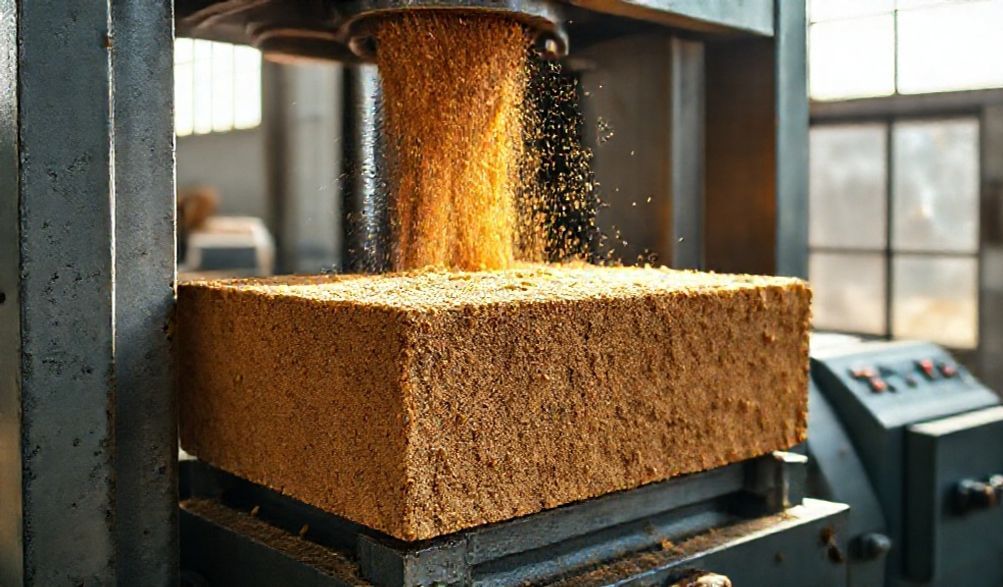
В своей основе машина для производства кокосовых торфяных блоков представляет собой пресс точного действия, предназначенный для максимального повышения ценности на завершающем этапе обработки. Она принимает подготовленный, рыхлый кокосовый торф и превращает его в плотную, удобную в обращении единицу.
Основная функция и выходные данные
- Основная функция:Применять огромное контролируемое давление к обработанному кокосовому торфу (кокосовому волокну), уплотняя его в твердые однородные формы.
- Стандартные формы вывода:Машина создает знакомые продукты, которые вы видите на полках:
- Кирпичи/Блоки:Наиболее распространенная форма, обычно прямоугольная.
- Гроубэги:Спрессованный торф в разлагаемом сетчатом мешке.
- Диски/Гранулы:Меньшие, круглые формы, часто используемые для посева семян.
От шелухи до блока: роль машины в цепочке создания стоимости
Изготовитель блоков — это кульминация многоступенчатого процесса. Понимание его места является ключевым:
1. Дефибрирование:Отделение длинных кокосовых волокон от скорлупы.
2. Добыча торфа:Измельчение и сбор тонкой сердцевины.
3. Сушка:Снижение влажности до оптимального уровня (обычно 12-15%).
4. Просеивание:Удаление примесей и обеспечение однородного размера частиц.
5. СЖАТИЕ (Роль этого устройства):Здесь ценность обретает конкретную форму. Это радикально сокращает объем, создает стабильный продукт и позволяет нанести бренд.
6. Упаковка:Упаковка блоков для розничной продажи или паллетирования оптом.
Машина для производства блоков является ключевым звеном, которое делает продукт экономически выгодным для отдаленных рынков, значительно снижая логистические расходы.
Как работает машина для производства кокосовых торфяных блоков?
Процесс представляет собой чудо простой, но эффективной инженерии. Давайте разберем его изнутри наружу.
Ключевые компоненты и их функции
Каждая машина построена вокруг нескольких ключевых компонентов:
* Хоппер:Точка загрузки, где предварительно обработанный сухой кокосовый торф подается в машину. Его конструкция обеспечивает стабильную, бесперебойную подачу без заклинивания.
* Компрессионная камера и пресс-форма (матрица):Это "сердце", которое определяет форму и размер блока. Это закалённая стальная полость, в которой прессуется торф.
* Press Mechanism (Hydraulic or Mechanical): The source of power. A hydraulic system uses fluid pressure, while a mechanical system uses a crank or flywheel to drive a ram.
* Панель управления: The brain of the operation, especially in advanced models. It allows operators to set pressure, cycle time, and monitor functions.
* Механизм выброса: Once compressed, a system (often part of the ram’s return stroke or a separate pusher) discharges the finished block onto a conveyor or table.
The Step-by-Step Compression Process
The operation follows a precise, repeatable cycle:
1. Кормление: Sieved coco peat is loaded into the machine’s hopper, either manually or via an automated feeding system.
2. Metering: A precise volume of peat is measured into the compression chamber. This ensures every block has identical weight and dimensions.
3. Сжатие: The hydraulic ram or mechanical press drives forward with immense force (often 20-100+ tonnes), compacting the loose peat into a dense, solid block within the mold.
4. Выброс: The ram retracts, and the ejection mechanism pushes the finished block out of the mold.
5. Stacking/Packaging: Blocks are conveyed or manually moved to be wrapped, labeled, and palletized for storage or shipment.
Types of Machines: Hydraulic vs. Mechanical
Choosing between these two core technologies is a fundamental decision.
-
Hydraulic Press Machines:
- Плюсы: Offer superior control with adjustable pressure, which is perfect for creating blocks of varying densities. They provide a smoother compression stroke, are generally quieter, and are easier to automate. Ideal for high-quality, high-density blocks.
- Минусы: Can have a slightly slower cycle time than mechanical presses. The hydraulic system requires regular maintenance (fluid checks, seal inspections) and can have a higher initial cost.
-
Mechanical Press Machines:
- Плюсы: Known for robustness, high speed, and fast cycle times. Often have a simpler design with potentially lower upfront costs and can be very efficient for high-volume production of standard-density blocks.
- Минусы: Less flexibility in adjusting pressure. The mechanical action (cranks, flywheels) can create more vibration and noise. May be less suitable for producing very high-density blocks without significant design adjustments.
Key Benefits of Using a Dedicated Block Making Machine
Moving from manual packing or using inadequate equipment to a dedicated machine is transformative. Here’s why.
Unmatched Product Consistency and Quality
- A machine eliminates human variability. Every block has the exact same dimensions, weight, and density.
- This consistency is non-negotiable for building a trusted brand. Commercial buyers, in particular, rely on predictable block expansion and performance.
Dramatic Increase in Production Efficiency
- Compare a machine producing 500-1000 blocks per hour to a team of workers manually packing. The labor savings are immediate and substantial.
- Machines enable 24/7 operation, allowing you to scale output to meet large orders without a linear increase in labor costs.
Significant Cost Savings on Logistics and Storage
- This is the most compelling financial benefit. Compression can reduce the volume of coco peat by 5 to 10 times.
- You ship and store “product,” not “air.” This directly translates to lower freight costs, fewer pallets, and reduced warehouse space requirements.
Enhanced Marketability and Professional Appeal
- Neat, uniform, and tightly wrapped blocks look professional. They allow for clear branding with labels or printed packaging.
- A premium, consistent product commands a better price point and appeals to discerning retail customers and large-scale agricultural operations alike.
Critical Factors to Consider Before Buying
This is where due diligence separates a wise investment from a costly mistake. Use this as your checklist.
Оценка ваших производственных потребностей
Ask yourself these questions first:
* What is my target daily/weekly output? (e.g., 2 tons per day vs. 20 tons per day).
* What block size and density does my target market demand? (e.g., 5kg bricks for retail, 650g blocks for hydroponics).
* What is the quality of my raw coco peat? Is it consistently sieved and dried? The machine can only work with what you feed it.
Machine Specifications and Features to Scrutinize
When reviewing supplier brochures, go beyond the price tag:
* Давление на разрыв: Measured in tonnes. Higher pressure (e.g., 50-100T) allows for denser, more compact blocks.
* Время цикла: Seconds per block. This directly determines your hourly output.
* Уровень автоматизации: Manual (operator feeds and removes each block), Semi-Automatic (auto compression, manual feed/eject), or Fully Automatic (integrated feeding and ejection conveyor systems).
* Качество сборки: Inspect the quality of steel used, the welding, and the reputation of key components like hydraulic pumps or electrical systems.
Источник питания и эксплуатационные расходы
- Электрический: Cleaner, quieter, and often more cost-effective for fixed installations with reliable grid power. Consider your local electricity costs and stability.
- Дизель: Essential for locations with unreliable electricity. Offers mobility but comes with fuel costs, exhaust, and higher maintenance.
- Always calculate the Total Cost of Ownership, including energy consumption, routine maintenance, and part replacement.
Supplier Reliability and After-Sales Support (A Key Trust Signal)
The machine is only as good as the company behind it.
* Гарантия: What is covered and for how long?
* Запчасти: Are they readily available? What is the lead time for critical components?
* Техническая поддержка Do they offer installation, on-site training, and remote troubleshooting?
* Проверка: Request client references. If possible, visit an existing installation to see the machine running.
Common Challenges and Maintenance Tips
Proactive knowledge prevents downtime. Here’s wisdom from the field.
Troubleshooting Frequent Operational Issues
- Blocks Not Holding Shape/Crumbling: Almost always a raw material issue. Check the moisture content—it’s likely too low (<10%) or uneven.
- Machine Jamming or Block Sticking in Mold: Can be caused by foreign material (stones, metal) in the peat or by peat that is too wet and sticky. A damaged or poorly finished mold surface can also cause sticking.
- Inconsistent Block Weight: Check the feeding and metering system for clogs or irregularities. Ensure a consistent flow of material into the hopper.
Essential Daily and Periodic Maintenance
- Ежедневно: Thoroughly clean the hopper, compression chamber, and molds to prevent peat buildup. Check hydraulic fluid levels and look for leaks. Lubricate all moving points as per the manual.
- Еженедельно/Ежемесячно: Inspect wear parts like the mold liners, ram head, and seals. Tighten any loose bolts and connections. Check electrical connections.
- Ежегодно: Consider a full professional service, including hydraulic fluid change and a comprehensive system check.
Ensuring Optimal Raw Material Input
The machine is not a miracle worker. It requires proper input:
* Moisture Content is King: Aim for 12-15%. Use a moisture meter. Peat that is too wet won’t compress properly and risks mold; peat that is too dry creates dusty blocks that don’t expand well.
* Sieving is Non-Negotiable: All peat must pass through a fine sieve (e.g., 6mm) to remove fibers, husk chips, and impurities that will damage the machine and create an inferior product.
Frequently Asked Questions (FAQ)
What is the average production capacity of these machines?
Capacity varies widely. Small-scale manual machines may produce 100-200 kg per hour. Semi-automatic models range from 300-600 kg/hr. Industrial, fully automatic lines can exceed 1000-1500 kg/hr. Your required output is the first spec to define.
Can one machine produce different block sizes and shapes?
Yes, but this depends on the machine’s design. Most quality machines allow for interchangeable molds. You can swap the mold/die to produce different brick sizes, grow bags, or discs. Always confirm this flexibility and the cost of additional molds with your supplier.
What is the approximate price range for a coco peat block making machine?
It’s a broad spectrum. Basic manual presses can start from $5,000 – $10,000. Robust semi-automatic hydraulic machines typically range from 15 000 – 40 000 долларов. High-capacity, fully automated production lines with conveyors and PLC controls can reach $70,000 – $150,000+. Always get a detailed quotation based on your specific specifications.
How important is the moisture content of the coco peat before compression?
It is the single most critical factor for quality and machine health. The industry standard is 12-15%. At this level, the peat particles bind under pressure without requiring additives. Incorrect moisture leads to production failures, poor block expansion, and potential mold growth in the final product.
Are there any safety precautions for operating this machinery?
Absolutely. Always:
* Ensure all safety guards are in place before operation.
* Provide thorough operator training on start-up, shutdown, and emergency procedures.
* Implement lock-out/tag-out (LOTO) protocols during any maintenance or clearing of jams.
* Wear appropriate personal protective equipment (PPE), including safety glasses and hearing protection, especially near mechanical presses.
Заключение
Investing in a Машина для производства кокосовых торфяных блоков is more than a capital expenditure; it’s a strategic commitment to quality, efficiency, and scalability. It is the essential engine that converts your processed raw material into a profitable, globally competitive product. By understanding the intricate workings, tangible benefits, and critical selection factors outlined in this guide—knowledge distilled from years of direct industry involvement—you are now equipped to make a confident, informed decision.
Ready to take the next step? We strongly recommend moving from research to engagement. Contact several reputable suppliers, request detailed specifications and quotations, and insist on seeing video demonstrations or, ideally, arranging a visit to a working installation. The right machine is not just a piece of equipment; it’s the foundation of your business’s growth and reputation in the sustainable agriculture market.
For over 15 years, CoirTech Solutions has been engineering and supplying durable, high-performance coco processing machinery to businesses worldwide. Contact our expert team today for a personalized consultation to find the perfect block making solution tailored to your production goals.
<