
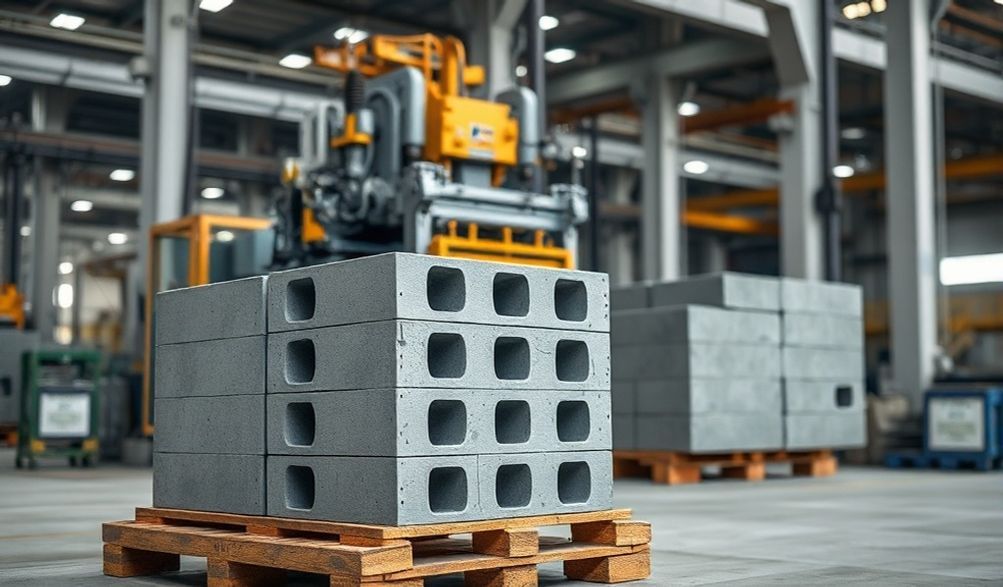
Le Guide Ultime des Machines à Fabriquer des Briques Creuses : Types, Avantages et Comment Choisir
Introduction
L'industrie mondiale de la construction est en quête incessante de matériaux à la fois durables et rentables. Face à cette demande, les briques creuses se sont imposées comme une solution de premier plan, offrant un mélange supérieur de performance, d'économie et de responsabilité environnementale. Mais derrière chaque brique creuse de haute qualité se cache une technologie essentielle : la machine à fabriquer les briques creuses.
Cette machine est le moteur de la fabrication moderne de blocs, transformant des matières premières comme le ciment, les cendres volantes et le sable en blocs de construction de haute résistance, parfaitement moulés. Son rôle est transformateur, permettant aux entrepreneurs de lancer des entreprises et aux sociétés de construction de maîtriser leur chaîne d'approvisionnement, leur qualité et leurs coûts.
Ce guide constitue votre ressource experte et complète. Synthétisant une connaissance approfondie du secteur, des spécifications techniques et des conseils d'achat pratiques, il est conçu pour les propriétaires d'entreprise, les responsables de chantier et les entrepreneurs du secteur manufacturier. À la fin, vous aurez une compréhension claire des différents types de machines, de leurs avantages substantiels, une liste de contrôle détaillée pour la sélection, des conseils opérationnels clés et des réponses aux questions fréquentes essentielles. Notre objectif est de vous permettre de prendre une décision d'investissement parfaitement éclairée, adaptée à vos besoins spécifiques.
Qu'est-ce qu'une machine à fabriquer des briques creuses ? Fonction principale et principe
Au cœur de son fonctionnement, une machine à fabriquer des briques creuses est un dispositif qui automatise la production de blocs de béton creux par un processus de compactage et de vibration. Comprendre son rôle commence par le produit qu'elle crée.
Définition du produit : Briques creuses vs Briques pleines
Les briques creuses, également appelées unités de maçonnerie en béton (CMU) ou blocs creux, sont définies par leur conception : elles contiennent un ou plusieurs grands trous ou vides (appelés « âmes »).
- Conception structurelle :Ces vides représentent généralement de 25 % à 50 % de la surface totale de la section transversale du bloc. Ils traversent le bloc de haut en bas.
- Avantages Résultants :
- Léger :Significativement plus légères que les briques pleines, ce qui les rend plus faciles et moins coûteuses à transporter et à manipuler sur le chantier, réduisant ainsi la fatigue des travailleurs et la charge structurelle.
- Isolation :Les poches d'air dans les vides offrent une excellente isolation thermique et acoustique, ce qui conduit à des bâtiments plus économes en énergie et plus silencieux.
- Utilité :Les noyaux permettent un passage aisé des conduits électriques, des tuyaux de plomberie et des barres d'armature (ferraillage), qui peuvent être coulés au mortier pour une résistance accrue.
Comment fonctionne la machine : Le processus de base
Bien que les conceptions varient, le cycle de production fondamental reste cohérent sur la plupart des machines.
- Alimentation :Les matières premières pré-mélangées (un mélange de ciment, de sable, de cendres volantes, de poussière de pierre et d'eau) sont introduites dans la trémie de la machine.
- Mélange :Un mélangeur interne garantit un mélange homogène et uniforme, ce qui est crucial pour la résistance constante des briques.
- Compactage et Vibration :Le mélange est versé dans un moule (la forme de la brique souhaitée). La machine applique ensuite une pression immensepression hydrauliqueet haute fréquencevibrationCette double action élimine les poches d'air et compacte densément le matériau, conférant à la brique son intégrité structurelle.
- Éjection & Durcissement :La brique fraîchement formée, dite "verte", est éjectée du moule sur une palette ou un convoyeur. Elle est ensuite déplacée vers une zone de cure, où elle acquiert de la solidité au fil des jours grâce à une humidité et une température contrôlées.
Applications Principales dans la Construction
Les briques produites sont polyvalentes et utilisées dans :
* Bâtiments résidentiels :Pour les murs porteurs et non porteurs.
* Ensembles commerciaux :Bureaux, entrepôts et espaces de vente au détail.
* Cloisons de séparation :Créer des divisions internes au sein des structures.
* Landscaping & Boundary Walls: For garden walls, fences, and other outdoor applications.
Types of Hollow Brick Making Machines: A Detailed Breakdown
Choosing the right type is your first major decision. Machines are categorized by operation, capacity, and output.
By Operation: Manual, Semi-Automatic, and Fully Automatic
-
Machines manuelles : Operated primarily by hand levers.
- Investissement :Coût initial très bas.
- Travail : High labor intensity, slow, and output dependent on operator skill.
- Sortie : Low (100-500 bricks per day).
- Idéal Pour : Micro-enterprises, very small-scale projects, or regions with extremely low labor costs.
-
Machines semi-automatiques : Combine mechanical operation (like hydraulic pressure) with manual handling of bricks and pallets.
- Investissement : Moderate.
- Travail : Requires a small team (2-4 people) for operation and handling.
- Sortie : Medium (800-2500 bricks per 8-hour shift).
- Idéal Pour : Small to medium businesses (SMBs) and startups with a steady demand.
-
Machines entièrement automatiques : Computer-controlled systems that automate feeding, mixing, molding, stacking, and pallet return.
- Investissement :Dépenses en capital élevées.
- Travail : Minimal; often just 1-2 operators for monitoring.
- Sortie : High (3000-15,000+ bricks per shift).
- Idéal Pour : Large-scale manufacturers, construction companies supplying major projects, and high-volume businesses.
By Production Capacity: Small, Medium, and Large Scale Plants
- Small Scale: Outputs up to 2,000 bricks per day. Often semi-automatic, suitable for local market supply.
- Medium Scale: Outputs between 2,000 and 8,000 bricks per day. Can be robust semi-automatic or entry-level automatic lines.
- Large Scale Plants: Outputs exceeding 8,000 bricks per day. Always fully automatic production lines with conveyor systems and sometimes robotic palletizers.
By Brick Type and Size
Machines are configured with interchangeable molds to produce various products:
* Blocs de béton standard creux : 4-inch, 6-inch, 8-inch, and 12-inch thicknesses.
* Blocs Pleins : For applications requiring maximum load-bearing capacity.
* Paving Blocks & Interlocking Pavers: For driveways and walkways.
* Formes Spécialisées : Curved blocks, chimney blocks, or lintels.
Specialized Machines: Mobile vs. Stationary Plants
- Plantes Stationnaires : The standard setup, installed in a fixed factory location.
- Machines mobiles de fabrication de briques : Mounted on a trailer for easy transport. The key advantage is on-site production, eliminating transport costs for bricks and allowing immediate use. Ideal for large, remote construction projects like dams, highways, or large housing developments.
Key Benefits of Using a Hollow Brick Making Machine
Investing in this technology unlocks a cascade of advantages, from the balance sheet to the building site.
Avantages Économiques
- Lower Unit Cost: Producing in-house drastically reduces the cost per brick compared to purchasing from third-party suppliers.
- High-Profit Margins: Creates a revenue stream by selling surplus bricks to the local market.
- Reduced Dependency: Shields your projects from market price fluctuations and supply chain delays of traditional bricks.
Construction & Performance Benefits
- Lightweight Nature: Eases construction speed and reduces dead load on the building foundation.
- Isolation Supérieure : Thermal properties lower heating and cooling costs. Acoustic insulation enhances comfort in residential and commercial spaces.
- Proven Structural Strength: When produced to proper standards, hollow blocks offer excellent compressive strength for multi-story construction.
Environmental & Sustainability Benefits
- Valorisation des Déchets : Can incorporate industrial by-products like fly ash (from coal plants) and slag, diverting them from landfills.
- Resource Efficiency: The hollow design uses less raw material per unit volume than a solid block.
- Energy-Efficient End-Product: Buildings made with hollow bricks have a lower lifetime carbon footprint due to reduced energy consumption.
Business and Operational Benefits
- Haute Vitesse de Production : Machines produce bricks far faster than manual or traditional methods.
- Qualité constante : Automated processes ensure every brick has identical dimensions, density, and strength, leading to better construction quality.
- Évolutivité des entreprises : You can start small and add capacity by upgrading machines or adding shifts as demand grows.
How to Choose the Right Machine: A Buyer’s Checklist
This decision should be driven by careful analysis, not impulse. Use this checklist to guide your evaluation.
Assess Your Business Needs & Goals
Answer these questions first:
* Target Market: Are you supplying a single project, local retailers, or large contractors?
* Daily Production Volume: What is your current and projected 3-year demand? Be realistic.
* Budget : What is your total investment cap, including machine, installation, and working capital?
* Available Space & Power: Do you have a suitable factory space with a 3-phase electrical connection?
Critical Technical Specifications to Scrutinize
- Compaction Force (Tonnage): Measured in tons, this determines brick density and strength. For standard blocks, 100-150 tons is common; for pavers or high-strength blocks, 200+ tons may be needed.
- Temps de cycle : The time to produce one brick or one mold of bricks. Faster cycles mean higher output.
- Exigence de puissance : Verify if it runs on standard 3-phase electricity or requires a diesel generator.
- Versatilité des Moulages Does the supplier offer a range of mold options, and how easy/expensive is it to change them?
Quality and Durability Factors
- Construction de l'ossature : The main frame should be made from heavy-duty steel plates and profiles, not lightweight sections.
- Component Brands: Reputable brands for hydraulic pumps, valves, PLCs (for automatics), and vibrator motors indicate reliability.
- Protection contre la corrosion : Look for sandblasting and high-quality paint coating to protect against rust in humid production environments.
Manufacturer & After-Sales Support Evaluation
This is often more important than a slight price difference.
* Garantie : A minimum of 12 months on parts and workmanship is standard for reputable makers.
* Disponibilité des pièces détachées : Ensure common wear parts are readily available locally or can be shipped quickly.
* Assistance technique : Does the company provide installation supervision, operator training, and troubleshooting support?
* Company Reputation: Research their history, ask for client references, and if possible, visit an existing plant using their machine.
Cost Analysis: Investment vs. Return on Investment (ROI)
Calculate a simple payback period:
1. Calculate your total investment (Machine + Installation + Initial Raw Material).
2. Estimate your monthly profit: (Selling Price per Brick – Production Cost per Brick) x Monthly Production Volume.
3. Payback Period (Months) = Total Investment / Monthly Profit.
A well-run operation with a suitable machine can often see a payback period of 12-24 months.
Operating and Maintaining Your Machine for Longevity
Your machine is a long-term asset. Proper operation and maintenance are non-negotiable for profitability and longevity.
Essential Raw Material Preparation
The quality of your bricks is directly tied to your raw material mix.
* Mix Ratios: A common starting mix is 1 part cement, 3 parts sand, and 3 parts stone dust/aggregate (1:3:3). Fly ash can replace 15-25% of the cement. Always conduct trial batches.
* Teneur en humidité : The mix must have the right consistency—typically 8-10% water. Too dry causes weak bricks; too wet causes deformation.
* Qualité des matériaux : Use clean, well-graded sand and aggregates free of clay, silt, or organic matter.
Daily Operation Best Practices
- Startup: Check oil levels, ensure the area is clear, and run the machine empty for a few minutes to warm up hydraulics.
- During Operation: Monitor brick formation, listen for unusual noises, and check for consistent vibration.
- Shutdown: Clean the hopper, mold, and platform thoroughly. Follow the manufacturer’s specific shutdown procedure.
Routine Maintenance Schedule
- Daily: Clean the machine, check for loose bolts, and inspect hydraulic hoses for leaks.
- Weekly: Lubricate all moving parts (pivots, guide rods) as per the manual. Check hydraulic oil level and condition.
- Monthly: Tighten all bolts and nuts on the frame and vibration table. Inspect mold liners for wear.
Troubleshooting Common Issues
- Poor Brick Strength: Likely causes are incorrect mix ratio, low cement content, insufficient compaction force, or improper curing.
- Surface Cracks: Usually caused by too much water in the mix, excessive vibration, or rapid drying during curing.
- Bricks Sticking in Mold: Often due to a worn or damaged mold liner, insufficient release agent, or a misaligned ejection system.
Frequently Asked Questions (FAQ) About Hollow Brick Making Machines
What is the average cost range for a hollow brick machine?
Prices vary dramatically based on automation and capacity. Manual machines can start from $2,000 – $8,000. Semi-automatic models typically range from $15,000 – $50,000. Fully automatic production lines begin around $60,000 and can exceed $250,000 for high-capacity plants. Always remember: specifications dictate the final price.
What raw materials can I use?
The most common materials are Portland cement, sand (river or crushed), stone dust (aggregate), and water. A key advantage is the ability to use industrial waste like cendres volantes (to replace cement) and slag. Some setups also allow for the use of recycled concrete aggregate.
How much space and what kind of power supply is needed?
You need space for three areas: the machine itself, raw material storage, and a curing yard. A small semi-automatic setup may require 1,500 – 3,000 sq. ft. Most industrial machines require a Alimentation électrique triphasée (380V/415V). Mobile or remote options often use diesel power packs.
Is special training required to operate the machine?
While modern machines are designed for user-friendliness, comprehensive training from the supplier is crucial. Proper training ensures operator safety, maximizes production efficiency, and teaches essential daily maintenance to prevent costly breakdowns.
What is the typical lifespan of a well-maintained machine?
A high-quality hollow brick making machine that receives diligent, scheduled maintenance can have a productive lifespan of 10 to 15 years or more. The key factor is preventative care—neglect can reduce this lifespan by half.
Conclusion
Selecting the right hollow brick making machine is a strategic decision that impacts your project’s cost, timeline, and quality, or your business’s profitability and growth trajectory. It requires balancing your immediate production needs with long-term goals, prioritizing machine quality and manufacturer support over the lowest initial price tag.
Our final expert recommendation is to conduct thorough due diligence. Request material tests from potential suppliers using your local raw materials to see the final product quality. Always calculate the Coût Total de Possession, factoring in maintenance and potential downtime, not just the purchase price.
We encourage you to consult with multiple reputable manufacturers, ask for client references you can contact directly, and, if feasible, visit a working plant to see the machine in operation. This firsthand experience is invaluable.
By making an informed investment, you are not just purchasing a machine; you are acquiring the key technology to build a more profitable, efficient, and sustainable future in the ever-evolving construction industry.
<