
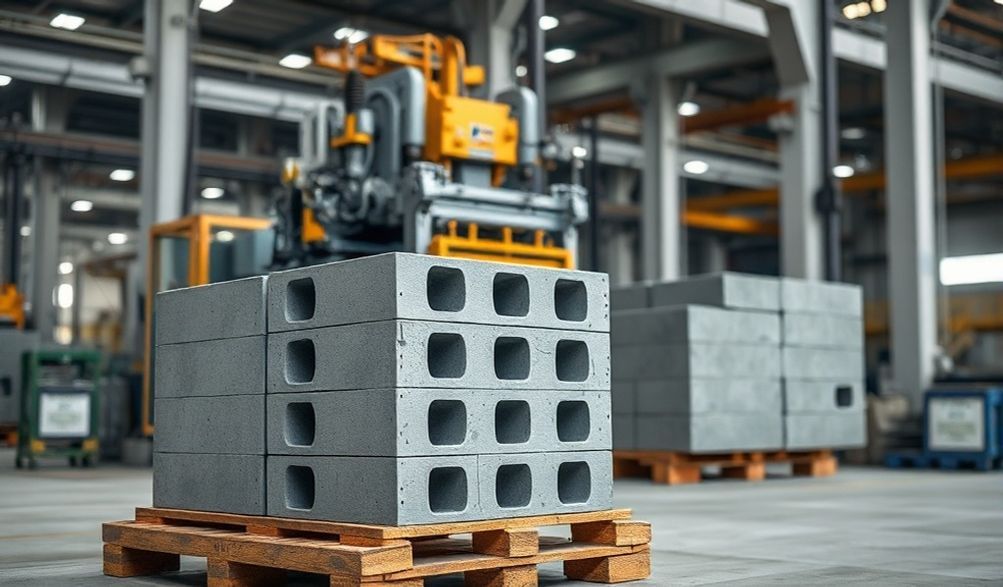
Hagaha Ugu Wanaagsan ee Makiinadaha Sameynta Lebiska Dhuuman: Noocyada, Faaiidooyinka & Sida Loo Xulo
Hordhac
Warshada dhismaha caalamku waxay si joogto ah ugu dadaashaa inay helaan qalabka dhismaha oo ah mid aan dhibaato lahayn iyo mid qiimo jaban. Iyadoo la raacayo baahidan, biriyada dhuuban ayaa noqotay xal hore, iyadoo ay bixiso isku dheellitirka ugu sareeya ee waxqabadka, dhaqaalaha, iyo mas'uuliyadda deegaanka. Laakiin gadaal kasta oo bir dhuuban tayo sare leh ah waxaa jira qayb muhiim ah oo teknolojiyada ah: makiinada sameynta birta dhuuban.
Mashinadan waa makiinada wax soo saarka tilmaamaha casriga ah ee la isku dhejiyo, waxayna u beddeshaa alaabta xaddidan sida sementiga, dhoobada duumada, iyo ciidda inay noqdaan tilmaamo qoto dheer oo xoog leh oo dhismo. Doorkeedu waa mid wax beddel leh, waxayna u suurtagelinaysaa ganacsatada inay bilabeen ganacsiyo iyo shirkadaha dhismaha inay gacan ka geystaan silsiladda wax soo saarkooda, tayada, iyo kharashaadkooda.
Hadaan turjumo: Hageegan waa ilo wacyi gelin oo dhamaystiran oo khabiir ah. Isku-dhafka aqoonta qoto dheer ee warshadaha, qeexitaannada farsamada, iyo talooyinka wax iibsiga ee waxtarka leh, waxaa loogu talagalay mulkiilayaal ganacsiga, maamulayaal dhismaha, iyo ganacsatada warshadaha. Dhamaadka, waxaad si cad u fahmi doontaa noocyada kala duwan ee makiinadaha, faa'iidooyinkooda muhiimka ah, liiska faahfaahsan ee doorashada, tilmaamaha muhiimka ah ee hawlgalka, iyo jawaabaha su'aalaha caanka ah. Hadafkeena waa inaan ku siinno awood aad ku go'aansan kartid go'aanka maalgelinta ee saxda ah ee baahidaada gaarka ah.
Waa maxay Makiinada Sameynta Lebiska Dhuuban? Shaqada iyo Mabaadi'da Aasaasiga ah
Asal ahaan, makiinada sameynta lebbiska dhuumasho ah waa qalab kuwaas oo u dhaqangeliyo wax-soo-saarista bulookada simento ah ee dhuuman iyadoo la isticmaalayo habka cufinta iyo gariirka. Fahamka howsheeda waxay ku bilaabmaa wax-soo-saarka ay sameyso.
Qeexista Alaabta: Lebiska Dushaarka ah iyo Lebiska Adag
Brikadka dusha ka qaawan, sidoo kale loo yaqaan 'concrete masonry units' (CMUs) ama bulooko dusha ka qaawan, waxaa lagu qeexay qaab-dhismeedkooda: waxay ku jiraan hal ilaa in ka badan godad weyn ama meel aan waxba ka jirin (loo yaqaan "cores").
- Qaabaynta QaabkaGudaha gudahaas ayaa inta badan u dhexeeya 25% ilaa 50% baaxada guud ee isku-duubka blooka. Waxay ku socdaan blooka ilaa hoos laga soo bilaabo sare.
- Faa'iidooyinka La Soo Saaray:
- Khafif:Waxay aad u fududahay dhagaxyada adag, taasoo ka dhigaysa inay fududahay in la gaarsiiyo oo la qaado goobta, iyagoo yareeyey qiimaha iyo culayska shaqada, iyo culayska qaab-dhismeedka.
- Qalabka dab-damiska:Hawa ku jirta boosyada madhan ayaa bixisaa daboolin kul iyo dhawaq oo aad u wanaagsan, taas oo keenta dhismooyin awood-badan oo aad u qosol badan.
- AdeegQaybaha dhexe waxay u oggolaadaan in la si fudud ugu wado toogagga korontada, tuubabka biyaha, iyo birta xoojinta (rebar), kuwaas oo la dheji karo si loo siiyo xoog dheeraad ah.
Sida Mashinka U Shaqeyso: Habka Aasaasiga ah
In kasta oo qaababku ay kala duwan yihiin, wareegga soo saarka aasaasiga ah waa isku mid inta badan mashiinnada:
- Cunto-siin:Alaabta hore ee la isku daray (isku dheggan oo ka kooban siman, ciid, duxusha, boorka dhagaxa, iyo biyo) ayaa lagu shubaa hoobada mashiinka.
- Isku-dhafka:Mashruulka gudaha ee isku-dhafka wuxuu hubiyaa isku-dhafka isku mid ah, kuwaas oo muhiim u ah xoogga lebbiska isku midka ah.
- Ku Dhufasho & Gariirid:Waxaa lagu tuuraa qashin qalabka (qaabka dhagaxa la doonayo). Markaas ayaa mashiinku ku dhejiyaa culeys weyncadaadka hydraulicsiyo heer sare oo ku dhacdagariir. This dual action removes air pockets and densely compacts the material, giving the brick its structural integrity.
- Bixinta & Daawaynta: The freshly formed, “green” brick is ejected from the mold onto a pallet or conveyor. It is then moved to a curing area, where it gains strength over days through controlled moisture and temperature.
Codsiga Ugu Muhiimsan Dhismaha
The bricks produced are versatile and used in:
* Residential Buildings: For load-bearing and non-load-bearing walls.
* Commercial Complexes: Offices, warehouses, and retail spaces.
* Partition Walls: Creating internal divisions within structures.
* Landscaping & Boundary Walls: For garden walls, fences, and other outdoor applications.
Types of Hollow Brick Making Machines: A Detailed Breakdown
Choosing the right type is your first major decision. Machines are categorized by operation, capacity, and output.
By Operation: Manual, Semi-Automatic, and Fully Automatic
-
Makiinada Gacanta: Operated primarily by hand levers.
- Maalgashiga:Qiimo aad u hooseeya bilowga.
- Shaqo: High labor intensity, slow, and output dependent on operator skill.
- Soo saar Low (100-500 bricks per day).
- Wanaagsan: Micro-enterprises, very small-scale projects, or regions with extremely low labor costs.
-
Makiinnada Yar-otoomaatig ah: Combine mechanical operation (like hydraulic pressure) with manual handling of bricks and pallets.
- Maalgashiga: Moderate.
- Shaqo: Requires a small team (2-4 people) for operation and handling.
- Soo saar Medium (800-2500 bricks per 8-hour shift).
- Wanaagsan: Small to medium businesses (SMBs) and startups with a steady demand.
-
Makiinadaha Tooska ah ee Si Fudud: Computer-controlled systems that automate feeding, mixing, molding, stacking, and pallet return.
- Maalgashiga: High capital expenditure.
- Shaqo: Minimal; often just 1-2 operators for monitoring.
- Soo saar High (3000-15,000+ bricks per shift).
- Wanaagsan: Large-scale manufacturers, construction companies supplying major projects, and high-volume businesses.
By Production Capacity: Small, Medium, and Large Scale Plants
- Small Scale: Outputs up to 2,000 bricks per day. Often semi-automatic, suitable for local market supply.
- Medium Scale: Outputs between 2,000 and 8,000 bricks per day. Can be robust semi-automatic or entry-level automatic lines.
- Large Scale Plants: Outputs exceeding 8,000 bricks per day. Always fully automatic production lines with conveyor systems and sometimes robotic palletizers.
By Brick Type and Size
Machines are configured with interchangeable molds to produce various products:
* Balooyin Caadi ah ee Dhuumaha: 4-inch, 6-inch, 8-inch, and 12-inch thicknesses.
* Goobooyaan Adag: For applications requiring maximum load-bearing capacity.
* Paving Blocks & Interlocking Pavers: For driveways and walkways.
* Qaabab Gaar ah: Curved blocks, chimney blocks, or lintels.
Specialized Machines: Mobile vs. Stationary Plants
- Waxyaabaha Joogtada ah ee Dhirta: The standard setup, installed in a fixed factory location.
- Mashiinada Lebiska Brikoodhka Mobilka: Mounted on a trailer for easy transport. The key advantage is on-site production, eliminating transport costs for bricks and allowing immediate use. Ideal for large, remote construction projects like dams, highways, or large housing developments.
Key Benefits of Using a Hollow Brick Making Machine
Investing in this technology unlocks a cascade of advantages, from the balance sheet to the building site.
Economic Advantages
- Lower Unit Cost: Producing in-house drastically reduces the cost per brick compared to purchasing from third-party suppliers.
- High-Profit Margins: Creates a revenue stream by selling surplus bricks to the local market.
- Reduced Dependency: Shields your projects from market price fluctuations and supply chain delays of traditional bricks.
Construction & Performance Benefits
- Lightweight Nature: Eases construction speed and reduces dead load on the building foundation.
- Qalabka sare ee Isku-dhafka Thermal properties lower heating and cooling costs. Acoustic insulation enhances comfort in residential and commercial spaces.
- Proven Structural Strength: When produced to proper standards, hollow blocks offer excellent compressive strength for multi-story construction.
Environmental & Sustainability Benefits
- Isticmaalka Qashinka: Can incorporate industrial by-products like fly ash (from coal plants) and slag, diverting them from landfills.
- Resource Efficiency: The hollow design uses less raw material per unit volume than a solid block.
- Energy-Efficient End-Product: Buildings made with hollow bricks have a lower lifetime carbon footprint due to reduced energy consumption.
Business and Operational Benefits
- High Production Speed: Machines produce bricks far faster than manual or traditional methods.
- Tayo-joogto ah: Automated processes ensure every brick has identical dimensions, density, and strength, leading to better construction quality.
- Wax-soo-saarka Ganacsiga: You can start small and add capacity by upgrading machines or adding shifts as demand grows.
How to Choose the Right Machine: A Buyer’s Checklist
This decision should be driven by careful analysis, not impulse. Use this checklist to guide your evaluation.
Assess Your Business Needs & Goals
Answer these questions first:
* Target Market: Are you supplying a single project, local retailers, or large contractors?
* Daily Production Volume: What is your current and projected 3-year demand? Be realistic.
* Budget: What is your total investment cap, including machine, installation, and working capital?
* Ballaariga La Heli Karo & Korontada: Do you have a suitable factory space with a 3-phase electrical connection?
Critical Technical Specifications to Scrutinize
- Compaction Force (Tonnage): Measured in tons, this determines brick density and strength. For standard blocks, 100-150 tons is common; for pavers or high-strength blocks, 200+ tons may be needed.
- Waqtiga Wareegga: The time to produce one brick or one mold of bricks. Faster cycles mean higher output.
- Baahida Korontada: Verify if it runs on standard 3-phase electricity or requires a diesel generator.
- Kala duwanaanta Qaabka Does the supplier offer a range of mold options, and how easy/expensive is it to change them?
Quality and Durability Factors
- Qaab-dhiska Qaabka The main frame should be made from heavy-duty steel plates and profiles, not lightweight sections.
- Component Brands: Reputable brands for hydraulic pumps, valves, PLCs (for automatics), and vibrator motors indicate reliability.
- Ilaalinta Daxalka: Look for sandblasting and high-quality paint coating to protect against rust in humid production environments.
Manufacturer & After-Sales Support Evaluation
This is often more important than a slight price difference.
* Warranty: A minimum of 12 months on parts and workmanship is standard for reputable makers.
* La Helitaanka Qaybaha Gadaal Ensure common wear parts are readily available locally or can be shipped quickly.
* Taageerada Tekniko Does the company provide installation supervision, operator training, and troubleshooting support?
* Company Reputation: Research their history, ask for client references, and if possible, visit an existing plant using their machine.
Cost Analysis: Investment vs. Return on Investment (ROI)
Calculate a simple payback period:
1. Calculate your total investment (Machine + Installation + Initial Raw Material).
2. Estimate your monthly profit: (Selling Price per Brick – Production Cost per Brick) x Monthly Production Volume.
3. Payback Period (Months) = Total Investment / Monthly Profit.
A well-run operation with a suitable machine can often see a payback period of 12-24 months.
Operating and Maintaining Your Machine for Longevity
Your machine is a long-term asset. Proper operation and maintenance are non-negotiable for profitability and longevity.
Essential Raw Material Preparation
The quality of your bricks is directly tied to your raw material mix.
* Mix Ratios: A common starting mix is 1 part cement, 3 parts sand, and 3 parts stone dust/aggregate (1:3:3). Fly ash can replace 15-25% of the cement. Always conduct trial batches.
* Moisture Content: The mix must have the right consistency—typically 8-10% water. Too dry causes weak bricks; too wet causes deformation.
* Tayada Qalabka: Use clean, well-graded sand and aggregates free of clay, silt, or organic matter.
Daily Operation Best Practices
- Startup: Check oil levels, ensure the area is clear, and run the machine empty for a few minutes to warm up hydraulics.
- During Operation: Monitor brick formation, listen for unusual noises, and check for consistent vibration.
- Shutdown: Clean the hopper, mold, and platform thoroughly. Follow the manufacturer’s specific shutdown procedure.
Routine Maintenance Schedule
- Daily: Clean the machine, check for loose bolts, and inspect hydraulic hoses for leaks.
- Weekly: Lubricate all moving parts (pivots, guide rods) as per the manual. Check hydraulic oil level and condition.
- Monthly: Tighten all bolts and nuts on the frame and vibration table. Inspect mold liners for wear.
Troubleshooting Common Issues
- Poor Brick Strength: Likely causes are incorrect mix ratio, low cement content, insufficient compaction force, or improper curing.
- Surface Cracks: Usually caused by too much water in the mix, excessive vibration, or rapid drying during curing.
- Bricks Sticking in Mold: Often due to a worn or damaged mold liner, insufficient release agent, or a misaligned ejection system.
Frequently Asked Questions (FAQ) About Hollow Brick Making Machines
What is the average cost range for a hollow brick machine?
Prices vary dramatically based on automation and capacity. Manual machines can start from $2,000 – $8,000. Semi-automatic models typically range from $15,000 – $50,000. Fully automatic production lines begin around $60,000 and can exceed $250,000 for high-capacity plants. Always remember: specifications dictate the final price.
What raw materials can I use?
The most common materials are Portland cement, sand (river or crushed), stone dust (aggregate), and water. A key advantage is the ability to use industrial waste like fly ash (to replace cement) and slag. Some setups also allow for the use of recycled concrete aggregate.
How much space and what kind of power supply is needed?
You need space for three areas: the machine itself, raw material storage, and a curing yard. A small semi-automatic setup may require 1,500 – 3,000 sq. ft. Most industrial machines require a 3-phase electrical supply (380V/415V). Mobile or remote options often use diesel power packs.
Is special training required to operate the machine?
While modern machines are designed for user-friendliness, comprehensive training from the supplier is crucial. Proper training ensures operator safety, maximizes production efficiency, and teaches essential daily maintenance to prevent costly breakdowns.
What is the typical lifespan of a well-maintained machine?
A high-quality hollow brick making machine that receives diligent, scheduled maintenance can have a productive lifespan of 10 to 15 years or more. The key factor is preventative care—neglect can reduce this lifespan by half.
Gabagabo
Selecting the right hollow brick making machine is a strategic decision that impacts your project’s cost, timeline, and quality, or your business’s profitability and growth trajectory. It requires balancing your immediate production needs with long-term goals, prioritizing machine quality and manufacturer support over the lowest initial price tag.
Our final expert recommendation is to conduct thorough due diligence. Request material tests from potential suppliers using your local raw materials to see the final product quality. Always calculate the Qiimaha Guud ee La Iska Leeyahay, factoring in maintenance and potential downtime, not just the purchase price.
We encourage you to consult with multiple reputable manufacturers, ask for client references you can contact directly, and, if feasible, visit a working plant to see the machine in operation. This firsthand experience is invaluable.
By making an informed investment, you are not just purchasing a machine; you are acquiring the key technology to build a more profitable, efficient, and sustainable future in the ever-evolving construction industry.
<