
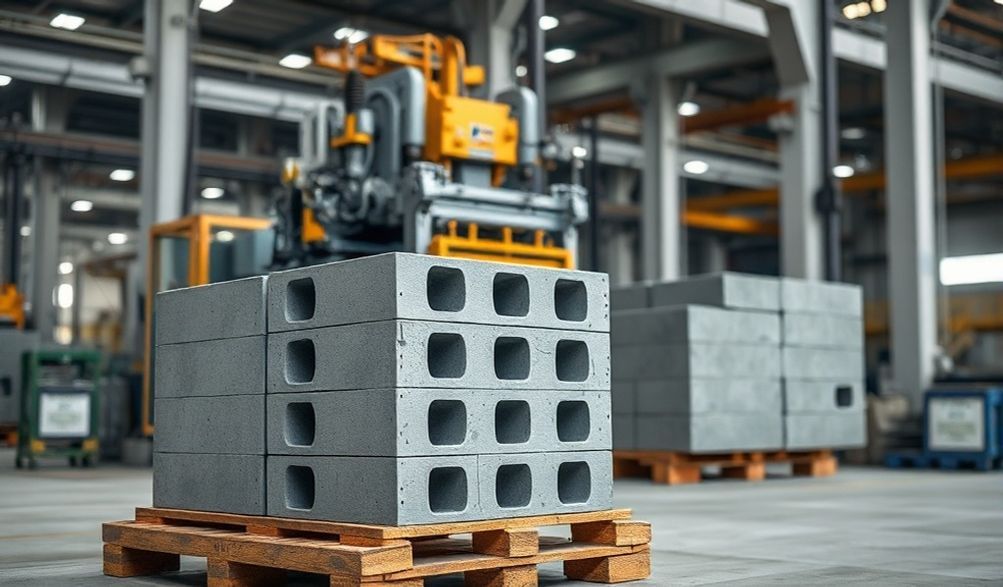
Ang Komprehensibong Gabay sa Makina ng Paggawa ng Hollow Brick: Mga Uri, Benepisyo at Paano Pumili
Panimula
Ang pandaigdigang industriya ng konstruksiyon ay patuloy na nagsusumikap para sa mga materyales na parehong sustainable at cost-effective. Sa gitna ng pangangailangang ito, ang mga hollow brick ay naging pangunahing solusyon, na nag-aalok ng mahusay na kombinasyon ng performance, ekonomiya, at responsibilidad sa kapaligiran. Ngunit sa likod ng bawat de-kalidad na hollow brick ay may mahalagang teknolohiya: ang makina ng paggawa ng hollow brick.
Ang makinaryang ito ang siyang puso ng modernong paggawa ng mga bloke, na nagpapalit ng mga hilaw na materyales tulad ng semento, fly ash, at buhangin sa tiyak na hugis at matitibay na mga bloke para sa gusali. Ang papel nito ay lubhang mapagbabago, na nagbibigay-daan sa mga negosyante na magsimula ng mga negosyo at sa mga kompanya ng konstruksyon na magkaroon ng kontrol sa kanilang supply chain, kalidad, at gastos.
Ang gabay na ito ay nagsisilbing iyong komprehensibo at dalubhasang sanggunian. Pinagsasama-sama ang malalim na kaalaman sa industriya, teknikal na mga detalye, at praktikal na payo sa pagbili, ito ay idinisenyo para sa mga may-ari ng negosyo, tagapamahala ng konstruksiyon, at negosyanteng nasa larangan ng pagmamanupaktura. Sa pagtatapos nito, magkakaroon ka ng malinaw na pang-unawa sa iba't ibang uri ng makina, ang kanilang malaking benepisyo, isang detalyadong talaan para sa pagpili, mahahalagang tip sa pagpapatakbo, at mga sagot sa kritikal na mga FAQ. Layunin namin na bigyan ka ng kakayahan na makagawa ng ganap na maalam na desisyon sa pamumuhunan para sa iyong partikular na pangangailangan.
Ano ang Hollow Brick Making Machine? Pangunahing Tungkulin at Prinsipyo
Sa ubod nito, ang isang makina ng paggawa ng mga butas na ladrilyo ay isang aparatong awtomatiko sa paglikha ng mga butas na bloke ng kongkreto sa pamamagitan ng proseso ng pagpiga at panginginig. Ang pag-unawa sa tungkulin nito ay nagsisimula sa produkto na nililikha nito.
Pagpapakahulugan sa Produkto: Hollow Bricks kumpara sa Solid Bricks
Hollow bricks, also called concrete masonry units (CMUs) or hollow blocks, are defined by their design: they contain one or more large holes or voids (called “cores”).
- Structural Design: These voids typically make up 25% to 50% of the block’s total cross-sectional area. They run through the block from top to bottom.
- Resulting Advantages:
- Magaan: Significantly lighter than solid bricks, making them easier and cheaper to transport and handle on-site, reducing labor strain and structural load.
- Insulation: The air pockets within the voids provide excellent thermal and acoustic insulation, leading to more energy-efficient and quieter buildings.
- Utility: The cores allow for easy routing of electrical conduits, plumbing pipes, and reinforcement bars (rebar), which can be grouted for added strength.
How the Machine Works: The Basic Process
While designs vary, the fundamental production cycle is consistent across most machines:
- Pagpapakain: Pre-mixed raw materials (a blend of cement, sand, fly ash, stone dust, and water) are fed into the machine’s hopper.
- Paghahalo: An internal mixer ensures a homogeneous, consistent mix, which is crucial for uniform brick strength.
- Pagpapatibay at Pagpapanatag: The mix is dropped into a mold (the shape of the desired brick). The machine then applies immense presyur ng haydrolikoat mataas na dalaspagyanig. This dual action removes air pockets and densely compacts the material, giving the brick its structural integrity.
- Pag-eject at Pagpapahid: The freshly formed, “green” brick is ejected from the mold onto a pallet or conveyor. It is then moved to a curing area, where it gains strength over days through controlled moisture and temperature.
Pangunahing Aplikasyon sa Konstruksyon
The bricks produced are versatile and used in:
* Residential Buildings: For load-bearing and non-load-bearing walls.
* Commercial Complexes: Offices, warehouses, and retail spaces.
* Partisyon na Pader: Creating internal divisions within structures.
* Landscaping & Boundary Walls: For garden walls, fences, and other outdoor applications.
Types of Hollow Brick Making Machines: A Detailed Breakdown
Choosing the right type is your first major decision. Machines are categorized by operation, capacity, and output.
By Operation: Manual, Semi-Automatic, and Fully Automatic
-
Manual na Makina: Operated primarily by hand levers.
- Puhunan:Napakababang paunang gastos.
- Paggawa: High labor intensity, slow, and output dependent on operator skill.
- Output: Low (100-500 bricks per day).
- Angkop Para Sa: Micro-enterprises, very small-scale projects, or regions with extremely low labor costs.
-
Semi-Automatikong Makina: Combine mechanical operation (like hydraulic pressure) with manual handling of bricks and pallets.
- Puhunan: Moderate.
- Paggawa: Requires a small team (2-4 people) for operation and handling.
- Output: Medium (800-2500 bricks per 8-hour shift).
- Angkop Para Sa: Small to medium businesses (SMBs) and startups with a steady demand.
-
Ganap na Awtomatikong Makina: Computer-controlled systems that automate feeding, mixing, molding, stacking, and pallet return.
- Puhunan: High capital expenditure.
- Paggawa: Minimal; often just 1-2 operators for monitoring.
- Output: High (3000-15,000+ bricks per shift).
- Angkop Para Sa: Large-scale manufacturers, construction companies supplying major projects, and high-volume businesses.
By Production Capacity: Small, Medium, and Large Scale Plants
- Maliit na Sukat: Outputs up to 2,000 bricks per day. Often semi-automatic, suitable for local market supply.
- Katamtamang Sukat: Outputs between 2,000 and 8,000 bricks per day. Can be robust semi-automatic or entry-level automatic lines.
- Large Scale Plants: Outputs exceeding 8,000 bricks per day. Always fully automatic production lines with conveyor systems and sometimes robotic palletizers.
By Brick Type and Size
Machines are configured with interchangeable molds to produce various products:
* Standard Hollow Blocks: 4-inch, 6-inch, 8-inch, and 12-inch thicknesses.
* Masinsing Bloke: For applications requiring maximum load-bearing capacity.
* Paving Blocks & Interlocking Pavers: For driveways and walkways.
* Espesyal na mga Hugis: Curved blocks, chimney blocks, or lintels.
Specialized Machines: Mobile vs. Stationary Plants
- Mga Halaman na Nakatigil: The standard setup, installed in a fixed factory location.
- Mobile na Makina ng Paggawa ng Bricks: Mounted on a trailer for easy transport. The key advantage is on-site production, eliminating transport costs for bricks and allowing immediate use. Ideal for large, remote construction projects like dams, highways, or large housing developments.
Key Benefits of Using a Hollow Brick Making Machine
Investing in this technology unlocks a cascade of advantages, from the balance sheet to the building site.
Economic Advantages
- Lower Unit Cost: Producing in-house drastically reduces the cost per brick compared to purchasing from third-party suppliers.
- High-Profit Margins: Creates a revenue stream by selling surplus bricks to the local market.
- Reduced Dependency: Shields your projects from market price fluctuations and supply chain delays of traditional bricks.
Construction & Performance Benefits
- Lightweight Nature: Eases construction speed and reduces dead load on the building foundation.
- Superior na Pag-iinsulate: Thermal properties lower heating and cooling costs. Acoustic insulation enhances comfort in residential and commercial spaces.
- Proven Structural Strength: When produced to proper standards, hollow blocks offer excellent compressive strength for multi-story construction.
Environmental & Sustainability Benefits
- Paggamit ng Basura: Can incorporate industrial by-products like fly ash (from coal plants) and slag, diverting them from landfills.
- Resource Efficiency: The hollow design uses less raw material per unit volume than a solid block.
- Energy-Efficient End-Product: Buildings made with hollow bricks have a lower lifetime carbon footprint due to reduced energy consumption.
Business and Operational Benefits
- High Production Speed: Machines produce bricks far faster than manual or traditional methods.
- Patuloy na Kalidad: Automated processes ensure every brick has identical dimensions, density, and strength, leading to better construction quality.
- Pagpapalawak ng Negosyo: You can start small and add capacity by upgrading machines or adding shifts as demand grows.
How to Choose the Right Machine: A Buyer’s Checklist
This decision should be driven by careful analysis, not impulse. Use this checklist to guide your evaluation.
Assess Your Business Needs & Goals
Answer these questions first:
* Target Market: Are you supplying a single project, local retailers, or large contractors?
* Daily Production Volume: What is your current and projected 3-year demand? Be realistic.
* Budget: What is your total investment cap, including machine, installation, and working capital?
* Available Space & Power: Do you have a suitable factory space with a 3-phase electrical connection?
Critical Technical Specifications to Scrutinize
- Compaction Force (Tonnage): Measured in tons, this determines brick density and strength. For standard blocks, 100-150 tons is common; for pavers or high-strength blocks, 200+ tons may be needed.
- Oras ng Ikot: The time to produce one brick or one mold of bricks. Faster cycles mean higher output.
- Pangangailangan sa Kuryente: Verify if it runs on standard 3-phase electricity or requires a diesel generator.
- Maraming Gamit na Molde: Does the supplier offer a range of mold options, and how easy/expensive is it to change them?
Quality and Durability Factors
- Konstruksyon ng Frame: The main frame should be made from heavy-duty steel plates and profiles, not lightweight sections.
- Component Brands: Reputable brands for hydraulic pumps, valves, PLCs (for automatics), and vibrator motors indicate reliability.
- Proteksyon Laban sa Korosyon: Look for sandblasting and high-quality paint coating to protect against rust in humid production environments.
Manufacturer & After-Sales Support Evaluation
This is often more important than a slight price difference.
* Warranty: A minimum of 12 months on parts and workmanship is standard for reputable makers.
* Kagamitan sa Pagkukumpuni: Ensure common wear parts are readily available locally or can be shipped quickly.
* Suportang Teknikal: Does the company provide installation supervision, operator training, and troubleshooting support?
* Company Reputation: Research their history, ask for client references, and if possible, visit an existing plant using their machine.
Cost Analysis: Investment vs. Return on Investment (ROI)
Calculate a simple payback period:
1. Calculate your total investment (Machine + Installation + Initial Raw Material).
2. Estimate your monthly profit: (Selling Price per Brick – Production Cost per Brick) x Monthly Production Volume.
3. Payback Period (Months) = Total Investment / Monthly Profit.
A well-run operation with a suitable machine can often see a payback period of 12-24 months.
Operating and Maintaining Your Machine for Longevity
Your machine is a long-term asset. Proper operation and maintenance are non-negotiable for profitability and longevity.
Essential Raw Material Preparation
The quality of your bricks is directly tied to your raw material mix.
* Mix Ratios: A common starting mix is 1 part cement, 3 parts sand, and 3 parts stone dust/aggregate (1:3:3). Fly ash can replace 15-25% of the cement. Always conduct trial batches.
* Moisture Content: The mix must have the right consistency—typically 8-10% water. Too dry causes weak bricks; too wet causes deformation.
* Kalidad ng Materyal: Use clean, well-graded sand and aggregates free of clay, silt, or organic matter.
Daily Operation Best Practices
- Startup: Check oil levels, ensure the area is clear, and run the machine empty for a few minutes to warm up hydraulics.
- During Operation: Monitor brick formation, listen for unusual noises, and check for consistent vibration.
- Shutdown: Clean the hopper, mold, and platform thoroughly. Follow the manufacturer’s specific shutdown procedure.
Routine Maintenance Schedule
- Daily: Clean the machine, check for loose bolts, and inspect hydraulic hoses for leaks.
- Weekly: Lubricate all moving parts (pivots, guide rods) as per the manual. Check hydraulic oil level and condition.
- Monthly: Tighten all bolts and nuts on the frame and vibration table. Inspect mold liners for wear.
Troubleshooting Common Issues
- Poor Brick Strength: Likely causes are incorrect mix ratio, low cement content, insufficient compaction force, or improper curing.
- Surface Cracks: Usually caused by too much water in the mix, excessive vibration, or rapid drying during curing.
- Bricks Sticking in Mold: Often due to a worn or damaged mold liner, insufficient release agent, or a misaligned ejection system.
Frequently Asked Questions (FAQ) About Hollow Brick Making Machines
What is the average cost range for a hollow brick machine?
Prices vary dramatically based on automation and capacity. Manual machines can start from $2,000 – $8,000. Semi-automatic models typically range from $15,000 – $50,000. Fully automatic production lines begin around $60,000 and can exceed $250,000 for high-capacity plants. Always remember: specifications dictate the final price.
What raw materials can I use?
The most common materials are Portland cement, sand (river or crushed), stone dust (aggregate), and water. A key advantage is the ability to use industrial waste like abu ng abo (to replace cement) and dumi ng bakal. Some setups also allow for the use of recycled concrete aggregate.
How much space and what kind of power supply is needed?
You need space for three areas: the machine itself, raw material storage, and a curing yard. A small semi-automatic setup may require 1,500 – 3,000 sq. ft. Most industrial machines require a 3-phase electrical supply (380V/415V). Mobile or remote options often use diesel power packs.
Is special training required to operate the machine?
While modern machines are designed for user-friendliness, comprehensive training from the supplier is crucial. Proper training ensures operator safety, maximizes production efficiency, and teaches essential daily maintenance to prevent costly breakdowns.
What is the typical lifespan of a well-maintained machine?
A high-quality hollow brick making machine that receives diligent, scheduled maintenance can have a productive lifespan of 10 to 15 years or more. The key factor is preventative care—neglect can reduce this lifespan by half.
Conclusion
Selecting the right hollow brick making machine is a strategic decision that impacts your project’s cost, timeline, and quality, or your business’s profitability and growth trajectory. It requires balancing your immediate production needs with long-term goals, prioritizing machine quality and manufacturer support over the lowest initial price tag.
Our final expert recommendation is to conduct thorough due diligence. Request material tests from potential suppliers using your local raw materials to see the final product quality. Always calculate the Kabuuang Halaga ng Pagmamay-ari, factoring in maintenance and potential downtime, not just the purchase price.
We encourage you to consult with multiple reputable manufacturers, ask for client references you can contact directly, and, if feasible, visit a working plant to see the machine in operation. This firsthand experience is invaluable.
By making an informed investment, you are not just purchasing a machine; you are acquiring the key technology to build a more profitable, efficient, and sustainable future in the ever-evolving construction industry.
<