
Guia Definitivo para Máquinas de Fabricação de Tijolos Vazados: Tipos, Vantagens e Como Escolher
Introdução
A indústria global da construção está em uma busca implacável por materiais que sejam sustentáveis e economicamente viáveis. Em meio a essa demanda, os tijolos vazados surgiram como uma solução líder, oferecendo uma combinação superior de desempenho, economia e responsabilidade ambiental. Mas por trás de cada tijolo vazado de alta qualidade está uma peça tecnológica fundamental: a máquina de fabricação de tijolos vazados.
Esta máquina é o motor da fabricação moderna de blocos, transformando matérias-primas como cimento, cinzas volantes e areia em blocos de construção de alta resistência e formato preciso. Seu papel é transformador, permitindo que empreendedores iniciem negócios e empresas de construção obtenham controle sobre sua cadeia de suprimentos, qualidade e custos.
Este guia serve como seu recurso especializado e abrangente. Sintetizando conhecimento profundo do setor, especificações técnicas e conselhos práticos de compra, ele é projetado para proprietários de empresas, gerentes de construção e empreendedores da indústria manufatureira. Ao final, você terá uma compreensão clara dos diferentes tipos de máquinas, seus benefícios substanciais, uma lista de verificação detalhada para seleção, dicas operacionais essenciais e respostas para perguntas frequentes críticas. Nosso objetivo é capacitá-lo a tomar uma decisão de investimento perfeitamente informada para suas necessidades específicas.
O que é uma Máquina de Fabricar Tijolos Vazados? Função e Princípio Central
Em sua essência, uma máquina de fabricar tijolos vazados é um dispositivo que automatiza a produção de blocos de concreto vazados por meio de um processo de compactação e vibração. Compreender seu funcionamento começa com o produto que ela cria.
Definição do Produto: Tijolos Vazados vs. Tijolos Maciços
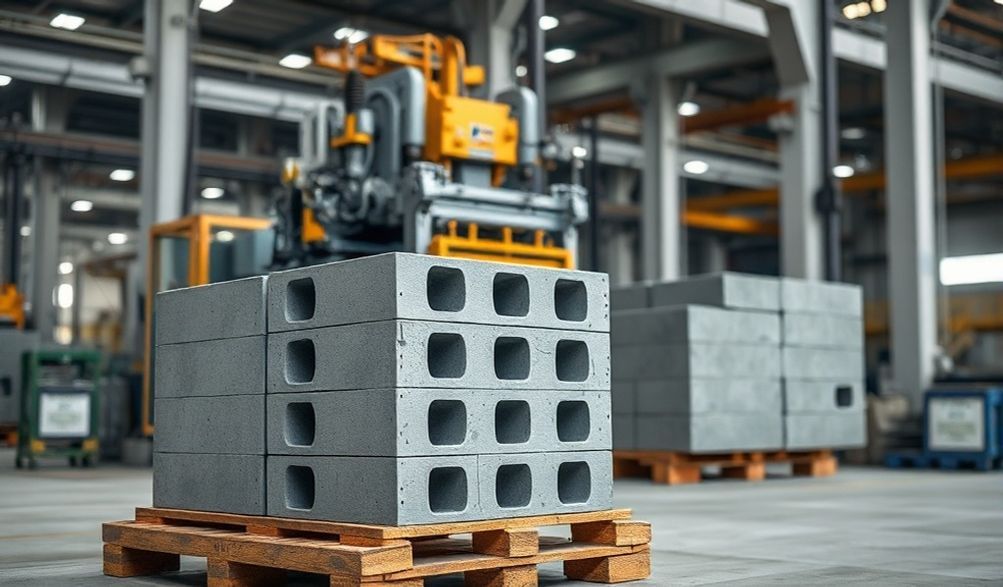
Blocos vazados, também conhecidos como unidades de alvenaria de concreto (CMUs) ou blocos vazados, são definidos por seu design: eles contêm um ou mais grandes furos ou vazios (chamados de "núcleos").
- Projeto Estrutural:Esses vazios geralmente ocupam de 25% a 50% da área total da seção transversal do bloco. Eles percorrem o bloco de cima a baixo.
- Vantagens Resultantes:
- Leve:Significativamente mais leves que os tijolos maciços, tornando-os mais fáceis e baratos de transportar e manusear no local, reduzindo o esforço da mão de obra e a carga estrutural.
- Isolamento:As bolsas de ar dentro dos vazios proporcionam excelente isolamento térmico e acústico, resultando em edifícios mais energeticamente eficientes e silenciosos.
- Utilidade:Os núcleos permitem o fácil roteamento de condutores elétricos, tubulações hidráulicas e barras de reforço (ferragens), que podem ser grauteados para maior resistência.
Como a Máquina Funciona: O Processo Básico
Embora os designs variem, o ciclo fundamental de produção é consistente na maioria das máquinas:
- Alimentação:Matérias-primas pré-misturadas (uma mistura de cimento, areia, cinza volante, pó de pedra e água) são alimentadas no funil da máquina.
- Mistura:Um misturador interno garante uma mistura homogênea e consistente, o que é crucial para a uniformidade da resistência dos tijolos.
- Compactação e Vibração:A mistura é despejada em um molde (no formato do tijolo desejado). A máquina então aplica uma imensapressão hidráulicae alta frequênciavibraçãoEsta ação dupla remove as bolsas de ar e compacta densamente o material, conferindo ao tijolo sua integridade estrutural.
- Ejeção e Cura:O tijolo recém-formado, "verde", é ejetado do molde para um palete ou esteira transportadora. Em seguida, é movido para uma área de cura, onde ganha resistência ao longo de dias por meio de umidade e temperatura controladas.
Principais Aplicações na Construção
Os tijolos produzidos são versáteis e utilizados em:
* Edifícios Residenciais:Para paredes estruturais e não estruturais.
* Complexos Comerciais:Escritórios, armazéns e espaços comerciais.
* Paredes Divisórias:Criando divisões internas dentro das estruturas.
* Paisagismo e Muros de Limite:Para muros de jardim, cercas e outras aplicações externas.
Tipos de Máquinas para Fabricar Tijolos Vazados: Uma Análise Detalhada
Escolher o tipo certo é sua primeira grande decisão. As máquinas são categorizadas por operação, capacidade e produção.
By Operation: Manual, Semi-Automatic, and Fully Automatic
-
Máquinas Manuais: Operated primarily by hand levers.
- Investimento:Custo inicial muito baixo.
- Trabalho: High labor intensity, slow, and output dependent on operator skill.
- Saída: Low (100-500 bricks per day).
- Ideal Para: Micro-enterprises, very small-scale projects, or regions with extremely low labor costs.
-
Máquinas Semiautomáticas: Combine mechanical operation (like hydraulic pressure) with manual handling of bricks and pallets.
- Investimento: Moderate.
- Trabalho: Requires a small team (2-4 people) for operation and handling.
- Saída: Medium (800-2500 bricks per 8-hour shift).
- Ideal Para: Small to medium businesses (SMBs) and startups with a steady demand.
-
Máquinas Totalmente Automáticas: Computer-controlled systems that automate feeding, mixing, molding, stacking, and pallet return.
- Investimento:Alto gasto de capital.
- Trabalho: Minimal; often just 1-2 operators for monitoring.
- Saída: High (3000-15,000+ bricks per shift).
- Ideal Para: Large-scale manufacturers, construction companies supplying major projects, and high-volume businesses.
By Production Capacity: Small, Medium, and Large Scale Plants
- Small Scale: Outputs up to 2,000 bricks per day. Often semi-automatic, suitable for local market supply.
- Medium Scale: Outputs between 2,000 and 8,000 bricks per day. Can be robust semi-automatic or entry-level automatic lines.
- Large Scale Plants: Outputs exceeding 8,000 bricks per day. Always fully automatic production lines with conveyor systems and sometimes robotic palletizers.
By Brick Type and Size
Machines are configured with interchangeable molds to produce various products:
* Blocos Vazados Padrão: 4-inch, 6-inch, 8-inch, and 12-inch thicknesses.
* Blocos Sólidos: For applications requiring maximum load-bearing capacity.
* Blocos de Pavimentação e Pavers Intertravados: For driveways and walkways.
* Formatos Especiais: Curved blocks, chimney blocks, or lintels.
Specialized Machines: Mobile vs. Stationary Plants
- Plantas Estacionárias: The standard setup, installed in a fixed factory location.
- Máquinas Móveis de Fabricação de Tijolos: Mounted on a trailer for easy transport. The key advantage is on-site production, eliminating transport costs for bricks and allowing immediate use. Ideal for large, remote construction projects like dams, highways, or large housing developments.
Key Benefits of Using a Hollow Brick Making Machine
Investing in this technology unlocks a cascade of advantages, from the balance sheet to the building site.
Vantagens Econômicas
- Lower Unit Cost: Producing in-house drastically reduces the cost per brick compared to purchasing from third-party suppliers.
- High-Profit Margins: Creates a revenue stream by selling surplus bricks to the local market.
- Reduced Dependency: Shields your projects from market price fluctuations and supply chain delays of traditional bricks.
Construction & Performance Benefits
- Lightweight Nature: Eases construction speed and reduces dead load on the building foundation.
- Isolamento Superior: Thermal properties lower heating and cooling costs. Acoustic insulation enhances comfort in residential and commercial spaces.
- Proven Structural Strength: When produced to proper standards, hollow blocks offer excellent compressive strength for multi-story construction.
Environmental & Sustainability Benefits
- Utilização de Resíduos: Can incorporate industrial by-products like fly ash (from coal plants) and slag, diverting them from landfills.
- Eficiência de Recursos: The hollow design uses less raw material per unit volume than a solid block.
- Energy-Efficient End-Product: Buildings made with hollow bricks have a lower lifetime carbon footprint due to reduced energy consumption.
Business and Operational Benefits
- Alta Velocidade de Produção: Machines produce bricks far faster than manual or traditional methods.
- Qualidade Consistente: Automated processes ensure every brick has identical dimensions, density, and strength, leading to better construction quality.
- Escalabilidade de Negócios: You can start small and add capacity by upgrading machines or adding shifts as demand grows.
How to Choose the Right Machine: A Buyer’s Checklist
This decision should be driven by careful analysis, not impulse. Use this checklist to guide your evaluation.
Assess Your Business Needs & Goals
Answer these questions first:
* Target Market: Are you supplying a single project, local retailers, or large contractors?
* Daily Production Volume: What is your current and projected 3-year demand? Be realistic.
* Orçamento: What is your total investment cap, including machine, installation, and working capital?
* Available Space & Power: Do you have a suitable factory space with a 3-phase electrical connection?
Critical Technical Specifications to Scrutinize
- Compaction Force (Tonnage): Measured in tons, this determines brick density and strength. For standard blocks, 100-150 tons is common; for pavers or high-strength blocks, 200+ tons may be needed.
- Tempo de Ciclo: The time to produce one brick or one mold of bricks. Faster cycles mean higher output.
- Requisito de Energia: Verify if it runs on standard 3-phase electricity or requires a diesel generator.
- Versatilidade do Molde: Does the supplier offer a range of mold options, and how easy/expensive is it to change them?
Quality and Durability Factors
- Construção da Estrutura: The main frame should be made from heavy-duty steel plates and profiles, not lightweight sections.
- Component Brands: Reputable brands for hydraulic pumps, valves, PLCs (for automatics), and vibrator motors indicate reliability.
- Proteção contra Corrosão: Look for sandblasting and high-quality paint coating to protect against rust in humid production environments.
Manufacturer & After-Sales Support Evaluation
This is often more important than a slight price difference.
* Garantia: A minimum of 12 months on parts and workmanship is standard for reputable makers.
* Disponibilidade de Peças de Reposição: Ensure common wear parts are readily available locally or can be shipped quickly.
* Suporte Técnico: Does the company provide installation supervision, operator training, and troubleshooting support?
* Company Reputation: Research their history, ask for client references, and if possible, visit an existing plant using their machine.
Cost Analysis: Investment vs. Return on Investment (ROI)
Calculate a simple payback period:
1. Calculate your total investment (Machine + Installation + Initial Raw Material).
2. Estimate your monthly profit: (Selling Price per Brick – Production Cost per Brick) x Monthly Production Volume.
3. Payback Period (Months) = Total Investment / Monthly Profit.
A well-run operation with a suitable machine can often see a payback period of 12-24 months.
Operating and Maintaining Your Machine for Longevity
Your machine is a long-term asset. Proper operation and maintenance are non-negotiable for profitability and longevity.
Essential Raw Material Preparation
The quality of your bricks is directly tied to your raw material mix.
* Mix Ratios: A common starting mix is 1 part cement, 3 parts sand, and 3 parts stone dust/aggregate (1:3:3). Fly ash can replace 15-25% of the cement. Always conduct trial batches.
* Teor de Umidade: The mix must have the right consistency—typically 8-10% water. Too dry causes weak bricks; too wet causes deformation.
* Qualidade do Material: Use clean, well-graded sand and aggregates free of clay, silt, or organic matter.
Daily Operation Best Practices
- Startup: Check oil levels, ensure the area is clear, and run the machine empty for a few minutes to warm up hydraulics.
- During Operation: Monitor brick formation, listen for unusual noises, and check for consistent vibration.
- Shutdown: Clean the hopper, mold, and platform thoroughly. Follow the manufacturer’s specific shutdown procedure.
Routine Maintenance Schedule
- Daily: Clean the machine, check for loose bolts, and inspect hydraulic hoses for leaks.
- Weekly: Lubricate all moving parts (pivots, guide rods) as per the manual. Check hydraulic oil level and condition.
- Monthly: Tighten all bolts and nuts on the frame and vibration table. Inspect mold liners for wear.
Troubleshooting Common Issues
- Poor Brick Strength: Likely causes are incorrect mix ratio, low cement content, insufficient compaction force, or improper curing.
- Surface Cracks: Usually caused by too much water in the mix, excessive vibration, or rapid drying during curing.
- Bricks Sticking in Mold: Often due to a worn or damaged mold liner, insufficient release agent, or a misaligned ejection system.
Frequently Asked Questions (FAQ) About Hollow Brick Making Machines
What is the average cost range for a hollow brick machine?
Prices vary dramatically based on automation and capacity. Manual machines can start from $2,000 – $8,000. Semi-automatic models typically range from $15,000 – $50,000. Fully automatic production lines begin around $60,000 and can exceed $250,000 for high-capacity plants. Always remember: specifications dictate the final price.
What raw materials can I use?
The most common materials are Portland cement, sand (river or crushed), stone dust (aggregate), and water. A key advantage is the ability to use industrial waste like cinzas volantes (to replace cement) and slag. Some setups also allow for the use of recycled concrete aggregate.
How much space and what kind of power supply is needed?
You need space for three areas: the machine itself, raw material storage, and a curing yard. A small semi-automatic setup may require 1,500 – 3,000 sq. ft. Most industrial machines require a Fornecimento elétrico trifásico (380V/415V). Mobile or remote options often use diesel power packs.
Is special training required to operate the machine?
While modern machines are designed for user-friendliness, comprehensive training from the supplier is crucial. Proper training ensures operator safety, maximizes production efficiency, and teaches essential daily maintenance to prevent costly breakdowns.
What is the typical lifespan of a well-maintained machine?
A high-quality hollow brick making machine that receives diligent, scheduled maintenance can have a productive lifespan of 10 to 15 years or more. The key factor is preventative care—neglect can reduce this lifespan by half.
Conclusão
Selecting the right hollow brick making machine is a strategic decision that impacts your project’s cost, timeline, and quality, or your business’s profitability and growth trajectory. It requires balancing your immediate production needs with long-term goals, prioritizing machine quality and manufacturer support over the lowest initial price tag.
Our final expert recommendation is to conduct thorough due diligence. Request material tests from potential suppliers using your local raw materials to see the final product quality. Always calculate the Custo Total de Propriedade, factoring in maintenance and potential downtime, not just the purchase price.
We encourage you to consult with multiple reputable manufacturers, ask for client references you can contact directly, and, if feasible, visit a working plant to see the machine in operation. This firsthand experience is invaluable.
By making an informed investment, you are not just purchasing a machine; you are acquiring the key technology to build a more profitable, efficient, and sustainable future in the ever-evolving construction industry.
<