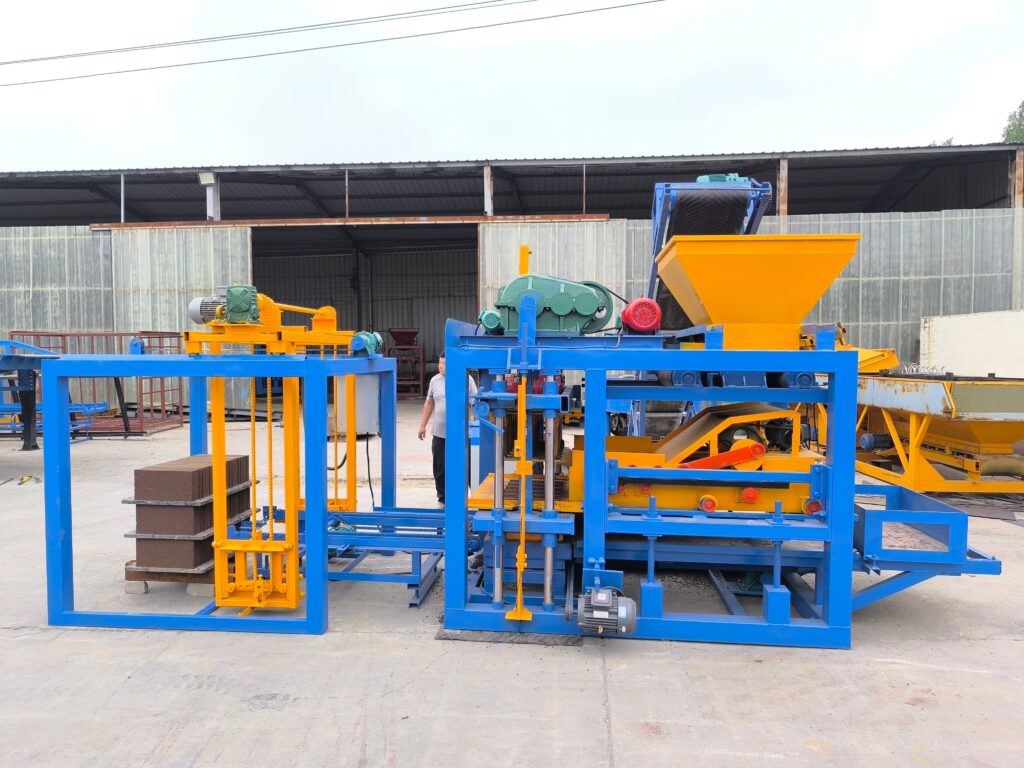
Kimiyya da Injiniyya na Samar da Tubalin Toka
1.1 Tsarin Musamman na Tubalin da Tubalan Ash na Fly
Sabanin tubalin yumbu na gargajiya, waɗanda suka dogara da haɗin kai na yumbu, tubalin tokar konewa samfuri ne na daidaitaccen sinadaran sinadarai da matsawa na inji. Babban abin da ake amfani da shi, tokar konewa, ƙurar ƙura ce mai kyau, mai wadatar silica, alumina, da carbon da ba a kone ba. Don canza wannan zuwa naúrar gini mai ɗorewa, ana haɗa shi da sauran abubuwan da ke cikin girke-girke da aka auna a hankali.
- Tushen Kayan Masaku:Tsarin haɗin daidaitaccen tsari ya haɗa da toka mai tashi (kimanin kashi 50-60%), wani abu mai ɗaure kamar lemun tsami ko siminti (8-12%), wani mai kunnawa kamar gypsum (3-5%), da ɗimbin ƙurar dutse ko yashi a matsayin mai cika (20-30%). Ana ƙara daidaitaccen adadin ruwa don fara halayen sinadarai da samar da yin aiki don matsawa.
- Tsarin Warkewa:Ƙarfin tubalin toka na samu ne daga wani sinadari da ake kira "halayen pozzolanic." Lokacin da aka haɗa tokar wuta, lemun tsami, da ruwa, suna samar da gels na calcium silicate hydrate (C-S-H), waɗannan sune abubuwan haɗawa da ake samu a cikin siminti. Wannan halayen yana ƙara ƙarfi a tsawon lokaci, musamman a cikin yanayi mai dumi da damshi. Saboda haka, ana kula da tubalin da tururi ko ruwa na wani takamaiman lokaci, wanda ke haifar da samfurin da sau da yawa ya fi ƙarfin matsi na tubalin yumbu na al'ada.
1.2 Layin Samarwa ta Atomatik: Haɗin Kai na Tsarin
Wurin yin bulo na tokar gardama ta atomatik tsari ne da aka haɗa kai tsaye inda na'urorin injina, na lantarki, da na ruwa ke aiki tare.
- Tattara da Haɗa Kayan Abinci na Asali:Tsarin yana farawa da sarrafa kayan aikin atomatik daga manyan kwandon da ke sama. Ma'aunin ma'auni yana tabbatar da ainihin adadin kowane sinadari da ake zubarwa a kan bel ɗin jigilar kaya wanda ke ciyar da shi cikin mahaɗin kwanon ko mahaɗin paddle. A nan, ana haɗa kayan tare da ƙayyadadden adadin ruwa don samar da cakuda mai daidaito, mai ɗan bushewa. Daidaiton wannan cakuda yana da mahimmanci ga ingancin samfurin ƙarshe.
- Matsawa da Matsawa Ƙarfi:Ana kai tsarin da aka shirya zuwa akwatin ciyarwa na injin matsi na bulo. Mai ciyawa ta atomatik yana rarraba daidaitaccen adadin cakuda zuwa cikin ramukan ƙirar. Zuciyar injin ita ce tsarin matsa lamba mai ƙarfi. Ta amfani da ƙarfin injin ruwa mai girma (yawanci daga tan 80 zuwa 300, ya danganta da nau'in injin), ana matsawa cakuda zuwa cikin bulo mai kauri ko tubalan marasa ciki. Ana ci gaba da matsa lamba na ɗan lokaci kaɗan don tabbatar da tsarin siffa, bayan haka ana fitar da sabbin bulo "kore" a kan injin jigilar kaya.
- Sarrafawa da Warkarwa ta atomatik:Hannun injina ko masu tara suna ɗaga bulo na kore a hankali kuma suka jera su a kan tarkace ko pellets. Daga nan sai a kai waɗannan tarkacen zuwa ɗaki na jurewa ko filin jurewa. A cikin tsarin ci gaba, tsarin jurewa ta atomatik yana sarrafa zafin jiki da ɗanɗano don hanzarta aikin pozzolanic, wanda ke ba da damar bulo su cimma ƙarfinsu da aka yi niyya a cikin kwanaki maimakon makonni.
Fasahar Kasuwa Mai Fa'ida Ga Masu Rarrabawa Da Abokan Cinikinsu
2.1 Fa'idodin Tattalin Arziki da Aiki Masu Jan Hankali
Yin amfani da injin bulo na tokar gardama ta atomatik yana ba da riba mai ƙarfi akan jarin ku, yana mai da shi abu mai sauƙi ga abokan cinikin ku.
- Saurin Samararwa da Fitowar Kayayyaki na Musamman:Wurin sarrafa shuki na otomatik na yau da kullun zai iya samar da tsakanin 7,000 zuwa 12,000 bulo a cikin sa'a guda, ko kuma adadin da ya dace na manyan tubalan. Wannan babban yawan samarwa yana baiwa masana'antun damar cika manyan kwangila da kuma samun tattalin arzikin sikelin da ba zai yuwuwa ba tare da hanyoyin hannu ko na rabin otomatik.
- Significant Reduction in Production Costs: The primary raw material, fly ash, is often procured at a very low cost or sometimes even for free from power plants, which are eager to dispose of this waste product. This drastically reduces the raw material expenditure. Furthermore, the high level of automation minimizes labor costs, requiring only a small team for supervision and maintenance.
- Minimal Wastage and Superior Product Consistency: The precision of automated batching, mixing, and pressing ensures that every brick or block is dimensionally identical and possesses uniform strength. This consistency reduces mortar consumption during construction by up to 50% and virtually eliminates on-site breakage and waste.
2.2 Powerful Environmental and Marketing Proposition
Beyond pure economics, this technology offers a powerful unique selling proposition (USP) in an increasingly eco-conscious market.
- Green Manufacturing Credentials: By utilizing fly ash, this process prevents the accumulation of this industrial waste in landfills, which can leach heavy metals into groundwater and cause air pollution. It also conserves topsoil and eliminates the need for fossil fuel-intensive firing in kilns, reducing the carbon footprint of brick production by over 80%.
- Compliance with Green Building Standards: Fly ash bricks and blocks contribute significantly to points under international green building rating systems like LEED (Leadership in Energy and Environmental Design) and BREEAM. This makes them the material of choice for developers working on environmentally certified projects, opening up a premium market segment.
- Enhanced Product Portfolio for Distributors: By offering this technology, you enable your clients to produce a diverse range of products, including solid bricks, hollow blocks, paving blocks, and interlocking landscape products, all from the same machine with a simple mold change. This versatility allows them to serve multiple construction segments simultaneously.
Critical Technical and Commercial Evaluation Parameters
3.1 Analyzing Machine Specifications for Market Fit
Selecting the right machine model is paramount to ensuring client satisfaction and long-term success.
- Cycle Time and Output Capacity: The key metric is the number of bricks or blocks produced per cycle and the cycle time in seconds. A machine with a 12-second cycle time producing 10 bricks per cycle has an output of 3,000 bricks per hour. Match the machine’s capacity to the projected demand in your target market.
- Pressure Force and Product Strength: The hydraulic pressure (measured in tons) directly determines the compactness and final compressive strength of the brick. For standard building bricks, a minimum of 100-120 tons is common, while for high-strength paving blocks or larger hollow blocks, 200 tons or more may be required.
- Level of Automation and Integration: Options range from basic automatic presses to fully integrated plants with automatic raw material handling, color dosing systems for paving blocks, robotic stacking, and automated curing systems. The choice should be guided by the client’s budget, available labor, and production ambitions.
- Power Consumption and Energy Efficiency: Machines equipped with Variable Frequency Drives (VFDs) and servo-hydraulic systems consume significantly less power, reducing the client’s operational expenditure. This is a critical selling point in regions with high electricity costs.
3.2 Assessing Long-Term Viability and Support
The initial capital outlay is just one part of the total cost of ownership. A thorough evaluation of support structures is essential.
- Build Quality and Component Durability: The machine’s frame should be constructed from high-tensile steel to withstand constant vibration. The quality of the hydraulic cylinders, pumps, and the PLC (Programmable Logic Controller) are indicators of the machine’s reliability and lifespan.
- After-Sales Service and Parts Availability: The supplier must have a proven track record of providing prompt technical support, whether remotely or on-site. A readily available inventory of critical spare parts, such as molds, hydraulic seals, and sensors, is non-negotiable to minimize client downtime.
- Comprehensive Training and Documentation: The supplier should provide extensive training for the client’s operators, electricians, and maintenance staff. Clear, well-illustrated manuals and easy access to the machine’s electrical and hydraulic diagrams are vital for troubleshooting and daily maintenance.
Conclusion: Building a Profitable and Sustainable Future
The automatic fly ash brick and block making machine is more than just an industrial asset; it is a catalyst for sustainable industrial growth. It presents a proven, viable, and responsible alternative to traditional brick manufacturing, offering unparalleled economic efficiency and a reduced environmental impact. For the discerning distributor and procurement specialist, this technology represents a frontier of immense opportunity.
Success in this domain requires a strategic approach that combines deep technical knowledge with an understanding of the evolving green construction market. By partnering with reputable manufacturers and offering comprehensive solutions that include robust machinery, reliable support, and expert guidance, you can empower your clients to become leaders in the new era of construction. The foundation for a greener, more profitable built environment is ready to be laid, one fly ash brick at a time.
Tambayoyin da ake yawan yi (FAQ)
Q1: What is the primary difference between fly ash bricks and traditional clay bricks?
A: The core difference lies in the raw materials and the method of gaining strength. Clay bricks are made from soil and gain strength through firing in a kiln at high temperatures, which consumes significant energy and emits CO2. Fly ash bricks are made from an industrial by-product (fly ash), lime, and gypsum, and gain strength through a chemical reaction during curing, which requires less energy and has a much lower carbon footprint. Fly ash bricks are also generally more consistent, stronger, and have better resistance to water penetration.
Q2: Are the bricks produced strong enough for multi-story construction?
A: Absolutely. When produced with the correct mix design and adequate compaction pressure, fly ash bricks can achieve compressive strengths ranging from 75 kg/cm² to over 200 kg/cm². This comfortably exceeds the strength requirements for load-bearing walls in multi-story buildings as per most international building codes.
Q3: How critical is the quality of the fly ash, and what parameters should be checked?
A: Fly ash quality is paramount. It should be procured from reliable sources and tested for key parameters:
- Loss on Ignition (LOI): Indicates the amount of unburned carbon. A high LOI can adversely affect strength and color consistency.
- Fineness: Finer particles lead to a better pozzolanic reaction and a denser brick.
It is highly recommended to conduct a raw material analysis and trial production run with the machine supplier to optimize the mix design.
Q4: What is the typical setup and commissioning time for a new plant?
A: From the point of order, manufacturing and sea freight can take 60-90 days. On-site, the foundation work must be completed beforehand. The actual installation, assembly, and commissioning of the machine by a team of engineers typically takes 3 to 4 weeks, depending on the plant’s complexity and the level of local support available.
Q5: Can these machines produce colored or textured products for aesthetic applications?
A: Yes, this is a significant advantage. By integrating a color dosing system, pigments can be automatically added during the mixing process. This allows for the production of a wide range of colored paving blocks, facing bricks, and landscaping products. Different mold designs can also create various textures and surface patterns, greatly enhancing the product’s market appeal.
Q6: What are the key maintenance routines to ensure long machine life?
A: A disciplined preventive maintenance schedule is crucial. Key routines include:
- Kullum: Cleaning the machine, checking hydraulic oil levels, and inspecting for loose bolts.
- Mako-mako: Greasing all bearings and guide rods, checking for oil leaks, and cleaning sensors.
- Kowane wata: Inspecting hydraulic hoses for wear, checking electrical connections, and calibrating the feeding system.
- Annually: Replacing hydraulic oil and filters, and conducting a thorough inspection of all major components.