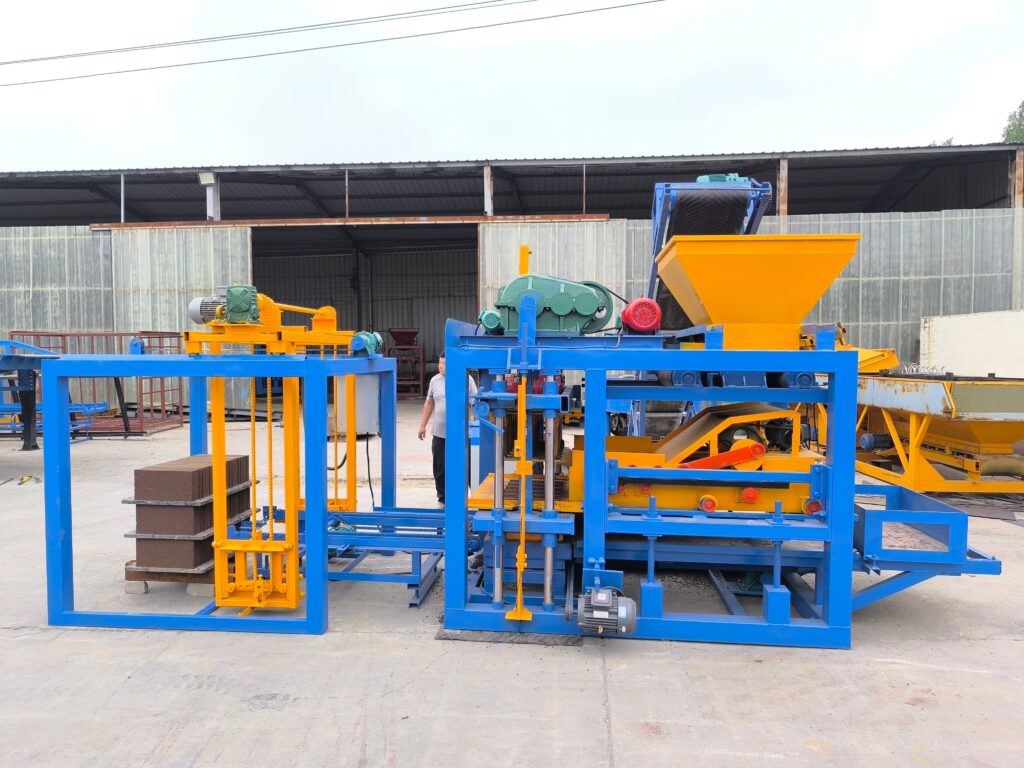
Наука та механіка виробництва цегли з летючої золи
1.1 Унікальний склад цегли та блоків з летючої золи
На відміну від традиційних глиняних цеглин, які базуються на зчепних властивостях глини, зольні цеглини є продуктом точної хімічної композиції та механічного ущільнення. Основна сировина, зола-унос, — це дрібний, порошкоподібний залишок, багатий на кремнезем, глинозем і непрогоріле вуглець. Щоб перетворити це на міцну будівельну одиницю, її змішують з іншими компонентами за ретельно вивіреним рецептом.
- Основні сировинні матеріали:Стандартний підбір складу включає зольний пил (приблизно 50-60%), зв’язувальний агент, такий як вапно або цемент (8-12%), активізатор, наприклад гіпс (3-5%), та подрібнену кам’яну пилку або пісок як наповнювач (20-30%). Точна кількість води додається для ініціювання хімічної реакції та забезпечення зручності укладання при ущільненні.
- Процес лікування:Міцність цегли з летючої золи походить від хімічної реакції, відомої як "пуцоланова реакція". Коли летюча зола, вапно та вода змішуються, вони утворюють гідросилікати кальцію (C-S-H) — ті самі зв'язуючі речовини, що містяться в цементі. Ця реакція поступово набирає міцності, особливо в теплому та вологому середовищі. Тому цеглу витримують на пару або у воді протягом певного періоду, що призводить до отримання продукту, який часто перевершує міцність на стиск традиційної глиняної цегли.
1.2 Автоматизована виробнича лінія: Синергія систем
Автоматична установка для виробництва цегли з летючої золи — це безперебійно інтегрована система, в якій механічні, електронні та гідравлічні компоненти працюють єдиним комплексом.
- Дозування та змішування сировини:Процес починається з автоматичного дозування сировини з навісних бункерів. Вагові датчики забезпечують точну пропорцію кожного інгредієнта, який подається на конвеєрну стрічку, що живить панміксер або лопатевий змішувач. Тут матеріали гомогенізуються з контрольованою кількістю води, утворюючи однорідну напівсуху суміш. Однорідність цієї суміші є критичною для якості кінцевого продукту.
- Високий тиск ущільнення та формування:Підготовлена суміш потім подається у завантажувальний бункер преса для виробництва цегли. Автоматичний живильник розподіляє точний об’єм суміші у порожнини форми. Серцем машини є її високотискова система пресування. За допомогою величезного гідравлічного зусилля (зазвичай від 80 до 300 тонн, залежно від моделі машини) суміш ущільнюється у щільну, суцільну цеглу або пустотілі блоки. Тиск підтримується протягом короткого моменту, щоб забезпечити фіксацію форми, після чого свіжоформована сира цегла виштовхується на конвеєр.
- Автоматизоване оброблення та твердіння:Роботизовані маніпулятори або штабелери акуратно піднімають зелені цеглини та систематично розміщують їх на стелажах або палетах. Потім ці стелажі переміщують до камери тверднення або на майданчик. У сучасних установках автоматизована система тверднення контролює температуру та вологість, щоб прискорити пуцоланову реакцію, дозволяючи цеглі досягти необхідної міцності за кілька днів замість тижнів.
Стратегічні ринкові переваги для дистриб'юторів та їх клієнтів
2.1 Переконливі економічні та операційні переваги
The adoption of automatic fly ash brick machinery delivers a powerful return on investment, making it an easy proposition for your clients.
- Exceptional Production Speed and Output: A standard automatic plant can produce between 7,000 to 12,000 bricks per hour, or a proportional number of larger blocks. This massive output enables manufacturers to fulfill large-scale contracts and achieve economies of scale that are impossible with manual or semi-automatic methods.
- Significant Reduction in Production Costs: The primary raw material, fly ash, is often procured at a very low cost or sometimes even for free from power plants, which are eager to dispose of this waste product. This drastically reduces the raw material expenditure. Furthermore, the high level of automation minimizes labor costs, requiring only a small team for supervision and maintenance.
- Minimal Wastage and Superior Product Consistency: The precision of automated batching, mixing, and pressing ensures that every brick or block is dimensionally identical and possesses uniform strength. This consistency reduces mortar consumption during construction by up to 50% and virtually eliminates on-site breakage and waste.
2.2 Powerful Environmental and Marketing Proposition
Beyond pure economics, this technology offers a powerful unique selling proposition (USP) in an increasingly eco-conscious market.
- Green Manufacturing Credentials: By utilizing fly ash, this process prevents the accumulation of this industrial waste in landfills, which can leach heavy metals into groundwater and cause air pollution. It also conserves topsoil and eliminates the need for fossil fuel-intensive firing in kilns, reducing the carbon footprint of brick production by over 80%.
- Compliance with Green Building Standards: Fly ash bricks and blocks contribute significantly to points under international green building rating systems like LEED (Leadership in Energy and Environmental Design) and BREEAM. This makes them the material of choice for developers working on environmentally certified projects, opening up a premium market segment.
- Enhanced Product Portfolio for Distributors: By offering this technology, you enable your clients to produce a diverse range of products, including solid bricks, hollow blocks, paving blocks, and interlocking landscape products, all from the same machine with a simple mold change. This versatility allows them to serve multiple construction segments simultaneously.
Critical Technical and Commercial Evaluation Parameters
3.1 Analyzing Machine Specifications for Market Fit
Selecting the right machine model is paramount to ensuring client satisfaction and long-term success.
- Cycle Time and Output Capacity: The key metric is the number of bricks or blocks produced per cycle and the cycle time in seconds. A machine with a 12-second cycle time producing 10 bricks per cycle has an output of 3,000 bricks per hour. Match the machine’s capacity to the projected demand in your target market.
- Pressure Force and Product Strength: The hydraulic pressure (measured in tons) directly determines the compactness and final compressive strength of the brick. For standard building bricks, a minimum of 100-120 tons is common, while for high-strength paving blocks or larger hollow blocks, 200 tons or more may be required.
- Level of Automation and Integration: Options range from basic automatic presses to fully integrated plants with automatic raw material handling, color dosing systems for paving blocks, robotic stacking, and automated curing systems. The choice should be guided by the client’s budget, available labor, and production ambitions.
- Power Consumption and Energy Efficiency: Machines equipped with Variable Frequency Drives (VFDs) and servo-hydraulic systems consume significantly less power, reducing the client’s operational expenditure. This is a critical selling point in regions with high electricity costs.
3.2 Assessing Long-Term Viability and Support
The initial capital outlay is just one part of the total cost of ownership. A thorough evaluation of support structures is essential.
- Build Quality and Component Durability: The machine’s frame should be constructed from high-tensile steel to withstand constant vibration. The quality of the hydraulic cylinders, pumps, and the PLC (Programmable Logic Controller) are indicators of the machine’s reliability and lifespan.
- After-Sales Service and Parts Availability: The supplier must have a proven track record of providing prompt technical support, whether remotely or on-site. A readily available inventory of critical spare parts, such as molds, hydraulic seals, and sensors, is non-negotiable to minimize client downtime.
- Comprehensive Training and Documentation: The supplier should provide extensive training for the client’s operators, electricians, and maintenance staff. Clear, well-illustrated manuals and easy access to the machine’s electrical and hydraulic diagrams are vital for troubleshooting and daily maintenance.
Conclusion: Building a Profitable and Sustainable Future
The automatic fly ash brick and block making machine is more than just an industrial asset; it is a catalyst for sustainable industrial growth. It presents a proven, viable, and responsible alternative to traditional brick manufacturing, offering unparalleled economic efficiency and a reduced environmental impact. For the discerning distributor and procurement specialist, this technology represents a frontier of immense opportunity.
Success in this domain requires a strategic approach that combines deep technical knowledge with an understanding of the evolving green construction market. By partnering with reputable manufacturers and offering comprehensive solutions that include robust machinery, reliable support, and expert guidance, you can empower your clients to become leaders in the new era of construction. The foundation for a greener, more profitable built environment is ready to be laid, one fly ash brick at a time.
Часті питання (FAQ)
Q1: What is the primary difference between fly ash bricks and traditional clay bricks?
A: The core difference lies in the raw materials and the method of gaining strength. Clay bricks are made from soil and gain strength through firing in a kiln at high temperatures, which consumes significant energy and emits CO2. Fly ash bricks are made from an industrial by-product (fly ash), lime, and gypsum, and gain strength through a chemical reaction during curing, which requires less energy and has a much lower carbon footprint. Fly ash bricks are also generally more consistent, stronger, and have better resistance to water penetration.
Q2: Are the bricks produced strong enough for multi-story construction?
A: Absolutely. When produced with the correct mix design and adequate compaction pressure, fly ash bricks can achieve compressive strengths ranging from 75 kg/cm² to over 200 kg/cm². This comfortably exceeds the strength requirements for load-bearing walls in multi-story buildings as per most international building codes.
Q3: How critical is the quality of the fly ash, and what parameters should be checked?
A: Fly ash quality is paramount. It should be procured from reliable sources and tested for key parameters:
- Loss on Ignition (LOI): Indicates the amount of unburned carbon. A high LOI can adversely affect strength and color consistency.
- Fineness: Finer particles lead to a better pozzolanic reaction and a denser brick.
It is highly recommended to conduct a raw material analysis and trial production run with the machine supplier to optimize the mix design.
Q4: What is the typical setup and commissioning time for a new plant?
A: From the point of order, manufacturing and sea freight can take 60-90 days. On-site, the foundation work must be completed beforehand. The actual installation, assembly, and commissioning of the machine by a team of engineers typically takes 3 to 4 weeks, depending on the plant’s complexity and the level of local support available.
Q5: Can these machines produce colored or textured products for aesthetic applications?
A: Yes, this is a significant advantage. By integrating a color dosing system, pigments can be automatically added during the mixing process. This allows for the production of a wide range of colored paving blocks, facing bricks, and landscaping products. Different mold designs can also create various textures and surface patterns, greatly enhancing the product’s market appeal.
Q6: What are the key maintenance routines to ensure long machine life?
A: A disciplined preventive maintenance schedule is crucial. Key routines include:
- Daily: Cleaning the machine, checking hydraulic oil levels, and inspecting for loose bolts.
- Weekly: Greasing all bearings and guide rods, checking for oil leaks, and cleaning sensors.
- Monthly: Inspecting hydraulic hoses for wear, checking electrical connections, and calibrating the feeding system.
- Annually: Replacing hydraulic oil and filters, and conducting a thorough inspection of all major components.