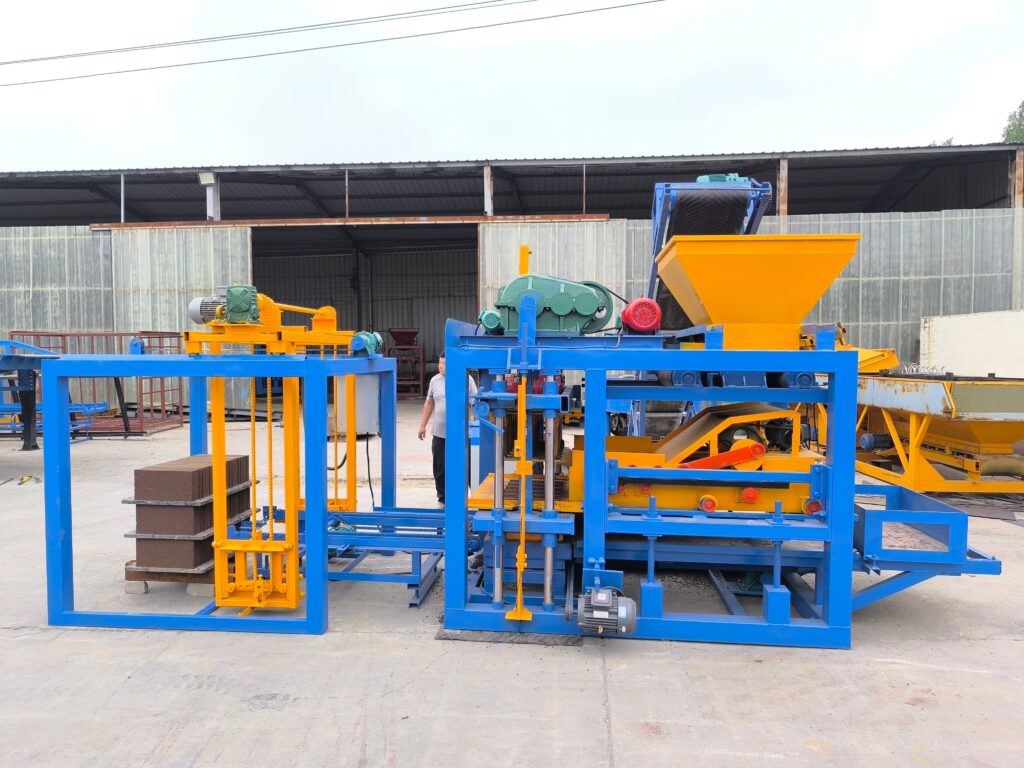
Syans ak Mekanik Pwodiksyon Brik Sann Volay
1.1 Konpozisyon Inik Brik ak Blòk Sann Volan
Kontrèman ak brik tradisyonèl an tè kwit, ki depann sou pwopriyete kolezif tè a, brik sann dife yo se yon pwodwi ki soti nan konpozisyon chimik presi ak konpak mekanik. Premye materyo prensipal la, sann dife, se yon rezidi amoni, an poud ki rich an silis, alumina, ak kabòn ki pa boule. Pou transfòme sa an yon inite bilding dirab, li melanje ak lòt konstitiyan nan yon resèt byen kalibre.
- Matyè Premye Fondamantal Yo:Konpozisyon estanda a enkli sann dife (apeprè 50-60%), yon ajan lye tankou lacho oswa siman (8-12%), yon aktivateur tankou jips (3-5%), ak pousyè wòch kraze oswa sab kòm yon plonje (20-30%). Yo ajoute yon kantite dlo egzak pou kòmanse reyaksyon chimik la epi bay posiblite pou konpaksyon.
- Pwosesis Gerizon an:Fòs brik sann pou chodyè soti nan yon reyaksyon chimik yo rele "reyaksyon pozzolanik." Lè yo melanje sann pou chodyè, lacho, ak dlo, yo fòme jel idrat silikat kalsyòm (C-S-H), menm ajan lye yo jwenn nan siman an. Reyaksyon sa a vin pi fò avèk tan, espesyalman nan yon anviwònman cho ak imid. Se poutèt sa, yo trete brik yo ak vapè oswa dlo pou yon peryòd espesifik, sa ki bay yon pwodwi ki souvan depase fòs konpresif brik tè kwit konvansyonèl yo.
1.2 Liy Pwodiksyon Otomatize: Yon Sinerji nan Sistèm
Yon plant otomatik pou fè brik sann volkan se yon sistèm entegre san pwoblèm kote eleman mekanik, elektwonik ak idwolik travay ansanm.
- Batisman ak Melanj Matyè Premye:Pwosesis la kòmanse avèk dosaj otomatik materyo premyè ki soti nan tremi anlè. Capteur pèz yo asire ke pwopòsyon egzak chak engredyan yo distribiye sou yon ban transpòtè ki alimente yon melanjè chodyè oswa melanjè palette. La a, materyo yo homojenize ak yon kantite kontwole dlo pou fòme yon melanj konsistan, semi-sèk. Inifòmite melanj sa a enpòtan anpil pou bon jan kalite pwodwi final la.
- Konpresyon ak Fòme anba Gwo Presyon:Melanj ki pare a achte yo pote nan bwat manje a nan pres brik la. Yon manjè otomatik distribye yon volim egzak melanj la nan kavite mwazi yo. Kè machin nan se sistèm konpresyon gwo presyon li yo. Lè l sèvi avèk fòs idwolik imans (tipikman soti nan 80 a 300 tòn, tou depann de modèl machin nan), melanj la konpakte nan brik dans, solid oswa blòk kre. Yo kenbe presyon an pou yon ti moman pou asire fòm nan fikse, apre sa yo voye brik "vèt" ki fèk fòme yo sou yon konvèye.
- Oto-tretman ak Gerizon Otomatik:Bras robotik oswa stackers leve brik vèt yo dousman epi mete yo sou etajè oswa pellets sistematikman. Etajè sa yo Lè sa a, transfere nan yon chanm gerizon oswa lakou. Nan konfigirasyon avanse, yon sistèm gerizon otomatik kontwole tanperati ak imidite pou akselere reyaksyon pozzolanik la, sa ki pèmèt brik yo reyalize fòs sib yo nan kèk jou olye ke plizyè semèn.
Avantaj Pwop Mache pou Distribitè yo ak Kliyan yo
2.1 Avantaj Ekonomik ak Operasyonèl Konvenkan
Adopsyon machin otomatik pou brik sann pou chabon bay yon gwo retou sou envestisman, sa ki fè li yon pwopozisyon fasil pou kliyan ou yo.
- Vitès Pwodiksyon ak Pwodiksyon Eksepsyonèl:Yon plant otomatik estanda ka pwodwi ant 7,000 a 12,000 brik pa èdtan, oswa yon kantite pwopòsyonèl nan blòk ki pi gwo. Gwo pwodiksyon sa a pèmèt manifaktirè yo satisfè gwo kontra epi reyalize ekonomi echèl ki enposib ak metòd manyèl oswa semi-otomatik.
- Rediksyon Signifikatif nan Depans Pwodiksyon:Matyè prensipal la, sann volan, souvan jwenn nan yon pri ki ba anpil oswa pafwa menm gratis nan plant elektrik, ki anvi jete pwodui dechè sa a. Sa redwi depans matyè prensipal yo anpil. Anplis de sa, nivo otomatizasyon ki wo a minimize depans pou travay, ki mande sèlman yon ti ekip pou sipèvizyon ak antretyen.
- Pèt Minim ak Konsistans Pwodwi siperyè:Presizyon otomatik dosaj, melanj, ak presyon asire ke chak brik oswa blòk gen menm dimansyon epi posede fòs inifòm. Konsistans sa a diminye konsomasyon mòtye pandan konstriksyon an jiska 50% epi elimin nòmalman kraze ak gaspiye nan sit la.
2.2 Powerful Environmental and Marketing Proposition
Beyond pure economics, this technology offers a powerful unique selling proposition (USP) in an increasingly eco-conscious market.
- Green Manufacturing Credentials: By utilizing fly ash, this process prevents the accumulation of this industrial waste in landfills, which can leach heavy metals into groundwater and cause air pollution. It also conserves topsoil and eliminates the need for fossil fuel-intensive firing in kilns, reducing the carbon footprint of brick production by over 80%.
- Compliance with Green Building Standards: Fly ash bricks and blocks contribute significantly to points under international green building rating systems like LEED (Leadership in Energy and Environmental Design) and BREEAM. This makes them the material of choice for developers working on environmentally certified projects, opening up a premium market segment.
- Enhanced Product Portfolio for Distributors: By offering this technology, you enable your clients to produce a diverse range of products, including solid bricks, hollow blocks, paving blocks, and interlocking landscape products, all from the same machine with a simple mold change. This versatility allows them to serve multiple construction segments simultaneously.
Critical Technical and Commercial Evaluation Parameters
3.1 Analyzing Machine Specifications for Market Fit
Selecting the right machine model is paramount to ensuring client satisfaction and long-term success.
- Cycle Time and Output Capacity: The key metric is the number of bricks or blocks produced per cycle and the cycle time in seconds. A machine with a 12-second cycle time producing 10 bricks per cycle has an output of 3,000 bricks per hour. Match the machine’s capacity to the projected demand in your target market.
- Pressure Force and Product Strength: The hydraulic pressure (measured in tons) directly determines the compactness and final compressive strength of the brick. For standard building bricks, a minimum of 100-120 tons is common, while for high-strength paving blocks or larger hollow blocks, 200 tons or more may be required.
- Level of Automation and Integration: Options range from basic automatic presses to fully integrated plants with automatic raw material handling, color dosing systems for paving blocks, robotic stacking, and automated curing systems. The choice should be guided by the client’s budget, available labor, and production ambitions.
- Power Consumption and Energy Efficiency: Machines equipped with Variable Frequency Drives (VFDs) and servo-hydraulic systems consume significantly less power, reducing the client’s operational expenditure. This is a critical selling point in regions with high electricity costs.
3.2 Assessing Long-Term Viability and Support
The initial capital outlay is just one part of the total cost of ownership. A thorough evaluation of support structures is essential.
- Build Quality and Component Durability: The machine’s frame should be constructed from high-tensile steel to withstand constant vibration. The quality of the hydraulic cylinders, pumps, and the PLC (Programmable Logic Controller) are indicators of the machine’s reliability and lifespan.
- After-Sales Service and Parts Availability: The supplier must have a proven track record of providing prompt technical support, whether remotely or on-site. A readily available inventory of critical spare parts, such as molds, hydraulic seals, and sensors, is non-negotiable to minimize client downtime.
- Comprehensive Training and Documentation: The supplier should provide extensive training for the client’s operators, electricians, and maintenance staff. Clear, well-illustrated manuals and easy access to the machine’s electrical and hydraulic diagrams are vital for troubleshooting and daily maintenance.
Conclusion: Building a Profitable and Sustainable Future
The automatic fly ash brick and block making machine is more than just an industrial asset; it is a catalyst for sustainable industrial growth. It presents a proven, viable, and responsible alternative to traditional brick manufacturing, offering unparalleled economic efficiency and a reduced environmental impact. For the discerning distributor and procurement specialist, this technology represents a frontier of immense opportunity.
Success in this domain requires a strategic approach that combines deep technical knowledge with an understanding of the evolving green construction market. By partnering with reputable manufacturers and offering comprehensive solutions that include robust machinery, reliable support, and expert guidance, you can empower your clients to become leaders in the new era of construction. The foundation for a greener, more profitable built environment is ready to be laid, one fly ash brick at a time.
Kesyon yo poze souvan (FAQ)
Q1: What is the primary difference between fly ash bricks and traditional clay bricks?
A: The core difference lies in the raw materials and the method of gaining strength. Clay bricks are made from soil and gain strength through firing in a kiln at high temperatures, which consumes significant energy and emits CO2. Fly ash bricks are made from an industrial by-product (fly ash), lime, and gypsum, and gain strength through a chemical reaction during curing, which requires less energy and has a much lower carbon footprint. Fly ash bricks are also generally more consistent, stronger, and have better resistance to water penetration.
Q2: Are the bricks produced strong enough for multi-story construction?
A: Absolutely. When produced with the correct mix design and adequate compaction pressure, fly ash bricks can achieve compressive strengths ranging from 75 kg/cm² to over 200 kg/cm². This comfortably exceeds the strength requirements for load-bearing walls in multi-story buildings as per most international building codes.
Q3: How critical is the quality of the fly ash, and what parameters should be checked?
A: Fly ash quality is paramount. It should be procured from reliable sources and tested for key parameters:
- Loss on Ignition (LOI): Indicates the amount of unburned carbon. A high LOI can adversely affect strength and color consistency.
- Fineness: Finer particles lead to a better pozzolanic reaction and a denser brick.
It is highly recommended to conduct a raw material analysis and trial production run with the machine supplier to optimize the mix design.
Q4: What is the typical setup and commissioning time for a new plant?
A: From the point of order, manufacturing and sea freight can take 60-90 days. On-site, the foundation work must be completed beforehand. The actual installation, assembly, and commissioning of the machine by a team of engineers typically takes 3 to 4 weeks, depending on the plant’s complexity and the level of local support available.
Q5: Can these machines produce colored or textured products for aesthetic applications?
A: Yes, this is a significant advantage. By integrating a color dosing system, pigments can be automatically added during the mixing process. This allows for the production of a wide range of colored paving blocks, facing bricks, and landscaping products. Different mold designs can also create various textures and surface patterns, greatly enhancing the product’s market appeal.
Q6: What are the key maintenance routines to ensure long machine life?
A: A disciplined preventive maintenance schedule is crucial. Key routines include:
- Daily: Cleaning the machine, checking hydraulic oil levels, and inspecting for loose bolts.
- Weekly: Greasing all bearings and guide rods, checking for oil leaks, and cleaning sensors.
- Monthly: Inspecting hydraulic hoses for wear, checking electrical connections, and calibrating the feeding system.
- Annually: Replacing hydraulic oil and filters, and conducting a thorough inspection of all major components.