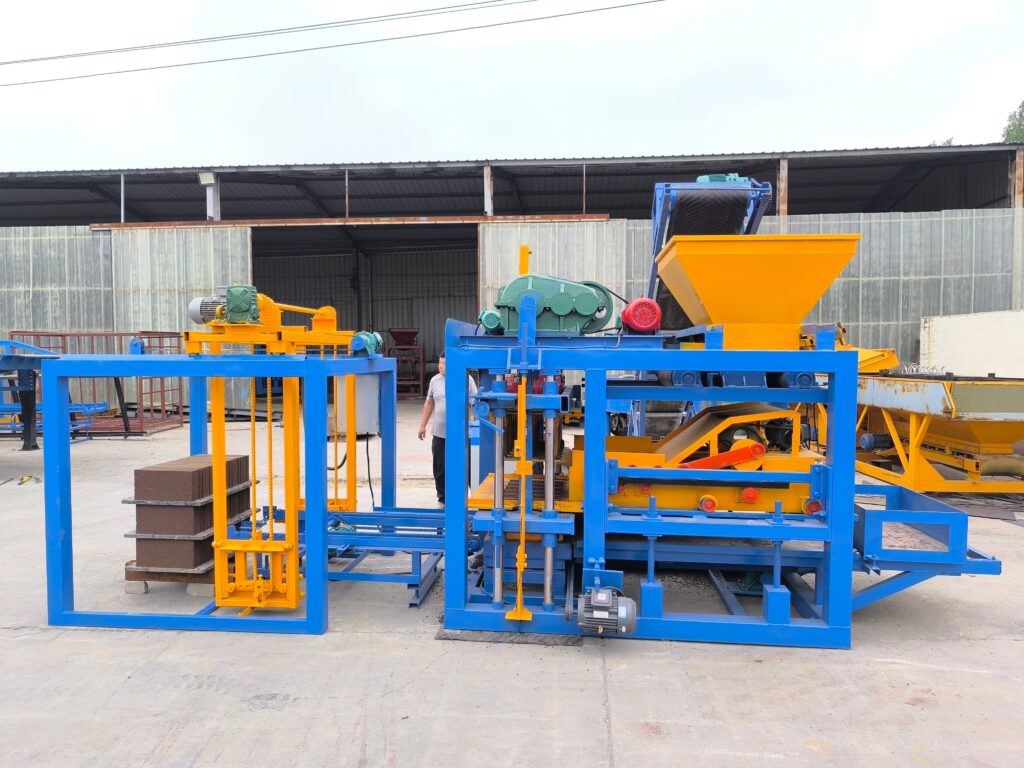
플라이 애시 벽돌 생산의 과학과 메커니즘
1.1 플라이 애시 벽돌과 블록의 독특한 구성
전통적인 점토 벽돌이 점토의 응집 특성에 의존하는 반면, 플라이 애시 벽돌은 정밀한 화학적 구성과 기계적 다짐의 산물입니다. 주요 원료인 플라이 애시는 실리카, 알루미나, 그리고 미연소 탄소가 풍부한 미세한 분말 잔류물입니다. 이를 내구성 있는 건축 자재로 변환하기 위해, 정밀하게 조정된 비율로 다른 구성 성분과 혼합됩니다.
- 핵심 원자재:표준 배합 설계에는 플라이 애시(약 50-60%), 석회나 시멘트와 같은 결합제(8-12%), 석고와 같은 활성제(3-5%), 그리고 쇄석 분말이나 모래를 충전재(20-30%)로 포함합니다. 화학 반응을 시작하고 다짐을 위한 작업성을 제공하기 위해 정확한 양의 물이 첨가됩니다.
- 경화 과정:플라이 애시 벽돌의 강도는 "포졸란 반응"으로 알려진 화학 반응에서 비롯됩니다. 플라이 애시, 석회, 물이 혼합되면 시멘트에서 발견되는 것과 동일한 결합제인 칼슘 실리케이트 하이드레이트(C-S-H) 겔이 형성됩니다. 이 반응은 시간이 지남에 따라, 특히 따뜻하고 습한 환경에서 강도를 얻습니다. 따라서 벽돌은 특정 기간 동안 증기나 물로 양생되어, 종종 기존 점토 벽돌의 압축 강도를 능가하는 제품을 만들어냅니다.
1.2 자동화 생산 라인: 시스템의 시너지
자동 플라이 애시 벽돌 제조 공장은 기계적, 전자적, 유압적 구성 요소들이 조화롭게 함께 작동하는 완벽하게 통합된 시스템입니다.
- 원료 계량 및 혼합:공정은 오버헤드 호퍼에서 원자재의 자동 배칭으로 시작됩니다. 무게 센서가 각 재료의 정확한 비율이 패들 믹서나 팬 믹서로 이어지는 컨베이어 벨트 위에 투하되도록 보장합니다. 여기서 재료들은 일정량의 물과 함께 균질화되어 일관된 반건조 혼합물을 형성합니다. 이 혼합물의 균일성은 최종 제품의 품질에 매우 중요합니다.
- 고압 성형 및 성형준비된 혼합물은 그 다음 벽돌 프레스의 공급 상자로 운반됩니다. 자동 공급 장치가 혼합물을 정확한 양으로 금형 캐비티에 분배합니다. 이 기계의 핵심은 고압 압축 시스템입니다. 막대한 유압력(일반적으로 기계 모델에 따라 80톤에서 300톤 범위)을 사용하여 혼합물이 고밀도의 견고한 벽돌 또는 속이 빈 블록으로 압축됩니다. 모양이 고정되도록 잠시 압력을 유지한 후, 갓 성형된 "생벽돌"이 컨베이어 위로 배출됩니다.
- 자동화 처리 및 경화:로봇 팔이나 스태커가 녹색 벽돌을 부드럽게 들어 올려 랙이나 팔레트에 체계적으로 놓습니다. 그런 다음 이 랙들은 양생실이나 야드로 이동됩니다. 고급 설비에서는 자동 양생 시스템이 온도와 습도를 제어하여 포졸란 반응을 가속화하여 벽돌이 몇 주가 아닌 며칠 만에 목표 강도를 달성할 수 있게 합니다.
유통업체와 그들의 고객을 위한 전략적 시장 우위
2.1 설득력 있는 경제적 및 운영적 이점
자동 플라이 애시 벽돌 기계의 도입은 투자 수익률을 크게 향상시켜 고객들에게 손쉬운 제안이 됩니다.
- 탁월한 생산 속도와 생산량표준 자동식 공장은 시간당 7,000개에서 12,000개의 벽돌을 생산할 수 있으며, 더 큰 블록의 경우 이에 비례하는 수량을 생산합니다. 이렇게 막대한 생산량 덕분에 제조업체는 대규모 계약을 이행할 수 있고, 수동 또는 반자동 방식으로는 불가능한 규모의 경제를 달성할 수 있습니다.
- 생산 비용의 대폭 감소주 원료인 플라이 애시는 발전소에서 매우 저렴하거나 때로는 무료로 조달되는 경우가 많으며, 발전소들은 이 폐기물을 처리하려고 열망합니다. 이로 인해 원자재 비용이 크게 절감됩니다. 또한 높은 수준의 자동화로 인해 감독과 유지보수만을 위한 소규모 팀만 필요하여 노동 비용을 최소화합니다.
- 최소한의 낭비와 우수한 제품 일관성자동 배합, 혼합, 성형의 정밀성은 모든 벽돌이나 블록이 치수적으로 동일하고 균일한 강도를 갖도록 보장합니다. 이러한 일관성은 시공 중 모르타르 소비량을 최대 50%까지 줄이고, 현장에서의 파손과 낭비를 사실상 제거합니다.
2.2 강력한 환경 및 마케팅 제안
Beyond pure economics, this technology offers a powerful unique selling proposition (USP) in an increasingly eco-conscious market.
- Green Manufacturing Credentials: By utilizing fly ash, this process prevents the accumulation of this industrial waste in landfills, which can leach heavy metals into groundwater and cause air pollution. It also conserves topsoil and eliminates the need for fossil fuel-intensive firing in kilns, reducing the carbon footprint of brick production by over 80%.
- Compliance with Green Building Standards: Fly ash bricks and blocks contribute significantly to points under international green building rating systems like LEED (Leadership in Energy and Environmental Design) and BREEAM. This makes them the material of choice for developers working on environmentally certified projects, opening up a premium market segment.
- Enhanced Product Portfolio for Distributors: By offering this technology, you enable your clients to produce a diverse range of products, including solid bricks, hollow blocks, paving blocks, and interlocking landscape products, all from the same machine with a simple mold change. This versatility allows them to serve multiple construction segments simultaneously.
Critical Technical and Commercial Evaluation Parameters
3.1 Analyzing Machine Specifications for Market Fit
Selecting the right machine model is paramount to ensuring client satisfaction and long-term success.
- Cycle Time and Output Capacity: The key metric is the number of bricks or blocks produced per cycle and the cycle time in seconds. A machine with a 12-second cycle time producing 10 bricks per cycle has an output of 3,000 bricks per hour. Match the machine’s capacity to the projected demand in your target market.
- Pressure Force and Product Strength: The hydraulic pressure (measured in tons) directly determines the compactness and final compressive strength of the brick. For standard building bricks, a minimum of 100-120 tons is common, while for high-strength paving blocks or larger hollow blocks, 200 tons or more may be required.
- Level of Automation and Integration: Options range from basic automatic presses to fully integrated plants with automatic raw material handling, color dosing systems for paving blocks, robotic stacking, and automated curing systems. The choice should be guided by the client’s budget, available labor, and production ambitions.
- Power Consumption and Energy Efficiency: Machines equipped with Variable Frequency Drives (VFDs) and servo-hydraulic systems consume significantly less power, reducing the client’s operational expenditure. This is a critical selling point in regions with high electricity costs.
3.2 Assessing Long-Term Viability and Support
The initial capital outlay is just one part of the total cost of ownership. A thorough evaluation of support structures is essential.
- Build Quality and Component Durability: The machine’s frame should be constructed from high-tensile steel to withstand constant vibration. The quality of the hydraulic cylinders, pumps, and the PLC (Programmable Logic Controller) are indicators of the machine’s reliability and lifespan.
- After-Sales Service and Parts Availability: The supplier must have a proven track record of providing prompt technical support, whether remotely or on-site. A readily available inventory of critical spare parts, such as molds, hydraulic seals, and sensors, is non-negotiable to minimize client downtime.
- Comprehensive Training and Documentation: The supplier should provide extensive training for the client’s operators, electricians, and maintenance staff. Clear, well-illustrated manuals and easy access to the machine’s electrical and hydraulic diagrams are vital for troubleshooting and daily maintenance.
Conclusion: Building a Profitable and Sustainable Future
The automatic fly ash brick and block making machine is more than just an industrial asset; it is a catalyst for sustainable industrial growth. It presents a proven, viable, and responsible alternative to traditional brick manufacturing, offering unparalleled economic efficiency and a reduced environmental impact. For the discerning distributor and procurement specialist, this technology represents a frontier of immense opportunity.
Success in this domain requires a strategic approach that combines deep technical knowledge with an understanding of the evolving green construction market. By partnering with reputable manufacturers and offering comprehensive solutions that include robust machinery, reliable support, and expert guidance, you can empower your clients to become leaders in the new era of construction. The foundation for a greener, more profitable built environment is ready to be laid, one fly ash brick at a time.
자주 묻는 질문 (FAQ)
Q1: What is the primary difference between fly ash bricks and traditional clay bricks?
A: The core difference lies in the raw materials and the method of gaining strength. Clay bricks are made from soil and gain strength through firing in a kiln at high temperatures, which consumes significant energy and emits CO2. Fly ash bricks are made from an industrial by-product (fly ash), lime, and gypsum, and gain strength through a chemical reaction during curing, which requires less energy and has a much lower carbon footprint. Fly ash bricks are also generally more consistent, stronger, and have better resistance to water penetration.
Q2: Are the bricks produced strong enough for multi-story construction?
A: Absolutely. When produced with the correct mix design and adequate compaction pressure, fly ash bricks can achieve compressive strengths ranging from 75 kg/cm² to over 200 kg/cm². This comfortably exceeds the strength requirements for load-bearing walls in multi-story buildings as per most international building codes.
Q3: How critical is the quality of the fly ash, and what parameters should be checked?
A: Fly ash quality is paramount. It should be procured from reliable sources and tested for key parameters:
- Loss on Ignition (LOI): Indicates the amount of unburned carbon. A high LOI can adversely affect strength and color consistency.
- Fineness: Finer particles lead to a better pozzolanic reaction and a denser brick.
It is highly recommended to conduct a raw material analysis and trial production run with the machine supplier to optimize the mix design.
Q4: What is the typical setup and commissioning time for a new plant?
A: From the point of order, manufacturing and sea freight can take 60-90 days. On-site, the foundation work must be completed beforehand. The actual installation, assembly, and commissioning of the machine by a team of engineers typically takes 3 to 4 weeks, depending on the plant’s complexity and the level of local support available.
Q5: Can these machines produce colored or textured products for aesthetic applications?
A: Yes, this is a significant advantage. By integrating a color dosing system, pigments can be automatically added during the mixing process. This allows for the production of a wide range of colored paving blocks, facing bricks, and landscaping products. Different mold designs can also create various textures and surface patterns, greatly enhancing the product’s market appeal.
Q6: What are the key maintenance routines to ensure long machine life?
A: A disciplined preventive maintenance schedule is crucial. Key routines include:
- Daily: Cleaning the machine, checking hydraulic oil levels, and inspecting for loose bolts.
- Weekly: Greasing all bearings and guide rods, checking for oil leaks, and cleaning sensors.
- Monthly: Inspecting hydraulic hoses for wear, checking electrical connections, and calibrating the feeding system.
- Annually: Replacing hydraulic oil and filters, and conducting a thorough inspection of all major components.