
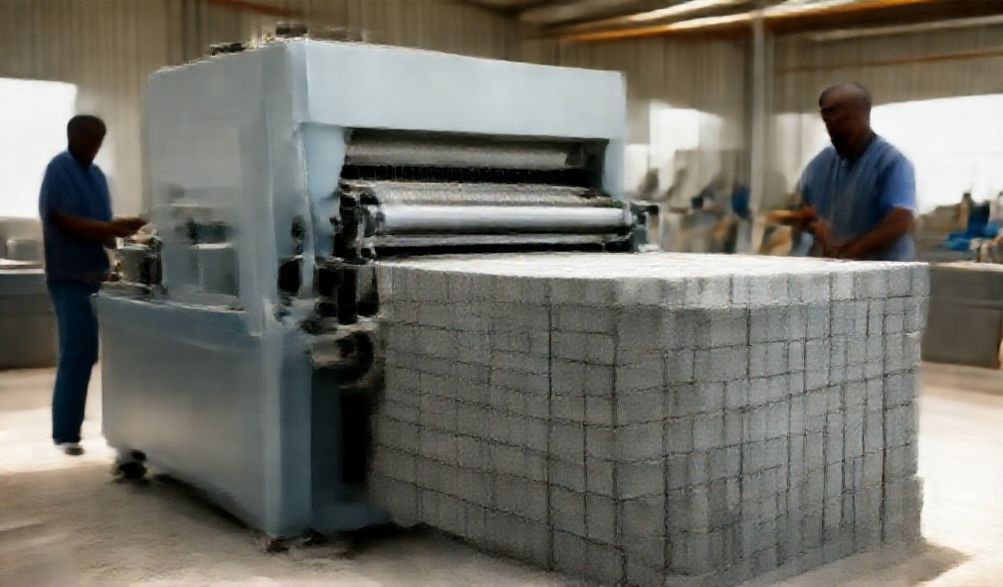
Cikakken Jagorar Na'urorin Yin Tubalin Siminti a Afirka ta Kudu (2026)
Gabatarwa
Sashin ginin Afirka ta Kudu ginshiƙi ne na tattalin arzikinta, tare da buƙatar gaggawa na sama da gidaje masu araha miliyan 3.5. Wannan buƙatar, tare da ci gaban ababen more rayuwa da ayyukan masu zaman kansu, suna haifar da ci gaba da buƙatar kayan gini masu dogaro, masu tsada. Shekaru da yawa, magina da 'yan kasuwa sun sha wahala da iyakokin yin bulo na gargajiya, mai cike da aiki, ko kuma hauhawar farashi da rashin daidaiton wadatar bulo da ake saya.
Shigo da na'urar yin tubalin siminti ta zamani: mafita mai ƙarfi wacce ke canza albarkatun ƙasa zuwa ingantattun tubalan gini masu inganci da dorewa cikin inganci. Wannan jagorar an ƙirƙira ta ne daga cikakken binciken kasuwa, nazarin fasaha, da fahimtar ƙwararrun masana'antu na Afirka ta Kudu. An tsara ta don rage hayaniyar kasuwa kuma ta ba ku cikakkiyar taswira mai ma'ana. Za mu bincika nau'ikan injinan da ake da su, fa'idodinsu, muhimman abubuwan da ya kamata a yi la'akari da su lokacin saye, yanayin masu sayar da kayayyaki a cikin gida, da kuma harkokin kuɗi, don ba ku ikon yin cikakkiyar zuba jarurruka don aikin ku ko kasuwancin ku.
Fahimtar Injinan Yin Tubalin Siminti
Kafin zuba jari, yana da mahimmanci a fahimci fasaha da zaɓuɓɓukan da suka yi nasara a yanayin Afirka ta Kudu.
Yaya Injin Yin Tubalin Siminti Suke Aiki?
A tsakinsu, waɗannan injinan suna sarrafawa da haɓaka tsohuwar hanyar yin bulo. Ka'idar ta ƙunshi muhimman matakai guda huɗu:
- Haɗawa:Siminti, yashi, tsakuwa, da ruwa ana haɗa su don samar da cakuda siminti mai daidaito, mai bushewa.
- Gyare-gyare:Wannan cakuda ana cusa shi cikin ramin ginin da aka tsara don siffar bulo da ake so (misali, maxi, bulo mai rami).
- Ƙarfafawa:Wannan shine muhimmin lokaci da ake amfani da matsin lamba. Na'urar tana amfani da ƙarfi—ta hanyar lefa, girgizar inji, ko ƙarfin ruwa—don matsawa cakuda, kawar da iska a ciki, da kuma samar da bulo mai ƙarfi da ƙarfi.
- Maganin Ciwon Ciki:Brick ɗin da aka fitar da shi kwanan nan "kore" sai a jera shi kuma a kiyaye shi da ɗanɗano na ɗan lokaci (yawanci kwanaki 7-28) don ya sami cikakken ƙarfinsa ta hanyar hydration.
Babban bambanci tsakanin nau'ikan injina ya ta'allaka ne akan yadda...ƘarfafawaAna amfani da ƙarfi da matakin sarrafa kai a cikin ciyarwa da fitarwa.
Nau'ikan Injina da Ake Samu a Kasuwar Afirka ta Kudu
Kasuwa tana hidima ga kowa daga mai gini a bayan gida har zuwa masana'anta.
-
Matsalolin Injinan Yin Tubali na Hannu:
- Mafi kyau don:Masu fara kasuwanci, ayyukan al'umma, masu gina gidaje na kanana, da waɗanda ke da ƙarancin kasafin kuɗi.
- Aiki:Yana dogaro da ƙarfin lebur na ɗan adam don matsawa. Ƙananan fitarwa amma mai araha sosai kuma mai ɗaukar kaya.
- Sakamako:Yawanci 300 – 1,000 bulo a cikin kwanakin aikin sa'o'i 8.
-
Matsin Injin Mai Ƙaramin Gudanarwa:
- Mafi kyau don:Haɓaka ƙananan da matsakaitan masana'antu (SMEs) da kwangila tare da buƙatu mai ƙarfi.
- Aiki:Yana amfani da injin lantarki ko dizal don kunna tsarin girgiza da takura. Ma'aikaci yana ciyar da cakuda kuma yana cire bulo, amma ainihin tsarin yana da injiniya.
- Sakamako:Yana iya kama daga bulo 1,500 zuwa 6,000 a kowace rana. Yana ba da mafi kyawun daidaito tsakanin yawan aiki da farashi.
-
Cikakkun Masana'antu na Kera Bulo ta Atomatik:
- Mafi kyau don:Samar da masana'antu na girma don wadata kamfanonin gine-gine da dillalai.
- Aiki:Tsarin da aka sarrafa ta kwamfuta waɗanda ke sarrafa haɗawa, ciyarwa, gyare-gyare, matsawa, da tattarawa. Ƙaramin sa hannun mutum.
- Sakamako:Yana iya wuce 10,000 tubali a rana tare da ingantacciyar daidaito.
- La'akari:Babban jarin kuɗi kuma yana buƙatar ƙarin sarari da ƙarfin wutar lantarki mai ƙarfi.
-
Mobile vs. Static Machines:
- Na'urorin Motsi: Mounted on trailers. Ideal for on-site production, eliminating transport costs for large projects like housing estates or remote builds.
- Na'urorin Tsaye: Fixed installations for factory-based production, often with higher capacity and integration with conveyor systems.
Key Benefits of Investing in a Brick Making Machine in South Africa
The investment goes beyond just making bricks; it’s about securing strategic advantages.
Cost Efficiency and ROI
- Tanadi Kai Tsaye: For large-scale projects, producing your own bricks can slash material costs by 30-50% compared to buying retail.
- Samun Kudaden Shiga: A brick-making business has a clear, tangible product with constant demand. The ROI can be swift, especially when supplying local builders, hardware stores, or government housing projects.
- Control: You are insulated from market price fluctuations and supply chain delays for finished bricks.
Uncompromised Quality and Consistency
- Ƙwararren Ƙirƙira: Machines apply consistent pressure, producing bricks of uniform size, density, and compressive strength (e.g., 7MPa for non-load bearing, 14MPa+ for structural work).
- SANS Compliance: By controlling the mix design and process, you can reliably produce bricks that meet the South African National Standards (SANS 1215), a critical requirement for formal construction and building plan approval.
Speed and Scalability for Growing Demand
- Meet Deadlines: A semi-automatic machine can produce a house-worth of bricks in days, not weeks, keeping projects on schedule.
- Grow with Demand: Start with a manual or semi-automatic model and upgrade your machinery as your order book grows. This scalability is perfect for the entrepreneurial journey.
Contributing to Local Economic Development
Investing in this technology is inherently local-centric. You create jobs (operators, drivers, admin), support local industries (cement, aggregates), and keep capital within the community. It’s a tangible way to participate in building the nation’s infrastructure.
Critical Features to Consider Before You Buy
Choosing the right machine is a technical decision. Focus on these core features.
Production Capacity (Bricks Per Hour/Day)
Be brutally honest about your needs. A machine that is too small will frustrate you; one that is too large will strain your finances and sit idle.
* Small Project/Start-up: 500 – 2,000 bricks/day.
* Established SME/Contractor: 3,000 – 8,000 bricks/day.
* Large Commercial Venture: 10,000+ bricks/day.
Brick Type and Size Versatility
- Buƙatun Kasuwa: In South Africa, maxi bricks, hollow blocks (for insulation and lighter structures), and pavers are highly popular.
- Mold Flexibility: Ensure the supplier offers a variety of easily interchangeable molds. A machine that can produce multiple products future-proofs your business against changing market trends.
Power Source: Electric, Diesel, or Manual?
- Lantarki: Cleaner, quieter, and lower operating cost. Requires reliable grid connection or a substantial generator.
- Dizal: Offers complete mobility and independence from the grid. Ideal for remote sites or areas with load-shedding, but has higher fuel costs and maintenance.
- Manual: Zero running energy costs, but limited to very low output.
Durability and After-Sales Support
This is the most critical consideration for the South African market.
* Ingancin Gina Look for robust frames, high-quality vibration motors, and hardened steel molds. Avoid flimsy, imported machines not built for local conditions.
* Local Service & Spare Parts: Your machine will need maintenance. A supplier with a workshop, trained technicians, and a comprehensive inventory of spare parts within South Africa is non-negotiable. Downtime means lost revenue.
* E-E-A-T Focus: Always verify a supplier’s service claims. Ask for a list of local clients you can contact and inquire about their warranty terms and response times for breakdowns.
Navigating the South African Supplier Landscape
The supplier you choose is as important as the machine itself.
Top Manufacturers and Suppliers of Brick Machines in SA
The market features a mix of long-standing local manufacturers, reputable international brands with local distributors, and newer importers. A trustworthy supplier, whether local or international, will have:
* A physical showroom or factory you can visit.
* Demonstrable machines in operation.
* Transparent pricing and specifications.
* A documented track record of installations and service support.
Authoritativeness Note: Conduct your own due diligence. This guide provides a framework for evaluation, not a definitive ranking. The “best” supplier is the one that reliably supports the machine model that fits your specific needs.
New vs. Used Machines: A Practical Comparison
- New Machines:
- Abubuwan da suka fi kyau: Full warranty, latest technology, reliable performance, and supplier training/support.
- Rashin Kyau: Higher upfront capital outlay.
- Used Machines:
- Abubuwan da suka fi kyau: Lower initial purchase price.
- Rashin Kyau: Potential hidden wear, no or limited warranty, possible obsolescence of parts.
- Red Flags: Avoid machines with excessive rust, cracked frames, or where the seller cannot demonstrate it working. Always check for the availability of spare parts for that specific model.
The Importance of Local Service and Spare Parts
Reiterating this point: a machine without local support is a liability. Before signing anything, ask the supplier:
* “Where is your service centre located?”
* “Can you provide a list of common spare parts and their prices?”
* “What is your typical response time for a service call?”
* “Can I speak to two of your existing customers in my province?”
Cost Analysis and Financing Your Investment
Plan your finances with a clear view of both capital and ongoing costs.
Price Ranges for Different Machine Types (Estimated in ZAR)
Prices are indicative and vary based on capacity, brand, and features.
* Na'urorin Hannu: R8,000 – R25,000
* Matsin Injin Mai Ƙaramin Gudanarwa: R50,000 – R250,000
* Tsire-tsire Masu Sarrafa Kansu Gabaɗaya: R300,000 – R2,000,000+
Beyond the Machine: Calculating Total Operational Costs
Your budget must include:
* Kayan Aiki: Cement, sand, crusher stone/dust.
* Aiki: Operators and general assistants.
* Site Costs: Rent, security, water for curing.
* Power/Fuel: Electricity or diesel for the machine.
* Maintenance: A monthly reserve for spare parts and service.
* Transport: Vehicle for delivering bricks.
Financing Options and Government Incentives
- Equipment Financing: Many banks and specialist finance companies offer asset-based loans for machinery.
- SME Funding: Explore opportunities from the Small Enterprise Finance Agency (sefa) and other development finance institutions.
- Ƙarfafawa daga Gwamnati: While not specific to brick-making, general manufacturing incentives from the Department of Trade, Industry and Competition (DTIC), such as the Critical Infrastructure Programme, may be applicable for larger setups. Consult with a business advisor.
Tambayoyin da ake yawan yi (FAQ)
Q1: What is the average production output of a standard brick making machine?
A: Output varies dramatically. A manual machine may produce 500-1,000 bricks per day. A standard semi-automatic model can produce 2,000-5,000 bricks per 8-hour shift. Fully automatic plants can exceed 10,000 bricks daily.
Q2: Can I start a brick-making business with a small budget?
A: Absolutely. Many successful businesses start with a single manual or small semi-automatic machine. Focus on a local market, manage costs tightly, and reinvest profits to upgrade your equipment over time.
Q3: How do I ensure the bricks I produce meet South African building standards?
A: Use the correct mix ratio (e.g., 1 part cement to 6 parts combined aggregate for a standard brick), ensure your machine provides adequate compaction, and follow a proper curing process (keeping bricks moist for at least 7 days). For formal projects, have samples tested at a certified lab to verify they meet SANS 1215.
Q4: What is the most common cause of machine breakdown, and how can I prevent it?
A: Neglect is the biggest enemy. The most common issues stem from not cleaning the machine after use (hardened concrete causes damage) and failing to lubricate moving parts as per the manual. Prevent this by implementing a strict daily cleaning and weekly maintenance schedule.
Q5: Where can I get training on operating and maintaining my machine?
A: A reputable supplier should provide comprehensive hands-on training upon installation. For deeper technical knowledge, consider short courses in concrete technology offered by various Technical and Vocational Education and Training (TVET) colleges across South Africa.
Ƙarshe
Investing in a cement brick making machine in South Africa is a strategic decision that blends practical construction needs with entrepreneurial opportunity. The journey begins by clearly defining your production goals, understanding the mechanics behind different machine types, and, most importantly, prioritising suppliers who offer unwavering local service and support. A thorough cost analysis, considering both the purchase price and ongoing operational expenses, will ensure your venture is built on a solid foundation.
Let this guide be your first step. We strongly encourage you to move from research to action: visit supplier workshops, see machines in operation, and speak directly to their existing customers. There is no substitute for firsthand verification.
Ready to take the next step? Download our free checklist: ’10 Essential Questions to Ask Before Buying a Brick Making Machine in South Africa’ to equip yourself for confident conversations with suppliers.
By making an informed choice, you’re not just buying a piece of equipment—you’re investing in the capacity to build the future of South Africa, one high-quality, locally-produced brick at a time.
<