
Gid Definitif pou Machin Fè Blòk Entèbloke an Beton: Kalite, Avantaj & Kijan pou Chwazi
Entwodiksyon
Endistri konstriksyon mondyal la ap evolye tout tan, pouse pa yon demann ijan pou materyèl ki pa sèlman fò ak dirab, men tou ki dirab ak ekonomik pou enstale. Nan mitan chanjman sa a, yon solisyon ap piti piti pran teren akòz melanj remakab li ant senplisite ak inovasyon: blòk beton ki anklav. Men, sa ki vrèman chanje jwèt la se pa sèlman blòk nan menm - se machin espesyalize ki pèmèt pwodiksyon sou sit ki efikas. Byenveni nan gid definitif soumachin pou fè blòk entèloke an beton.
Gid sa a fèt kòm yon resous konplè, san patipri pou kontraktè, bòs mason, antrepren anbisye, ak manadjè pwojè. Soti nan konesans pwofon endistri, espesifikasyon teknik, ak apèsi sou aplikasyon pratik, nou pral demistifye teknoloji pwisan sa a. Objektif nou an se sèl: ekipe ou ak yon konpreyansyon klè sou kalite machin yo, benefis konkè yo, kritè seleksyon enpòtan yo, ak konsiderasyon esansyèl pou achte, ki pèmèt ou pran yon desizyon parfe enfòme pou pwojè ou oswa biznis ou. Sa se yon resous edikatif ki konsantre sou pi bon pratik ak konesans fondamantal, pa sou pwomosyon okenn mak espesifik, asire w ke ou resevwa enfòmasyon objektif ou bezwen pou reyisi.
Kisa yon Machin pou Fè Blòk Entèloke an Beton?
Nan nwayo li, machin sa a se yon preston ki fèt ak presizyon ki fèt pou transfòme yon melanj sèk nan agrega, sab, ak siman an blòk bilding ki gen estrikti solid ak yon karakteristik inik: yo tache ansanm san mòtye.
Fonksyon Prensipal ak Sòti Eksplike
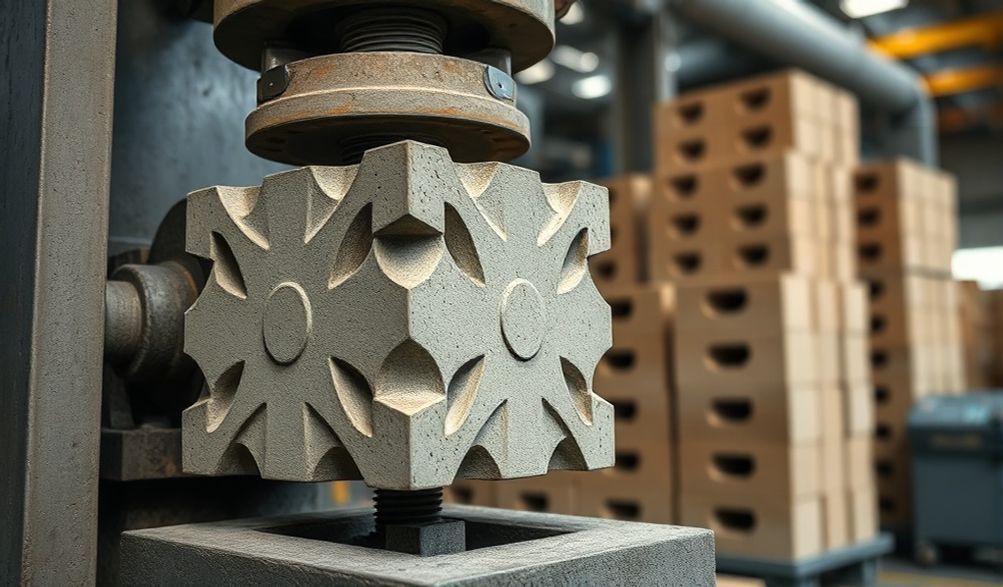
Fonksyon prensipal yonmachin pou fè blòk entèbloke an betonse fè presyon anpil sou yon konkrè "melanj sèk", konpakte li nan yon mòl ki fòme blòk ak desen patante nan fòm lang-ak-ran, tankou yon devinèt, oswa desen jewometrik sou tèt yo ak bò yo. Desen sa yo se kle sistèm nan:
- Entèlòk la:Lè yo mete yo, boulon yo (bouton) yon blòk antre byen nan twou yo (rigol) blòk ki vwazen yo.
- Rezilta a:Yon kou mi oswa pave ki estab, mekanikman fèmen, ki jwenn fòs li nan friksyon ak jewometri, anpil tankou yon puzzle twa dimansyon. Sa elimine nesesite pou lye tradisyonèl mòtye.
Prensip Fondamantal Travay la
Pandan ke konsepsyon yo varye, pwosesis fondamantal la se konsistan nan pifò machin yo epi li swiv yon metòd sèk-koule:
- Manje:Yon melanj konkrè sèk prepare (ak jis ase imidite pou idratasyon, men pa gen okenn "affaissement") foure nan bwat moul oswa tremye machin nan.
- Konpaksyon:Melanj la sibi de fòs kle esansyèl:
- Vibrasyon:Vibrasyon gwo frekans règle melanj lan, retire bwat lè yo, epi asire kwen mwazi yo plen.
- Presyon Idwolik:Yon belye idwolik aplike presyon ekstrèm (ki mezire an tòn) sou melanj la, li fè l vin pi dans, tounen yon mas solid ak gwo fòs.
- Moulaj:Aksyon konbine vibre ak presyon fòme melanj la nan fòm egzak mòl la, ki gen ladan motif konplèks ki antrele.
- Ejeksyon:Blòk ki fèk fòme a leve oswa pouse soti nan mwazi a sou yon palèt oswa atè a, pare pou sechaj.
Metòd "koulè sèk" sa a diferan de koulè beton tradisyonèl la, ki pèmèt pou manyen blòk yo imedyatman epi akselere tan konstriksyon an an jeneral.
Avantaj Kle nan Itilize Blòk Entèloke ak Machin ki Fè Yo
Envesti nan teknoloji sa a se pa sèlman achte yon machin; li se dekouvri yon seri avantaj pou pwojè konstriksyon ou oswa modèl biznis ou.
Konstriksyon ak Benefis Pèfòmans
- Vitès Konstriksyon San ParèySan nesesite melanje, aplike, epi tann pou mòtye pran, pwodiktivite wòch brik ka ogmante pa 200-300%. Mi yo monte pi vit, akselere finalizasyon pwojè a.
- Gwo Efikasite PriEkonomi reyalize nan plizyè sektè:
- TravayRedwi bezwen pou mason ki gen anpil konpetans.
- Materyèl:Eliminasyon mòtye, sab, ak siman pou poze.
- TranspòPwodiksyon sou plas la diminye depans yo ak kraze ki asosye ak transpòte blòk fini lou soti nan yon faktori byen lwen.
- Durabilite ak Fòs PwisanBlòk interloke ki byen fabrike yo gen anpil fòs konpresyon. Entèloke mekanik yo kreye yon estrikti fleksib ki ka jere fòs taye ak etabli pi byen pase mi ki lye ak mòtye rijid, sa ki fè yo ideyal pou mi retansyon, pave, ak aplikasyon ki pote chaj.
- Dirabilité natirèlTeknoloji sa a sipòte bilding vèt nan plizyè fason:
- Itilizasyon Materyèl Ka enkòpore pwodwi endistriyèl tankou sann vole oswa aragman resikle.
- Pèmeyabilite:Gen kèk desen pèmèt zèb oswa dlo antre, sa redwi koule dlo a.
- Reusability: Blocks can often be disassembled and reused elsewhere.
Operational and Business Advantages
- On-Demand, On-Site Production: Produce blocks exactly where they’re needed, when they’re needed. This provides ultimate control over inventory, quality, and logistics.
- Immense Design Versatility: By simply changing the mold, a single machine can produce a variety of block sizes, shapes (e.g., straight, corner, half), and even surface textures (split-face, rock-face, smooth). Color can be added to the mix or applied to the surface.
- A Tangible Business Opportunity: For entrepreneurs, a single semi-automatic or automatic machine can form the core of a profitable block manufacturing business, supplying blocks for local construction, landscaping, and infrastructure projects.
Types of Concrete Interlocking Block Making Machines
Choosing the right machine starts with understanding the landscape. They are primarily categorized by their operation method, mobility, and output.
Pa Metòd Operasyon
- Machin Manyèl:
- Kijan yo fonksyone: Operated entirely by human labor using a lever mechanism to apply pressure. Feeding and block removal are manual.
- Pi bon pou: Very small-scale projects, DIY enthusiasts, community-led building initiatives, or pilot projects. Output is low (e.g., 100-500 blocks per day), but the cost of entry is minimal.
- Machin Semi-Otomatik:
- Kijan yo fonksyone: The core compaction process (vibration and hydraulics) is powered and automated. Operators manually feed raw material and remove finished blocks, often with the aid of a lever or button.
- Pi bon pou: Small to medium-sized businesses, contractors with multiple projects, and medium-volume production (e.g., 1,000 – 6,000 blocks per 8-hour shift). They offer an excellent balance between productivity, cost, and flexibility.
- Machin Otomatik Konplè:
- Kijan yo fonksyone: These are complete production lines. They feature automated systems for feeding raw material, mixing, conveying, compacting, curing, and even stacking/palletizing finished blocks. Controlled via PLC (Programmable Logic Controller).
- Pi bon pou: Large-scale commercial block yards and industrial production facilities requiring very high, consistent output (10,000+ blocks per day). They maximize output and minimize labor but require a substantial capital investment.
By Mobility and Setup
- Plant Estasyonè: These are fixed installations, often the foundation of a block manufacturing factory. They are designed for maximum output and are not intended to be moved frequently.
- Mobile/Portable Machines: Mounted on a trailer or skid frame, these units can be towed or transported directly to a job site. This is a massive advantage for large infrastructure projects (e.g., remote road construction, large retaining walls) where transporting blocks is impractical.
By Block Output Capacity
- Ti-echèl: Up to ~2,000 blocks per day. Typically manual or small semi-automatic models.
- Mwayen echèl: ~2,000 to 10,000 blocks per day. The domain of robust semi-automatic and smaller fully automatic machines.
- Large-scale Industrial: 10,000+ blocks per day. The exclusive realm of high-end fully automatic production lines and stationary plants.
Critical Factors to Consider When Choosing a Machine
Making the right choice requires a clear-eyed assessment of your needs against the machine’s capabilities. Here’s your practical checklist.
Project & Business Requirements
- Production Volume: Calculate your average daily and peak weekly block requirement. Choose a machine that can meet this with some capacity to spare—running a machine at 100% capacity constantly leads to wear.
- Espesifikasyon Blòk yo List every block type you need (standard, corner, half-block, thickness). Ensure the machine and available molds can produce them all.
- Site & Resource Constraints:
- Espas: Do you have a factory shed or just an open plot? Automatic lines need more covered space.
- Pouvwa Is three-phase electrical power available, or do you need a diesel-powered option?
- Travay What is the skill level of your available workforce? A fully automatic machine may need an electrician/technician, while a semi-automatic needs diligent operators.
Machine Specifications & Features
- Kapasite Pweson (Tònaj): This is critical for block strength. Higher tonnage (e.g., 150 tons vs. 50 tons) produces denser, stronger blocks suitable for load-bearing walls. For garden walls, lower pressure may suffice.
- Mold Versatility & Changeover: How easy is it to change molds? Quick-change systems save hours of downtime when switching block types. Also, check the cost and availability of additional molds from the supplier.
- Nivo Otomatizasyon: Honestly evaluate the trade-off. Higher automation means a higher upfront cost but lower long-term labor costs and more consistent output. Can your budget and operational style support it?
- Kalite Konstriksyon: Inspect the robustness of the frame (solid steel is best), the quality of the hydraulic pump and cylinders, and the brand/durability of the vibrator motors. A heavier machine frame generally indicates better stability and longevity.
Supplier and Support Evaluation
This step is as important as evaluating the machine itself. Your relationship with the supplier will define your long-term success.
- Research Manufacturer Reputation: Look for companies with a long track record (10+ years is a good sign). Search for reviews, ask for a client portfolio, and try to speak to existing customers.
- Sèvis Apre Vann: Does the supplier offer installation, commissioning, and on-site operator training? What is their spare parts policy? A reliable local agent or service network is invaluable.
- Warranty & Documentation: Scrutinize the warranty terms. Clear, comprehensive operation and maintenance manuals in your language are a must-have.
Operational Best Practices and Maintenance Tips
Owning the machine is half the battle; operating it correctly ensures profitability and longevity. Here’s actionable guidance drawn from field experience.
Prepare Matye Premye
The quality of the block is determined here. Ensuring consistent moisture in the mix is often the difference between a perfect block and a cracked one.
- Melanj konsepsyon an A typical mix might be 1 part cement, 3-6 parts well-graded aggregate (e.g., 3/8″ crushed stone), and 2-4 parts sharp sand. The exact ratio depends on desired strength and local materials.
- Kontni Imidite This is critical. The mix should be damp enough to hold its shape when squeezed in your hand (≈ 5-8% water by weight), but no free water should be visible. Too dry = weak blocks; too wet = blocks stick in the mold.
Routine Machine Operation Checklist
- Pre-Start: Check hydraulic oil levels, ensure all bolts are tight, clean the mold cavity and pallets.
- During Operation: Feed the hopper consistently but don’t overfill. Monitor the block ejection process—any sticking indicates a mold or mix issue. Listen for unusual noises from the hydraulics or vibrators.
- Shutdown: Clear all residual material from the mold and hopper. Park the machine in a safe position.
Essential Maintenance for Longevity
A simple, consistent maintenance routine prevents costly breakdowns.
- Daily: Clean the machine thoroughly. Check for loose parts.
- Weekly: Lubricate all moving parts as per the manual (pivots, guide rods). Inspect hydraulic hoses for leaks.
- Monthly: Check and tighten all major bolts and nuts on the frame and vibration table. Change hydraulic oil and filters as recommended by the manufacturer.
FAQ Section
Q: What is the typical cost range for an interlocking block machine?
A: The range is vast. A basic manual machine can start from \$3,000 – \$10,000. A quality semi-automatic machine typically ranges from \$15,000 to \$50,000. Fully automatic production lines can range from \$70,000 to well over \$300,000, depending on capacity and sophistication. Always factor in costs for molds, a mixer, and a pallet or curing rack system.
Q: Can these machines use recycled materials like crushed concrete or plastic?
A: Many can, especially robust machines with higher pressure. Crushed concrete is an excellent, sustainable aggregate. Some technologies allow for the inclusion of certain plastic fibers. However, the material must be clean, consistently sized, and its properties understood. Always consult with the machine manufacturer to validate your specific mix design.
Q: How much training is required to operate a semi-automatic machine?
A: Basic operational training is usually sufficient and is often provided by the supplier over a few days. The key is diligent adherence to the operational manual, understanding the raw material mix, and performing routine maintenance. Safety training around moving parts and hydraulics is non-negotiable.
Q: What is the difference between hydraulic and vibration pressure in these machines?
A: They serve complementary roles. Vibrasyon (often from multiple high-frequency vibrators) consolidates the dry mix, causing particles to settle densely into every part of the mold. Presyon idwolik then applies a final, static, high-tonnage force that permanently compacts the mix, creating the final bond and achieving the high compressive strength of the block. The best machines effectively combine both.
Q: Are the blocks produced strong enough for load-bearing walls?
A: Absolutely. When produced with the correct cement content, proper mix design, and sufficient machine pressure, interlocking concrete blocks can achieve compressive strengths that meet or exceed ASTM C90 standards for concrete masonry units. For any specific load-bearing structural application, the block specifications should be reviewed and approved by a qualified structural engineer.
Konklizyon
Selecting the ideal machin pou fè blòk entèbloke an beton is a strategic decision that hinges on a clear assessment of your project needs, output goals, and operational budget. From manual presses for community projects to fully automated lines driving an industrial business, this technology offers a pathway to faster, more economical, and notably sustainable construction.
We encourage you to use this guide as your foundational framework for evaluation. Let it inform the questions you ask and the specifications you prioritize. Your final step should involve contacting multiple reputable suppliers with your detailed requirements. Request live demonstrations, ask for samples of blocks produced by their machines, and scrutinize their service commitments. By investing time in this due diligence, you’re not just purchasing a piece of equipment—you’re investing in the future efficiency and growth of your construction endeavors or business. This technology is more than a machine; it’s a tool for building modern, resilient infrastructure, one precisely interlocked block at a time.
<